
Featured Quizzes
User Quizzes
Create Quiz
Data and Charts
Word Search
Badges and Games
About JetPunk
Message Board
Dark Mode

Permutations and Combinations
A Quiz about Permutations and Combinations. Includes factorials, theorems, formulas, and more. Basically, stuff with math.
Questions and answers are from chapter 1 of Mastering AMC 10/12 by Omega Learn.
Play on dark mode, as if you play on light mode, some answers can't be seen as they're the same color as the background. Dark mode can be found in the Menu tab.
Rate:
Last updated: January 26, 2025
You have not attempted this quiz yet.
More quiz info >>
| First submitted | January 19, 2025 |
| Times taken | 23 |
| Average score | 23.8% | Report this quiz | Report |
15:00
The quiz is paused. You have remaining.
Copied!
Scoring
You scored / = %
This beats or equals
% of test takers
also scored 100%
The average score is
Your high score is
Your fastest time is
Keep scrolling down for answers and more stats ...
1. The number of ways of arranging n objects in a line is
n²
n
2n
n!
2. The number of ways of arranging n objects in a circle where rotations of the same
arrangement aren’t considered distinct is
The reason that this is true is because we can simply fix 1 person to be at the top and there are (n − 1)! ways to arrange the other people. This accounts for rotations since rotating an arrangement will result in someone else on top.
2n!
n!
(n+1)!
(n-1)!
3. The number of ways of arranging n objects in a circle where rotations of the same
arrangement aren’t considered distinct and reflections of the same arrangement aren’t
considered distinct is
We divide by 2 for reflections because of symmetry on both the left and right sides of the person chosen to be at the top.
2(n-1)!
n!/2
(n+1)!
(n-1)!/2
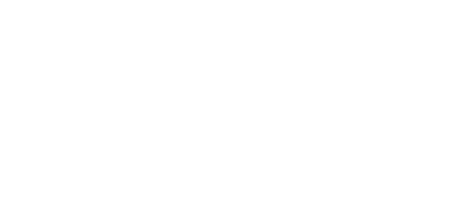
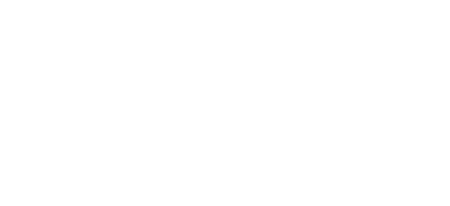
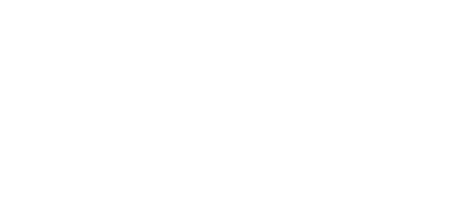
4. The number of ways to arrange k objects out of n total objects is

5. How many 4 digit numbers exist such that the first digit is odd and the other 3 digits
are even and all digits distinct?
The first digit has 5 choices (1, 3, 5, 7, and 9). The second digit, since it's an even number, also has 5 choices (0, 2, 4, 6, and 8). However, the third digit only has 4 choices, since we already selected an even number previously, and we only have 4 choices left. Same goes for the last digit, where it has 3 choices. We take all of these possible choices and multiply them together to get 5*5*4*3=300.
500
250
300
375
6. Gauss, Pauli, Einstein, Newton, Edison, and Faraday are sitting at a circular table.
Einstein, Newton, and Faraday are enemies so they refuse to sit next to each other.
With this condition, how many ways are there for the 6 physicists to sit at the table if
rotations are not counted as distinct orientations?
Without the condition, the answer would just be (6 − 1)! = 5! = 120 as we can fix 1 of the 6 people at the top and permute the remaining 5 people. However, that isn't the case, as we have constraints. Since there are only 6 people, there has to be one person seperating two of the enemies to get an alternating pattern, like X O X O X O. We can fix someone at the top, like Gauss (arbitrarily). We can now order the remaining 5 people. The location of the enemies is fixed, so there's 3! ways to order them. Now we just need to permute the remaining 2 physicists, and there's 2! ways. The answer is 3!2! which gives us (3*2*1) * (2*1) = 6*2 = 12.
120
24
60
12
7. How many 6 digit numbers exist such that all the digits are distinct, and it’s first 2 digits
are 6 or more, the last 2 digits are 5 or less, and the 3rd digit is a nonzero multiple of 7?
This is like question 5, but harder. The first thing we should take note of is that the third digit should be a nonzero multiple of seven. This means that its only choice is to be 7, so the third digit is locked in as 7 and we cannot use it elsewhere, as all digits have to be distinct. Let's tackle the first 2 digits first. The question says that the first 2 digits must be 6 or more, so for the first digit, we have 6, 8, and 9 as our choices (remember that we can't use 7), giving us 3 possible choices for the first digit. For the second digit, we have 2 choices left, as one of the 3 choices was taken by the first digit. So far we have 3, 2, and 1 combinations. For the last 2 digits, they have to be 5 or less, so we can have 5, 4, 3, 2, 1, and 0, giving us 6 choices. The last digit has 5 choices, as one was taken before. Now for the fourth digit, we just need to see all the numbers that we have left. Let's assume that we took 6, 8, 7, _, 5, and 4 as our digits. The 4th digit has 0, 1, 2, 3, and 9 as its choices, as all the other choices are taken, giving us 5 combinations. When we multiply all of these combinations together, 3 * 2 * 5 * 6 * 5, we get 30 * 30, and we get 900 as our answer.
720
1080
900
480
8. Peter is packing his pencil case. He must pack 3 distinct pencils, 2 distinct erasers, and 2 distinct markers in some order. However, he will not put an item in his case if there are already more of that type of item than any other type of item. (Eg. Peter will not put another pencil in his case if there are already more pencils than
markers or more pencils than erasers in the case). How many different orders are there for Peter to put items in his case?
For the first item, we have 3 choices. Pencil, Eraser, and Marker. Let's assume he puts in an eraser (arbitrarily). For the second item, he has 2 choices. Marker or Pencil. Again, let's assume he puts in a marker (arbitrarily). For the third item, he only has one choice, pencil. For the fouth, fifth, and sixth, it's still the same. 3 choices, then 2, then one. For the last item, it has to be a pencil, since there's none of anything else left. However, we're not done. You'd assume that it's just all the combinations together (3 * 2 * 1 * 3 * 2 * 1 * 1 = 36), but you need to account for thte fact that the pencils are distinct, the erasers, are distinct, and the markers are distinct. For this, we need to multiply the original answer (36) by 3! (Pencils), 2! (Erasers), and 2! (Markers) to get 36 * 3!2!2! = 36 * 24 = 864.
996
36
24
864
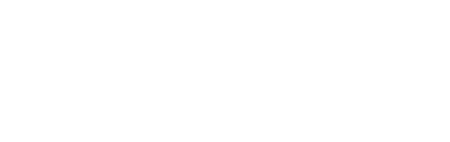
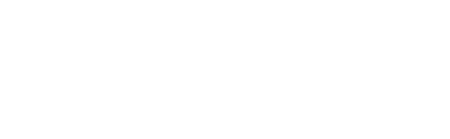
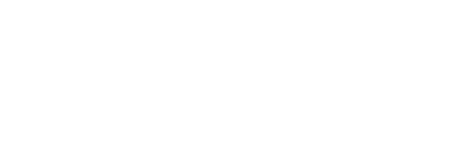
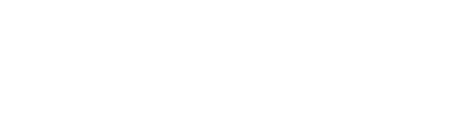
9. The number of ways to order a word is
where n is the number of letters and d1, d2, d3, . . . are the number of times each of the letters that occur more than 1 time appear in the word.
10. How many ways are there to rearrange the letters in COMPUTER such that the C, O,
M, and P stay together (not necessarily in the same order)?
For this word rearrangement problem, let's treat the COMP component as a single "block", like [COMP]UTER. Now the total amount of ways to rearrange this is 5!, since the [COMP] block is treated as a single letter. BUT, you can still rearrange the letters in [COMP], as they don't necessarily have to stay in the same order, so that's another 4! Multiplying 5! and 4! together gives you our answer of 2880.
2700
24
120
2880
11. In a shooting match, eight clay targets are arranged in two hanging columns of three
targets each and one column of two targets. A marksman is to break all the targets
according to the following rules:
1) The marksman first chooses a column from which a target is to be broken.
2) The marksman must then break the lowest remaining target in the chosen column.
If the rules are followed, in how many different orders can the eight targets be broken?
Think of it like Column A as AAA, Column B as BBB, and Column C as CC. Since the targets aren't distinct, then we can use the word rearrangement formula. AAABBBCC. The total ways to rearrange it is 8!/3!3!2!, giving us 560.
1990
40320
72
560
12. Using the letters A, M, O, S, and U, we can form five-letter ”words”. If these ”words”
are arranged in alphabetical order, then the ”word” USAMO occupies position
A, M, O, S, and U are the alphebetical order of these letters. We need to find the order, since U is last here. A____ has 24 combinations, and so does M____, O____, and U____, giving us 96 "words" before we even reach U____. The thing is, S is also the second-to-last, so: UA___ has 6 combinatinos, UM___ has 6, and UO___ has 6. When we get to US___, the first "word" we have in alphebetical order is just USAMO, so 24+24+24+24+6+6+6 = 96+18 = 114 is the answer, right? No. We need to add one, since the list starts on one, not zero, giving us our answer of 115.
115
97
114
120
13. Usually, the words ”permute”, ”order does matter”, etc. imply a __________ while the
words ”choose”, ”select”, ”order doesn’t matter”, etc. imply a __________.
Permutations' order matters, combinations' don't.
Combination, Permutation
Permutation, Combination
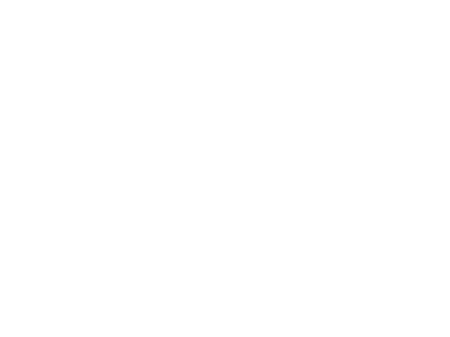
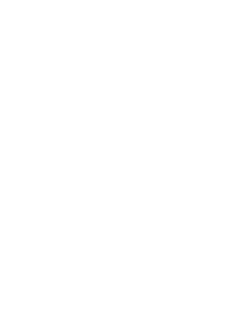
14. The number of ways to choose k objects out of n total objects is:
This can be said as "n choose k".
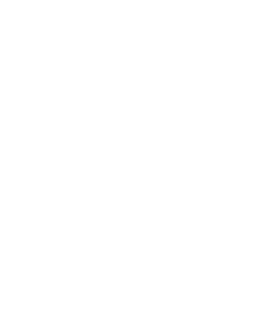
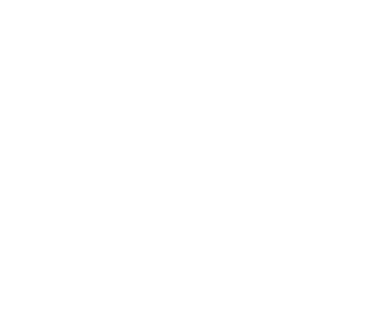
15. True or False?
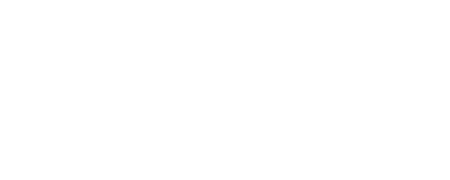
This is true because we can see choosing k objects on the left hand side is equivalent to the n − k objects that will not be selected on the right hand side.
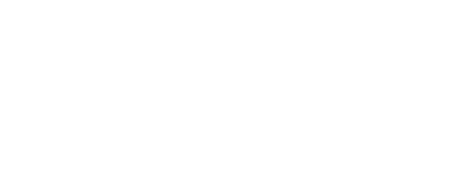
16. There are 6 experienced applicants and 7 inexperienced applicants applying for a job.
Out of the experienced applicants, 2 managers are selected. Out of all of the other
applicants who aren’t selected for a manager (both experienced and inexperienced), 4
other employees are selected. How many ways are there to do this?
We must choose 2 managers from the 6 experienced applicants, so it's 6 choose 2, giving us 6!/2!4!. This simplifies into 6*5/2 = 15. Now, we need to select the other employees. There's 11 unhired people left, so we just do 11 choose 4, giving us 330.15 * 330 = 4950, which is our answer.
330
4950
528
2763
17. You have 12 different energy bars that you need to give to 3 people: Alice, Betty, and
Chase. Alice needs 3 bars, Betty needs 4 bars, and Chase needs 5 bars. How many ways are there to distribute the 12 bars to satisfy their requirements?
Since the energy bars are different, we'll have to distribute them with the combinations formula. Let's do Alice first. She needs 3 bars, and we have 12. We can just do 12 choose 3, which gives us 220. There's 9 bars left, so now let's do Betty. She needs 4 bars, so we'll do 9 choose 4, badabing, badaboom, we get 126 combinations for Betty. For Chase, there's 5 bars left, and he needs 5, so 5 choose 5 is just one. From all this, we multiply 220, 126, and 1, to get 27,720 as our answer.
27,720
1,507
346
86,248,800
18. How many ways are there to place 4 balls into a 4 × 6 grid such that no column or row
has more than one ball in it? (Rotations and reflections are considered distinct.)
First off, every row must have exactly one ball in it, as if one row was empty, a ball would be placed in an already occupied row, so that wouldn't work. Now how do we figure out the columns?... Well, we can choose 4 out of the 6 to have a ball in them, so it's 6 choose 4, giving us 15. Let's say we have our 4 rows selected, how will we place our balls in there now (pause)? Well, for our first row, we have 4 choices of columns for it to be placed in, giving us 4 choices. For the second ball, one column is taken up, so we have 3 choices. It repeats until we get to the last ball, so the ball positions are 4!. Because of this, our answer is just the number of ways to place the balls and the number of column combinations we have, so it's 24 × 15, giving us 360 as our answer.
120
360
270
180
19. Robert has 4 indistinguishable gold coins and 4 indistinguishable silver coins. Each coin has an engraving of one face on one side, but not on the other. He wants to stack the eight coins on a table into a single stack so that no two adjacent coins are face to face. Find the number of possible distinguishable arrangements of the 8 coins.
We can use the word rearrangement formula for 8!/4!4! to get 70. We'll now number the ways to put the coins face up or face down. If a coin's face down, then the next coin can be anything and their faces will never meet. If a coin's face is up, then the next coin must face up as well. The moment a coin becomes face up, all the other next coins must also be face up as well. There's 8 ways to do this. If none of the coins are face up, there's one orientation. In total, we have 9 (8+1) orientations, and 9*70 is 630.
256
70
630
315
20. The number of subsets of a set of size n is
We have 2 choices for each element in the set: whether to include or not include the element in our subset, and since there are n elements in the set, the total number of subsets is 2 × 2 × 2 × · · · × 2 (n times).
2!n!
n^2
2^n
(2n)!
21. Two subsets of the set S = {a, b, c, d, e} are to be chosen so that their union is S and
their intersection contains exactly two elements. In how many ways can this be done,
assuming that the order in which the subsets are chosen does not matter?
First, let's choose which 2 will be the intersection. Five choose two gets us 10 combinations. We must then divide the remaining 3 elements among two subsets. Each element has two choices; whether to be in subset A or subset B, so we have 2^3=8 choices for the subsets. 8*10 = 80. Because the order doesn't matter, we have to divide by two for symmetry, as we can just flip them.
30
80
40
25
Save Your Stats
Your Next Quiz

Can you name the capitals cities of all 196 countries in the world?

Can you guess the countries that have these flags?

Try to name the countries that have exported the most weapons in the last 10 years.

Drag the pin onto the correct country. Careful, though! Three wrong moves and the game ends.
Comments
No comments yet
New and Popular