
Featured Quizzes
User Quizzes
Create Quiz
Data and Charts
Word Search
Badges and Games
About JetPunk
Message Board
Dark Mode
Greek Philosophers - Statistics
General Stats
- This quiz has been taken 333 times
- The average score is 8 of 25
Answer Stats
| Picture | Hint | Answer | % Correct |
|---|---|---|---|
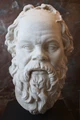 | Foundational role in Western philosophy, introducing the method of critical inquiry and dialogue, known as the Socratic Method, which encourages self-examination and the pursuit of truth and virtue (470–399 BC) | Socrates | 84%
|
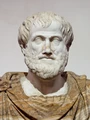 | Best-known for understanding reality through empirical observation and logical analysis, emphasizing the importance of achieving eudaimonia (flourishing) through the cultivation of virtues, and advancing the idea that all things have a purpose (telos). (384-322 BC) | Aristotle | 77%
|
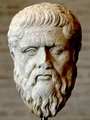 | Most famous for his Theory of Forms, asserting that the true essence of reality consists of eternal, unchanging, and perfect abstract entities known as Forms or Ideas, with the material world being a mere shadow of this higher reality (427-348 BC) | Plato | 74%
|
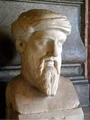 | Believed in the centrality of numbers and mathematical harmony as the basis of the universe, believed in reincarnation (570–495 BCE) | Pythagoras | 56%
|
 | Famous for his ascetic lifestyle and rejection of social conventions. He lived in poverty, aiming to achieve self-sufficiency and virtue. (404-323 BC) | Diogenes of Sinope | 50%
|
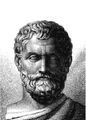 | First philosopher in Western history, believed water is the fundamental substance (archê) of the universe (624–546 BCE) | Thales of Miletus | 42%
|
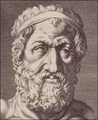 | Famous for his paradoxes, which supported Parmenides (495-430 BC) | Zeno of Elea | 41%
|
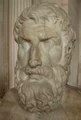 | Emphasized the pursuit of pleasure and the avoidance of pain as the highest goods (Hedonism) (341-270 BC) | Epicurus | 34%
|
 | Famous for the doctrine of change (panta rhei) and the unity of opposites, fire as archê, concept of the Logos (535–475 BCE) | Heraclitus | 33%
|
 | Developed the theory of atomism, proposing that everything is composed of small, indivisible particles (atoms). (5th Century BC) | Leucippus | 30%
|
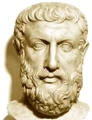 | Argued that change is an illusion, and true reality is unchanging and eternal; focused on the nature of "being." (515–450 BCE) | Parmenides | 28%
|
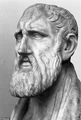 | Founder of Stoicism, taught that the path to happiness lies in accepting the present moment as it is, using reason, and living in accordance with nature. (343-262 BC) | Zeno of Citium | 28%
|
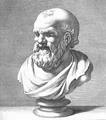 | Expanded on Leucippus' atomism, arguing that atoms and the void are the fundamental components of the universe (460-370 BC) | Democritus | 25%
|
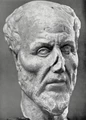 | Founder of Neoplatonism, synthesized Plato’s ideas with metaphysical thought (204-270 AD) | Plotinus | 24%
|
 | Introduced the concept of the apeiron (the boundless) as the origin of all things (610–546 BCE) | Anaximander | 22%
|
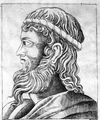 | Proposed air as the primary substance (585–528 BCE) | Anaximenes | 18%
|
 | Considered the most famous of the Sophists, best known for his claim that "Man is the measure of all things," (490-420 BC) | Protagoras | 16%
|
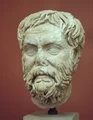 | Founder of Skepticism, a school of thought that questioned the possibility of certain knowledge (360-270 BC) | Pyrrho of Elis | 14%
|
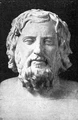 | Student of Socrates, reflected the values of Socratic thought in a pragmatic and accessible manner (430-355 BC) | Xenophon | 14%
|
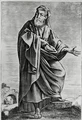 | Proposed that four elements (earth, air, fire, and water) form the basis of all matter, with Love and Strife driving change (494–434 BCE) | Empedocles | 12%
|
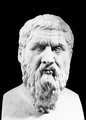 | Sophistic rhetorician, known for his paradoxical arguments, particularly his assertion that nothing exists, and if it did, it could not be known or communicated (483-375 BC) | Gorgias | 12%
|
 | Introduced the concept of nous (mind or intelligence) as the force organizing the cosmos. (500–428 BCE) | Anaxagoras | 10%
|
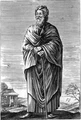 | Criticized anthropomorphic conceptions of the gods and argued for a single, unchanging divine being. (570–478 BCE) | Xenophanes | 10%
|
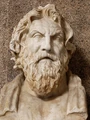 | founder of Cynicism, emphasizes the pursuit of virtue through rigorous self-discipline, rejection of material wealth, and living in accordance with nature (446-366 BC) | Antisthenes | 7%
|
 | Student of Aristotle, extends and refines Aristotelian thought, focusing on the study of nature, ethics, and character, emphasizing practical wisdom and virtue. (371-287 BC) | Theophrastus | 7%
|
No matching quizzes found
Score Distribution
Percent of People with Each Score
Percentile by Number Answered
Your Score History
You have not taken this quiz
New and Popular