
Featured Quizzes
User Quizzes
Create Quiz
Data and Charts
Word Search
Badges and Games
About JetPunk
Message Board
Random Quiz
Dark Mode
IB biology common topics - Statistics
General Stats
- This quiz has been taken 5 times
- The average score is 22 of 110
Answer Stats
| Question | Tile | Select | % Correct |
|---|---|---|---|
| membrane transport proteins and their functions | ATP stands for Active Transport Pump | No | 100%
|
| membrane transport proteins and their functions | cholesterol is in plants and fungi as well as animals | No | 100%
|
| membrane transport proteins and their functions | Exocytosis: materials enter cell, making membrane larger | No | 100%
|
| membrane transport proteins and their functions | channel proteins cannot be gated | No | 75%
|
| membrane transport proteins and their functions | channel proteins: passive transport, mainly for ions and water, but can only transport 1 type | Yes | 75%
|
| membrane transport proteins and their functions | Endocytosis: materials exit cell, making membrane smaller | No | 75%
|
| membrane transport proteins and their functions | Ions can diffuse across membrane | No | 75%
|
| membrane transport proteins and their functions | active transport proteins: need ATP to move molecules against concentration gradient | Yes | 50%
|
| membrane transport proteins and their functions | ATP synthase is active transport | No | 50%
|
| membrane transport proteins and their functions | carrier proteins are active transport proteins | No | 50%
|
| membrane transport proteins and their functions | carrier proteins: binds to molecule, changes shape, transports molecule. passive or active with ATP | Yes | 50%
|
| membrane transport proteins and their functions | voltage gated ion channels: uses transmembrane voltage, important in neurons | Yes | 50%
|
| haploid cells | 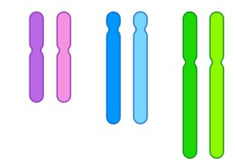 | No | 25%
|
| haploid cells | 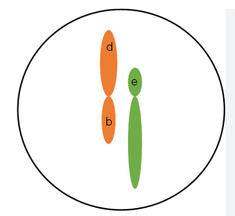 | Yes | 25%
|
| haploid cells | 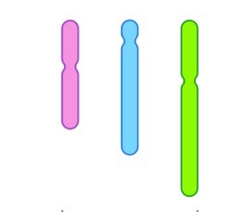 | Yes | 25%
|
| haploid cells | 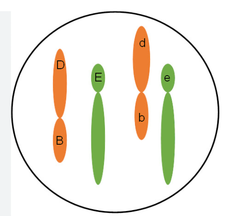 | No | 25%
|
| correct statements regarding immune system | 1st line of defence: physical barriers (ex:skin), chemical/microbial barrier (ex:lysozyme in saliva) | Yes | 25%
|
| haploid cells | A cell described by 2n | No | 25%
|
| haploid cells | a cell that can be described by 1n | Yes | 25%
|
| correct statements regarding immune system | adaptive immune system: developed over life | Yes | 25%
|
| correct statements regarding immune system | adaptive- pathogen specific, remembers some pathogens | Yes | 25%
|
| correct statements regarding immune system | antibodies can be on t-helper cells, cytotoxic cells, b-lymphocyte cells, or free floating | No | 25%
|
| membrane transport proteins and their functions | aquaporins: only for water movement | Yes | 25%
|
| correct statements regarding immune system | b-cells come from thymus | No | 25%
|
| haploid cells | Can undergo meiosis but not mitosis | No | 25%
|
| haploid cells | can undergo mitosis but not meiosis | Yes | 25%
|
| haploid cells | cells after meiosis | Yes | 25%
|
| haploid cells | cells after mitosis | No | 25%
|
| Enzymes in DNA replication and their correct function | DNA polymerase III: attaches free nucleotides to DNA in 3-5 direction | No | 25%
|
| Enzymes in DNA replication and their correct function | DNA polymerase II: proofreads strand | No | 25%
|
| Enzymes in DNA replication and their correct function | DNA polymerase II: removes RNA primer | No | 25%
|
| Enzymes in DNA replication and their correct function | DNA polymerase I: replaces RNA primer with DNA at begining of transcription process | No | 25%
|
| haploid cells | egg | Yes | 25%
|
| haploid cells | gametes | Yes | 25%
|
| membrane transport proteins and their functions | glycoprotein: for cell adhesion and are the antigens on blood | Yes | 25%
|
| Enzymes in DNA replication and their correct function | gyrase: splits DNA strands | No | 25%
|
| haploid cells | Has 23 chromosomes | Yes | 25%
|
| haploid cells | Has 46 chromosomes | No | 25%
|
| haploid cells | has homologous pair | No | 25%
|
| Enzymes in DNA replication and their correct function | helicase: splits DNA strands | Yes | 25%
|
| correct statements regarding immune system | innate immune: skin, mucus, phagocytes, blood clotting, not specific | Yes | 25%
|
| correct statements regarding immune system | innate immune system: born with it | Yes | 25%
|
| Enzymes in DNA replication and their correct function | leading strand is continuous, lagging strand is not continuous | Yes | 25%
|
| membrane transport proteins and their functions | Ligand-gated Ion Channels: transports when certain chemical (acetylcholine in neurons) attaches | Yes | 25%
|
| Enzymes in DNA replication and their correct function | ligase: binds okazaki fragments | Yes | 25%
|
| Enzymes in DNA replication and their correct function | Ligase: signals to other enzymes to stop replication | No | 25%
|
| correct statements regarding immune system | macrophage is type of phagocyte | No | 25%
|
| Enzymes in DNA replication and their correct function | (not an enzyme) okazaki fragments are found on 5-3 strand | No | 25%
|
| Enzymes in DNA replication and their correct function | (not an enzyme) okazaki fragments are found on leading strand | No | 25%
|
| correct statements regarding immune system | Pathogens include all bacteria, some fungi, viruses and prions | No | 25%
|
| membrane transport proteins and their functions | Phagocytosis – The process by which solid substances are ingested | Yes | 25%
|
| correct statements regarding immune system | Prion: type of pathogenic prokaryotic cell | No | 25%
|
| membrane transport proteins and their functions | sodium potassium pump is active transport | Yes | 25%
|
| haploid cells | Some somatic cells | No | 25%
|
| haploid cells | sperm | Yes | 25%
|
| haploid cells | spermatids | Yes | 25%
|
| haploid cells | spermatogonia | No | 25%
|
| haploid cells | stem cells | No | 25%
|
| Enzymes in DNA replication and their correct function | syrcase: ends DNA replication | No | 25%
|
| Enzymes in DNA replication and their correct function | syrcase: initiates DNA replication | No | 25%
|
| correct statements regarding immune system | t-cells "remember"" antigen for next time | No | 25%
|
| correct statements regarding immune system | t-helper cell "learns" antigen, turns into plasma cell | No | 25%
|
| correct statements regarding immune system | T-helper cell message macrophages | No | 25%
|
| correct statements regarding immune system | vaccines are made of antigenic material and generate general immunity, not specific | No | 25%
|
| aspects of a QUATERNARY protein structure (and examples) | 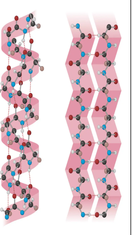 | No | 0%
|
| aspects of a QUATERNARY protein structure (and examples) |  | No | 0%
|
| aspects of a QUATERNARY protein structure (and examples) | 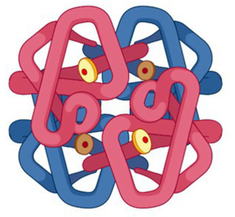 | Yes | 0%
|
| aspects of a QUATERNARY protein structure (and examples) | At this point polypeptides fold into a-helices or b-sheets | No | 0%
|
| correct statements regarding immune system | bacteriophage is a virus that IB bio students must know for whatever reason | Yes | 0%
|
| correct statements regarding immune system | b-cells are from bone marrow | Yes | 0%
|
| correct statements regarding immune system | B-lymphocyte "learns" antigen, turns into plasma cell | Yes | 0%
|
| aspects of a QUATERNARY protein structure (and examples) | can have inorganic compounds | Yes | 0%
|
| aspects of a QUATERNARY protein structure (and examples) | can have prosthetic groups | Yes | 0%
|
| aspects of a QUATERNARY protein structure (and examples) | Caused by R-groups interacting | Yes | 0%
|
| membrane transport proteins and their functions | cholesterol: maintains fluidity and permeability | Yes | 0%
|
| aspects of a QUATERNARY protein structure (and examples) | collagen | Yes | 0%
|
| aspects of a QUATERNARY protein structure (and examples) | covalent bonds | Yes | 0%
|
| correct statements regarding immune system | cytotoxic cells recognize and kill infected cells | Yes | 0%
|
| aspects of a QUATERNARY protein structure (and examples) | disulphide bonds | Yes | 0%
|
| Enzymes in DNA replication and their correct function | DNA polymerase III: attaches free nucleotides to DNA in 5-3 direction | Yes | 0%
|
| Enzymes in DNA replication and their correct function | DNA polymerase III: proofreads strand | Yes | 0%
|
| Enzymes in DNA replication and their correct function | DNA polymerase I: replaces RNA primer with DNA at end of transcription process | Yes | 0%
|
| Enzymes in DNA replication and their correct function | DNA primase: adds RNA primer to start of strands when initiating replication | Yes | 0%
|
| membrane transport proteins and their functions | glycolipids and glycoproteins have attached sugar chains | Yes | 0%
|
| membrane transport proteins and their functions | glycolipid: used for communication, signalling, and attaching, on lipid | Yes | 0%
|
| Enzymes in DNA replication and their correct function | gyrase: reduces tension on DNA from unwinding | Yes | 0%
|
| Enzymes in DNA replication and their correct function | helicase: holds DNA strands apart during replication | No | 0%
|
| aspects of a QUATERNARY protein structure (and examples) | hemoglobin | Yes | 0%
|
| aspects of a QUATERNARY protein structure (and examples) | hydrogen bonds | Yes | 0%
|
| aspects of a QUATERNARY protein structure (and examples) | insulin | Yes | 0%
|
| aspects of a QUATERNARY protein structure (and examples) | ionic bonds | Yes | 0%
|
| correct statements regarding immune system | lysogenic: bacteriophage DNA mixed in host DNA, cell divides, phage DNA activates w/ right condition | Yes | 0%
|
| correct statements regarding immune system | lytic cycle of virus: bacteriophage DNA separate from host, replicates, cell lyses | Yes | 0%
|
| correct statements regarding immune system | macrophage gives antigens on pathogen to T-helper cell | Yes | 0%
|
| aspects of a QUATERNARY protein structure (and examples) | made of 2 or more tertiary proteins | Yes | 0%
|
| aspects of a QUATERNARY protein structure (and examples) | metallic bonds | No | 0%
|
| aspects of a QUATERNARY protein structure (and examples) | nearly all proteins eventually have quaternary structure | No | 0%
|
| aspects of a QUATERNARY protein structure (and examples) | peptide bonds | Yes | 0%
|
| membrane transport proteins and their functions | peripheral protein: for cell signalling, communication, and support | Yes | 0%
|
| correct statements regarding immune system | phagocytosis: phagocytic white blood cells, digest new bodies, put in vesicles, sent to lysosomes | Yes | 0%
|
| membrane transport proteins and their functions | phospholipids w/ saturated fatty acid: less fluid, higher melting point | Yes | 0%
|
| membrane transport proteins and their functions | phospholipids w/ unsaturated fatty acid: more fluid, lower melting point | Yes | 0%
|
| correct statements regarding immune system | plasma cell produces antibodies | Yes | 0%
|
| aspects of a QUATERNARY protein structure (and examples) | prosthetic groups are smaller proteins within the larger one | No | 0%
|
| membrane transport proteins and their functions | proteins spanning both sides of membrane are integral proteins | Yes | 0%
|
| Enzymes in DNA replication and their correct function | RNA primase: adds RNA primer to start of strands when initiating replication | No | 0%
|
| membrane transport proteins and their functions | small molecules, like water, co2, and O2 can pass w/o transport protein | Yes | 0%
|
| correct statements regarding immune system | t-cells are from thymus | Yes | 0%
|
| correct statements regarding immune system | T-helper cell messages cytotoxic and B- lymphocyte cells with cytokines | Yes | 0%
|
| aspects of a QUATERNARY protein structure (and examples) | Van der Waals forces | Yes | 0%
|
No matching quizzes found
Score Distribution
Percent of People with Each Score
Percentile by Number Answered
Your Score History
You have not taken this quiz
New and Popular