
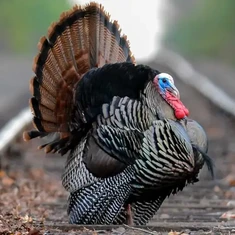
Strange origin of Turkeys
First published: Tuesday November 5th, 2024
Report this blog
Strange origin of Turkeys
In 16th-century England, turkeys were introduced to Europe and were mistakenly believed to be related to guineafowls, some of which came from Turkey. Hence the name, turkey!
Some nations disagreed with this idea. In most languages, the bird is actually called “the Indian chicken,” as many believed it originated from the Indian subcontinent. This might be because some of the turkeys imported to Europe arrived via Indian merchants. The French call it “la dinde”, the Russian refer to it as “индейка” [indeyka] and the Turkish (ha!) also call this bird by a name that references India, “hindi”.
In some languages even the city where these birds supposedly came from is identified. In Dutch, it is “kalkoen”, in Finnish it is called “kalkkuna” and the Icelandic word is “kalkúnn”. These all stem from the name of Calicut, a city in India.
Some speculated that turkeys came from France, so for instance in Gaelic languages turkeys are called “French chicken” or “French cockerel”: “cearc fhrancach” in Irish Gaelic or “kellagh frangagh” in Manx.
Other nations like Croats, Portuguese and Pakistanis argue that turkey comes from Peru. Meanwhile, the Vietnamese just call it the “Western chicken”, i.e. “gà tây”, in Breton it’s a chicken from Spain (“yar-Spagn”) and in Malay it’s a Dutch one (“ayam belanda”).
And it gets more weirder: Japanese and Korean call it the equivalent of “seven-faced bird,” Abkhazian and other languages in the Caucasus call it “blue bird,” and Thai and Urdu call it “elephant chicken” or “elephant trunk chicken.”