
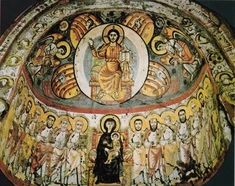
The Miaphysite church (CD2)
Last updated: Monday April 27th, 2026
Report this blog
Hey guys, long time no see! I wanted to post this blog to show you how I'm doing with "Christian Denominations 2", the sequel of the first part (which you can check here). This blog is about Oriental Orthodoxy, a group of Apostolic churches as united as Christ ;)
The Oriental Orthodox - or Miaphysite - churches
Foundations of the Oriental Orthodox churches
Oriental Orthodoxy is a group of Eastern churches that claim to be the one true Church founded by Jesus and the Apostles, yet still recognize each other as the one true Church.
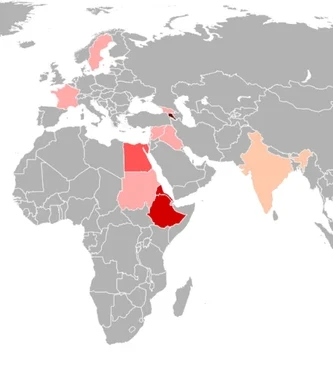
Some of the churches that make up to Oriental Orthodoxy are the Coptic Church (Alexandria), the Armenian Church, the Ethiopian & Eritrean Church, the Malankara Church (in India), and the Syriac Church. Despite their different traditions and independent history, they are in communion with one another.
The British Orthodox Church also exists, but that one isn't in communion with the main ones ¯\_(ツ)_/¯
The origin of their churches goes back to... Christ and the apostles! They have a different interpretation of Matthew 16:18-19:
18 And I tell you, you are Peter Simon, and on this rock I will build my church, and the gates of hell shall not prevail against it.
19 I will give you the keys of the kingdom of heaven, and whatever you bind on earth shall be bound in heaven, and whatever you loose on earth shall be loosed in heaven.
They believe Jesus gave the keys of the Kingdom to all the apostles, and that even though the Pope of Rome is “first among equals”, the consensus of the patriarchs carries more weight.
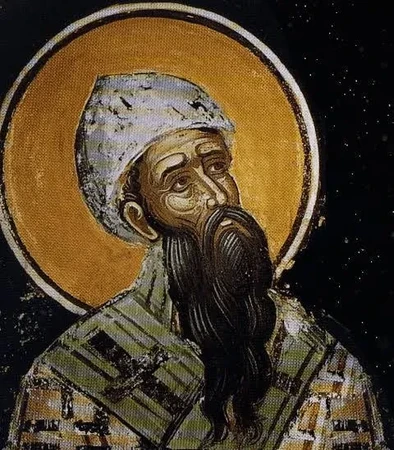
Pope Saint Cyril of Alexandria is one of their most important saints, since he was the one who condemned the Patriarch of Constantinople Nestorius as a heretic.
Nestorius was separating Christ’s natures, saying things like the Marian title “Mother of God” (Theotokos) was problematic. In Ephesus there was a council called over this dispute; and after Cyril convinced everybody that Nestorius was a heretic, Nestorius and his followers were expelled from the Church, with Cyril winning the council.
Yay!
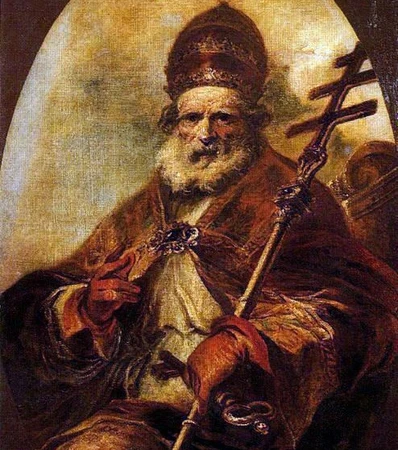
However, after Cyril died, Pope Saint Leo Magnus clashed with the monk Eutyches and with Pope Dioscorus of Alexandria near 449 a.D. Leo interpreted Cyril as teaching that Christ has two natures. Dioscorus, along with the Patriarchs of Antioch and Jerusalem, opposed that reading, since they firmly believed that Christ had a single united nature.
Leo's posture is called "Chalcedonianism" and Dioscorus' is called "Miaphysitism".
But who is right? Regarding the natures of Christ, that depends on your interpretation, but regarding what Cyril thought, Oriental Orthodoxy was.
Cyril said the infamous "One incarnate nature of the Logos [Jesus]." Some Calcedonians say that it's a later addition made by the Apollinarian sect, but Cyril had also said, and this one is definitely not a forgery, "If anyone divides the union AFTER the incarnation, let him be anathema." Pretty Miaphysite, right?
Sadly, Cyril died in 444, so we can't know with certainty what he thought.
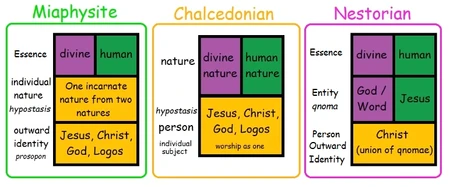
This graph shows why Miaphysites saw Chalcedonianism as similar to Nestorianism:
Chalcedonians only used 'person' and 'nature' on Christology, while Miaphysites distinguished three aspects: essence, nature, and identity. Essentially, the three groups used similar words but with different meanings in mind, which caused confusion for all parties (and for us).
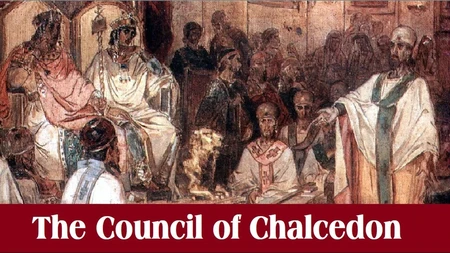
In 451 a.D, the fourth ecumenical council was called in the city of Chalcedon (current Kadıköy, Turkey); where Pope Leo and Pope Dioscorus would discuss this issue about the natures of Christ.
(A council is when all the bishops of the world meet in a city to discuss important issues.)
The council of Chalcedon ended up siding with Pope Leo of Rome, since Dioscorus and Miaphysitism didn't distinguish "person" and "nature" enough.
And that's how the schism between Eastern Orthodoxy and Oriental Orthodoxy happened!
Beliefs, Practices and Doctrines
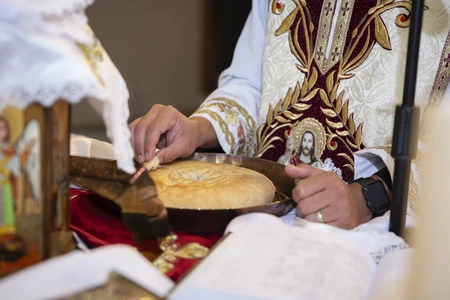
Regarding the Eucharist, most believe the Bread and Wine are mysteriously transformed into the Body and Blood of Christ.
Catholics would label this as some kind of 'transubstantiation', but Miaphysites - as well as Eastern Orthodox - would reject the name.
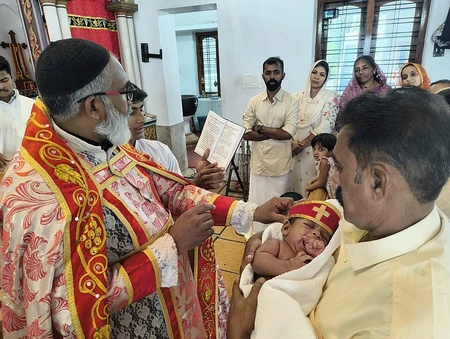
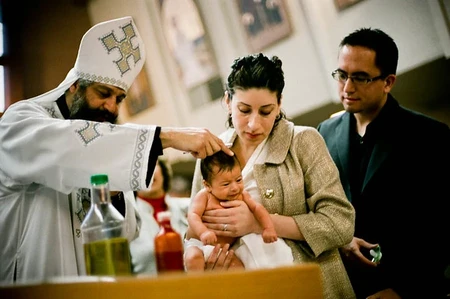
Oriental Orthodox baptize their babies, as they believe that baptism is what makes us members of the church and enables God's active grace to work in us, leading to salvation.
Chrismation is shared in general Orthodoxy, both in Eastern and Oriental churches.
The Miaphysites hold that the consecrated oil seals the Holy Spirit into the believer and perfects its incorporation into the Church.
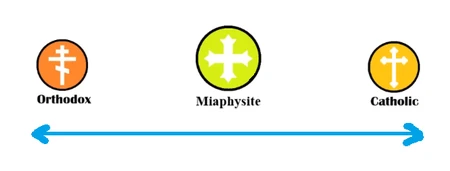
Besides the sacraments, this church is also marked by its relationship with Catholicism and Eastern Orthodoxy; Miaphysite churches aren't close to Catholicism and the western side of Christianity, yet they do not get along with Eastern Orthodoxy, since both of these Orthodoxies claim to be the one and original Orthodox church.
Regarding some issues, they kind of seem to be between both of the Chalcedonian Apostolic churches:
•Regarding the filioque (the Holy Spirit proceeding from the Father AND the Son), they reject this doctrine as unbiblical, but aren't as dogmatic as the Eastern churches.
•Regarding theosis, they do affirm a union with God's energies, but they do not agree with the Eastern Orthodox version of it.
•Regarding God's essence and energies, they think that there's a distinction, but a formal one caused by human attempts at understanding God, not a real one.
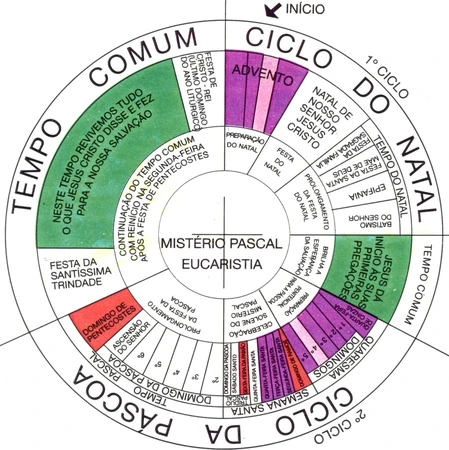
The Coptic Liturgical calendar is unique not because it has different seasons, but because it is 14 days behind the Gregorian calendar. The Pope Gregorius XIII imposed a new calendar supported by mathematicians, but the Coptic (and most Orthodox) churches rejected the new calendar, since they argue it changes the liturgy, and if you change the liturgy, you change the faith.
This may not sound like a great issue for outsiders, but for a church that claims infallibility and a perfect preservation of the tradition of the apostles, it is crucial not to change.
That's why they celebrate Christmas on January 7th!
ㅤ
Oriental Orthodoxy englobes different churches that, despite having traditions that developed over time, are in communion with each other.
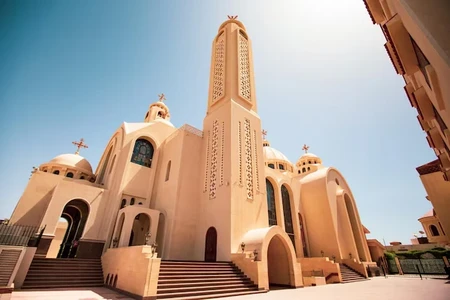
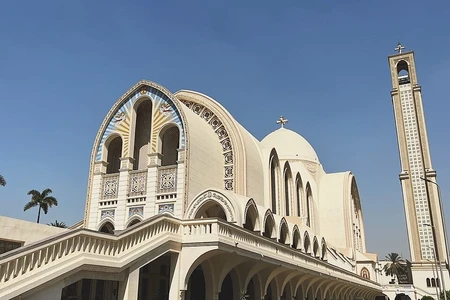
The Coptic church is the biggest Miaphysite church, with 12 million baptized members. They claim to have been founded by the apostle Mark.
The heritage of the Coptics includes the birthplace of saints such as Saint Athanasius (the most important saint of Christianity) and Saint Cyril, the patriarchate of Alexandria, and the preservation of the Coptic language.
ㅤ
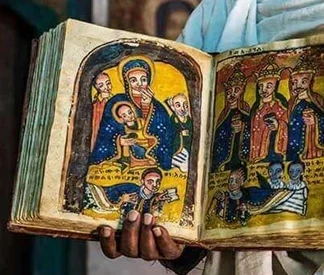
The Ethiopian and Eritrean Tewahedo churches became 'separated' institutions when Eritrea became independent in 1993. They claim to have been founded by the apostle Matthew and the eunuch of the Acts of the Apostles.
The heritage of the Ethiopians includes the largest Bible (81 books), the Bibles with illustrations, claims of holding the Ark of the Covenant, and the rock-hewn churches of Lalibela.
ㅤ
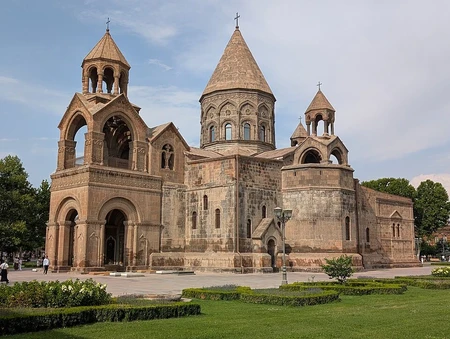
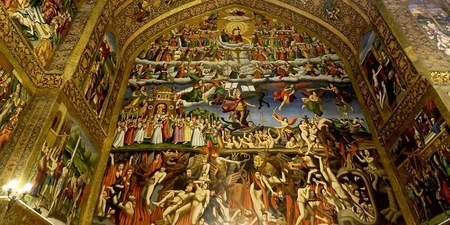
The Armenian Apostolic Church is the world's oldest national church, as Armenia was the first country to convert to Christianity in 301. They claim to have been founded by the apostles Bartholomew and Thaddaeus.
The heritage of the Armenians includes the creation of the Armenian alphabet, the first cathedral, and the preservation of the Armenian culture.
ㅤ
The Syriac Orthodox church can be considered as the world's most persecuted church. They are located in the historical region of Syria, which is comprehended by nowadays' Syria and Turkey. They claim to be founded by Saint Peter in the first century.
The heritage of the Syriacs includes the patriarchy of Antioch (in turkey), the birthplace of Saint Efren the Syriac, and the preservation of Aramaic - the language that Jesus spoke.
ㅤ
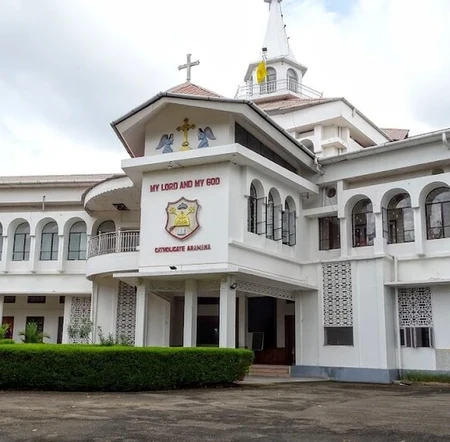
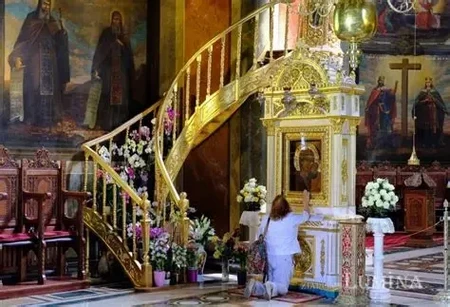
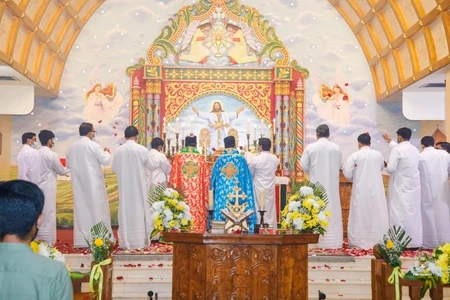
The Malankara church (also called Malankara Orthodox Syriac Church) is a mix of many church institutions that share common roots in the preaching of the Apostle Thomas in India in the first century. They're administered by the patriarchy of Antioch.
The heritage of the Indians includes the mix of Syriac, Qatari, and Indian traditions and cultures, and a long history of persecution.
The books that form the Bible - or the canon - aren't something defined as in Catholicism or agreed upon as in Protestantism; it changes a lot with the tradition.
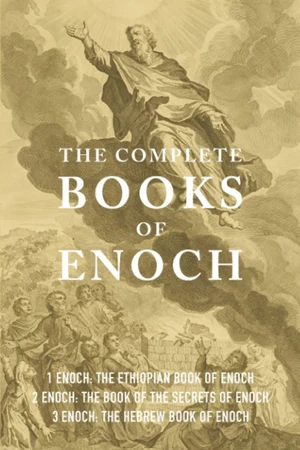
The thing the Ethiopians are best known for is their canon, which contains 81 books, the largest in Christendom. They include Enoch, Jubilees, and the Deuterocanon in the Old Testament; and Synods, Liberty, 1 and 2 Clement, Hermas Priest, and Didascalia Apostolorum in the New Testament.
The Coptics have a really similar canon to the Catholic one, but they include extra-5 psalms in the book of psalms (151-155) and often Enoch and Jubilees.
The Armenians only add 3 Corinthians; and the Syriacs have the shortest canon of them all! They used to not include 2 Peter, 2 and 3 John, Jude, and Revelation in their Bible, the Peshitta. Despite adding them to their Tradition, they still don't fully use them.
Minor notes
•From May 5 to June 2, 553, the emperor Justinian convened the 5th ecumenical council in Constantinople to try and reunify Miaphysitism and Chalcedonianism. His intentions were that - as a Chalcedonian - he wanted no problems with his wife Theodosia, who was a Miaphysite.
•In some OO churches, especially in the African ones, circumcision is often practised as a cultural practice of purity.
•They only accept the councils of Nicaea I - Jesus' divinity - Constantinople I - The Holy Spirit's Divinity and Jesus' humanity - and Ephesus - Mary being the Mother of God.
•Do not call Oriental Orthodox "Monophysites", since "Monophysite" says that Jesus is half-human half-God, instead of 100% God and 100% human!
•Remember the fasts of Eastern Orthodoxy? Well, Oriental Orthodoxy fasts up to 250 days per year, including the 55-56 days of the Great Lent and the 43-day Christmas fast.
•Ethiopian liturgies ("services") can last up to 4 hours!
•The Ethiopian Tewahedo church does not believe in transubstantiation, they rather believe the same as Lutherans do (Christ and the Bread are both present).
•Some Oriental Orthodox argue that, since Chalcedonians split Christ's natures into two, the church - which is His body - split as a consequence (see the Great Split and the Protestant Reformation).
•The most famous Miaphysite of JetPunk is... idk
This is just an update of the next "Christian denominations" blog, which I hope can come out in the next months. Froggodoggo has helped me a lot in that blog, and it was nice to see people interested in the topic!
If you ask me, (as a Protestant) I think there is no one true Church in the sense of "I am Christian and have the Eucharist, you guys are heretics", but there is a church who is right on their doctrines.