
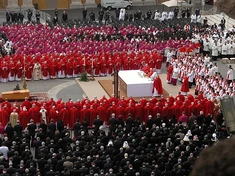
Sede Vacante - The Papal Vacancy
First published: Wednesday April 30th, 2025
Report this blog
Hello all! I initially had hoped to publish a blog about Blessed Carlo Acutis to coincide with his intended canonization date of April 27, 2025. However, due to the death of Pope Francis on April 21, this canonization has been postponed and will not be celebrated until sometime after a new pope is elected. This is what brought about the inspiration to instead make a blog about this unexpected occurrence. The mourning period for Pope Francis has now passed, though I want to still reiterate the importance of respecting his legacy and praying for the repose of his soul before delving into the topic of this blog: the Vacant Papal See. The Catholic Church is in need of a new successor to Saint Peter, how does this process work and who are likely candidates for this position?
The Process: Papal Conclaves
A papal conclave, coming from the latin prefix "con-" (with) and word "clavis" (key), is the gathering whereby the cardinals that are younger than 80 years old will elect a new pope. As the etymology suggests, these meetings are secretive and held only amongst the Catholic Church's Cardinals (i.e., the College of Cardinals). A Cardinal is simply a title given to an ordained Catholic (deacon/priest/bishop) which indicates that this individual is eligible to vote for a pope when needed.
The College of Cardinals gathers approximately one week following the death of a pope. After a sermon on the status of the Church and Mass, the College of Cardinals lock themselves into the Sistine Chapel. They take a vote that day, requiring a 2/3 majority. If such a majority is not met, the procedure repeats twice in the morning and twice in the afternoon of each consecutive day. Most likely a pope will be selected by this time (if not, there are procedures that follow, but I won't go into them).
Possible Candidates
There's truly no telling who the next pope will be (as much as the secular media tries to make it seem otherwise). Potential candidates are typically called "papabile" which would translate to "pope-able". Neither of the 1978 conclaves elected a papabile candidate, however the two most recent (2005 & 2013) conclaves did. To be completely honest, I think I would personally hope to see a non-papabile cardinal elected. So without further ado, I will list the candidates who either I or the media see to be potential candidates to the papacy.
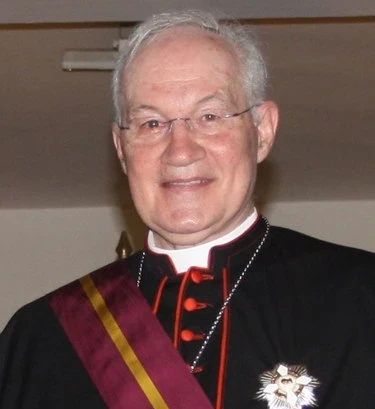
Marc Ouellet, 80 🇨🇦
I mention Ouellet only because he was supposedly a forerunner in the 2013 conclave, receiving up to 20% of the votes. However, he won't even be eligible to vote in this conclave due to his age (80). This does not mean that he cannot be voted, however would significantly reduce his likelihood. In the event where the College of Cardinals does not hope to elect a pope who would have a long papacy, he could be seen as a viable option. Though at almost 81 years of age, I don't see him being as strong of a forerunner as in 2013.
Luis Tagle, 67 🇵🇭
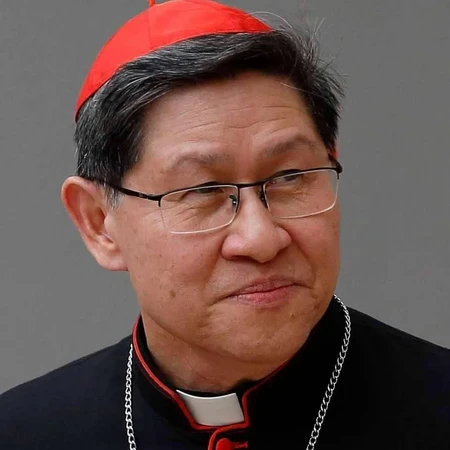
Everyone seems to be identifying Cardinal-Bishop Tagle, former Archbishop of Manila, as the frontrunner. As much as I would personally appreciate a great theologian like John Paul II or Benedict XVI, Tagle fits the Francis mold very well. Whether this is a move that Cardinal electors will favor is left to be seen. He is also on the younger side, meaning electing Tagle would likely mean a two-ish decade papacy. The more I reflect on things, I can see cardinals reflecting on Francis' pastoral approach favorably (as I've seen much similar sentiment throughout the internet since his death). Moves to continue with non-Italian papacies would also be favorable for Tagle.
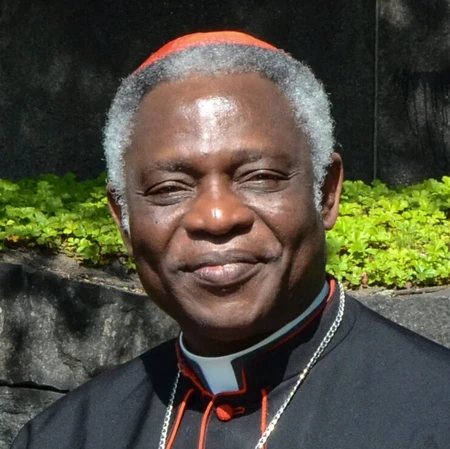
Peter Turkson, 76 🇬🇭
Turkson would also be a solid choice in terms of non-Italian papacy, which is a good decision seeing as Africa's role in the Church should only grow in the future. Though in terms of fitting a Francis mold, Turkson is not as clear of a choice as Tagle. His role in Laudato Si' affirm he would "fit the mold", though I personally don't see him as having the same pastoral or tender approach as Francis had. I personally see the choice of an African pope being more of a statement and carrying more weight for the greater Church than that of an Asian pope. Given his closer age being to 80, he also would not give a guaranteed 2+ decade papacy.
Pietro Parolin, 70 🇮🇹
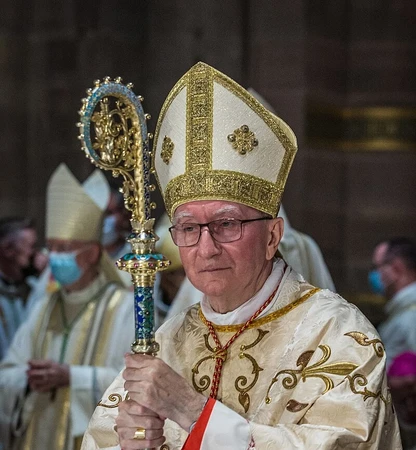
Parolin, besides not hailing from outside Italy, has a similar vision as the aforementioned Cardinals. He aligns well with Francis and would be seen as a continuation of a Francis-esque papacy. He supposedly played an important role in Traditionis custodes, the motu proprio which restricted the practice of the Latin mass. I personally feel this was an out-of-touch decision on his part, which makes sense upon viewing his pastoral experience and affiliation with the US and greater anglophone Church (which I feel this motu proprio was targeted towards).
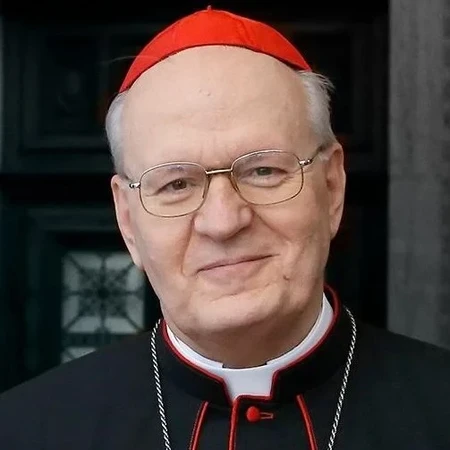
Péter Erdő, 72 🇭🇺
Erdő has had a long tenure as a cardinal, being named a cardinal by John Paul II over 20 years ago. He has to date not established strong opinions in regards to the aforementioned Traditionis custodes. He does however seem to pose decent continuity from Francis with his experience and pastoral approach to a greater Christian unity though seems to be relatively centralist in terms of immigration. I believe he would make a good pope, but I don't know if cardinal electors would rather support a non-European. His age would likely be ideal if a single decade papacy is desired.
Robert Sarah, 79 🇬🇳
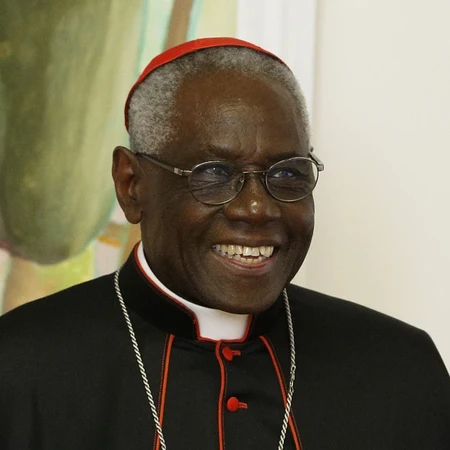
Cardinal Sarah barely makes the cut off (being 80 by less than 2 months from Francis' passing). This could work in his favor if a shorter papacy is desired, though with how close he is to 80, his prime papabile time may have "passed" by now. He may be seen as being too different from Francis so as to cause confusion and not the clarity necessary that some believe is necessary to "digest" Francis' papacy. E.g., he is known to have continued celebrating the Traditional Latin Mass after Traditionis custodes' implementation.
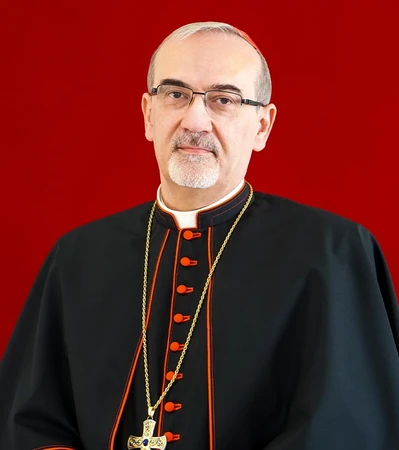
Pierbattista Pizzaballa, 60 🇮🇹
Pizzaballa's name has been thrown around by the media for seemingly understandable reasons, so it seems appropriate to mention here. Because of his presence in the Holy Land (Jerusalem), his selection could have strong implications for support for peace in the Holy Land. He could also be a great choice for encouraging improved relations between Catholics & the Orthodox. However, I believe he is probably too young and with not much experience in Rome to be chosen.
Other possible candidates:
- Fridolin Ambongo Besungu (65, 🇨🇩)
- Jean-Claude Hollerich (66, 🇱🇺)
- Matteo Zuppi (69, 🇮🇹)
- Marcello Semeraro (77, 🇮🇹)
- Willem Eijk (71, 🇳🇱)
- Jean-Marc Aveline (66, 🇫🇷)
- Anders Arborelius (75, 🇸🇪)
So, as you can see there are many possible "papabile" that could be the Catholic Church's next pope. The conclave is not slated to begin until May 7, so what the media says until then could (and probably will) fluctuate. Either way, it's ultimately the cardinals who will reflect over and ultimately decide which candidate they support. And it will then most likely come down to whichever cardinals receive the most support after the first vote, though there is a chance if the cardinals cannot seem to agree, someone with less support could be suggested as a "compromise".
I personally don't see several of the first seven papabile candidates that I listed above being likely candidates, but I did want to do a small analysis on many of the cardinals that the media has been throwing around. Some questions to consider include:
Is a shorter papacy something the cardinals are looking to consider?
Will a non-European (or at least non-Italian) pope be preferred?
What issues are on the forefront of the cardinals' minds?
If the answer to the first two questions are yes, then I imagine the sweet spot for age is early to mid 70s and from African or Asia. If the cardinals seek to have a papacy that won't shake things up too much, then a middle-of-the-road candidate would be preferable (who agrees with most of Francis' sentiments. If the "Fat pope, thin pope" idea comes true, then an African pope would seem most likely.
When it comes down to it, no one can (or should) be able to say for certainty who the next pope will be. The cardinals each have their own perspectives of what the Church needs right now, and no matter how many articles the media puts out, we won't know what the cardinals are looking for until the conclave begins. Moreover, the Vatican has been staunch in its efforts to combat outside influences, meaning the media's attempts to make a certain candidate seem like a top choice (e.g., Tagle) hopefully won't interfere with the cardinal's selection.
Papal Names
The question of what name the new pope will ultimately choose is a question that's been thrown around some as well. If the pope seems to align well with Francis and is chosen so as to delve deeper into Francis' perspectives, I could perhaps see Francis II being chosen. I could also see John Paul III being a possibility too given John Paul II's likely influence during the formative years of many of the cardinals. The same could be said for the papal name Paul VII. Unless a noticeably traditional cardinal is chosen, I don't see names like Benedict XVII or Pius XIII being chosen.
There is of course always the chance that a completely new papal name is selected (as was the case in Bergoglio's choice of Francis in 2013) or that a centuries-old papal name is revived (but this second option feels less likely than the first). For example, I haven't put much thought into the notion myself since I won't ever become pope, but I like the idea of choosing the name Joseph. However choosing a pre-existing name (as a sign of continuing a legacy or a source of inspiration) is more likely for those who would legitimately become pope which I obviously am not.
Personally I see Parolin or Tagle as most likely, but you're correct, who knows who they'll choose
That makes sense, if they were to lock in a longtime pope and then he went a way different to what they wanted, at least they could change before too long went by