

The Dead Sea Scrolls
First published: Wednesday November 10th, 2021
Report this blog
Discovery
The first of the Dead Sea Scrolls were discovered in late 1946 / early 1947 by two Bedouin shepherds. The date of the first discovery is uncertain as the shepherds could not remember exactly the date they found the scrolls.
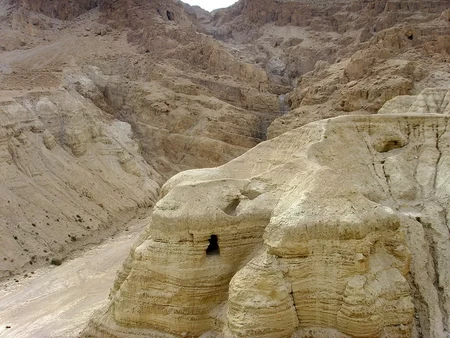
The shepherds were throwing rocks around the cliffs off the coast of the Dead Sea when one of the rocks entered an isolated cave, striking an old piece of pottery, which alarmed the two cousins. They searched the cave and found some scrolls that had been preserved inside pottery jars. Eventually they managed to sell the scrolls, but only for 7 Jordanian pounds, which is equivalent to about $325 adjusted for inflation.
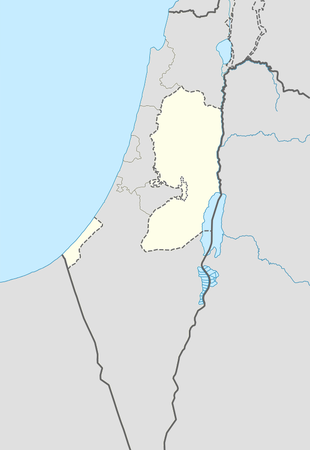
The scrolls were discovered in Qumran, which is located along the Palestinian shores of the Dead Sea.
Eventually biblical scholars learned of the discovery of these scrolls and were able to verify their validity. This led to a large number of additional searches over the next ten years. Over the course of these searches, nearly 1000 manuscripts were found, many of which had decomposed into small fragments, but were still able to be largely recovered.
Significance
The discovery of such scrolls, whose date of origin ranges from the 3rd Century BC to 1st Century AD, have had significant impacts on what we know about Jews from this time period, which prior to the discovery was often disputed. Moreover since this time period overlaps with the time period of Jesus' life, the scrolls also have a significant impact on Christianity.
Prior to their discovery, many believed that Jews never read much of the deuterocanonical books of the bible, such as the Book of Tobit and Sirach. However, among the 235 biblical texts found in these caves, both the Book of Tobit and the Book of Sirach were found.
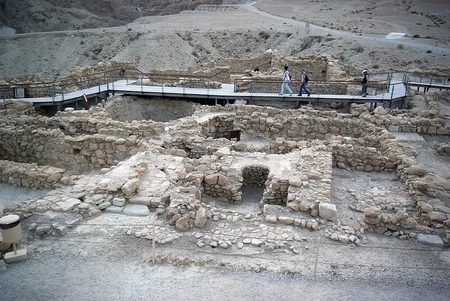
Also found among the scrolls was the Community Rule, which outlined the way of life for the Essenes, a Jewish sect/philosophical school. From this, we are able to learn much about what the Essenes practiced and their beliefs. Also found at the Qumran archeological site is the location of an Essene Monastery.
Interesting Implications
The discovery and study of the Dead Sea Scrolls has led to an explanation of many questions which have "lingered" for almost two millennia.
- The Ancient Jews were awaiting a messiah. Perhaps this isn't such a lingering question since the arrival of a messiah is basically Judaism common knowledge. But we see from the scrolls that the Essenes had left and began moving east into the wilderness (the desert) and ultimately were halted when they arrived the Dead Sea, where they began their community. That is where they stopped and waited for the messiah.
- Why did Jesus simply tell his disciples to look for a "man carrying a jar of water"? To a modern reader, this line may not make sense. How would this description alone distinguish someone in all of Jerusalem? With a historical context, we know however that carrying water was never a man's job in ancient times. Only women ever collected water and carried jugs. In exploring the lifestyle of the Essenes, scholars learned how the Essenes immersed themselves in water more than usual, but also that Essene men embraced a life of celibacy. This means that most Essene men would not have a wife, daughter, etc. to collect water for them, leaving the job to themselves.
- Ancient Judaism had a lot of volatility. For instance, we see that the worship of the Essenes does not revolve around Temple. And since the Community Rule outlines much of the Essene belief, scholars have been able to unpack their beliefs and compare them to other ancient Jewish sects. This proves that Judaism in fact was not very uniformly practiced at this time, and experienced a lot of change between the Maccabean and Great Jewish Revolts.
I still don't understand the deuterocanonical books. I've always learnt that they are religious texts that are or Christian values, but aren't a part of the Bible (Protestant Bible)
Apparently the Books of the Protestant Bible need to:
1. Mention God directly (with an exception of Esther, because it's clear that God is working throughout the whole book
And
2. Contains a prophecy (I think it includes prophecies being fulfilled).
I think there was something else, but I don't have it off the top of my head.
Just wondering, do the deuterocanonical books fulfil that criteria?
Sort of the difference between the typical "Catholic" Bible and "Protestant" Bible is that the standard for the former was "what Jews used in the time of Christ", and the latter "what Jews accepted after Christianity emerged." The problem is that there wasn't an established canon during/before Jesus' time. So it's hard to establish the first standard.
What is unique about the Dead Sea Scrolls is that it helps to in fact answer that first standard. So that's why their discover is pretty cool!