
A History of Green: Chapter 5
First published: Thursday May 23rd, 2024
Report this blog
Chapter 5: Inspiration
This blog shows art in the Renaissance, so anyway let's take a look at the Renaissance first. I will talk about the big man, Leonardo da Vinci first. Just to clarify, Leonardo's name comes from where he was from, the town of Vinci, which is a little town just outside of Florence. We all know Leonardo from his painting Mona Lisa, and here it is. You can see in the background there is a lot of green.
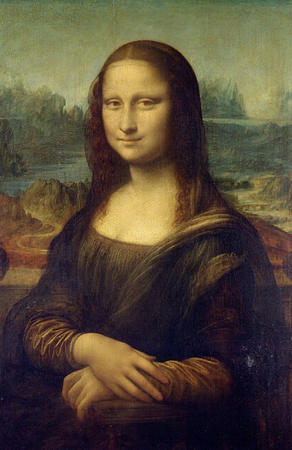
Yes, we all know Leonardo for the Mona Lisa, but he has done a few other not so famous paintings such as, The Last Supper, and Lady with an Ermine, but also The Vitruvian Man. There were other famous artists as well such as, Michelangelo who painted the Sistine Chapel in Rome.
In the Renaissance, artists nearly always took inspiration from Roman/Greek art or each other, which led to some very interesting pieces. One reason that the Renaissance was so important for art was that a lot of artists had patrons, the most famous one being the Medici family, who lived in Florence. The Renaissance was already flourishing in Italy, but the Renaissance came to other parts of Europe, like in the Netherlands, Germany, France and even England. Famous artists of the Northern Renaissance included, Jan van Eyck, Hans Holbein and Pieter Brueghel the Younger. A famous painting by Holbein was called the Ambassadors which is famous for it being symbolic and having a distorted skull in the middle of it. After this the Dutch Golden Age will arrive and we will see Rembrandt and Vermeer, but this is the end of the blog. Bye