
A History of Green: Chapter 6
First published: Saturday April 19th, 2025
Report this blog
Chapter 6: Gouden Eeuw (Golden Age)
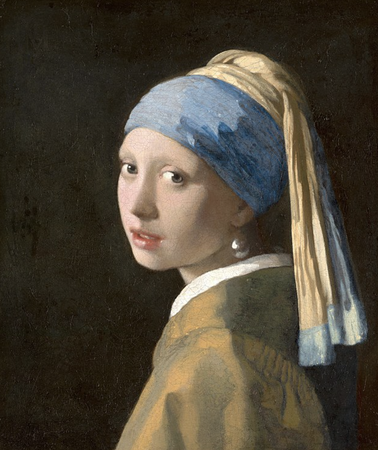
It is now the 1600s and art is flourishing especially after the Renaissance. There was one area in this time that had many great artists, I am talking about the Netherlands. The artists in this era decided to paint more somber and melancholic paintings. As far as I know, green is not a melancholic or somber colour, so green was not very popular in art of this time. Still, art became even more specialised and intricate. The most famous artists of this time are Vermeer and Rembrandt. A very famous painting from this time by Vermeer is "Girl with a Pearl Earring", but as you can see the only green in this painting is in the girl's clothes, and it is sort of mixed with brown.
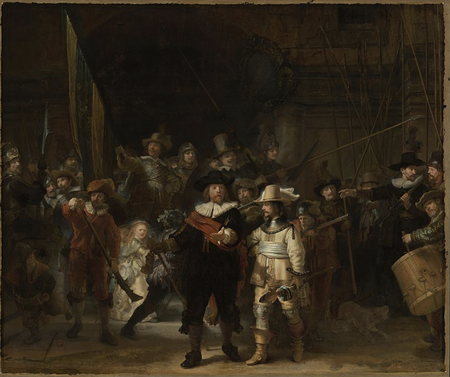
I have not talked about Rembrandt yet, but he is one of the most famous artists of all time for his mastery of light and shadow, but he did not use green much in his paintings, as he often used darker colours like brown, dark yellow and grey. His most famous painting is probably The Night Watch, which features a group of soldiers led by two men. This is the painting here.
Even though some of the most famous artworks of the 1600s were of people and were not very colourful, a few less famous artists used green in their paintings, these were mainly of fruit, (the official term is still life). One artist, Balthasar van der Ast, painted a few of these types of paintings, which used a fair amount of green in them.
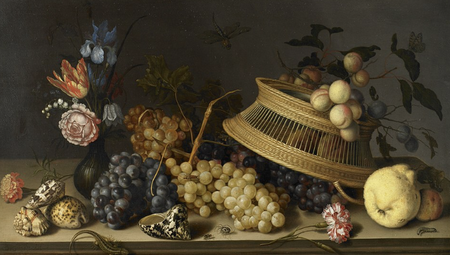
Although most art of this time period didn't have much green there were some artists who did. The End.