

Building Heights and What They Mean
First published: Wednesday September 10th, 2025
Report this blog
Introduction
With many new skyscrapers being built with new and intricate designs, it can be difficult to see how the building is being measured. Oftentimes there are different types of heights given to buildings, and this blog should help provide a better understanding of these building heights.
Disclaimer: this blog is about buildings, which are freestanding structures with multiple habitable floors, and excludes other structures like the CN Tower in Toronto and the Space Needle in Seattle. These structures are purely meant for observation, and are not included in the discourse of this blog.
Types of Heights Given
Typically, the height of skyscrapers that will be used is called the Architectural Height. However, let's overview a few other heights first.
1. Top Floor Height - Measures the height of the building from the ground to the floor of the highest habitable indoor floor. In other words, if you were standing at the building's top floor, it's how high you are above the ground. This height is rarely considered in building heights, rather is informational on how high one can go, and comparing sizes of skyscraper floors.
2. Roof Height - Measures the height of the building from the ground to the roof of the physical building itself. This excludes anything on top of the building like antennae or spires. Some buildings have unique roof shapes, but roof height still accounts for the height to the roof's highest point.
3. Pinnacle Height (AKA Height to Tip) - Measures the height of the building from the ground to the highest point of anything on the building. This includes spires, antennae, flagpoles, etc. Although not part of the physical building itself, pinnacle height accounts for anything on top of the roof.
Antennae vs Spire
Before getting into architectural height, it is important to discuss the difference between antennae and spires, two terms often used interchangeably, but differ drastically when determining heights of buildings.
1. First let's discuss the older and less common antennae. Antennae look just like spires, but are more characteristic of older buildings, such as the Empire State Building in New York (completed in 1931), and the Willis Tower in Chicago (completed in 1973).
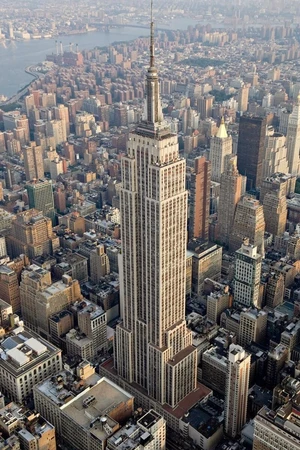

The key characteristic of antennae that differentiates it from spires is that antennae are NOT part of the original design of the building. As in the case of the Empire State Building and Willis Tower, antennae are often tacked onto buildings after being finished.
Antennae are also designed to be removed or modified easily. An example of this is when the antennae of Willis (then Sears) Tower were modified to make its pinnacle height taller. This was done in 2000, 27 years after the building was originally completed.

2. The spire, however, differentiates almost entirely from the previously mentioned characteristics of the antennae. Spires are much more common amongst recent skyscrapers built. Notable examples of buildings with spires are the One World Trade Center in New York (completed in 2014) and Merdeka 118 in Kuala Lumpur (completed in 2023).

Spires are part of the building's original architectural design, and is not something simply tacked onto the building after being finished. They are meant to be permanent structures atop the building, and are seen as critical to the building's overall appearance.
Architectural Height
This now leads to the definition of the term architectural height, which fully takes into account the building's design and purpose. Architectural height excludes antennae from its height, since it is not part of the building's architectural design. Conversely, architectural height includes spires since they are architecturally fundamental to the building. This is why newer buildings tend to use spires rather than antennae, as a strategical tactic to make the building's architectural height taller.
In other words, the architectural height of buildings with spires will typically be the same as its pinnacle height.
Whereas, the architectural height of buildings with antennae will typically be the same as its roof height.
My Opinion
I personally do not fully agree with the metrics in which buildings are measured. When looking at the height of a skyscraper, the height used is almost exclusively its architectural height, which in my opinion can be misleading. While I do understand that spires and antennae are structurally different and have different purposes amongst buildings, I do not believe their differences should be considered in standard building height. I personally believe roof height is the best and most consistent method for ranking the heights of buildings. I do not think one building should have a height advantage for having a spire versus an antenna, when visually they appear the same.
Examples
With that said, here are some of examples of height and ranking changes among skyscrapers if ONLY roof height or if ONLY pinnacle height were considered:
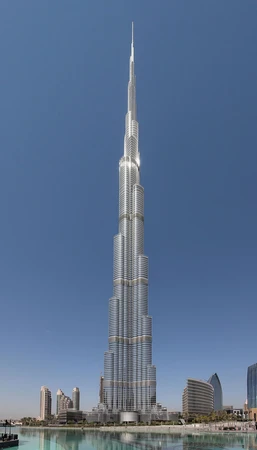
1. Using roof height, Burj Khalifa in Dubai would still rank as the world's tallest building, however, its roof height is 89 meters or 291 feet shorter than its architectural height.
2. Architecturally, Merdeka 118 in Kuala Lumpur is the second-tallest building in the world at 678 meters (2,227 feet). If measured by roof height, Merdeka 118 would rank as the ninth-tallest building in the world at only 518 meters (1,700 feet).
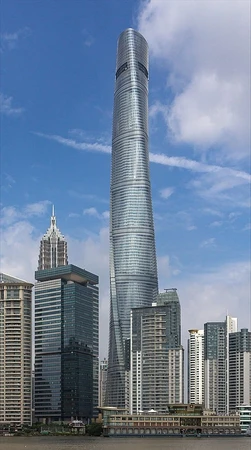
3. This would mean Shanghai Tower, a building without any spires or antennae, would be the world's second tallest building at 632 meters (2,073 feet), instead of third place architecturally.
4. The One World Trade Center in New York (shown earlier) is considered the tallest building in the United States, which according to its architectural height, it is (at 541 meters or 1,776 feet). However, by roof height, it would rank third at 417 meters or 1,368 feet (behind Central Park Tower, New York (472 meters or 1,550 feet) and Willis Tower, Chicago (442 meters or 1,451 feet)).
5. If considering pinnacle height, Willis Tower in Chicago would rank as the second-tallest building in the United States at 527 meters or 1,729 feet, rather than ranking third architecturally.
6. If considering pinnacle height, the Empire State Building would rank as the third-tallest building in New York at 443 meters or 1,454 feet, only behind the One World Trade Center and Central Park Tower. Architecturally, the Empire State Building ranks as the eighth tallest building in New York at 381 meters or 1,250 feet.
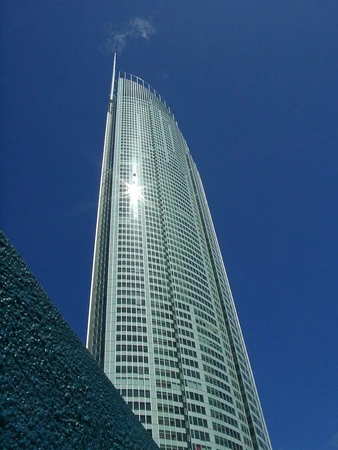
7. Q1 in Gold Coast is the tallest building in Australia architecturally at 322 meters or 1,058 feet. At its roof height, Q1 only stands at 245 meters or 804 feet, which would rank seventeenth in Australia's tallest buildings. By roof height, Australia 108 in Melbourne, a building without any antennae or spires would be Australia's tallest building standing at 316 meters or 1,039 feet.
Conclusion
I hope this blog provides a better understanding of different heights used in evaluating buildings. I believe its important to look at this through a critical lens to fully understand how tall a building truly is. I believe roof height is the best and most accurate measurement when assessing building height, as architectural height has too many inconsistencies.
However, from a skyscraper-enthusiast standpoint, I love the aesthetic look of buildings with antennae or spires. Buildings like this are among the coolest-looking in the world and immensely add to the uniqueness of a cityscape. I am looking forward to new skyscrapers being built, including the Jeddah Tower in Saudi Arabia which is set to be the next tallest building! (in all height metrics.)
Thank you for reading!