
FlabberBapper's Favorite American Small Towns You Probably Don't Know
First published: Saturday February 8th, 2025
Report this blog
Introduction
Howdy y'all. It's me, FlabberBapper or Josh, whatever you want to call me. That guy that occasionally posts a blog once every 4 or whatever years. And no this isn't the blog that I've been working on for years since my UNO blog, this is like a blog idea I came up with like just a couple months ago and figured I could quickly whip up. Anyways, I'm rambling so back to the subject of the blog. This is pretty much a compilation of some of my favorite small towns in the U.S. that I've researched that I think some folks could appreciate learning about, as I don't see often talked about or covered outside of U.S. geography nerds, ya know, like me. So I dunno let's just dive in.
Deadwood, South Dakota - Population 1,156
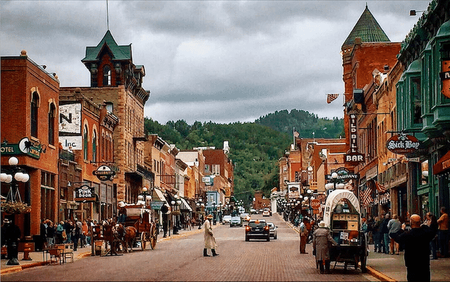
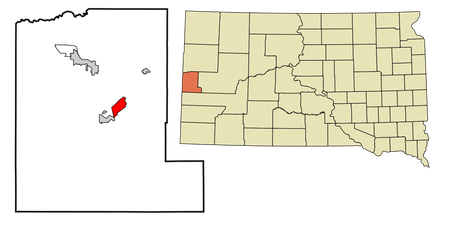
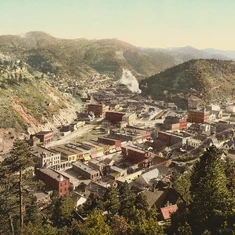
Deadwood is perhaps the most known small town that will appear on this list, as well as only one of two cities on this list that I have actually been to myself. Nestled in the heart of the Black Hills, Deadwood is the county seat of Lawrence County. Deadwood has its roots as being settled illegally as a gold mining town at the outbreak of the Black Hills Gold Rush in 1876 in what was then part of the reservation land for the Lakota people. In one year, Deadwood grew to an estimated population of about 12,000 people, making it one of the biggest cities in the West. The fast expansion of the boom town brought upon a reputation of lawlessness to the city with it's high murder rate and the establishment of saloons, gambling halls, and brothels. Deadwood housed some notable Western legends such as Calamity Jane and Wild Bill Hickock who are both buried in the city's cemetery, the latter notably being shot and killed at a poker table in the city, holding a pair of black aces and eights, which later became known as the dead man's hand. Other notable historical figures of Deadwood were fictionalized in the hit HBO show Deadwood (2004-2006) which helped boost the town's popularity as a glimpse into the Old West with it's gunfight reenactments and one of the few cities in the U.S. today with legalized gambling but it's notoriety as a Western town still being overshadowed by Tombstone, Arizona. As for the aforementioned, Deadwood is now one of the most notable tourist attractions in the Black Hills along with Mount Rushmore, the Sturgis Motorcycle Rally, Crazy Horse Memorial, Wind Cave National Park, and Devil's Tower in Wyoming.
Virginia City, Nevada - Population 787
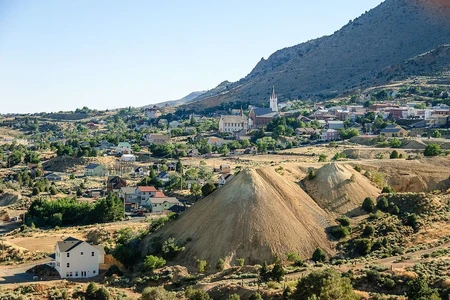
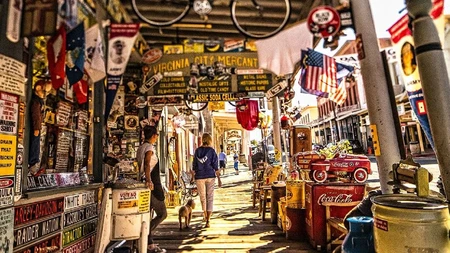
Similarly to Deadwood, Virginia City is the only other city on this list I've been to and is everything Deadwood is although just a lot less popular despite it's busy tourist season in the Summer. Virginia City has legalized gambling being in Nevada, gunfight reenactments, and more. Such as Virginia City also had it's own notable residents such as Mark Twain who wrote for the city's newspaper in the 1860s. The NBC western, Bonanza (1959-1973), one of the longest running live-action TV shows in the United States, also frequently depicted the city in the setting. Virginia City also began out as a mining town in 1859 with the discovery of the Comstock Lode, a large silver deposit. It was this deposit near to Virginia City that brought immense wealth to the city and to Nevada as a whole, which expediated it's path to statehood just 5 years later in 1864 and to which garnered the state's nickname as the Silver State. However, unlike most boom mine towns, Virginia City continued to prosper for two decades after the discovery of silver, reaching a peak in the 1870s at one point reaching a population of about 25,000 people, the third biggest city in the West at the time only behind San Francisco and Denver. During this period, the Comstock Lode produced near to half of all the precocious metals in the United States and Virginia City was known as the richest city in America. Today, Virginia City sits as the quiet county seat of Storey County, hidden away behind the mountains. It is now bypassed by Interstate 580 between the much larger cities of Reno and Carson City and tourists tend to be drawn to the much more prominent Lake Tahoe area only a dozen or so miles away.
Galena, Illinois - Population 3,308
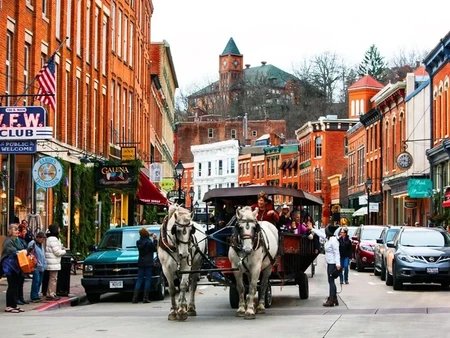
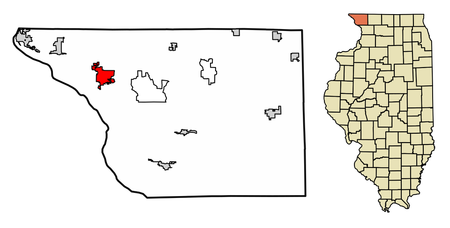
When it comes to mining towns east of the Mississippi River, few tend to think about Illinois. And for those that do think of Illinois, they tend to think about the coal mining towns dotting the state south of Interstate 80. However, in Jo Daviess County, this little county seat in the very northwest corner of Illinois has it's roots in lead mining. For thousands of years, the number of Native American tribes in the area of northwestern Illinois, southwestern Wisconsin, and eastern Iowa. When the French became the first European peoples to explore the area in 1658, it didn't take them long to establish towns in the area of their own for the purpose of lead mining. The French originally established Galena in the 1690s for this same purpose, although they originally named the city La Pointe. It wasn't until the 1820s when the Americans now settling the city gave the city it's current name. It was also during this period of American interest that lead mines around Galena were the most productive and the city boomed to a population of nearly 10,000 people. Galena remained one of the most prominent cities in Illinois for several decades after and at point was home to Ulysses S. Grant who lived there for a year before the outbreak of the Civil War. But Galena mostly faded into being a smaller farming town as the mining industry left and other Midwest cities of the area wildly outgrew Galena in size. Galena today mainly sits as a seasonal tourist town, largely popular to those in the Chicago area, known for it's events, festivals, parades, and it's historic downtown area.
Sylva, North Carolina - Population 2,578
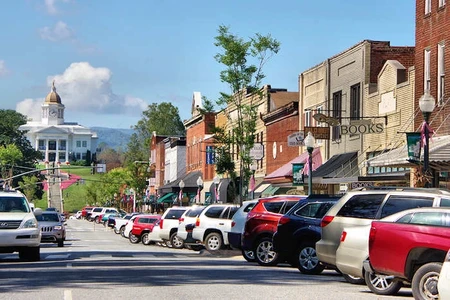
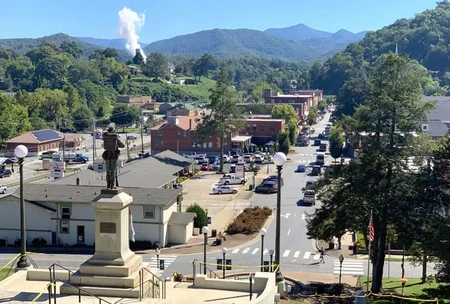
Now the Appalachian Mountains, however, are very much known for it's history with mining. Sylva, despite being nestled in the heart of the Appalachians of North Carolina, does not have a history with mining on a large scale. Instead Sylva has it's roots in the railroad, after the town was established in the 1880s following the construction of a rail line through the area. It didn't take long after for Sylva to take the claim of being Jackson County's county seat from the nearby town of Webster in 1913 after Sylva began experiencing growth due to the rail line while Webster was bypassed. It was that same year that Sylva's prominent county courthouse was built on top of a hill at the end of town. Today, Sylva remains a quiet mountain town and doesn't have as large of a tourist draw as the other towns on this list do. Sylva's largest industries instead are education via the town's public schools as well as the Southwestern Community College and Western Carolina University. It does also house a few hotels in and nearby town as Sylva is one of the last stops before entering Great Smokey Mountains National Park on the east side. Sylva however is probably most recognizable not as Sylva itself, but for being the filming location of a few notable movies such as 1972's Deliverance, 1993's The Fugitive starring Harrison Ford, and 2017's Three Billboards Outside Ebbing, Missouri.
Eureka Springs, Arkansas - Population 2,166
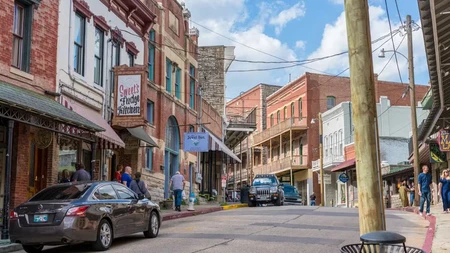
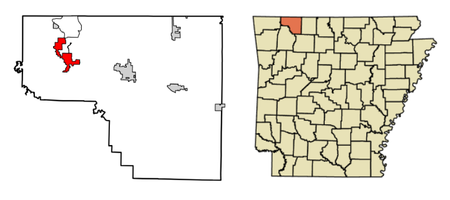
Similar to Sylva in that sense that Eureka Springs here wasn't founded to be a mining town as the other towns on this list were, Eureka Springs was unique though as in that is was built specifically to be a resort and tourist town in 1879 for the visitors to the natural springs in this area of the Ozark Mountains. Although European Americans had been living in the area since 1856 and the Native Americans have also been using the springs for centuries earlier. Eureka Springs quickly grew from it's official founding, becoming an incorporated city just a year later and by 1889, in just ten years after it's founding, Eureka Springs was even the second biggest city in Arkansas behind Little Rock. Although the city still practiced segregation during this time, the city had flux of black freedmen moving into town where they were able to own several businesses in the city as Eureka Springs was one of the most pro-Unionist cities in Arkansas but black immigration to the city started to decline in the 1920s as did the population of the city in general and less than half a percent of the population today is black. However, this sort of counterculture reputation Eureka Springs had towards the rest of what might be expected of Arkansas has continued to today. Starting in the 1960s, Eureka Springs became a prominent destination for members of the LGBT community to move to and other counterculturalists of the era. At the same time as this was happening, so was a wave of a evangelism to the city. This movement brought about a sort of Christian tourist destinations to the city such as the 66 foot (20 m) statue of Jesus built in 1966, a 4,100 seat amphitheater dedicated to performances of The Great Passion Play, and the Thorncrown Chapel, an glass church built in 1980. Both of these movements happening simultaneously has led to Eureka Springs today having an unexpected mixture of both a large LGBT population and a highly religious population where half the households in Eureka Springs belonged to same-sex couples. Eureka Springs was also a groundbreaker in Arkansas for being the first city in the state legalize same-sex marriage in 2014, but a state law outlawed same-sex marriage state-wide a year later and this wouldn't be reversed until a month later when the U.S. Supreme Court overturned all state-wide bans on same-sex marriage.
Bisbee, Arizona - Population 4,923
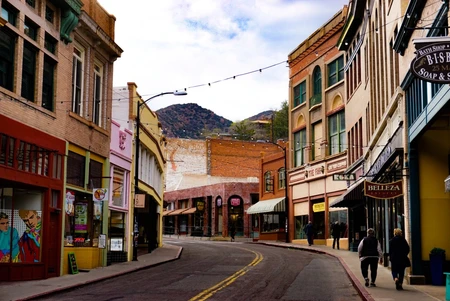
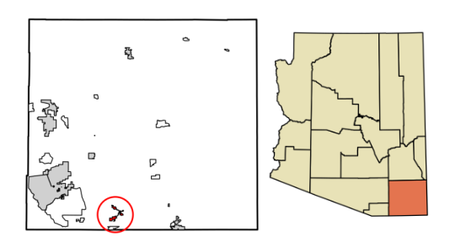
This county seat of Cochise County, located just under 8 miles (12 km) from Main Street to the border with Mexico, was founded in 1880 to be a mining town in an area rich in gold, silver, and predominantly, of course what Arizona is known for, copper. Similar to most mining towns, especially that of the other towns on this list, mining largely ceased to be a major employer in the town in the 1970s, leading to a population decline from what was once a major city in the state. During this same time, similar to Eureka Springs, a sizeable LGBT community began to set roots in Bisbee to where now the city has the highest proportion of homosexual couples in Arizona. Bisbee is now mostly a tourist town for those looking for tours of the old mines or looking for a historic Old West feel, perhaps a more authentic one than nearby Tombstone which is only 23 miles up the road along Highway 80 from Bisbee. Bisbee is also home to Warren Ballpark, a baseball stadium built in 1909 that may hold claim to being the oldest baseball stadium in the United States that is still in use. Although the ballpark also has a dark history as being the site where in 1917, 1,300 Mexican-American miners who were striking against their employer, one of the largest mines in Bisbee, were illegally rounded up by the sheriff of Cochise County, who was colluding with the mining executives, to be deported to Mexico. The U.S. Army later had to be involved to bring back the deportees and relocate them to New Mexico. An ensuing 1920 Supreme Court case resulting from this incident found that the Supreme Court insanely believed the federal government had no place in stopping kidnappings or the trafficking of said individuals across state lines, and this ruling is still used as precedent in other cases to this day.
Honorable Mention
Placerville, California - Population 10,747
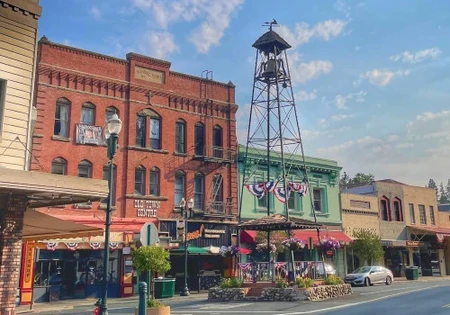
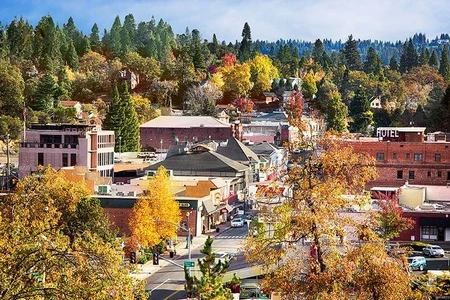
Why is Placerville an honorable mention you might ask? For one, it is more than double the population of the next biggest city on this list, as well as I am very biased for this inclusion as I grew up around Placerville. So of course this would be one of my favorite small towns, but I feel like it's just as interesting as the rest of the small towns on this list, which I'm sure you're starting to understand why I like those towns if this is the area where I'm from. Anyways, Placerville is the county seat of El Dorado County, which of course gets it's name from being where the California Gold Rush started after gold was discovered in 1848 at nearby Sutter's Mill in Coloma. Placerville sprung up as mining camp soon after and a full fledged city, it was even the third biggest city in California when California became a state in 1850. Although Placerville was originally founded as Dry Diggin's, but the name was changed to Hangtown in 1849 as the town at the time had no law enforcement and was known for it's frontier style justice, hangings. The city didn't change it's name to Placerville until 1854 when some local temperance movements found the name Hangtown to be too "unfriendly", but Placerville today still flaunts Hangtown as it's nickname. Placerville also holds claim two historic records, that being the oldest continuously published newspaper in California dating back to 1851 and also the oldest continuously operated hardware store west of the Mississippi River. Placerville today is also a tourist destination but with a bit more to offer than just historic main street and old mines to tour, which you still can, but Placerville also hosts the El Dorado County Fair annually, the Thomas Kinkade (who was from Placerville) gallery on Main Street, and it is home to the Placerville Speedway which hosts dirt track races, demolition derbies, and rodeos. As well as Apple Hill in nearby Camino which proves to be very popular for tourists, much to my own hatred during high school on my commutes to home. U.S. Route 50 which travels through the city which is commonly used be travelers on their way to Lake Tahoe, is historic in it's own right as it was laid upon the route the Lincoln Highway went through Placerville which itself was the route used by the Pony Express on their route from St. Joseph, Missouri to Sacramento.
Wrapping Up
Look at that, this short little blog I wanted to share turned out to not be short in either length nor the time it took me to make. But, either way, I hope you learned a bit about small town America you can learn to appreciate, and maybe become favorites of your own. ALSO do let me know if you want me to consider making a sequel to this, as there were a lot of cities/towns I wanted to mention but I felt there either wasn't a lot to write about for them or that they were "too big" in population size. So yeah, feel free to let me know in the comments if you want me to cover those that I did exclude from this blog. Maybe I'll get around to it in another 2 years or whatever.
Glad you mentioned Eureka Springs (one of the two on this list I've visited). Arkansas, and the south in general, have got a bunch of great small towns. In the state alone, you've got Texarkana, Washington, Mountainburg, Van Buren, Arkadelphia, Pea Ridge, Fifty-Six, Harrison, Kingsland, Hot Springs (not so small anymore), and Murfreesboro.
The best state for small towns? Alaska by far, since all the communities grew up so differently, but in the lower forty-eight it's probably Vermont or Louisiana.