

Ranking Every U.S. President - Part 1
First published: Saturday August 3rd, 2024
Report this blog
45. Andrew Johnson
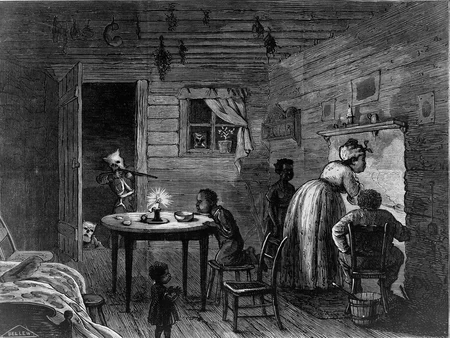
Andrew Johnson was the only southern senator who remained loyal to the union during the Civil War. As a reward for his loyalty, Abraham Lincoln gave him the Vice Presidency for his second term. When President Lincoln was assassinated in April 1865, Johnson became the president during the beginning of the Reconstruction era. However, he was more sympathetic to the newly rejoined southern states than Lincoln had planned to be, and than the Republican Congress wanted him to be. This leniency towards the former Confederate states allowed organizations like the KKK and other White Supremacist organizations to run rampant in the south with little to no opposition. He was eventually impeached for his efforts to influence the War Department, but was acquitted by just 1 vote. He continued to veto Reconstruction and Civil Rights legislation for the rest of his term, cementing his legacy as one of the worst presidents in American history.
44. James Buchanan
During the election of 1860 tempers were running high. Many southern leaders feared that Republican candidate Abraham Lincoln would abolish slavery throughout the nation, despite his repeated assurances that he wouldn't. When he won, the secession crisis began. 7 states would secede from the union before Buchanan left office. At its most fragile moment, the union needed a strong leader who would hold it together, yet he did almost nothing to try to keep the union together. As the states in the south seceded, Buchanan was nowhere to be found. When Buchanan and Lincoln were ridding in a carriage together before his inauguration, he told the new president "My dear sir, if you are as happy in entering the White House as I shall feel on returning to Wheatland, you are a happy man indeed."

43. Donald Trump
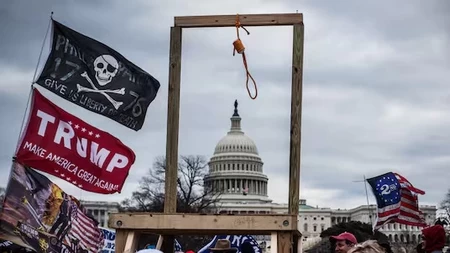
After he lost the 2020 election, he promoted false claims of widespread voter fraud, which 1 in 3 American still believe to this day. And on January 6th, he incited a mob that would eventually breach the Capitol building, which resulted in the deaths of 5 people, and injured hundreds of law enforcement officers.
42. Herbert Hoover
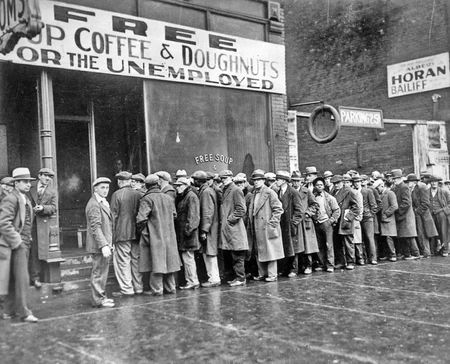
Less than a year into his presidency, Herbert Hoover was confronted with the worst economic crisis in American history. In October 1929, the Stock Market crashed, throwing the country into the Great Depression. Unemployment skyrocketed, nearly half of the banks in the country closed, and people couldn't access their savings. However, Hoover believed strongly in non-intervention in the economy, despite the gravity of the situation. He took limited action compared to what his successor would do. Additionally, he continued to support Prohibition, despite it's increasing unpopularity due to
the widespread gang violence it caused. He would also call in the military to disperse a group of World War I veterans who were protesting outside the Capitol building, drawing widespread condemnation.
When he lost the election of 1932, he would drag his feet on the transition to Franklin D. Roosevelt, which would hinder his ability to govern effectively early on in his administration.

41. John Tyler
In 1862, when John Tyler died, he would become the first and only president not to be buried under the Star-Spangled Banner. As a Virginian, he had become a proponent of secession, and was even elected to the Confederate Congress. While this won't effect his ranking, it's helpful when understanding his position on slavery. He was perhaps the most pro-slavery president in history, promoting the "State's Rights" philosophy. He also supporting the expansion of slavery, primarily through the annexation of Texas (which he did not achieve).
40. Franklin Pierce
The term 'Bleeding Kansas' refers to the violence that unfolded after the Kansas Nebraska Act established the two territories. Despite the Missouri Compromise banning slavery above the southernmost border of Missouri, the Kansas Nebraska Act was passed on 'Popular-Sovereignty' wherein the citizens of the state (or territory) decide whether slavery is legal or not. To sway the vote in their favor, pro-slavery and anti-slavery settlers flowed into the Kansas territory, and would begin to violently clash with each other, killing hundreds. As he did throughout his presidency, Franklin Pierce would take advice from southern pro-slavery Democrats more than anyone else, which would lead him to favor many divisive measures, pushing the nation further towards Civil War.
39. Warren G. Harding
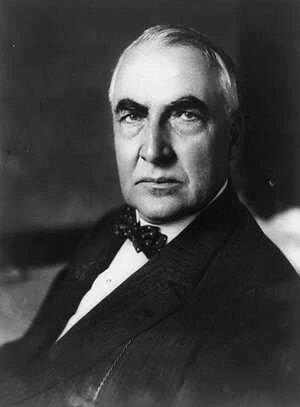
Warren G. Harding's administration was notoriously corrupt. Most notably, his Secretary of the Interior was implicated in the 'Teapot Dome Scandal', where he gave cheap leases to oil company's in exchange for hefty bribes. This corruption would go so far that it would negatively impact the economy. In addition to this, he was a strong isolationist, opposing American involvement in the League of Nations. This isolationism promoted by Harding and his party is widely cited as a major factor in the rise of Nazism unchecked in a post-war Germany.
38. Zachary Taylor
Zachary Taylor was famously a non-political person. Before assuming the presidency, he had never even voted before! He had been in the military for decades, and was a war hero during the Mexican-American War. Despite this, he was nominated by the Whig party for the election of 1848. Taylor wasn't enthusiastic about his new role as president however. He would die about one year later, but he managed to make a lot of people angry. He was adamant about his opposition to the expansion of slavery, and took efforts to undo parts of the Missouri Compromise, further diving the nation, and pushing it closer to the brink of Civil War.
37. Richard Nixon
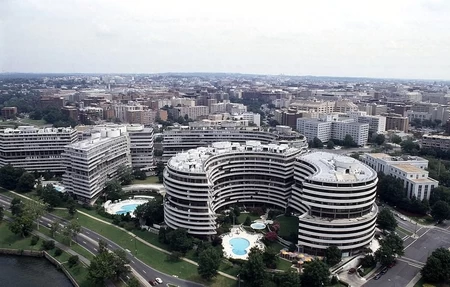
Richard Nixon was willing to do most anything to achieve victory. This started even before he became president. When running for the office in 1968, one of his biggest advantage over Democratic challenger Hubert Humphrey was the ongoing Vietnam War. But as election day fast approached, there was a major breakthrough in peace negotiations. Despite this, a senior member of the U.S. delegation offered to sabotage the negotiations so Humphrey wouldn't receive a last second boost in the polls. Nixon accepted this offer. But this wasn't the end of his shenanigans. He would later be implicated in the Watergate Scandal, where operatives working for his campaign broke into Democratic Party headquarters. While Nixon did do many positive things as president, most notably his policy of Detente, which thawed relations with the Soviet Union and China, the Watergate scandal shall forever taint his legacy.
36. Grover Cleveland
Grover Cleveland is best known as the only president to serve two non-consecutive terms. But citizens of his time were likely far more concerned with other matters, such as his failure to respond to the Panic of 1893. He believed strongly in government non-intervention, going as far as to veto a drought relief package for the West. This isn't the only time he would veto bills though. He had an interesting interpretation of the presidency. He never took any initiative, relying on Congress to actually govern. He would veto over 800 bills in his two terms, the most of any president to date. He also caused a split in his party by supporting the Gold Standard. This would ultimately lead to a massive political re-alignment, giving Republicans back the White House in 1896.

In terms of social issues, he relied on the support of the party establishment, which was largely dominated by Southerners. He strongly opposed Civil Rights legislation, going as far as to assure former Confederates that the Cleveland Administration wouldn't "intervene" in state affairs.
35. Martin Van Buren
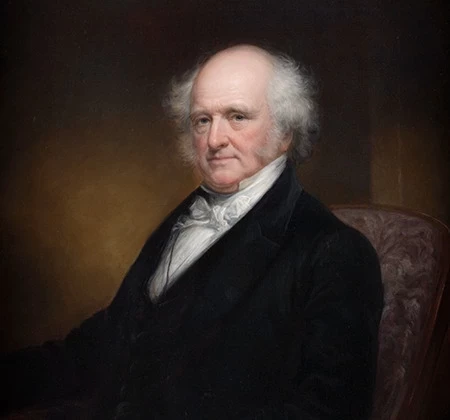
Martin Van Buren's response to the Panic of 1837 is widely criticized to this day. He was unable to effectively manage the crisis (because of his belief in non-intervention) allowing the country to slip further and further into the calamity. He did however push for an Independent Treasury, a Democratic Party ideal that held for nearly a century.
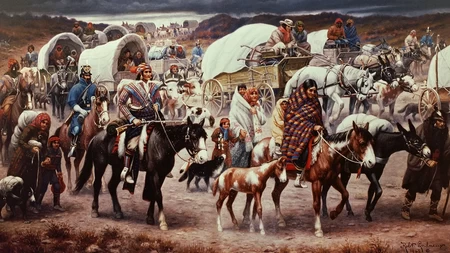
Van Buren served as Andrew Jackson's Vice President, and he enforced the controversial Indian Removal Act which would eventually lead to the death of 5,000 Native Americans in the Trail of Tears.
34. Andrew Jackson
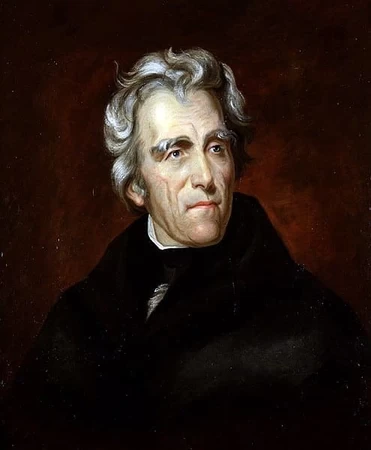
Andrew Jackson took place in exactly 103 duels, even killing a man in 1806. When a general in the War of 1812, he treated both the local populace and his own man in an atrocious manner, having many executed for seemingly bogus charges. This contempt for human life would continue to the presidency, where he would heavily advocate for and eventually sign the Indian Removal Act which forcibly removed 15,000 Native Americans from their land, relocating them west of the Mississippi River. Around 4,000 died along the way in the Trail of Tears.
Jackson did advocate for many policies of the Democratic party however, taking action to eliminate the National Bank, acting against abolition, but also increasing tariffs, angering many of his southern supporters. Perhaps Jackson can best be explained in this short story. One day during his presidency, a man approached him a pulled a pistol on the President. Thankfully it misfired. Instead of retreating or calling for help, Jackson began striking the man with his cane. As the man pulled a second pistol (it also misfired), rather than shield himself or run away, Andrew Jackson continued to beat his would be assassin with his cane.
33. Millard Fillmore
Millard Fillmore is often regarded in a poor fashion by historians, but this is due in a significant part to controversies after Fillmore left office. His support for Andrew Johnson's Reconstruction's policies and his candidacy and affiliation with the Know-Nothing Party, a radical nativist group.
While in office however, he is best known for his role in shaping the Compromise of 1850, which included provisions such as the Fugitive Slave Act. This is widely seen to have just kicked the can down the road on the issue of slavery. Not to mention, the compromise was adamantly opposed by Zachary Taylor, who Fillmore succeeded after his death. On a more positive note, he is also remembered for opening relations with Japan, including beginning trade after centuries of Japanese isolationism.
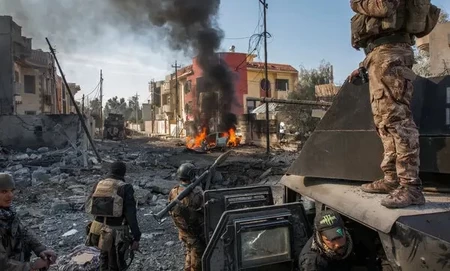
32. George W. Bush
In the aftermath of the 9/11 terrorist attacks, George W. Bush famously said on ground zero "I can hear you, the rest of the world hears you, and the people who knocked these buildings down will hear all of us soon!" Following through on this promise, Bush would announce the U.S. invasion of Afghanistan, to hunt down terrorist leaders and dismantle the Taliban. 2 years later, Bush announced the invasion of Iraq, claiming their were WMDs there. Famously, he was wrong, and around 4,500 American soldiers would die in the war. In addition to this debacle, Bush's response to the Great Recession was widely criticized.
Despite these shortcomings, Bush still managed to be a standard-bearer for Conservative causes, slashing taxes, repealing the Assault weapons ban, and attempting to privatize Social Security among other things.
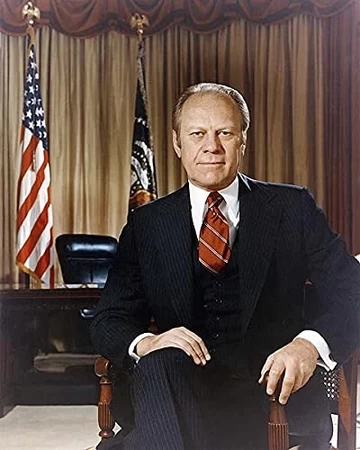
31. Gerald Ford
Gerald Ford assumed the presidency after Richard Nixon resigned due to the Watergate scandal. The honeymoon period didn't last long however, as Ford's first official act was to pardon Nixon. He claimed it would help move the country forward, but this move was widely criticized and still is to this day. While he did advocate for many conservative policies, he veered back and forth between government non-intervention, but when inflation began to increase, he advocated government stimulus.
30. Woodrow Wilson
Woodrow Wilson was one of the most progressive presidents in American history, establishing the income tax, creating the Federal Reserve, and much more. Because he was a standard-bearing for his cause, he receives good marks in that area. However, Wilson's actions regarding American involvement in WWI were similar to the appeasement tactics of the Chamberlain. He sacrificed American shipping rights to avoid attacks by German U-boats. While he campaigned on peace, he would flip-flop essentially overnight and become the most avid supporter of war.
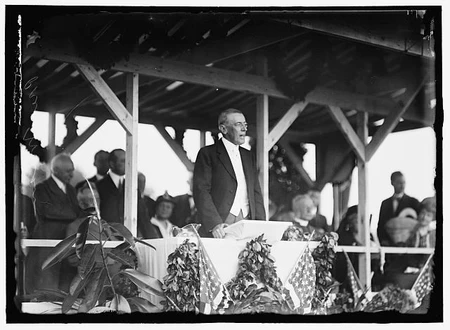
In addition to that, Wilson has become notorious for his racist beliefs. He was known to have referred to African Americans as an "ignorant and inferior race." He allowed the movie Birth of a Nation to be filmed at the White House and unveiled a monument to Confederate soldiers at Arlington National Cemetery.
Finally, roughly a year and-a-half before his presidency ended, Wilson suffered a severe stroke, partially blinding him and significantly reducing his ability to govern. Rather than admit this or even step aside, Wilson instructed his to hide this from the press at all costs, putting his image above the well-being of the nation.
Actually i’m starting to realise all of them suck a lot and we need a ten president buffer between them and #29
ZT and WGH should be a rank higher or smth
uhh good luck with that though
*removes political comments*