
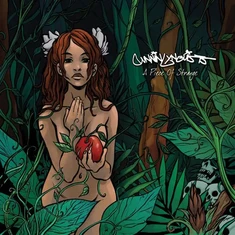
My Favorite Album of All Time
Last updated: Tuesday January 7th, 2025
Report this blog
Before I begin this blog about my favorite album of all time, I just want to make a few things clear:
1. If you want to listen to the album before reading it to avoid spoilers, here it is on Spotify and Apple Music. I'm not linking every single streaming service for this, so it's called A Piece of Strange by CunninLynguists if you want to look it up on your own.
2. I'm not going to explain why this is my favorite album (because the blog almost entirely does) other than saying that I think it's perfect in everything I love the most out of my music. It's got excellent lyricism, production, themes, imagery, and a great amount of energy and depth poured into it.
3. Listen to this album over and over again. It won't click on the first listen.
With all that out of the way, let's begin (kind of):
CunninLynguists: An Introduction
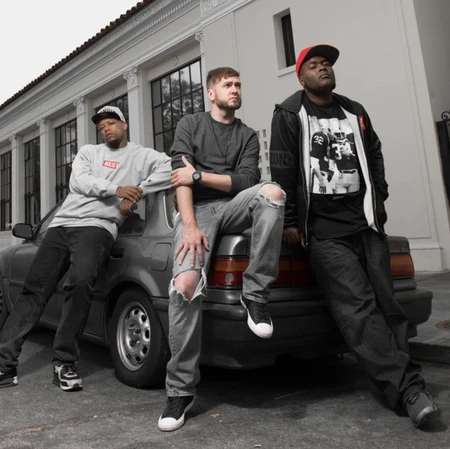
For those of you who don't know (as in, almost everyone reading this blog), CunninLynguists is an underground hip-hop trio consisting of rappers Deacon the Villain and Natti, as well as the producer Kno. With Deacon and Natti hailing from Kentucky and Kno from Georgia, are all three are very much familiar with the American South and its dark history. The group is also known for the excellent and contemplative lyricism of Deacon and Natti, as well as the soulful and illustrious beats of Kno.
Anyways, onto the group's history. They formed in the year 2000 and released their debut album, Will Rap for Food a year later. On that album, we see their lyricism shine through as they range from silly lyrics like "Smacking the vegetarian with hamburger patties/Telling the animal activist that I killed Lassie" but also a good amount of serious tracks, such as "Family Ties", which deals with the problems of absent parents and the rappers' grievances with them.
The group released their follow-up Southernunderground, that in my opinion (and many other fans alike) is not as good as their debut and features a lot of Eminem-biting but still makes for some 8/10-level music overall with the production and lyricism being just as good as before. However, with that out of the way, let's get onto what this album actually did.
A Piece of Strange: Some Fun Facts
This album marks numerous changes in the group, so I'll list them all here, in no particular order.
#1: Mr. SOS is gone from the group. That's right, the lyrical Puerto Rican is no longer in the group due to personal issues that stemmed from his poor commitment and questionable work ethic. Fear not, though - he would later show up as a guest on later LPs, so the relationship was later rekindled. So, who replaces him? Natti. While the original group was composed of Kno and Deacon, with Mr. SOS being added on Southernunderground, Natti is the fellow Kentuckian alongside Deacon with a slightly deeper voice who just got out of prison.
#2: Kno's production ascends to the heavens (that pun will make sense by the end of this blog, I promise). Prior to this album, we'd seen really good production out of Kno. On the very messy yet interesting mixtape Sloppy Seconds Vol. 1, Kno flips legendary rap tracks such as "If I Ruled the World" and many more in an interesting fashion. In fact, on that debut of theirs, you can get a sense for the chipmunk-soul sounds that he'd perfect on this tertiary LP.
#3: CunninLynguists' sound changes drastically. This entire album is serious and introspective, and from this point onward, the group would lean much more heavily into their introspective side than their comedic side (both of which are really strong, respectively).
#4: This album was released in November of 2005, just a few months after Hurricane Katrina devastated the city of New Orleans. Hip-hop was in its bling era at the time - not so focused on lyrical ability as much as it was in hit-making and commercialism. And while the bling era came with its fair share of dated and well-aged styles, beneath it lay an underground hip-hop scene serving up some of the most interesting concepts that the genre has ever seen.
So... what is this thing about?
A Piece of Strange is an album about the path away from sin. And while one may read the word "sin" and think "Oh, is this Christian rap?" - think again. This is an album with Christian themes, but it is not Christian rap.
Unlike the fear-inducing sermons of the First Great Awakening and their anti-sin messages, the trio takes a different approach to sin. And while it is true that Deacon the Villain contacted his dad during the album's recording to make sure that the messages were theologically sound in the Bible, that is besides the point.
However, what makes this album stand out so much is not just its musical qualities but its complex and detailed motifs. So, let's go song-by-song and break down what this album really is a bit further.
As for the characters and the plot, I'll be breaking them down further in this blog, but feel free to consult this website and this great review for further information, as it really helped my understanding as I was first listening to it and I've paraphrased parts from them within this blog. Also, feel free to check out some annotations of the meanings of the lyrics on Genius.
Where Will You Be?
There's not much to say about this one. The entire lyrics repeat "Where will you be tomorrow if it ends today?" It does, however, feature a nice guitar instrumental that hooks the listener in and serves a great intro overall. Nevertheless, I suppose you could consider this a bit of a prelude if you want to.
Since When?
We have our exposition start to set. And while I don't think it's the best song off the album (that would have to be The Gates), it is my personal favorite.
The track discusses how the South has always had great rappers, and how people generally do not understand the struggles that come with living there and the brilliance of the MC's in the area:
"Call it el natural sound of soul
You ain’t seen these darts or how fast they’ve flown
From, ‘tween these parts and the ones ‘nere known
My slang bang with a twang and hang on earlobes
You hear Natti, hot as Caddies with no steering column on ‘em
With enough lines to dry all the clothes that you own"
Later in the track, they express their disgust at broke rappers supposedly flexing their wealth, and bring it in with a bit more Southern lyricism in highlighting the poverty from their experiences there:
"Standin on southern dirt that helped America get rich
Ye’ ain’t gotta struggle with a shovel to dig this
Cold as no power, after hours in the winter months
Hot though crock-pot flow
So here dinner comes"
The track finishes with a beautiful outro that transitions beautifully into the third track of the album, which is...
Nothing to Give
Now, take the time to really let the imagery set in. The world-building is no joke with this entire LP, so pay close attention to it. Nothing to Give addresses the dangers of the night-time and how evil and criminal acts "don't seem so wrong." In other words, the night's darkness is a green light for heartless criminals in poor areas:
"We no longer seek light to give us power
That voice gets hushed by the rush of the Witching Hour
The touch of the wicked cowards that lurk in the dusk
In even-tide, heathens rise, searching for bucks"
TL;DR: Hope and light seem impossible in this area. With criminals surrounding your presence at every angle, what room is there for such a thing? Instead of escaping sin, you are surrounded by people who consistently commit it. And that leaves us stuck with the feeling that we are...
Caved In
With Kno sampling Kanye and Yasiin Bey (née Mos Def)'s classic Two Words on this track, we find Deacon exploring the general realities of this poverty and Cee-Lo Green delivering a great hook. In this case, being "caved in" literally refers to the feeling of being trapped in this situation.
"Stuck, teenagers, foxes and pups
On blocks rocks in they chucks, choppers watching above
They need love, not snug cuffs, federally fucked
Tis all an orchestration Hans Zimmer couldn't conduct
But whattawedo, most problems dun been discussed
But we talk about actions on the backend, and hush
I guess most of y'all must listen to Rush
Long as you all good, then everybody under you flushed"
This ending of Deacon's first verse emphasizes the sadness of the situation - children and the poor have their existence criminalized under the system and are need of love and a better situation. However, as he states, everyone is already aware of these problems, but will do nothing to fix them. The "Rush" refers to the now-decased right-wing commentator Rush Limbaugh, who has used racist language and rhetoric against black people in the past. So, that last lyric essentially says that these same individuals are satisfied with their lives as long as they are the ones benefiting and the people with less wealth are suffering. In other words, they are apathetic by choice.
Deacon's second verse involves him reflecting on how he and others keep persisting in this dystopian reality, and concludes that he hopes that God will help him in that journey:
"Still Judge, but dont Dredd each day, instead feast
Life's an unfed beast that eats bread and meat
That's either your cash or your corpse
So I just pray that the Lord helps me last through these wars"
For one, Deacon is stating that the days should not be viewed as a chore when life is a chore that consumes you from within to begin with. He clearly needs happiness after witnessing the crimes of the nighttime ("instead feast") and absorbing the horrors of his surroundings where the bad don't seem so wrong...
So, in this dark, lonely reality, Deacon wishes to escape and he watches the sands of the...
Hourglass
Deacon seeks to escape his lack of happiness as he thinks about someone alone in bed. He wants to grow as a person and feel this sense of personal love and fortune, and reflects on the joys of his teenage years. So, he watches the hourglass sands, wondering if God will give him the strength to "gain wisdom" in an uncertain and unpromising situation.
Note that the hook on this song states that Deacon does not have true friends who sympathize with his sadness and come around. And as is stated in the second verse, those teenage friends are long gone and nowhere near his life at this point.
Remember how I stated that there was a certain someone. Well, that someone is a...
Beautiful Girl
Or is it one? This track can be interpreted as a double entendre, with the "Jane" described in the song coming off to some listeners as a beautiful girl or for weed (as "Mary Jane" is a slang term for it). Either way, one thing to note here is that this is the rising action in our plot diagram if you want to think of it like that. Even more important, however, is the fact that Deacon and Natti are both seeking to escape through questionable sources - weed won't soothe your problems for anything more than a temporary escape, nor will a woman or anyone for that matter.
So, roll a blunt or that Mary Jane, as we...
Inhale
This interlude doesn't have much for us other than being 1) enjoyable (duh), and 2) a very interesting outro within it where "something is happening" and Deacon and Natti are "entering a whole new world." And indeed this turns out to be true, as it turns out that there is no point in being so restricted by the confines of your mind that you're simply just living in a...
Brain Cell
Note that this song doesn't reflect what really happens to the characters in this story, but rather the possibility of what happens when you are so trapped within your reality that you don't even bother trying to escape it.
Interestingly enough, this is a contrast to the prior extreme that we see on Hourglass and Beautiful Girl. While both of those tracks showcase the dangers of escape without true change, this track showcases the danger of not even trying to the point where it backfires:
"Swallow Oxycontins to find solace
You need a fix so you hit some blockhead for his wallet
But your gun jams and the cops come to take ya
And now that bullet ain't the only thing thats caught up in a chamber (chamber)"
In this hypothetical that the track lays out, the protagonist ends up committing the very same crimes that harmed his life in the first place and we end up on this message from Natti:
"If the plots you got are flagrant
It's best that you leave em vacant
'Cause there's cells in your mind that'll free you every time
Even the tales thrown in these bars can't be confined
Just be patient, nothing in life is by design"
Ironically enough, the mind can liberate you just as much as it can hold you back - so really, there is no point in giving in to the worst of your reality when it will lead to "further incarceration", whether mentally or in a literal prison.
Interestingly enough, the same criminals with nothing to give are praised among the masses, which further highlights how...
America Loves Gangsters
Here we see the literal consequences of the glorification of violence within our minds, actions, and relations to it. Throughout the track, it is clear that the dollars, lust, and intoxicating power of crime, violence, and destruction don't just poison your mind - but they make you love such toxic things:
"There's something about a vandal's lust
The lifestyles of the scandalous
Ain't nothing like it
America loves gangsters (Ha, ha, ha, ha)
Look at all the angel dust, the cocaine and the cannabis
Ain't nothing like it"
And as usual, their albums drop in a flavor of conscious at the end with Tonedeff making a guest appearance to discuss the hypocrisy of American policies and the loss of morality that comes with it:
"This ain't democracy, it's a Survival of the Fittest
A country built behind closed doors with gods as their witness
Picture this
People can become so blind that their ears can't listen
Trying to save their souls with penitentiareligion superstition
Never done unto others but claiming that they're Christian
While God's children are sittin home praying and wishing
For answers to their questions
Picture this
People can become so blind that their ears can't listen
Trying to save their souls with penitentiareligion superstition
Never done unto others but claiming that they're Christian
While God's children are sittin home praying and wishing
For answers to their questions"
Ironically enough, while America is democratic in the sense that you can choose your elected leaders, it does not change the disproportionate influence of the powerful in American society and the grim dog-eat-dog reality of American life. The same individuals who seek to enforce so-called "Christian values" on everyone else are apathetic or outright supportive regarding the plight of the poor who die for answers to their uncertain lives.
"My soul came, spent, I tried to get it back
Thinking that if my heart stopped that my body could relax
But there's no time to be laxed
Because there's a war all through creation
God's Warriors are dying and gangsters are their replacements"
The message is clear here - you can't escape or relax from the moral corruption of the world around you. God and Christianity (as well as many other religions) are hijacked by the powerful and their defenders for interests that only corrupt humanity even further, making it impossible to truly relax from this disturbing truth.
So, all of this leaves us with the question of how these backwards-minded thinkers...
Never Know Why
So, in Hourglass, we looked at the woman that Deacon is thinking about. He has a child with the woman, who we can presume to be white, as the racist grandfather of this child does not approve of his granddaughter giving birth to a mixed-race baby. In fact, he even goes so far as to put her out in the cold and refuse to speak with her and her child. There is not enough support involved, despite the couple's best efforts to support themselves financially.
We get yet another guest rapper appearance on the album, with Immortal Technique delivering a reflective and incredible verse, ending it on the note that:
"I slip into a coma, roaming over the planet
Leaving the gold and the granite, the old and the famished
But just before I vanish, as I think I’m right at the end
The sun becomes the light of my birth and I live again
Yeah, [REDACTED], remember way back when...?"
This light will later be clarified for us at the end of the album. And while I won't show all of Tech's verse here (you can look it up if you want), we come to the conclusion that the worst of the old must be left behind. Whether it's pain, people, or the past, you do need to escape to find yourself - not to distract yourself from the situation, an important distinction that the album does make.
So, this grandfather later dies. Due to his life, he arrives at this higher location of sorts in heaven known as...
The Gates
This is the climax of our story, and it's utterly amazing. That racist grandfather opposed to his granddaughter's interracial marriage worked as a firefighter, and his character (played by Tonedeff) slowly reveals the mask of who he really is through his words. So, let's break it down:
"Forgive me please, see I need to address this
Just haven't been this breathless since I met this
Woman who lept into my life when I was reckless
Mothered my blessed kid, but was destined to exit early"
It's ironic that he uses the term blessed here and calls himself reckless. Seems ironic to you? Don't worry, the irony builds up further.
"It's funny how we move in sudden directions
Dedicated my life to the public's protection
Never remarried 'cause love's an investment
Besides, I had a baby girl to worry about
That would struggle to blend in"
This description is especially ironic though. As we will later find out, while it is true that he dedicated his life's to the public's protection, he is not the person he makes himself out to be here. Nor was his opposition motivated by concern for any potentially bullying or discrimination that the child could experience. Rather, it is simply due to racism.
The firefighter is met by a "standing guard" that invites him to pray, and the following interaction ensues:
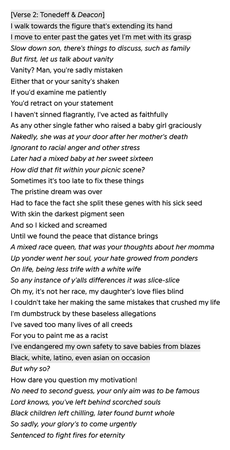
Let's break each part down here. First of all, the firefighter attempts to enter the gates of heaven without waiting for the guard. That guard is St. Peter, who loves all people the same, unlike the firefighter. (Note that Deacon is playing St. Peter here).
St. Peter calls the firefighter out for his vanity, who denies it, but the irony further reveals itself. All that the firefighter has done prior to this interaction is to act as such, never seeming to see the flaws or mistakes in his actions, as he believes that they are all justified.
Perhaps the greatest irony is that despite admitting to leaving his granddaughter in the cold in the prior song, he denies it here, which St. Peter calls him out on ("Nakedly, she was at your door after her mother's death"). The graciousness isn't really present, and she would have had no way of knowing of his prejudice.
When questioned about it and asked "How did that fit within your picnic scene?", the firefighter doubles down on his sins, stating that the pristine dream of an all-white family is gone. His racism further reveals itself, describing the black father has having a "sick seed" with "skin the darkest pigment seen." St. Peter bashes the roots of his hate and states that this arose purely out of the desire to maintain his own comfort at the expense of his daughter being far more tolerant and different than he is ("Up yonder went her soul, your hate growed from ponders").
This is where CunninLynguists' writing on racial issues really stands out. It's easy to say "racism bad" or "no one should be treated worse by the color of your skin" but what isn't as easy to do is to understand why racists think the way they do. In this case, we watch the psychology of this firefighter unravel itself to show how messed up it really is.
While the firefighter denies his racism due to his own heroic actions as a firefighter, St. Peter exposes the selfishness behind it in the final few lines (see the image above) - he was never in it to help them, but rather for his own personal glory even if others were suffering due to his apathy.
As a result, he is damned to eternal flames in Hell......
Damnation (Interlude)
Another great interlude where the "devil takes many colors and shapes walking through hell" - in other words, regardless of race, body size, age, ethnicity, or whatever - no one is immune from sin or the influence of the Devil. Nevertheless, that firefighter is sentenced to...
Hellfire
Ironically enough, the firefighter now been "sentenced to fight fires for eternity" as mentioned two songs ago. There's no glory in Hell, and unlike in the real world where he can avoid the consequences of these actions, he can't there - he is stuck here, forever and we can see him burn. However, I ask that you don't forget me here. Instead...
Remember Me (Abstract/Reality)
The final interlude on this album (although it doesn't have Interlude in the title), we have my personal favorite Interlude. We shift back to Deacon's viewpoint on things where "the abstract has become the reality." In the outro to this interlude, the lyrics are as follows:
"Easy for us to forget (x2)
To the setting sun
Remember me, oh lord (x2)"
To stare at the setting sun refers to reflect on an ending to something that is slipping away. In Deacon's case, he is reflecting on the end of that past. Now, the question for him is...
What'll You Do?
On this track, Deacon concludes that he doesn't want to go back to that past life. At the end of the verse reflecting on his struggles with music and supporting himself, he says "'For the love' is a hard reason to keep my life in suspension", indicating that there is no point in maintaining this state of uncertainty when at the end of the day, we all still need to support ourselves, and it only compounds our troubles further.
The outro involves a double entendre. It is asked whether Deacon will quit music and find a regular job or to keep trying to pursue music and secure financial stability.
So, with all these struggles out of the way, it appears that our protagonist has finally seen...
The Light
One of my favorite tracks off the album, this closing track ends with some of the most beautiful messages on human nature that I've ever heard.
Here's the opening verse, which clearly highlights the uncertainty of human morality and the inconsistencies within ourselves:
"The evil, the good, legal, illegal, what's hood?
We see through people, but we don't look in ourselves like we should
We try to grow in the cold, so busy shoveling snow
That we tend to forget about the light that's warming our soul (x2)"
We don't know what's good or evil. We don't reflect on ourselves accordingly, and we keep trying to persist or make it to the next day that we forget how to really heal ourselves accordingly and keep that flame lit within us.
Natti's second verse asks us whether the struggles in life make this reality clearer:
"Is it clearer in the mirror when you look at your exterior
In fear of your interior voice
Some who the one with good game that cook caine proper
And offer it up to junkies as a choice
Seems to whisper to sistas to switch they mista
Simply to get that financial support
Then turn and make that same supporter beat em and
Mistreat em and leave em after breaking em for the sport"
Since they never provide a clear-cut answer for the listener, I think they're encouraging us to reflect a bit, especially when this is the chorus:
"If you wanna be healed, then you got to reveal the truth
If you wanna be healed, then you got to reveal the truth
If you wanna be healed, you got to reveal the truth
If you wanna be healed, then you got to reveal the truth"
So, the answer to healing yourself and unraveling the reality of the life that you live in is to reflect on yourself and the world around you. You can't try to see through others through a critical lens without looking at yourself, you can't heal from trauma without self-love, and you can't find the truth without understanding what got you there in the first place, as is touched upon in the outro:
"Set your eyes on the sun
What has brought you this far?
What has brought you this far?"
In other words, we must look at ourselves and how we got here. But here's where a paradox comes into play - to "set your eyes on the sun" is a religious connotation to setting your sights on a goal that is nearly or entirely unattainable. And yet, it's that same desire to set our eyes on the sun that gives our lives meaning, even though we can never truly set our eyes on them successfully.
Like Sisyphus, we seem to get closer and closer until something screws us up and we have to start over. And yet unlike Sisyphus, that purpose can provide positivity and healing, whereas he had to carry a boulder up as a punishment from the gods.
We may not know what has brought us this far and we know the world around us is grim. And yet we can heal within ourselves in spite of all of it.
Themes
Sin
For CunninLynguists, the path away from sin isn't through an escape that ignores the problems or through accepting those problems. Instead, they take a middle ground. And this middle ground (unlike the ones suggested in false balances), works really well.
They make it clear that while the world around you is filled with sin and individuals with questionable morality ("Caved In" and Hourglass"), that doesn't mean you should accept it and give into that yourself - as it could backfire (see "Brain Cell"). At the same time, though, they don't condemn escape entirely either - they understand that the cruel realities of poverty, crime, or any other challenges in someone's life and trying to persist through that will burn out the light that warms your soul.
Racism
Hip-hop is no stranger to anti-racist music, and this group is no different in having such a wonderful stance. What they are different in, however, is their approach. In revealing who the firefighter really is, it enables us to understand why many racists do not consider themselves as such or even bad people - their sense of morality is just extremely flawed and hateful, but any positive actions from them or stubborness in morality ironically blind them from seeing that when it could be positive for someone who is anti-racist.
Healing
At the end of the day, they make it clear that healing must occur within yourself and in relation to yourself, as well as with the world around you. While Christian-influenced spirituality is given as a solution here, they do not force this down the listener's ears with some YOU NEED JESUS NOW chant. Instead, they make a general call for spiritual healing within ourselves, one that my Jewish self can very much relate to and finds to be very beautiful.
So... what can we all learn from this album?
I encourage all of you to listen to this album and reflect on the question that "The Light" asks us. What's your idea of setting your eyes upon the sun? What got you to this point? And how do you want to change the uncertainty in your life for the better without being unrealistic or accepting it?
Those are questions that never hurt us to ask, and such thought-provoking introspection is why I'd give this album a 12/10. Seriously, I love it that much.
(P.S. I DM'd Deacon the Villain on Instagram twice and he responded both times in a very polite way. What a guy!)