
How Hockey created a sense of Nationalism
First published: Tuesday October 7th, 2025
Report this blog
History
On February 2nd, 2024, Gary Bettman, the commissioner of the NHL, made a major announcement by revealing that the league would not only create a new international event called the Four Nations tournament, bringing together top players from four of the best hockey countries—but also, for the first time ever, would allow the league’s professional players to take a break from their regular season to represent their home countries in the 2026 Winter Olympics in Milan, which was a huge deal because it meant the best players in the world could compete on the world’s biggest stage. The countries announced were: Canada, Finland, Sweden, and the United States. Russia is also major hockey country, was not invited to participate in the 4 Nations tournament because of the ongoing ban tied to international sanctions and the war in Ukraine. The NHL has followed the lead of the International Ice Hockey Federation (IIHF), which suspended Russian teams from global competition starting in 2022, and the situation hasn’t changed enough for the NHL to include them. The Czech Republic is also another major hockey country was not invited to participate either because the tournament needs to balance the amount of countries. Same goes for other hockey countries like Germany, Switzerland, Slovakia, and Latvia.
Politics has influenced the 4 Nations Face-Off notably through the exclusion of Russia due to its conflict with Ukraine, reflecting wider international sanctions and sports boycotts, while trade tensions like the Canada-USA tariff war and humorous political ideas such as Canada becoming the “51st state” have had little to no impact on the tournament itself—despite economic disagreements, hockey remains a unifying force for the two countries, and the NHL continues to prioritize the event as a celebration of top-level international competition without letting political or trade disputes interfere.
Canada vs. Sweden
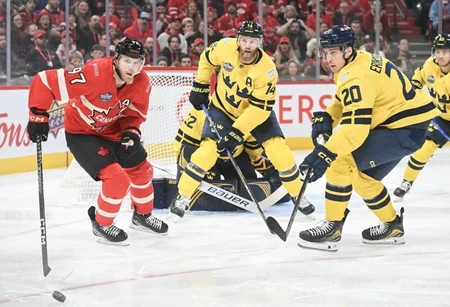
This was the opening game of the 4 Nations Face‑Off, the first “best‑on‑best” international tournament since 2016. It was held at the Bell Centre in Montreal in front of a sold‑out crowd of 21,105 fans. Canada chose Jordan Binnington as its starting goaltender, while Sweden went with Filip Gustavsson. The atmosphere was electric — the return of top-tier international hockey was something many longed to see.
1st Period
From the very start of the game, Canada came out strong. Just 56 seconds in, they scored their first goal. That happened while Sweden was short one player because one of their players (William Nylander) accidentally hit a Canadian player in the face with his stick — a penalty called "high sticking." As a result, Canada got a short time where they had more players on the ice, giving them a big advantage.
During that power play, Canadian superstar Nathan MacKinnon scored a goal after getting a slick pass from Sidney Crosby, who didn’t even look when he passed — a flashy move that shows a high level of skill. Connor McDavid, another top player, also helped set it up.
Later in that same part of the game (called the first period, the first 20 minutes), Canada scored again. This time, it was Brad Marchand who finished off a fast two-on-one play — meaning he and a teammate skated quickly down the ice against just one Swedish defender. He got help from Brayden Point, who passed the puck, and Seth Jarvis, who was involved in the play earlier.
By the end of that first period, Canada had taken 7 shots, while Sweden only had 3, and Canada was leading the game 2–0.
2nd Period
Sweden struck first in the second: defenseman Jonas Brodin beat Binnington, putting a shot past him to make it 2–1. But Canada answered later in the period in dramatic fashion: Crosby carried the puck himself and found Mark Stone, who scored to restore Canada’s two-goal edge, making it 3–1 heading into the third.
It was also in this period that Canada lost Shea Theodore to injury, which reduced their defensive depth.
3rd Period
In the third period, became a tense and exciting comeback for Sweden. Just under two minutes in, Adrian Kempe scored a goal, making the score 3–2 and bringing Sweden closer. A few minutes later, Joel Eriksson Ek scored again to tie the game at 3–3, with help from teammates Jesper Bratt and Lucas Raymond, who passed the puck during the play. The rest of the game was full of fast action and pressure, but neither team scored again. Near the end, Sweden had an advantage when Canada took a penalty, but Canada’s defense held strong and prevented a goal. After 60 minutes of play, the game was still tied and headed into overtime.
Overtime
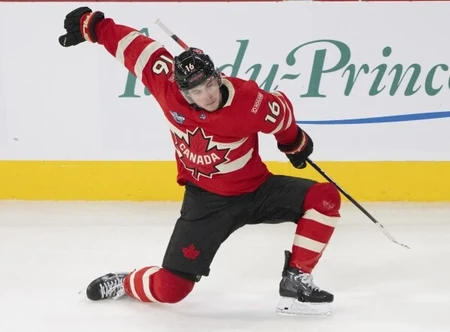
In the 3-on-3 overtime period, both teams had chances, but Mitch Marner would be the hero. At 6:06 into OT, he ripped a shot upstairs past Gustavsson to give Canada a 4–3 victory. Crosby set him up with a play earlier in the zone. The Bell Centre erupted.
Finland vs. Sweden
This was a fierce matchup between two Nordic rivals — Sweden and Finland — playing in Montreal. Both teams needed a win to stay alive in the tournament, so stakes were high. Goalie changes, momentum swings, and clutch plays all made this one dramatic.
1st Period
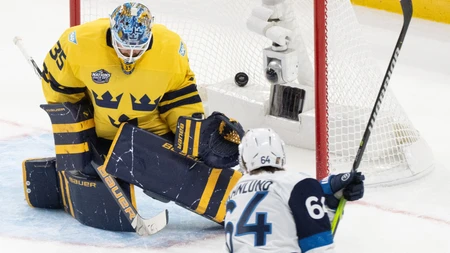
Sweden struck first. Around 8:35, Mika Zibanejad took advantage of a mistake by Finland’s defense and scored, putting Sweden up 1‑0. But Finland responded quickly. Just a couple of minutes later, Anton Lundell teamed up with a teammate in a two-on-one attack and scored to tie the game 1‑1. Near the end of the period, Finland got a power play opportunity (because a Swedish player committed a penalty), and Mikko Rantanen took advantage, he scored 12 seconds later to give Finland a 2‑1 lead heading into the first break.
2nd Period
Sweden came out fighting in the second period. Early on, Rasmus Dahlin scored off a rebound to tie it 2‑2. Then Sweden pushed ahead when Erik Karlsson scored during a rush play (a fast offensive attack) to make it 3‑2 in their favor. But Finland weren’t done - just before the period ended, captain Aleksander Barkov managed to tie the game 3‑3 thanks to a well-placed pass and a slight deflection as the clock wound down.
3rd Period
The third period was tense and tight. Both teams had chances, but neither was able to score. The defenses held firm. Finland’s coach said later that Finland did a good job preventing Sweden from getting quality scoring chances. With no goals scored, the game remained tied 3‑3 after 60 minutes.
Overtime
In overtime, things got fast and sudden - each team had fewer players on the ice, meaning more open space and higher chance for mistakes. Early on, Sweden’s Mika Zibanejad had a chance but Finland’s goalie made a solid save. Then, as Finland launched a two-on-one rush (two Finnish attackers vs. one Swedish defender), Mikael Granlund got the puck and shot it past the Swedish goalie at 1:49 into overtime. That goal won the game for Finland, making the final score 4‑3.
Canada vs. United States
The game was in Montreal, this was not a polite handshake of a game. Before the game, when the U.S. national anthem was played, many in the crowd booed loudly — it was a clear sign of tension and rivalry between the two nations. Then, when it was time for “O Canada”, the mood changed: fans sang it with pride, the Canadian team stood arm in arm as the flag was raised, and the anthem echoed through the arena as a moment of national celebration and unity on their home ice. Many notable Canadians were at the game including Georges St. Pierre (the greatest MMA fighter of all-time), Justin Trudeau, Pierre Poilievre, and Jean Chretien.
1st Period
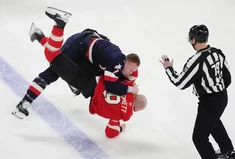
The puck drops... and all hell breaks loose.
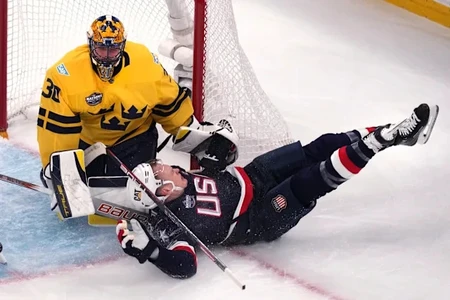
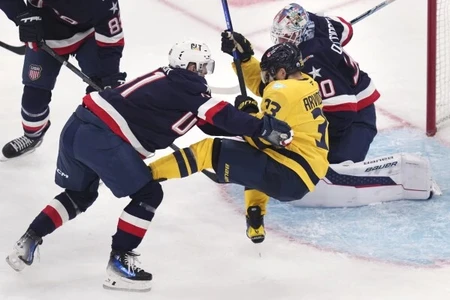
Nine seconds into the game - not minutes, seconds - three separate fights erupt. Gloves drop, fists fly, and players crash into each other as if it's a playoff final. It's not chaos; it's calculated. Neither team is backing down. This about pride.
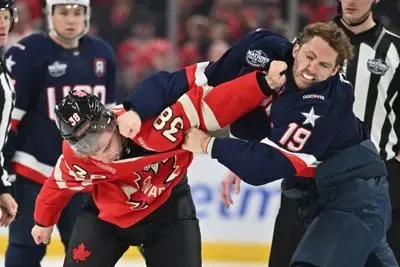
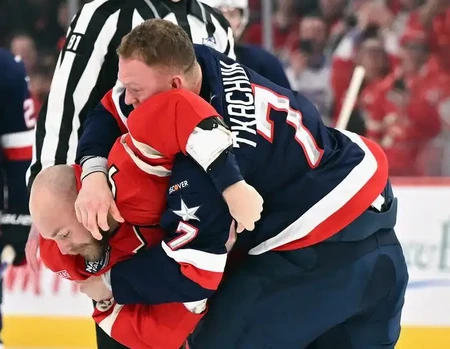
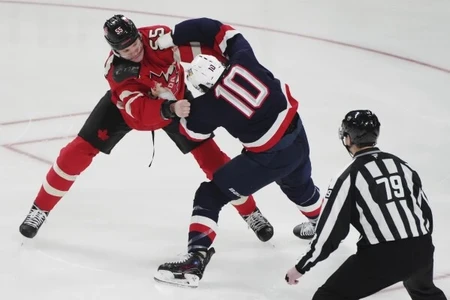
Once the ice is cleared of gloves and penalties are handed out, the actual hockey begins. And it doesn’t take long for the skill to match the physicality. Canada’s star, Connor McDavid, picks up a loose puck and sneaks in a backhanded goal, giving Canada a 1–0 lead. The crowd in Montreal erupts — they believe.
But Team USA is unfazed. They settle in, weather the storm, and respond with a goal of their own. Jake Guentzel finds an opening and buries the puck. Suddenly it’s tied 1–1, and the pace doesn’t slow down. It’s end-to-end, no time to breathe. Every shift looks like it could swing the game.
As the first period ends, both teams have landed their punches — literally and metaphorically. But they’re even.
2nd Period
Now the U.S. starts tilting the ice.
Midway through the period, a misstep by Canada opens up a chance. Dylan Larkin jumps on it — a break down the wing, a quick move, a shot — and just like that, it’s 2–1 for the Americans.
Canada tries to claw it back. They push hard, trying to crack the U.S. defense. McDavid circles. MacKinnon fires. The crowd grows anxious. But the U.S. is composed. They block shots, control rebounds, and give Canada nothing easy.
The period ends, and suddenly the home team is chasing. A mistake, a moment, and now the Americans are holding the cards.
3rd Period
Desperation begins to creep in.
Canada controls possession, hounds the puck, throws everything at the U.S. net. But nothing goes in. The American goalie, Connor Hellebuyck, turns away every chance. Time is running out. Canada pulls their goalie for an extra attacker — one last push.
And that’s when it ends.
Brady Tkachuk scores into the empty Canadian net. It’s 3–1. Game over.
USA has walked into Canada’s house, withstood the emotion, the pressure, the skill — and left with a win.
It was more than just a loss for Canada. It was a wake-up call. The Americans came ready for a war. And in Game 1, they won it.
Canada vs. Finland
The games were in Boston now and this was a must‑win game for both Canada and Finland. Only the winner would move on to the championship match. Canada brought big names like Connor McDavid, Nathan MacKinnon, and Sidney Crosby. Finland knew they’d need to dig deep to stay alive. The stakes were high, tensions were real, and by the end, it was more than just a game — it was a proving ground.
1st Period
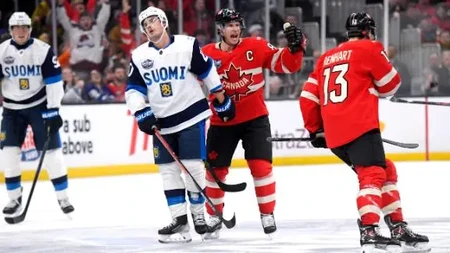
Canada wasted little time. About four minutes in, McDavid intercepted a Finnish pass, circled around, and scored with a clean shot — 1–0 Canada. Less than a minute later, MacKinnon busted through Finland’s defense and scored again, making it 2–0. Canada kept up the heat: Brayden Point added a third goal later in the period after a rebound off the Finnish goalie. By the end of the first period, Canada had dominated — three goals, momentum, and control.
2nd Period
Canada didn’t let up. Early in the second, MacKinnon scored his second of the game, set up by Crosby, pushing the lead to 4–0. That goal was the final straw for Finland’s starting goalie, Kevin Lankinen; he was pulled, and Juuse Saros came in to try and stem the tide. Canada continued to press, but the score stayed 4–0 through the rest of the period. Canada’s confidence was surging.
3rd Period
Finland wasn’t ready to give up. Midway through the third, Esa Lindell scored to break the shutout and get Finland on the board — now 4–1. As time wore down, Canada’s defense looked tired, and Finland smelled blood. With less than two minutes left, Mikael Granlund struck twice in quick succession, making it 4–3 and sending a ripple of panic through Canada’s bench. Finland pulled their goalie (so they had an extra attacker instead of the goalie) in hopes of tying it. But Canada made one final play: Sidney Crosby scored into the empty net, putting the game out of reach. Final score: Canada 5, Finland 3.
Sweden vs. United States
By this point, the U.S. had already locked up their spot in the final, so this game was mostly about pride. Sweden, on the other hand, had to win to keep their hopes alive. Both teams wanted to finish strong.
1st Period
The U.S. struck early. Just 35 seconds into the game, Chris Kreider scored off a rebound, giving America a sudden 1–0 lead. The crowd roared, thinking the Americans might run with it.
But Sweden didn’t panic. They responded later in the period when Gustav Nyquist deflected a shot past the U.S. goalie to tie it 1–1. Then, just before the period ended, Jesper Bratt found the back of the net after a quick rush up the ice, giving Sweden a 2–1 lead heading into the break.
2nd Period
The middle stanza was all defense. Neither side managed to score. Sweden’s goalie Samuel Ersson, playing in his first game of the tournament, held strong. The U.S. kept pushing, but they couldn’t crack Sweden’s defense or get a clean shot past Ersson.
3rd Period
The final period followed the same pattern: lots of pressure, but no goals. The U.S. pulled their goalie late to try and force a tie, but Sweden’s defense and goalie were up to the task. In the end, the game stayed 2–1 in favor of Sweden.
Canada vs. United States (Championship Game)
This was the final match of the tournament. The stakes were high — pride, bragging rights, and national spirit were all on the line. Canada and the U.S. have a long history of intense games against each other. The game took place in Boston, and Canada had already lost a previous matchup in this same tournament to the U.S., so there was some tension and urgency for redemption.
After a fiery first game between the U.S. and Canada last Sunday, the two countries were scheduled to meet again in the 4 Nations Face-Off championship Thursday. Due to the intense nature of the first game that three fights within the first few seconds, the rematch had a lot of anticipation behind it.
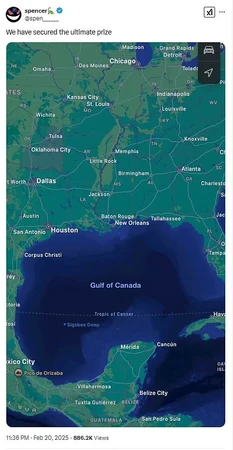
Further increasing tensions between the two countries and their fanbases was the political landscape. President Donald Trump previously threatened to imposed heavy tariffs on the U.S.’s northern neighbor and has repeatedly floated the idea of annexing the country and making it the 51st state.
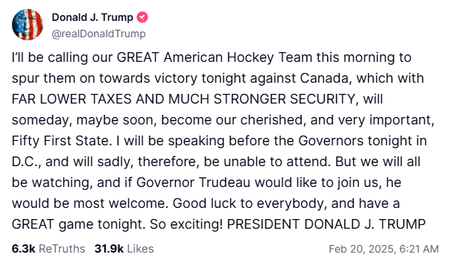
During Thursday afternoon’s White House briefing, Fox News correspondent Peter Doocy jokingly asked if Trump and Canadian Prime Minister Justin Trudeau made a bet on the championship game. Leavitt then revealed that Trump had actually spoken with Team USA’s players after the first win.
“I know he talked to the USA hockey team this morning,” Leavitt said. “He talked to the players after their morning practice around 10 o’clock; and I also spoke to some folks from that team after. They were jubilant over President Trump’s comments to the team. I believe they’re going to put out a video of that call. So he looks forward to watching the game tonight, and we look forward to the United States beating our soon-to-be 51st state, Canada.”
1st Period
Canada struck first. Early into the game, Nathan MacKinnon scored a goal, giving Canada a 1‑0 lead. The U.S. answered before the period was over: Brady Tkachuk tied it up by capitalizing on a chance created by his teammate Auston Matthews. By the end of the first 20 minutes, the game was tied 1‑1.
2nd Period
The middle portion saw the U.S. take the lead. Jake Sanderson scored for the Americans, pushing them ahead 2‑1. Canada didn’t back down; with some slick play, Sam Bennett tied it up again following a nice assist from Mitch Marner. So heading into the third period, the score was 2‑2. Both goalies had made strong saves, and neither team had pulled away.
3rd Period
The third period was tense and defensive. Both sides had chances to win it but the goaltenders held strong. Neither Canada nor the U.S. was able to score, despite pressure — especially from Canada, which was pushing hard in the final minutes. The score stayed 2‑2 after the full 60 minutes.
Overtime
Because there was no winner after regulation time, the game went into overtime — a sudden‑death format, meaning the next goal wins. About eight minutes and eighteen seconds into overtime, Connor McDavid received a pass from Mitch Marner, found space, and scored the game‑winning goal. The crowd erupted. Canada won the game **3‑2 in overtime**. Jordan Binnington, Canada’s goalie, made key saves throughout, especially in overtime, helping seal the win. Nathan MacKinnon was named MVP of the tournament for his overall performance.
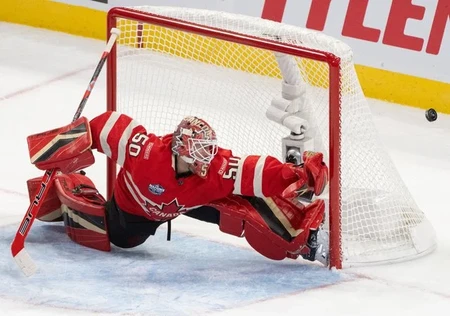
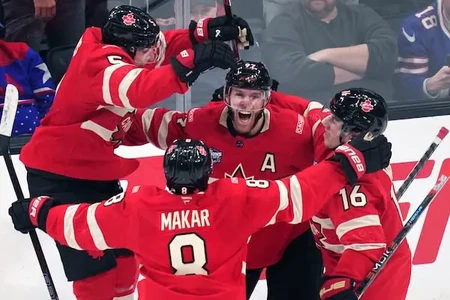
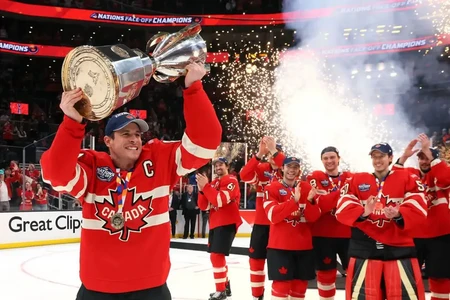
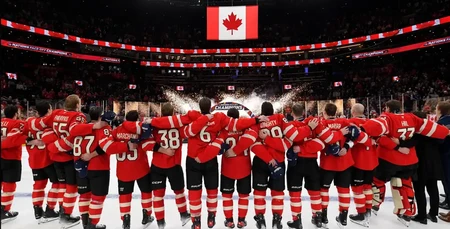
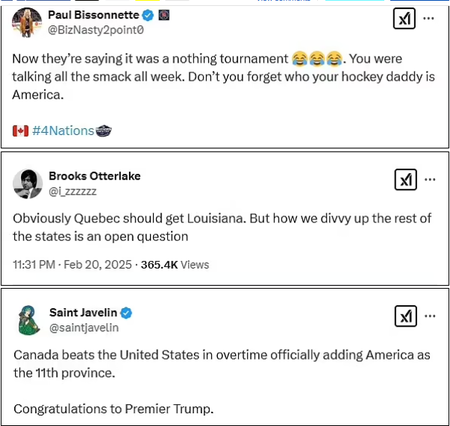
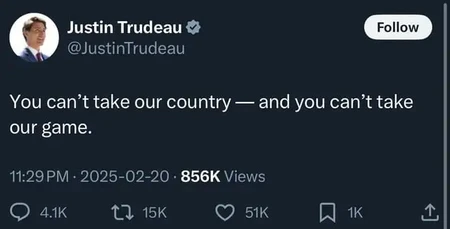
Here is what Canadians had to say post-game from Trump's comment.
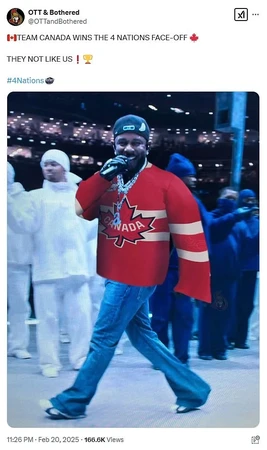
From Canada’s dramatic overtime win in the final, to early fights, wild comebacks, and emotional anthems, this tournament had something for everyone. Even casual viewers could feel the intensity — the deep-rooted rivalries, the pride in each jersey, and the personal battles fought shift by shift.
As the players return to their NHL teams, fans are already asking: when’s the next one?
Because if this tournament showed us anything, it’s that the world is more than ready for international hockey to take center ice again.
I hope you enjoyed this blog and don't be afraid to leave some feedback. I will see you in the 2026 Winter Olympics in Milano Cortina.