
War Summaries #2 The Seminole Wars
First published: Sunday August 31st, 2025
Report this blog
The Seminole Wars: A Struggle for Land and Survival
The Seminole Wars were a series of three conflicts between the United States and the Seminole people in Florida during the 1800s. These wars were not only the longest Indian wars in U.S. history, but also some of the most difficult and costly. At the center of the struggle was land, freedom, and the Seminoles’ determination to stay in their homeland despite increasing pressure from the U.S. government.
The First Seminole War (1817-1821)
The First Seminole War began in 1817. Tensions had been building for years between American settlers and the Seminoles, who were living in what was then Spanish-controlled Florida. The U.S. government was upset that the Seminoles were offering shelter to escaped enslaved people and occasionally attacking settlers along the border. General Andrew Jackson was sent to deal with the problem, and he led a force into Florida without official permission. He destroyed Seminole villages and even captured Spanish forts. Though the war was short, it had a big impact. Spain realized it could no longer hold onto Florida, and in 1821, it officially gave the territory to the United States.
The Second Seminole War (1835–1842)
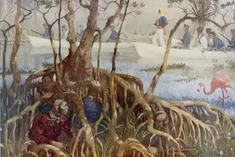
The Second Seminole War (1835–1842) was much longer and far bloodier. After the Indian Removal Act was passed in 1830, the U.S. government began trying to force all Native American tribes to move west of the Mississippi River. Many Seminoles refused to leave their land in Florida. One of their most well-known leaders, Osceola, strongly resisted and helped organize attacks against U.S. forces. The war turned into a brutal conflict fought in the swamps and forests of Florida. Despite being outnumbered and outgunned, the Seminoles used guerrilla tactics to hold off U.S. troops for years. Osceola was eventually captured under a false flag of truce and later died in prison. By the end of the war, most Seminoles had been killed, captured, or forced to relocate, but a small group managed to remain hidden in the Everglades.
The Third Seminole War (1855-1858)
The Third Seminole War took place from 1855 to 1858. It was smaller than the previous two, but still part of the ongoing U.S. effort to remove the last Seminoles from Florida. This war started after the U.S. Army began surveying Seminole lands, which led to renewed fighting. The remaining Seminoles, led by chiefs like Billy Bowlegs, resisted again, but eventually most were captured or moved. However, a few families avoided removal by retreating deeper into the Everglades, where they lived in isolation for many years.
Conclusion
In the end, the U.S. government never completely defeated the Seminoles. A small number of them remained in Florida, never signing a peace treaty or surrendering. Their descendants are part of the modern-day Seminole Tribe of Florida, a federally recognized tribe that still exists today.
The Seminole Wars were more than just a series of battles—they were a symbol of Native resistance. The Seminole people fought to defend their land, protect their families, and preserve their way of life. Despite great losses, their determination helped them survive and remain in Florida, long after the fighting had ended.
Russian Civil War
Taiping Rebellion
Napoleonic Wars
The Crusades
Mongol Conquests
Viking Invasions of England
Trojan War
Punic Wars
Korean War
Those are your Candidates please cast your votes in the comments