
World of Glaciers: Types of Glaciers
First published: Wednesday May 20th, 2026
Report this blog
Introduction
Hey y'all, Pingo here, rolling out with my first blog series. Glaciers have been something I have been passionate about for a while, hence I have decided that for my debut as a blog maker I would like so specialize in the amazing world of glaciers. At the end of the series, I hope for y'all to gain a better appreciation for these rivers of ice and regardless of your political affiliation, recognize these natural wonders are disappearing and do your part in slowing their demise.
As for this blog, it will pertain to the types of glaciers. Essentially, there are 2 types of glaciers which can be divided into three and four subtypes respectively. The learning objective for this blog, is to be able to understand the types of glaciers and recognize each type from a photo. Now if you have any questions, please ask in the comments and I will do my best to answer them. Additionally, this is my first blog, so any comments regarding making it better for next time will be highly appreciated.
The Umbrella Types
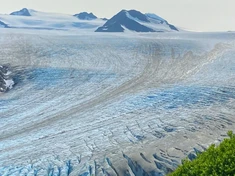
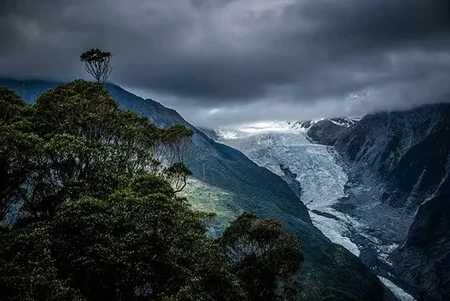
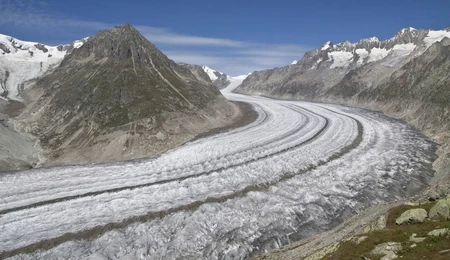
Pertaining to the types of glaciers there are essentially two different "umbrella" types. Those being Alpine and Continental glaciers. Alpine glaciers can be most concisely described as high altitude, and low latitude, while Continental are typically low altitude and high latitude. I remember this by thinking Alpine Altitude. Alpine glaicers are those you find in mountains like in Switzerland. Below I have attached two images of alpine glaciers. Note how they look like they are coming down a mountain.
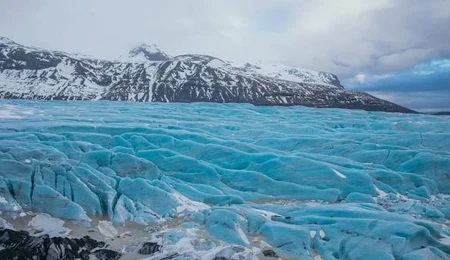
Now Continental Glaciers, as mentioned before, typically have high latitude and low altitude, meaning that rather moving downward from a mountain, they move expand outward. you can essentially think of them like huge plains of Ice. Continental glaciers are like those in Iceland, Greenland and Antarctica. Below I have added two images of continental glaciers. Notice how they are like a plain of ice, rather than a flow descending from mountains.
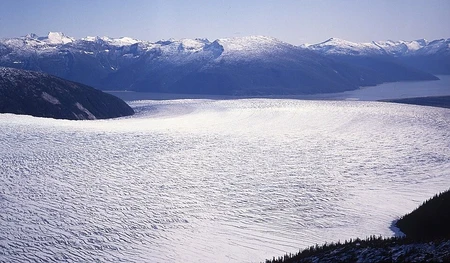
Types of Alpine Glaciers
Now that we know what the two umbrella types are, its time to get more specific. Alpine glaciers can be divided into four types. Those being Cirque, Valley, Piedmont, and Ice Fields. To understand what they really are, we have to take a look into the formation of these Alpine Glaciers. Glaciers form when Neve, or seasonal snow into Firn or a thicker multi-year ice. This change expands the ice, eroding away a bowl shaped depression in its mountain called a Cirque. The Cirque Glacier is essentially a glacier still in its Cirque. This means that either Cirque glaciers are really young or are dying.
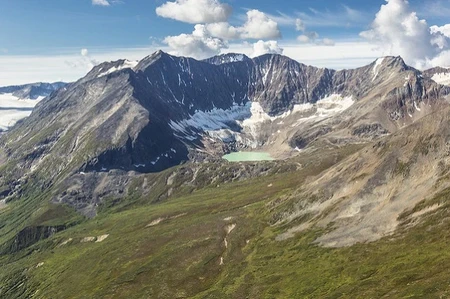
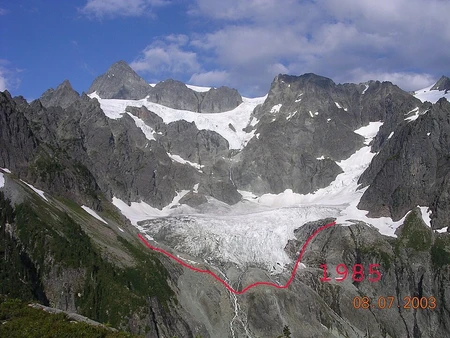
When the glacier out grows the cirque, it starts to move down a valley, widening it into a U shaped valley (which we will also go over in more depth in a later blog). The glacier in that state is known as a valley glacier. Below I have attached two Valley glaciers, note how they are coming through a valley.
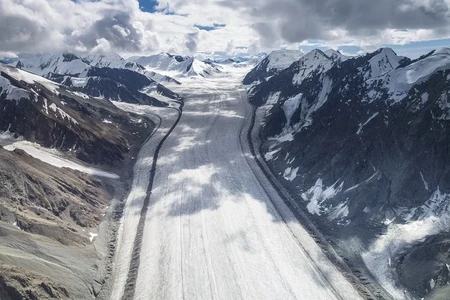
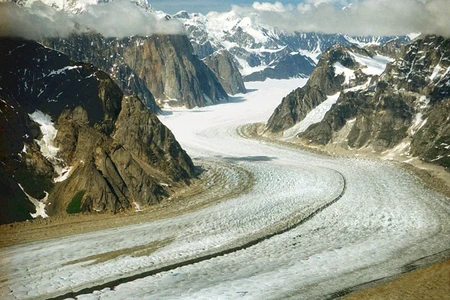
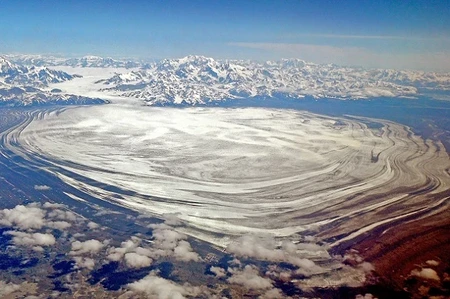
When the glacier reaches the end of a valley, it enters into a large opening where it spreads in all directions, think of like a river opening up into an alluvial plain. When that happens is becomes a Piedmont Glacier. Piedmont Glaciers are notorious for looking like and behaving like continental glaciers as its main difference is it still originates at a cirques. Below I have attached two examples of Piedmont Glaciers. Note how it expands into a lobe like shape as it comes through the valley.
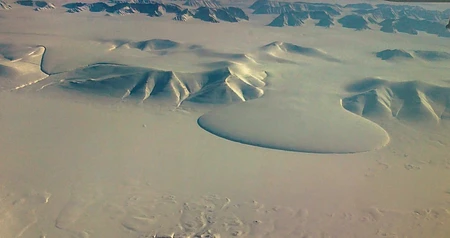
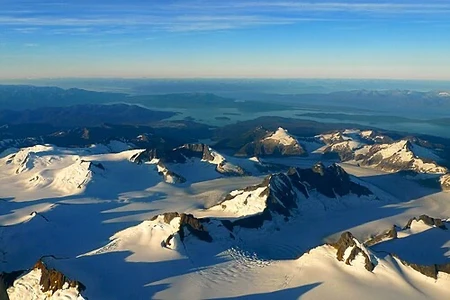
The last type of Alpine glacier is not exactly a glacier but a network of interconnecting glaciers, called an ice field. They too expand in multiple directions but they are found at higher altitudes and they have peaks scattered in the ice called nunataks. Below I have included two images. Take note of how they interconnect and especially the nunataks as that's the key identifying factor.
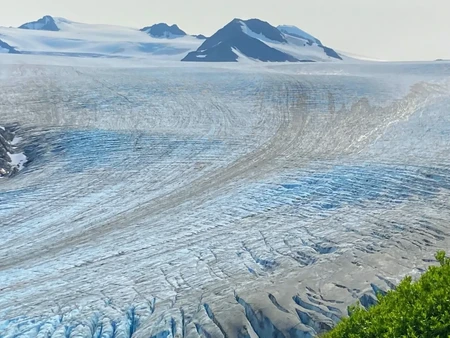
Types of Continental Glaciers
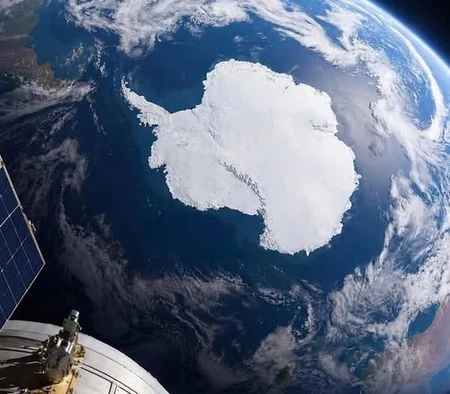
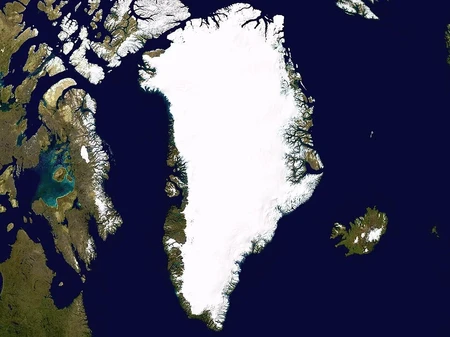
Now that we have discussed the types of Alpine Glaciers, lets get into the types of Continental Glaciers. These types are way more concrete, so they should be easier to understand. Those types are Ice Sheet, Ice Cap and Outlet Glacier. The first type Ice Sheet constitutes a glacier which is over 50,000 square kilometers (19,000 square miles) large. Only two, well three but for simplicity purposes two exist in the world. Those being Antarctica and Greenland. Together these sheets make up about 99% of all the freshwater on earth and they can reach thicknesses of up to 4 kilometers (2.5 miles). Below I have images of the two ice sheets.
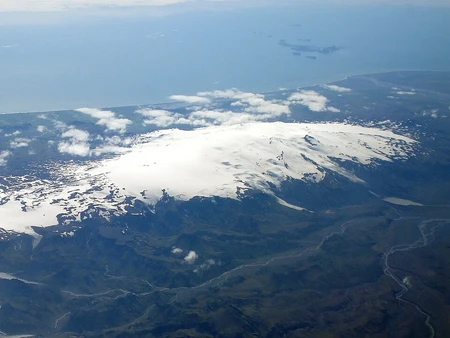
Ice caps are really ice sheets but less than 50,000 km squared (19,000 miles squared). They are essentially the generic Continental glacier and is typically dome shaped. Below I have two pictures of Ice caps.
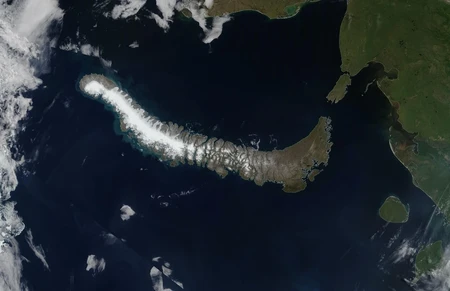
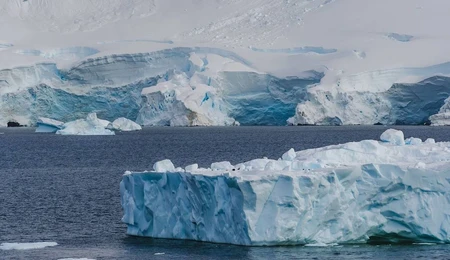
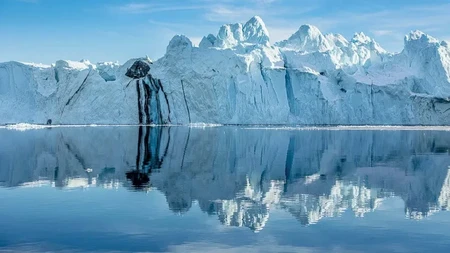
Outlet Glaciers are essentially glaciers, which drain Ice Sheets or Ice Caps. They typically end in the ocean calving off icebergs and sometimes ice shelves. These Glaciers usually move much faster as they are channeled by bedrock and mountains unfortunately causing ice sheets to loose water. Below are some images. Note how they typically end in the ocean or a lower elevation.
Conclusion
I hoped you enjoyed my blog. Restating the fact that this is my first blog, means that yes there will be errors and things that could have been better as I lack experience. If y'all enjoyed reading this blog please like it and let me know in the comments what you enjoyed about it. If there were things you noticed that could have been better please let me know and I will improve it for next time. If you have any questions, please let me know in the comments.
Pertaining to the continuation of this series, it will likely be 10 to 15 parts. The next part will discuss Erosional and Depositional features. There is a lot to learn about the glacier from its marks it left behind.
Thanks for Reading Y'all and see you in the next one.
P.S any suggestions for the frequency in which I should submit these blogs is highly appreciated. I do not want to overcrowd the RUB as well as I do not want to lose Audience engagement.
Keep goin!
they so cool bro
As for frequency, just take your time and write at your own speed, publishing when you feel your blog is right. Personally I would prefer quality over quantity, but I am looking forward to the next one already.
Great blog !