

Ranking Every U.S. President - Part 2
First published: Friday August 9th, 2024
Report this blog
29. William Henry Harrison
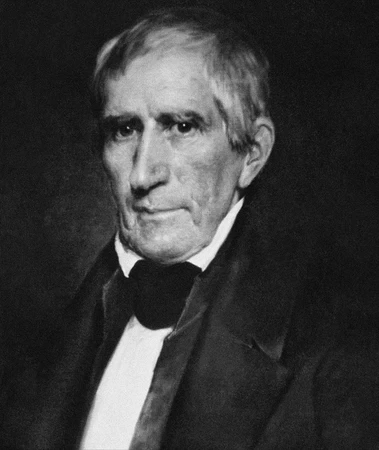
William Henry Harrison is often ranked among the worst presidents in American history. However, he's best known for being the shortest-serving president (and the first to die in office), lasting just one month. Therefore, he didn't have a chance to do anything, especially because he was ill for his entire term, spending no time actually governing. Harrison didn't do anything good, but because he didn't serve for very long, he didn't do anything bad either.
28. William Howard Taft
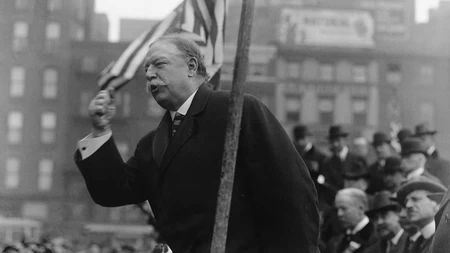
In 1912, Theodore Roosevelt ran for the presidency as a member of the Progressive Party. Roosevelt had picked Taft as his successor, but Roosevelt was dissatisfied with how conservative Taft turned out to be. Indeed, this was not without its merit. While Taft had enacted some progressive legislation such directed the Interstate Commerce Commission to set railroad rates, and establishing the Postal Savings Systems. He also took efforts to preserve American land through conservation practices. He even went as far as to push for an Income Tax Amendment to the U.S. Constitution. At the same time, he did very little to further civil rights, and he went against the Republican platform by pushing lower tariff rates.
27. Rutherford B. Hayes
During the election of 1876, Democrat Samuel Tilden and Republican Rutherford B. Hayes were locked in a vicious battle. When the final results came in, it was unclear who had won. But parties eventually came up with a compromise. Republicans would get the presidency, and Democrats would get something they had been advocating for since 1865, the end of Reconstruction. Keeping true to this agreement, one of Hayes' first acts was to withdraw American troops from the South that had been keeping order and protecting civil rights. This decision set back the progress of racial equality by decades and gave organizations like the KKK free rein throughout the South. While Hayes did tow the party line on many issues, he called in troops re-called from the south to go city to city and break up striking railroad workers, killing many.
26. James A. Garfield
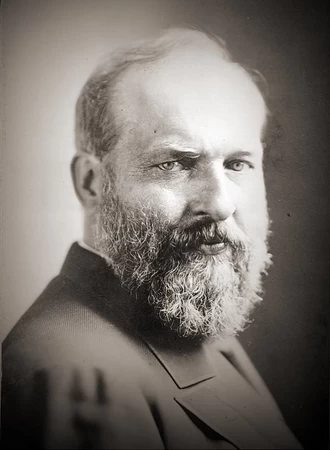
James A. Garfield's ranking is similar to that of William Henry Harrison. He only served for less than a year. However, unlike Harrison, he was able to get a few things done. After a history of corruption and patronage in previous administrations, Garfield pushed for civil service reform. Furthermore, despite the end of Reconstruction, he still pushed for civil rights legislation. He did many positive things as president, but if he had been in office longer, he may have a chance to sign much of his agenda. Sadly, he was assassinated later that year.
25. George H.W. Bush
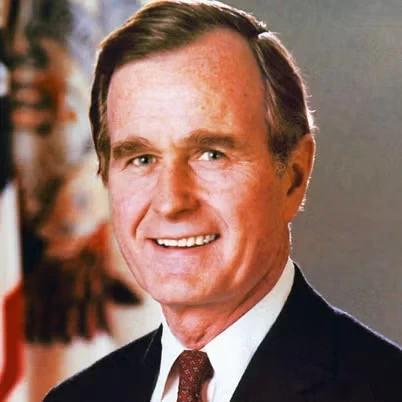
When determining a good president, one of the largest factors is how well the president promoted his party policies. And in that area, George Bush didn't do that well. When running for president in 1988, he famously declared "Read my lips: no new taxes!" and he yet would eventually sign a package that raised taxes across the board. In addition, his response to the economic depression in the early 90s was criticized by both parties. He also decreased defense spending. Aside from this, he signed the American With Disabilities Act, and signed the START I treaty with the U.S.S.R. during the closing days of the Cold War. He was also instrumental in the reunification with Germany.
Perhaps his greatest accomplishment was the American victory in the Persian-Gulf War, in which the United States lead an international coalition that swiftly kicked Iraq out of Kuwait with minimal U.S. casualties.

24. Jimmy Carter
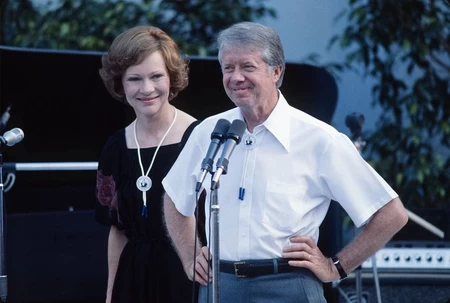
Jimmy Carter had many notable achievements in his four years in office. Building upon the Nixon Administration, he established full relations with China. He also signed the SALT II treaty, limiting the use of nuclear weapons, oversaw the Camp David Accords that saw peace between Israel and Arab States. While (still) controversial, he also pardoned the Vietnam draft dodgers and returned the Panama Canal to Panama. While these accomplishments were overwhelming, two things weigh heavy on his legacy as president. Firstly, his response to the Iran Hostage Crisis was criticized as being too soft on the Iranian regime. The hostages would end up spending over 400 days trapped in the American embassy in Iran. Secondly, the recession in the early 1980s saw inflation skyrocket to around 15%, and unemployment increased as well. While he made effort to reverse this, it ultimately wasn't enough, and he lost his re-election bid in a landslide.
23. Benjamin Harrison
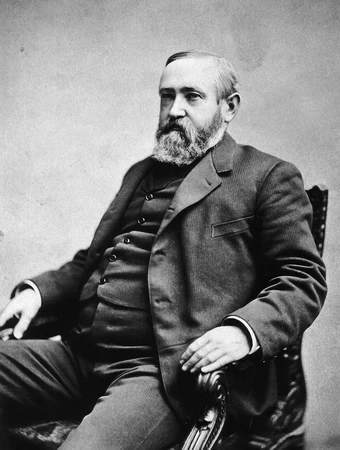
Like Presidents Carter and Bush, Benjamin Harrison did many positive things for the Country. Still, one of his policies is credited with a major economic recession, in this case the Panic of 1893. Historians credit the McKinley Tariff Harrison championed, as starting the country down a slippery slope that would lead to recession. However, Harrison enacted sweeping environmental legislation, signed the Sherman-Antitrust Act, and greatly impacted foreign policy through the end of the nineteenth century. He was also a staunch supporter of Civil Rights, enforcing the 15th Amendment to the letter.
22. Calvin Coolidge
Calvin Coolidge strongly promoted a conservative take on economics, which saw limited spending and government intervention in the economy. He also cut taxes for the upper class, which wouldn't become a part of the Republican platform for another 60 years. This economic policy consistently produced surpluses and shrank the federal deficit. Despite this economic success, he signed the Immigration Act of 1924, which greatly restricted immigration to the United States (yet he also signed the Indian Citizenship Act). Those immigration restrictions are widely credited with starting the strong sense of isolationism in the U.S. and prevented a large number of refugees fleeing Hitler and the Holocaust from seeking refuge in the U.S. years later.
21. John Adams
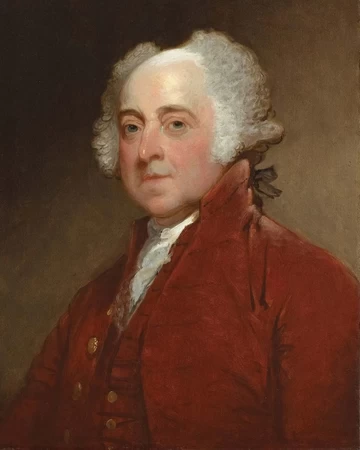
The rivalry between John Adams' Federalist party and Thomas Jefferson's Democratic-Republican party is the basis of the modern political debate. The Federalists favored a larger government and a stronger executive. This lead Adams to sign the Alien and Sedition Acts, which among other things, restricted the rights of foreign-born Americans, and even more controversially, it made it a crime to publish negative things about the government.
While Adams did many positive things during his presidency, such as strengthening the Navy, his support for the unconstitutional Alien and Sedition Acts significantly decrease his rating.
20. Ulysses S. Grant
Ulysses S. Grant is often ranked near the bottom by many historians, but much of it is due to the widespread corruption of his administration. However, contrary to popular belief, Grant himself was never personally implicated in these scandals.
President Grant signed the 15th Amendment, granting black men the right to vote, and numerous other pieces of civil rights legislation. He also persecuted the Ku Klux Klan, in order to protect civil rights and restore order in the south. He also appointed more Black men, and Jewish men to government office than any previous president.
19. Chester A. Arthur
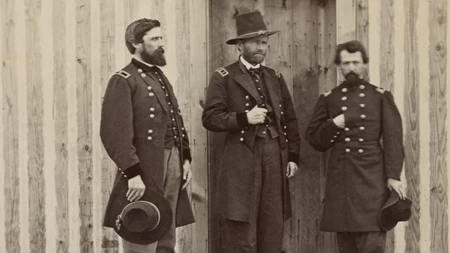
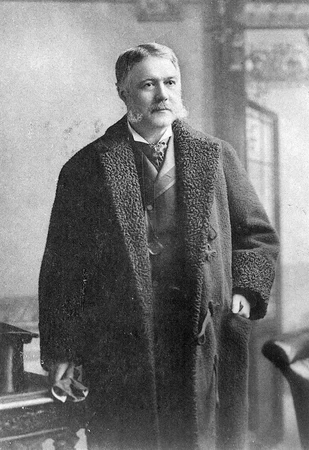
Chester A. Arthur is easily one of the most underrated presidents. While he was only president for three and-a-half years, he was able to get a lot done. One of his biggest accomplishments was advocating for and then signing the Pendleton Act, which enacted sweeping reforms for civil service, which both parties had advocated for since the 1860s. He also vetoed the Chinese Exclusion Act and oversaw a massive building program for the Navy.
Despite being a Republican (they typically advocated for higher tariffs), he also lowered tariffs after the Treasury reported numerous surpluses. This led to an increase in trade.
18. Joe Biden
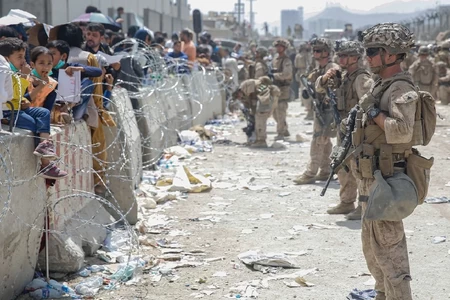
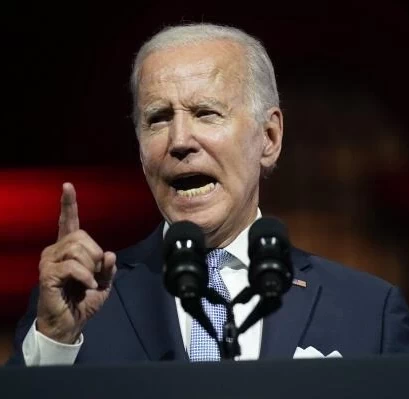
Joe Biden has promoted and passed bipartisan legislation, such as the CHIPS and Science Act, Infrastructure and Jobs Act, and support for Ukraine, while also promoting mainstream liberal views, such as student debt cancellation and the American Rescue Plan. However, many economists partially credit some of his signature legislation as causing the inflation of 2022. That, combined with the Afghanistan debacle, brings Biden's ranking somewhat down.
17. Harry S. Truman
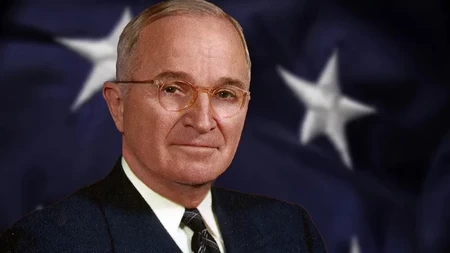
Harry S. Truman was the president at the beginning of the Cold War. One of his greatest accomplishments was The Marshall Plan, which saw nearly $12 billion in aid given to the countries of western Europe in the aftermath of WWII, and served as a stark contrast between communism and capitalism. He also ordered the Berlin Airlift, which saw the citizens of Berlin supplied for nearly a year after the Soviets blockaded the city. He also made the decision to use drop Atomic Bombs on Hiroshima and Nagasaki, which while controversial, saved hundreds of thousands of Japanese and American lives in the long run. On the home front, he promoted a broad liberal agenda, although much of it was blocked by Congress. The one thing that ways heavy on his actions to aggressively root out supposed "communist influence" in the U.S. government. Entities like the HUAC (House Un-American Activities Committee) saw a rise during the red scare, and President Truman gave into the hysteria.
16. Barack Obama
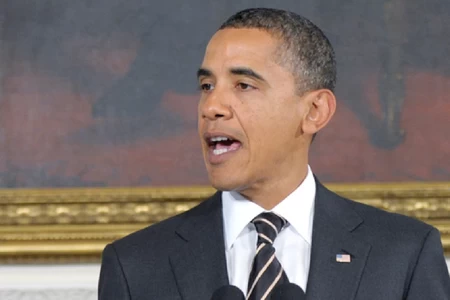
The crowning achievement of the Obama Administration was the Affordable Care Act (aka Obamacare), which was the largest liberal healthcare bill in decades. His domestic agenda promoted mainstream liberal positions, such as immigration reform and fighting climate change. In the aftermath of the Great Recession, Obama took action to try to rescue the economy. It was a slow recovery, however, but he blamed these failures on the Republican Congress and the Bush Administration (which he is marked down for). His foreign policy is also somewhat shaky, notwithstanding one of his biggest accomplishments was the assassination of 9/11 mastermind Osama Bin Laden.
Otherwise well done, ranking all these can't be an easy job