
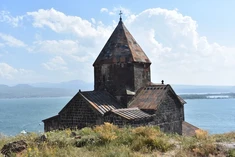
The Hidden Country - Armenia
Last updated: Saturday August 2nd, 2025
Report this blog
The country of Armenia doesn't get too much popularity compared to its more popular neighbors of Turkey and Iran. Armenia is often shadowed, and people don't really get to see what it is really like. So in this blog, I would like to show you... The Hidden Country of Armenia.
Introduction to Armenia
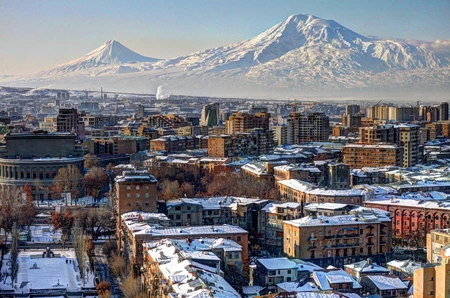
Armenia is a small mountainous nation in the Caucasus region of Western Asia. Aremnia is ranked 142nd by size with an area of 29,743 sq kilometers or 11,484 sq miles. Also, Armenia is ranked 140th by population with a population of around 3.1 million people. Armenia's capital, Yerevan accounts for around 35% of the population at around 1.1 million people. Armenia is a landlocked country mostly on a plateau home to many mountains surrounding the country. Also, Armenia is a Christian country with over 96% of citizens identifying with the belief. The official language is Armenian, a language which is unique to Armenia.
Geography and Climate
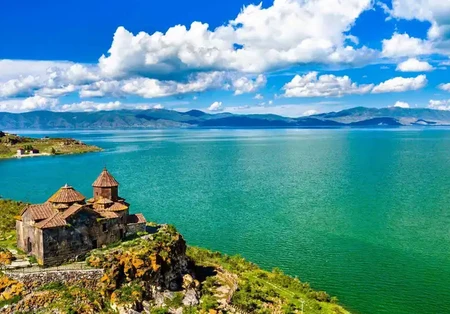
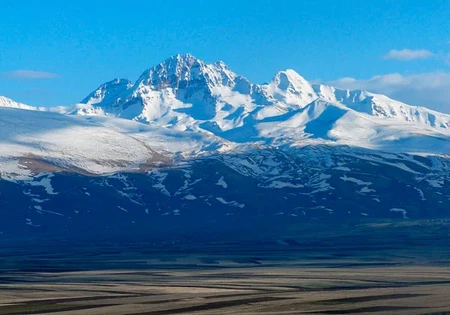
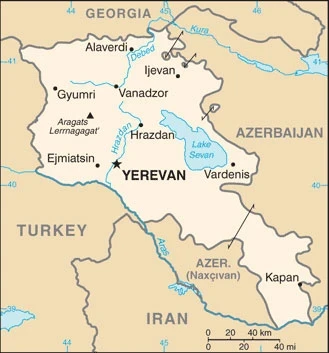
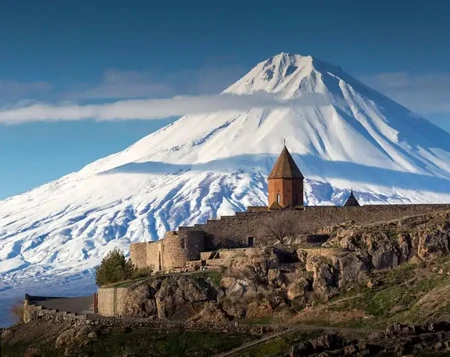
As stated before, Armenia is a landlocked country set on a high plateau known as the Armenian Highlands. Armenia has no point lower than 390 meters (1,280 feet) above sea level. Also, the average elevation of the country is the 10th highest in the world, higher than countries like Switzerland and Georgia. Armenia is surrounded by mountains, with the Lesser Caucasus to the north, the Zangezur Range to the south, and the Geghama, Vardens, and Shakhdag Ranges in the central region. Armenia's highest mountain is Mount Aragats (shown above), located in the Lesser Caucasus. Mount Aragats rises to a height of 4,090 meters (13,419 feet). Armenia also borders four nations; There is Georgia to the north, Turkey to the west, Iran to the south, and Azerbaijan to the east. Armenia isn't very forested with only 10% of the nation being covered in trees. Lake Sevan (shown above) is Armenia's largest lake accounting for 1/6 of the country's entire area at 5,000 sq km (1,900 sq mi). Lake Sevan is also one of Asia's highest lakes at an elevation of 6,234 feet. Armenia's climate is mainly highland continental with hot, dry, and sunny summers, short winters, long autumns, and snowy, cold winters.
Modern History of Armenia
From the 16th century, Armenia was controlled by the vast Ottoman Empire, but by 1908, the Ottomans were facing issues. The Young Turk Revolution occured and Sultan Hamid was overthrown. The Armenians hoped things would change and they would no longer be second-class citizens, but the Adana massacre proved them wrong, as 20,000-30,000 Armenians were murdered on the streets. During the outbreak of World War I, the Ottomans were fighting the Russians in the Caucasus region and the new government began looking at Armenians with suspicion due to the fact that Russians were using Armenian volunteers as spies. In April of 1915, those intellectuals were arrested and the Armenian genocide started.
Over the course of at least two years, around 1-1.5 million Armenians were killed by the Ottomans across modern-day Turkey and Syria. First, the male population was killed through massacre and forced labour. Next, women, children, and the elderly were sent on death marches to the Syrian desert by military escorts who were known to rob, r*pe, and deprive them of food and water until they died. Turkish authorities still deny the genocide to this day.
On May 28, 1918, after the fall of the Ottoman Empire, the First Republic of Armenia was formed. This republic didn't last very long however, and came to an end on December 4, 1920, just two years later due to conflicts between surrounding Turks, Russians, and even Americans over the land. By July 13, Armenia, along with Georgia and Azerbaijan, were incorporated into the Soviet Union.
During the early years of the Soviet Union's control of Armenia, there was a period of relative stability, especially in contrast to the violence and terror brought by the Ottomans. Although, by the time Stalin ruled, there were mass repressions in national identity and religion, although Armenia rapidly industrialized. By World War II, although there were no battles in Armenia, over 145,000 Armenians died while fighting for the Soviet Union. After the death of Stalin, peace was brought back to Armenia and the church was revived.
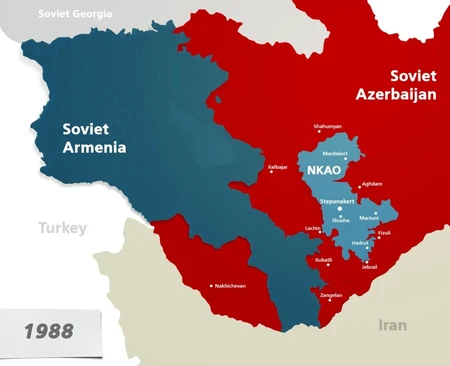
During the 1980s, under Gorbachev, there were many peaceful protests opposing Soviet pollution of their country in addition to tensions with neighboring Azerbaijan. The district of Ngorno-Karabakh in Azerbaijan is majority-Armenian, so most Armenians including the Armenians of Ngorno-Karabakh, wanted the region to unite with them. Even though around 484,000 Armenians lived in the region and other parts of Azerbaijan, Azerbaijan disagreed and tensions started. Even though Armenians peacefully protested, they were met with violence from the Azerbaijanis who massacred many Armenians in violent pogroms. Following these pogroms, Armenians started to do the same to Azerbaijanis living in Armenia.
Gorbachev's inability to solve any of Armenia's problems, led to clashes between Armenian militiamen and Soviet forces, leading to a shootout where five Armenians were killed. Further tensions between Armenia and Azerbaijan continued when most of the 200,000 Armenians living in Azerbaijan's capital Baku, had to flee due to violence from the Azerbaijanis.
On August 23, 1990, Armenia dissolved from the Soviet Union and by September 21, 1991, Armenia declared its statehood. One month later in October, Levon Ter-Petrosyan became Armenia's first president. In the initial years following the collapse of the Soviet Union, Armenia faced economic hardship, and the conflict with Azerbaijan definitely didn't help either. Azerbaijan instigated a railway and air blockade against Armenia which Turkey joined to help Azerbaijan in 1993. The Karabakh war ended in 1994 after a Russian ceasefire was put into place. Armenians viewed the war as a success as Armenians were able to capture 16% of Azerbaijan's land including almost all of Ngorno-Karabakh which they held until 2020. During the War, over 30,000 people were killed with over 1 million displaced. Several thousand were later killed in the 2020 Karabakh war. Even more conflict has happened in recent years and I pray this war ends and both sides can come to a deal and make peace as both countries have suffered greatly from this war.
Cities and Provinces
Armenia is divided into 10 provinces, called marzes, along with Yerevan which has special administrative status. With an area of 5,348 square kilometers, the province of Gegharkunik is the largest in Armenia by area. With a population of 251,941, the province of Shirak is the most populated. The capital city of Yerevan in Armenia, is the largest city with a population of around 1.1 million people.
1. Yerevan
2. Gyumri
3. Vanadzor
4. Abovyan
5. Hrazdan
6. Vagharshapat
7. Kapan
8. Armavir
9. Masis
10. Artashat
Demographics of Armenia
Population: 3.1 million
Capital: Yerevan
Population density: 104/sq km or 269/sq mi
Life expectancy: 73 years
GDP: 24.09 Billion USD
3 largest ethnic groups:
Armenians (98.1%)
Yazidis (1.1%)
Russians (0.5%)
Official language: Armenian
Main Religions:
Armenian Apostolic Church (95.2%)
Catholicism (0.6%)
Evangelicalism (0.5%)
Best Places to Visit
1. Yerevan - capital city full of culture and history from taverns to bronze age artifacts to Soviet era monuments
2. Khor Virap - stunning monastery with views of Mount Ararat
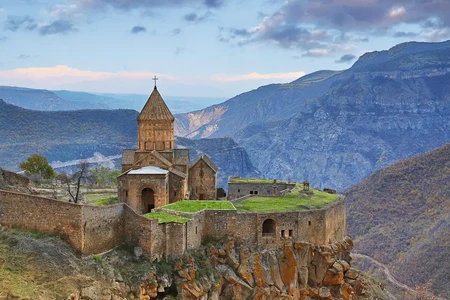
3. Tatev Monastery - gorgeous 9th century monastery overlooking the gorges of southern Armenia
4. Lake Sevan - high altitude lake known for its beaches and monasteries
5. Garni - Hellenic temple built in the 1st century, a symbol of pre-Christian Armenia
Culture
Armenian culture is a unique blend of Eastern and Western influences and is shaped through centuries of history and resilience. Armenian culture is rooted in family values, a strong sense of national identity, and a vibrant artistic heritage.
Armenian music is a mix of indigenous folk music and Christian music and is commonly played by instruments like the duduk (double reed woodwind), dhol (drums), zurna (double reed woodwind), and kanun (string instrument). Some of the oldest forms of Armenian music include the "Armenian chant", many of which are ancient and can now be found in church settings. Musicians such as Djivan Gasparyan, Aram Katchaturian, and Richard Hagopian paved the way for modern Armenian music in genres like pop and kef (folk music influenced by jazz).
Armenia also thrives with art. The National Art Gallery in Yerevan has more than 16,000 works that date back to the Middle Ages. Also, Yerevan's streets are home to bustling markets selling all different kinds of art including woodcarving, antiques, jewelry made from gold or obsidian, and Russian souvenirs, just to name a few.
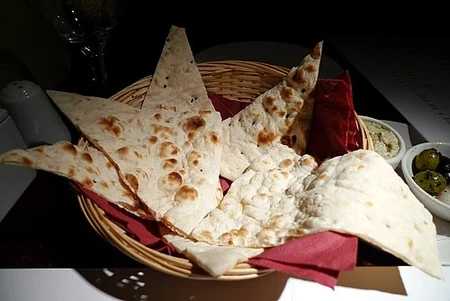
Armenian cuisine consists of many influences from Soviet to Mediterranean to Ottoman. Bread, butter, buttermilk, cheese, radishes, lamb, yogurt and eggplants are staples in Armenian cuisine. Fresh herbs are also very commonly used in food along with fresh and dried fruit. Apricots and Pomegranates are most common. Lavash, an Armenian flatbread, was even inscribed in the UNESCO Representative List of the Intangible Cultural Heritage of Humanity in 2014.
Many sports are played in Armenia including wrestling, weightlifting, judo, football (soccer), and boxing of which are the most popular. Armenia has produced many successful athletes including Hrant Shahinyan (two-time Olympic medalist in gymnastics), Arter Aleksanyan (four-time Olympic medalist in wrestling), and Simon Martirosyan (two time Olympic medalist in weightlifting). Wrestling is Armenia's best sport in the Olympics, winning 11 out of their 22 total medals.
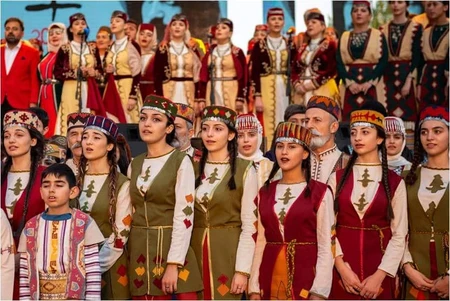
Armenian traditional clothing is a rich cultural tradition dating back centuries. Wool, fur, and silk are most commonly used in traditional Armenian clothing. Traditionally, Armenian women would wear a long dress with a slit on the chest and below the hips. The waist was wrapped in a long, folded silk or woolen scarf. An apron and headscarf are also commonly included in addition to socks and leather shoes. For men, shirts, trousers, a vest, hat, socks, and leather shoes are common. Vibrant colors and intricate designs are a staple in Armenian clothing.
Fun Facts About Armenia
1. Armenia was the world's first Christian country, adopting Christianity as the state religion in 301 AD and building the world's first church.
2. At 85.9%, Armenia has more mountainous area then Switzerland and Nepal.
3. Yerevan is older than Rome! The capital city is just 29 years older than the Eternal City, having been founded in 782 BC by King Argishti I.
4. Armenia is home to the world's oldest winery. The Areni-1 cave in the village of Areni has been producing wine for over 6,000 years!
5. Armenia is also home to the world's oldest shoe. The shoe is around 5,500 years old and was found in the same cave that has been producing wine for 6,000 years!
So this wraps up the beautifully hidden gem of Armenia! I hope you enjoyed reading my blog! and sorry for making it a week late Also, make sure to vote in the comments for which nation you would like me to do next!
The options are:
Turkmenistan
Oman
Montenegro
Happy blogging!
Oman: 6 votes |1st Place|
Montenegro: 5 votes |2nd Place|
Turkmenistan: 4 votes |3rd Place|
Thank you to everyone who has voted and the next blog on Oman will come out next week. Starting Monday I will be gone for another week, so you won't here from me unfortunately.
Thank you!
Oman please! :)
I'll vote Oman next, sounds pretty interesting.
sorry for the joke(Oman please)
My vote goes to Oman!