
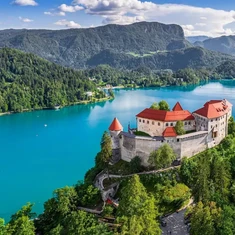
The Hidden Country - Slovenia
First published: Monday June 30th, 2025
Report this blog
The country of Slovenia doesn't get too much popularity compared to its more popular neighbors of Italy and Croatia. Slovenia is often shadowed, and people don't really get to see what it is really like. So in this blog, I would like to show you... The Hidden Country of Slovenia.
Introduction to Slovenia
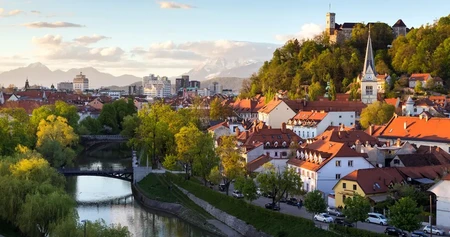
Slovenia is a small mountainous nation in Central Europe. Slovenia is ranked 150th by size with an area of 20,271 sq kilometers or 7,827 sq miles. Also, Slovenia is ranked 145th by population with a population of around 2.1 million people. Slovenia's capital, Ljubljana accounts for around 15% of the population at 300,000 people. Although home to many mountains in the north and south of the country, Slovenia is also made up of fertile valleys and even has a small coastline along the Adriatic Sea. Slovenia is a christian country with 75-80% of citizens identifying with the belief. The official language is Slovene or Slovenian, a language which is unique to Slovenia.
Geography and Climate
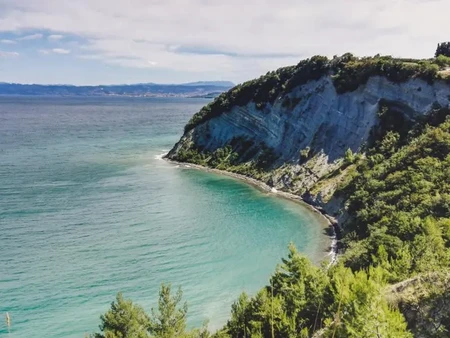
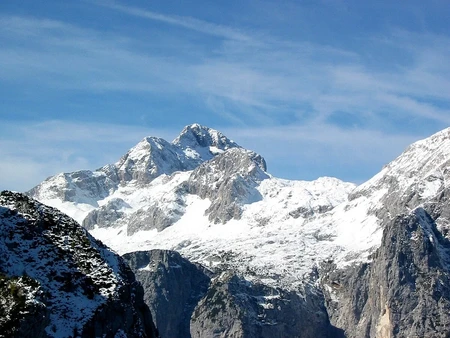
Although small, Slovenia has a diverse geography. In the north of the country are the mountains with ranges like the Julian Alps, the Pohorje, and the Kamnik-Savinja Alps. To the south of the country there are also smaller mountain ranges like the Nanos, Dinarides, and Zumberak Mountains. In the middle of those mountains is the fertile valley home to many of Slovenia's major cities like Ljubljana, Kranj, and Kamnik. Many people assume Slovenia is a landlocked country, but Slovenia actually has a 29-mile coastline along the Adriatic sea with dramatic cliffs and stunning beaches. Slovenia also borders four countries, all are pretty much well known, or at least more known than Slovenia. There is Austria to the north, Hungary to the northeast, Italy to the west, and Croatia to the south. The highest mountain in Slovenia is Mount Triglav (shown above) in the Julian Alps close to the border with Italy and Austria, with a height of 2,864 meters or 9,396 feet. Slovenia is also a very forested nation with over half of its land being covered in forest. Slovenia has a varied climate. In the north, there is a more extreme, alpine climate, with freezing winters and mild summers. While in the central region, there is a temperate climate with hot summers and cold winters. However, in the coastal region in the south, there is a more Mediterranean climate with mild winters and warm summers.
History of Slovenia
Historically, Slovenia has been a part of many empires. First the Roman Empire, then the Lombards, then the Slavs, Carantanians and Holy Roman Empire, Habsburgs, Venetians, Austro-Hungarian Empire, and Yugoslavia. And although the full history of Slovenia is rich and really shapes the culture and demographics of Slovenia today, writing about it would go on forever. So without further ado, here is the history of Slovenia after the fall of the Venetians...
In 1797, the Republic of Venice dissolved and Venetian Slovenia was passed on to Austria-Hungary. Then, from 1805-1813, the Slovene lands were ruled by Napoleon as a part of the French-ruled Illyrian Provinces after Napoleon invaded. In August 1813, Austrian troops invaded the Illyrian Provinces, reuniting the Slovene lands with Austria-Hungary. While part of Austria-Hungary, Slovene nationalism and the belief to unite the Slovene ethnic regions of the empire into one Slovene kingdom (within the empire) rose. By the 1820s and 1840s, there was an urge to standardize the Slovene language (as German was still the main language used professionally and in government) and collect folk songs to keep the culture alive.
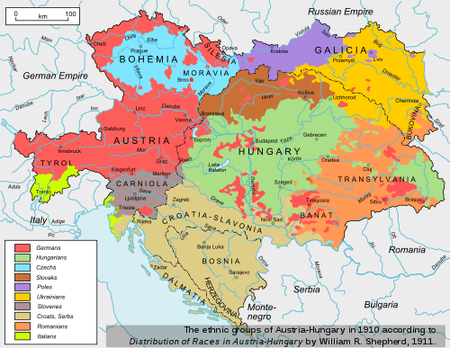
Between 1848 and 1918 (the end of the Austro-Hungarian Empire), many institutions like theaters and cultural organisations were founded in the "Slovene National Awakening", in hopes of having political representation. Throughout the rest of the century, the Slovene people pushed for representation and to keep their culture alive. By the end of the century, Slovene culture was thriving and literacy levels were among the highest in the empire. At the turn of the 20th century however, not all was so well. There were tensions between the Italian-speakers, Slovenes, and German-speakers who lived in so-called Carniola for nationalism. During this period, many Slovenes considered the unification of all the Southern Slavs into a nation called Yugoslavia.
At the same time and even as early as 1880, mass emigration occurred in Slovenia. During this time, around 1 in 6 Slovenes left for places in other countries like the United States (specifically Ohio and the Midwest), Argentina, and Germany, but also other cities within the empire like Vienna and Zagreb. This was largely due to limited opportunities in the region.
World War I saw the mass destruction of the region and led to the death and emigration of thousands of Slovenians. Battles like the Battles of the Isonzo, pushed Slovenians out of their homeland to neighboring regions like Italy and Austria. The Slovenians in Italy were treated very poorly however and as fascists took power, were seen as enemies and subjected to violence. This caused even more emigration to places like South America.
In late 1918, after the fall of the Austro-Hungarian Empire, the Slovenes took control of their lands and unified with parts of modern day Croatia and Bosnia to form the Kingdom of Slovenes, Croats, and Serbs. A few months later, the kingdom merged with Serbia (also including modern day Montenegro, North Macedonia, and Kosovo) to form the Kingdom of Yugoslavia. During World War II however, the region of Slovenia was annexed by Nazi Germany and Fascist Italy and Yugoslavia was defeated.
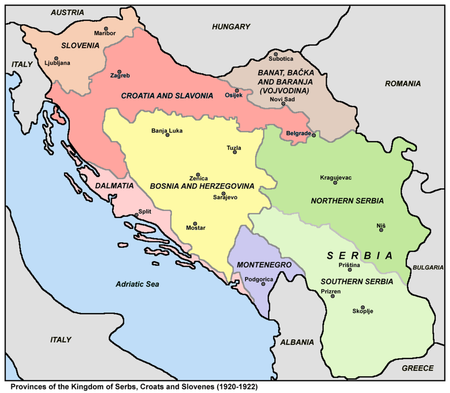
Horrible things happened during this time as ethnic Slovenes under Nazi Germany were ethnically cleanses and forced out of their homeland to Nazi puppet states in Croatia and Serbia. By 1941, Joseph Broz Tito, a Communist leader, started resisting the Italian forces in hopes of uniting Yugoslavia again, but this time as a communist nation. Because of this, Italian violence also increased and 25,000 Slovenes were sent to Italian concentration camps. Both nations promoted their cultures and forced it on the people of Slovenia. Around 8% of the population died during World War II
In 1945, a communist Yugoslavia under Joseph Broz Tito emerged in Slovenia and the other Southern Slavic states. During this period, many ethnic Italians and Germans fled to avoid persecution or jail-time. Also, many Slovenes left the country as well due to thousands of people being imprisoned due to their political beliefs. Throughout the decades, Yugoslavia was only facing more hardships and by the economic crisis of the 1980s, many Slovenians and other Yugoslavians pushed for the dissolution of the nation and independence of their national identities.
After many uprisings and protests, referred to as the "Slovene Spring", Slovenia finally gained its independence in 1991 along with four other nations formerly a part of Yugoslavia. For the first time in Slovenia's history, free elections were held. Milan Kucan became the first president of Slovenia in 1990. Finally! jbro finished yapping about Slovenian history! you're probably thinking
Cities and Provinces
Slovenia is divided into 212 municipalities, which is more than any other country in the world! With an area of 555 square kilometers, the municipality of Kočevje is the largest municipality and with more than 280,000 people, the municipality of Ljubljana is the most populated municipality. Ljubljana is also the largest city in Slovenia. Here is a list of the 10 largest cities in Slovenia:
1. Ljubljana
2. Maribor
3. Celje
4. Kranj
5. Koper
6. Valenje
7. Novo Mesto
8. Ptuj
9. Jesenice
10. Kamnik
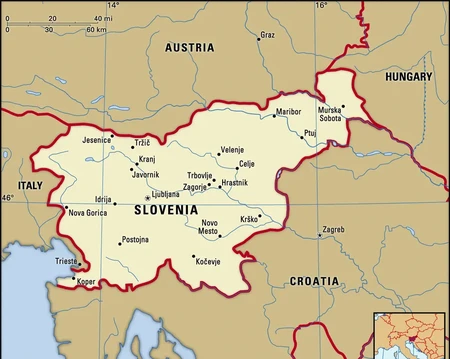
Demographics of Slovenia
Population: 2.1 million
Capital: Ljubljana
Population Density: 105/sq km or 272/sq mi
Life Expectancy: 82 years
3 Largest Ethnic Groups:
Slovenes (83.1%)
Serbs (2.0%)
Croats (1.8%)
Official Language(s): Slovene/Slovenian
Main Religions:
Catholic (70%)
Atheist (18%)
Orthodox (3%)
Best Places to Visit
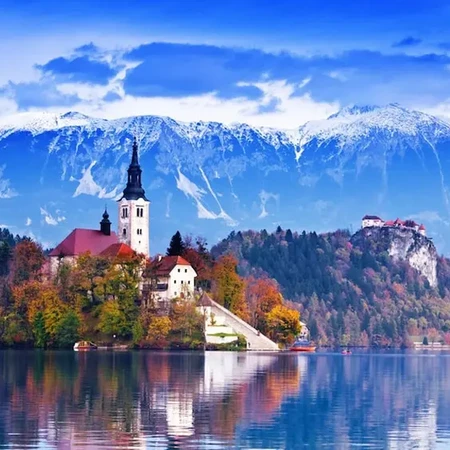
1. Lake Bled - gorgeous lake in the mountains of northern Slovenia with island and church
2. Ljubljana - capital city with historic old town, scenic river walks and cafes
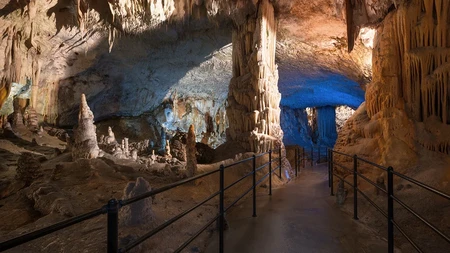
3. Postojna Cave - stunning rock formations in cave with train access
4. Predjama Castle - historic castle with cave system and picturesque views
5. Vintgar Gorge - alpine gorge with crystal waters, lush forests, and vibrant wildflowers
Culture
Slovenia has a rich and diverse culture influenced by its history and proximity to regions and cultures such as the Mediterranean, Austrian, Hungarian, and Balkan, to name a few.
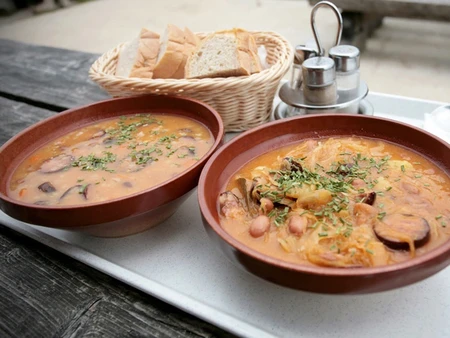
A majority of Slovenian cuisine is very similar to other Central European cuisines like Hungarian and Austrian. Although, some of the cuisine on the coast is more Mediterranean and Italian. In Slovenia, one-pot dishes (meals where everything is mixed in the same pot) are the most common. Main Slovene dishes include Istrian stew (jota), zganci buckwheat spoonbread, prekmurska gibanica (pastry), potica (nut roll), and roasted potatoes.
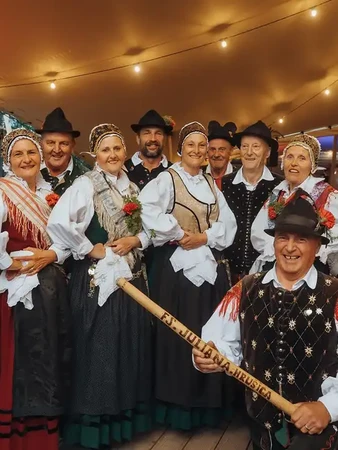
The traditional clothing of Slovenian women include skirts, with cotton socks, leather shoes, linen shirts, and with ribbons usually at the collar or sleeve. The tops are usually bodices that are very ornamental and decorated. Many women also choose to wear head coverings as shown in the picture. For men, it is common to see boots, wool or leather leggings, a linen shirt with ribbons, and vests made of velvet with many buttons. Belts are also commonly worn in addition to hats of varying sizes and shapes. Polka is a popular folk dance in Slovenia, often performed with two people wearing traditional clothes, in which the two dance in a gentle manner. Waltzes, and ballet are also very common in Slovenia. When it comes to music, harmony singing is a tradition in Slovenia where around four to eight singers sing traditional folk songs in harmony as well as play traditional instruments like the harmonica, fiddle, and clarinet.
A big part of Slovenian culture is also the arts. To start, the architecture of Slovenia is a beautiful mix of Austrian (mostly during 19th and early 20th centuries), Venetian, and Hungarian styles with UNESCO recognition in the capital of Slovenia. Styles like Baroque, Art Noveau, and Medeival are most commonly found in Ljubljana. Historically, painting and sculpting in Slovenia has been shaped by Neoclassicism, Biedermeier, and Romanticism and famous painters include Matevz Langus, Giuseppe Tominz, and Michael Stroy. Sports culture is also very popular in Slovenia with many citizens regularly being active and playing sports. Currently, sports like Football (Soccer), Basketball, and Skiing are the most popular although prior to World War II, fencing and gymnastics were the most popular. Athletes like Tina Maze (Olympic skier), Peter Prevc (Olympic ski jumper), Tadej Pogacar (cyclist who won the Tour de France), and Janja Garnbret (Olympic rock climber) paved and continue to pave the way in individual sports as well. Slovenia's mens football (soccer) team has also qualified for two European Championships (Euros) and two World Cups.
Slovenian culture is also deeply rooted in Christianity (specifically Roman Catholicism) as that region was one of the first to be Christianized, back in the Early Middle Ages. There are also around 2,500 churches in the nation
Fun Facts About Slovenia
1. Slovenia is home to the most caves in Europe with 10-14,000 caves.
2. The world's oldest vineyard is more than 400 years old and calls Maribor, Slovenia its home.
3. Slovenia is home to the world's oldest instrument, the Divje Babe Flute, which was used by neanderthals over 55,000 years ago!
4. Slovenia is one of the most forested nations with over 60% of the country being covered in trees.
5. Although being such a small nation, Slovenia is home to over 2,500 churches and 1,000 castles.
So this wraps up the beautifully hidden gem of Slovenia! I hope you enjoyed reading my blog! and sorry for making it really long Also, make sure to vote in the comments for which nation you would like me to do next.
The options are:
Armenia
Moldova
Montenegro
Happy blogging!
"Slovenia is the only country with "love" in it" - A Slovenian Swatcat met
Armenia: 10 votes|1st Place
Montenegro: 4 votes|2nd Place
Moldova: 0 votes|3rd Place
The next hidden countries blog, on Armenia, will likely come out next Monday.
I'll go Montenegro
Armenia gets my vote!
Thanks for making this!