
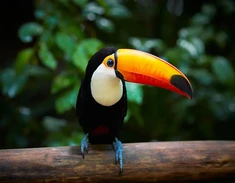
the Amazon tropical rainforest
Last updated: Sunday July 13th, 2025
Report this blog
Introduction
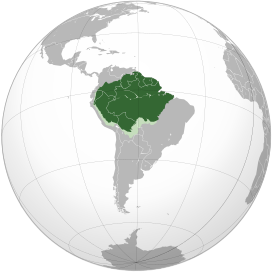
The amazon rainforest is a forest in 9 different countries. I will show you now the countries that have the Amazon rainforest and what percentage that is to the total Amazone rainforest
1. Brazil (60%)
2. Peru (13%)
3. Colombia (9%)
4. Venezuela (5%)
5. Bolivia (5%)
6. Guyana (3%)
7. Suriname (2%)
8. Ecuador (1.5%)
9. France/French Guiana (1.5%)
The total square of the Amazon rainforest is around 6.4 million square kilometres. That is 2 times as big as India. The total population that live in the Amazon is around 35 million people.
Crops
There are lots and lots of crops in the Amazon rainforest. Here is a list of the top 10 most amount of crops in the Amazon.
1. Soybeans, 21% of the total amount in the world
2. Gold, 6.1% of the total amount in the world
3. Oil, 21% of the total amount in the world
4. Sugarcane, 25% of the total amount in the world
5. Rice, 1.4% of the total amount in the world
6. Maize, 3.1% of the total amount in the world
7. Cassava, 10% of the total amount in the world
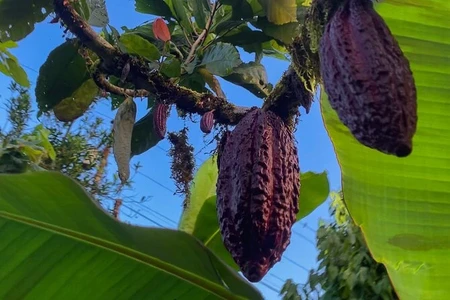
8. Cacao, 7.2% of the total amount in the world
9. Coffee, 35% of the total amount in the world
10. Citrus fruits, 27% of the total amount in the world
Did you know that our Chocolate, Moisturiser, Cashew and Paranuts, Medicine, Shampoo, Vanilla, Coffee, Avocado's, Banana's, Cinnamon, Peper and Raspberries all come from the Amazon Rainforest, There are lots of trees that these things grow on. all kinds of fruits trees are found in the Amazon rainforest.
Biodiversity
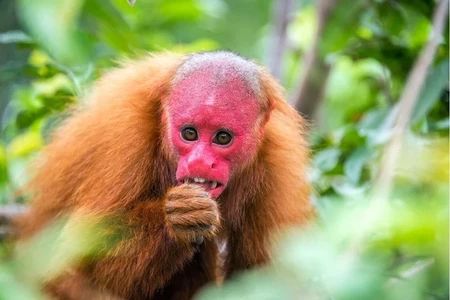
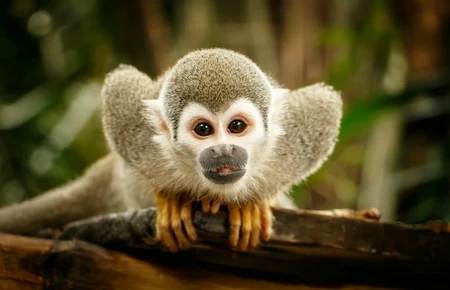
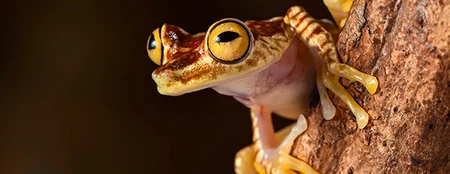
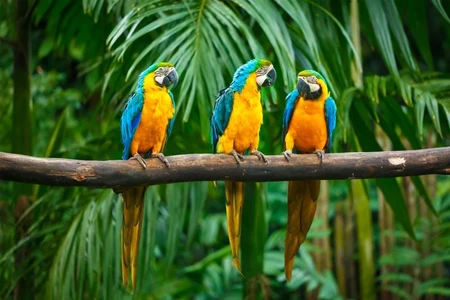
Then we move on to the biodiversity of the Amazon rainforest, that means the plants and animals. 10% of all the animals are located in the Amazon rainforest. There are over 3.3 million insects species. 3.3 MILLION!!! Can you believe it? There are over 500 million plant species in the Amazon. Just shocking. There are 1340 bird species and 490 mammals species, 3200 fish species and 370 reptile species and 430 amphibians species. The biggest animals that you can find in the Amazon rainforest are crocodiles, jaguars, black caymans, but the biggest of all is the Amazon seacow. The Amazon seacow can grow up to 3 metres and 570 kilograms.
Amount of species per hectare in the Amazon rainforest
Type of Organism Number of Species per hectare
Birds 160
Trees 310
Epiphytes 96
Reptiles 22
Amphibians 33
Fish 44
Primates 10
History of the Amazone rainforest
The rainforest likely formed during the Eocene era (from 56 million years to 33.9 million years ago). It appeared following a global reduction of tropical temperatures when the Atlantic Oceanhad widened sufficiently to provide a warm, moist climate to the Amazon basin. The rainforest has been in existence for at least 55 million years, and most of the region remained free of savanna-type biomes at least until the current ice age when the climate was drier and savanna more widespread.
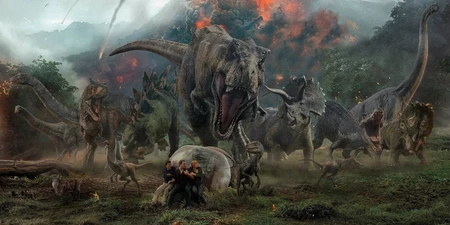
millions of years ago, there were dinosaurs living in the rainforest. The most dinosaurs that lived there were Neodinosaurs.
Many millions of years ago, in the Paleozoic era, all the land was part of a unique continent, the Pangaea. Salt water washed the Amazon region and possibly reached Peru and Bolivia . The end of the Paleozoic marks the incorporation of the Amazon River basin to the continent but only on the Cenozoic period great transformations took place and produced something similar to where the forest is located today.
Cities
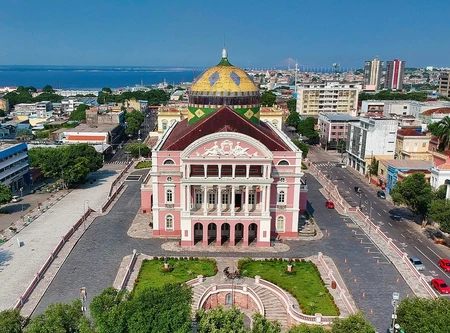
There are no big cities in the Amazon rainforest because it is isolated from big cities as Rio de Janeiro, Salvador or São Paulo, but there still is one big cities that makes the difference. The city is called Manaus. Manaus is a city in the middle of the rainforest and it makes up to 2.41 million inhabitants. Manaus is the 11th biggest city in Brazil. This is the only big city in Brazil, you still have some other cities as Porto Velho (460.000), Santarém (290.000), Boa Vista (413.000) and Macapá (510.000) But these cities still come nowhere close to Manaus.
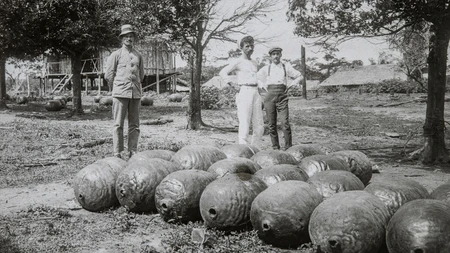
Rubber made Manaus the richest city in South America during the late 1800s. Rubber also helped Manaus earn its nickname, the Paris of the tropics. Many wealthy European families settled in Manaus and brought their love for sophisticated European art, architecture and culture with them.
Manaus is after São Paulo and Brasilia the richest city in Brazil with an average GDP per Capita of over $16.000 per year.
There are also other big cities in the Amazon rainforest that are not located in Brazil. Examples are Leticia, Colombia (50.000 people), Coca, Ecuador (60.000 people), Iquitos and Puerto Maldonado, Peru (550.000 people) and Rurrenabaque, Bolivia (21.000 people).
Colonisers
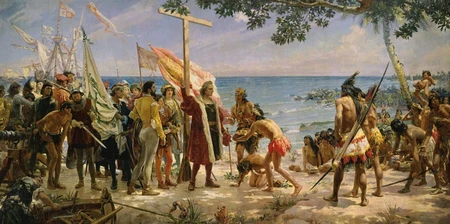
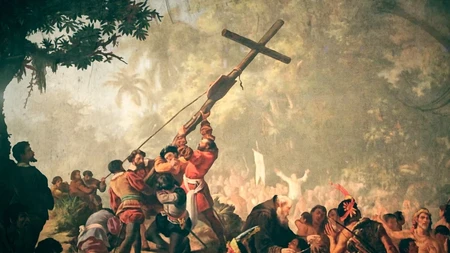
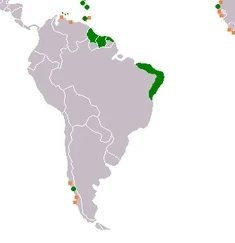
The Amazon rainforest have been colonised by some countries. Not much because it's difficult to conquer the Amazon rainforest since it is very big and isolated from big cities or something, But the countries that colonised parts of the Amazon rainforest were Spain, Portugal, the Netherlands.
Spain
Spain was the country that had all countries of South-America in control, but not the countries Brazil, Guyana, Suriname and French Guiana. The Spanish colonised Argentina, parts of Uruguay and Paraguay, Bolivia, Peru, Chile, Colombia, Ecuador and Venezuela. Countries as Bolivia, Peru, Colombia, Ecuador and Venezuela all have parts in the Amazon Rainforest. So you can say that Spain controlled lots of land in the Amazon rainforest. 34%.
Portugal
Portugal also had colonization in South America, They had the big country of Brazil. The controlled the whole of Brazil at one moment. 64% of the Amazon rainforest is located in Brazil, so this shows that Portugal had the greatest possession of land in the Amazon rainforest.
Netherlands
Beginning in 1630, the Dutch Republic gained control of a large portion of northeastern Brazil from the Portuguese The Dutch West India Company set up their headquarters in Recife; it also exported a tradition of religious tolerance to its New World colonies, most notable to Dutch Brazil. The governor, Johan Maurits, invited artists and scientists in order to help promote migration to the new South-American colony. However, the Portuguese fought back and won a significant victory at the second battle of Guararapes in 1649. On 26 January 1654, the Dutch Republic surrendered and signed a capitulation returning control of all the northeastern Brazil colony to the Portuguese. After the end of the first Anglo-Dutch war in May 1654, the Dutch Republic demanded that Nieuw Holland (Dutch Brazil) be returned to Dutch control. Under threat of an occupation of Lisbon and a reoccupation of northeastern Brazil, the Portuguese, already involved in a war against Spain acceded to the Dutch demand. However, the new Dutch political leader Johan de Witt deemed commerce more important than territory, and saw to it that New Holland was sold back to Portugal on August 6, 1661, through the Treaty of the Hague
After the devastation caused by World War II the Dutch government stimulated emigration to Australia, Brazil, and Canada. Brazil was the only nation to allow the arrival of large groups of Catholics. With the consent of the Brazilian government, the Catholic Dutch Farmers and Market-gardeners Union (Dutch: Katholieke Nederlandse Boeren- en Tuindersbond) coordinated the emigration process. A group of approximately 5000 migrants from the province of North Brabant arrived in Brazil, establishing their first colony at the farm of Fazenda Ribeirão in the state of São Paulo. Holambra I was founded in 14 July 1948. After a referendum in 1991 where 98% of the population voted in favor of political autonomy for the area, Holambra gained city status in January 1993.
Famous for its large production of flowers and plants and for the yearly event Expoflora, Holambra receives thousands of tourists each year. In April 1998 this fact was recognized as Holambra gained the status of Estância Turística, touristic location. Further immigration from the Netherlands, ended up creating the cities in Brazil where the majority of the population descends from these Dutch immigrants. These cities are Holambra, Castrolanda, Carambei, Não me Toque, Witmarsum (where most of the population are descended from Dutch Frisian immigrants), Arapoti and Campos de Holambra.
The Netherlands also had Suriname and parts in French Guiana and Guyana. These three countries all have parts that are in the Amazon rainforest. You can tell that the Netherlands has had various areas in the Amazon rainforest. The Dutch owned 7-8% of the total Amazon rainforest.
Deforestation
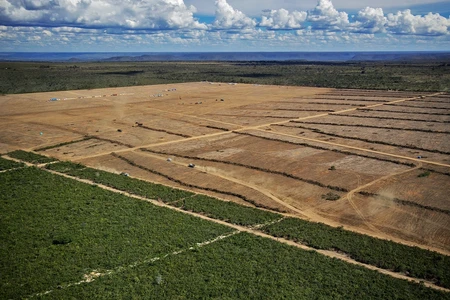
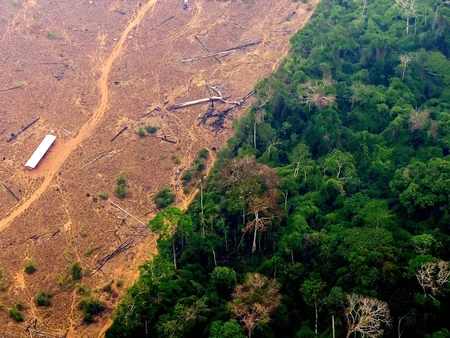
Deforastation is huge in Brazil. Every 15 seconds, there disappears a football field of Amazon forest. Every 15 seconds. This year, 7000 square kilometres of Amazon rainforest was felled. The peak of the felling was reached in 1995 where there was 29.000 square kilometres of Amazon rainforest felled. That is 0.5 % of the total Amazon rainforest. and that in 1 year. The deforastation is still being done because they want to have that ground for things as buildings, infrastructures or agriculture. But, Brazil is in the peaceappeacement of Paris where the law is to Brazil that they have to plants more plants in the Amazon rainforest. Because without the rainforest, oxygen becomes lesser and lesser and that is not good for our health. The Brazil is also called as the lungs of the world because most of the oxygen comes from the rainforest of the Amazon.
I haven't been to many, but the misty aura of rainforests is unmatched. Of course, the wildlife will probably kill you. The mosquitos nearly did when I was in the Alaskan rainforests.
There's a theory that (a large chunk of) the Amazon was man-made. Essentially, it says that the local tribes planted a ton of trees since they wanted an easy way to get food, wood, and all that stuff. The journals of conquistadors back it up too—they claimed to see massive cities with thousands of people in the middle of a hostile jungle.
Some things:
There are 400 tribes in the rainforest, some of which are uncontacted. There are over 300 languages, and half have less than 500 people. Many are endangered I believe. 50 language isolates also appear.