

Countries With the Highest (and Lowest) Life Expectancy Historically
First published: Sunday March 29th, 2026
Report this blog
Paleolithic and Neolithic Ages

In the Paleolithic era, life expectancy at birth worldwide was around age 33, affected by factors such as high infant mortality and the fact that there was virtually nothing you could do once you caught a disease. Many people died from attacks from wild animals as well. There is no country-specific data for this period, but what we do know is that life expectancy across the globe was very low. For the 72.5% of children that survived their first year, life expectancy was around 45, and for the 52.5% of children that survived to puberty, life expectancy could be as high as 55. The eruption of the Toba supervolcano, which left the world population as low as 3,000, also critically impacted the global life expectancy as potentially almost all of humanity was wiped out.
Moving on to the Neolithic age, life expectancy actually dropped due to the invention of agriculture. Farming led to the existence of permanent settlements, which resulted in easier transmission of disease. Life expectancy at this time was estimated at 20-33 years, with child mortality rates similar to that of the Paleolithic age.
2000 B.C.E. - 1st Millennium A.D.

In ancient Egypt, an infant mortality rate of roughly 40% brought the life expectancy to even lower than it was in the paleolithic and neolithic age - the average person in ancient Egypt was expected to live to 19 at birth. Men and women who survived infanthood had lifespans of around 30 and 34 years respectively. In classical Greece, however, life expectancy was higher. Despite the fact that nearly half of ancient Greeks died before adolescence, life expectancy around that time was 25 - extremely low compared to modern standards, but 6 years higher than ancient Egypt. For those that survived to age 15, they were expected to live to around 40. People who lived to age 30 had a decent chance of living to middle age. For example, Socrates lived to around 70. Life expectancy in ancient Rome was around 22. In Roman Egypt, life expectancy was around 24, and in Roman England life expectancy was roughly 30.3 years at birth. Those in China had lifespans of 35, which increased to 47 for those who survived infanthood. In Gaul, life expectancy at age 20 was 37 for women and 45 for men. Worldwide, from the bronze to iron age, life expectancy averaged 26. In summary, from the paleolithic age to the Roman age, there was little improvement in average lifespans globally.
Medieval - Early Modern Period
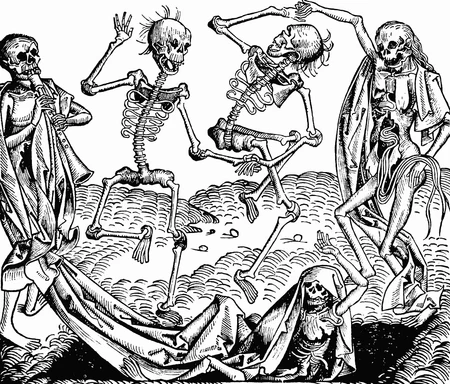
Life expectancy in England 750 years ago was about 34.94 years, and before the Black Death it was 30-35 years - which had dropped to as low as 17 by 1350. From the 16th century to the beginning of the Industrial Revolution longevity of life among the United Kingdom generally ranged from 35-40 years, with a few exceptions, such as in 1558 when the life expectancy dropped to 22.38 years as a result of an influenza outbreak from 1557-8. The average lifespan of 1,541 English aristocrats that reached the age of 21 sometime between 1200 and 1745 was approximately 64.2 years. The Aztec Empire's life expectancy was around 28 years. Wrocław, then known as Breslau, had a life expectancy of approximately 33.5 years in 1693. Worldwide, in 1000 A.D, the average person lived to 24. It is safe to say that the life expectancy hardly improved in the medieval and early modern period.
18th Century

An outbreak of a disease, potentially smallpox, from 1727-30 brought the life expectancy in Britain to just 25 years. French males lived to, on average, 24.8 years in the 1740s and 27.9 years in the 1750s. Average lifespans in France jumped from 27 in 1795 to 35 in 1800 as a result of the invention of the smallpox vaccination (1796) and many reforms after the French Revolution. From 1751-1771 life expectancy in Sweden ranged from 30-40 years; a famine from 1771-2 caused the life expectancy to plunge to less than 18 years in 1773 before rebounding to 40.53 years the next year. From 1775-79, the longevity of life in Iceland was around 36.68 years, which dropped to 21.94 by 1785 as a result of the Laki eruption which wiped out 9,500, or 19 percent, of the island's population. In the small Japanese village of Nishikata, life expectancy among females at birth was approximately 75.3 from 1782-7, which plummeted to 39.1 by 1787-92. Life expectancy for Japan as a whole from 1751-1869 was 37.4 and 32.2 from 1776-1865. The average person in colonial America lived to 28; around the same time, if one lived to 50 in Massachusetts they had approximately 21 remaining years to live; if one lived to 60 in Massachusetts they were expected to live 15 more years. Life expectancy improved after the Industrial Revolution but the improvements had not taken their full effects yet.
19th Century
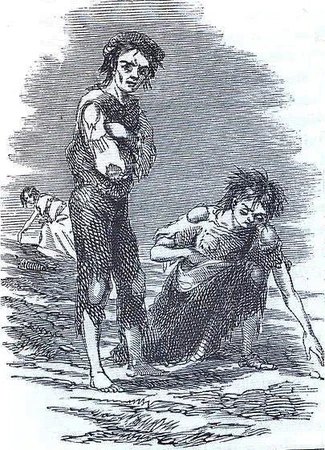
In 1820, an average person worldwide was expected to live to 26 - if someone lived in a more developed country (Western Europe, Canada and the U.S., Australia and New Zealand, or Japan) their lifespan was anticipated as 36 years, 12 years more than in other countries. Based on estimates from Gapminder, Iceland, Belgium, the Netherlands, the United States and Canada led the world in life expectancy. Icelanders, for example, lived to 42.9 on average. In the 1800s, Yemen, Kyrgyzstan, Turkmenistan, Tajikistan, and Vanuatu had the lowest life expectancies - people from each of those countries lived to, on average, not even 25 years old. Many countries experienced severe drops in life expectancy in the 1800s - one of the most well-known examples being the Irish Potato Famine, in which over 1 million Irish people, or 1/8 of the island died due to an infection of potatoes, which the island heavily relied on. Even worse was the Ethiopian famine of 1888-92 where 4 million Ethiopians died and the life expectancy supposedly fell to 4.29 years, and the Fijian measles outbreak of 1874-6 where 40,000 people in Fiji died and the life expectancy supposedly fell to just 1.04 years. In 1900 life expectancy in more developed countries had skyrocketed to 46 years, with life expectancies over 50 observed in Norway, Sweden, Denmark and Australia. Despite this, little change was noted in less developed countries. The average person in North Korea lived to just 20.
20th Century
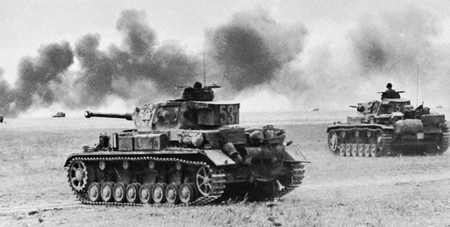
During World War I average lifespans in Europe dropped by some 11 years, from 43 in 1914 to 32 in 1918. Because of this, and the Influenza outbreak of 1918-20, countries such as Seychelles, Argentina, and possibly even Papua New Guinea climbed the charts, each potentially having one of the 20 highest life expectancies among other modern-day countries in the world. During World War II average lifespans in Europe dropped by approximately 13 years, from 55 in 1939 to 42 in 1944. Jewish lifespans in Europe probably dropped by much more. In Lithuania and Poland, over 85% of Jews died from the Holocaust. Given that life expectancy in Fiji dropped to 1 year after a 33% drop in population, the life expectancy of Jews in some Eastern European countries could have collapsed to even less than a year. In 1950, after the two World Wars, the global life expectancy sat at 46.39 years. The highest life expectancies were observed in San Marino (71.59), Norway (71.59), the Netherlands (71.44), Sweden (71.14) and Iceland (71.03), and the lowest life expectancies were seen in North Korea (14.20), South Korea (22.23), Afghanistan (28.16), Mali (28.73) and Yemen (28.93). The Rwandan and Cambodian genocides brought their countries' life expectancies down by 30.78 years and 26.51 years respectively. In 1991, Monaco was the first country to have a life expectancy exceeding 80 years. Based on this information, it is clear that life expectancies in the 20th century significantly improved.
21st Century
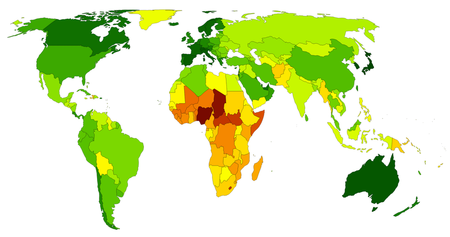
Most countries have seen rapidly increasing average lifespans in the recent decades, excluding COVID-19. In 2000, only 3 countries had a life expectancy of at least 80 years. Now, 45, or 23 percent of all recognized countries on Jetpunk, do. Since 2000 life expectancy globally has also increased by 7.33 years. Dominica is the only country that has experienced a drop in life expectancy from 2000-2026 (roughly -0.0977 years). By 2100, every continent except Africa and Antarctica is predicted to have a country with a life expectancy over 90. The increase of life expectancy is also a main factor of aging populations. 37.1% of Monaco is estimated to be over 65, and 29.5% of Japan. By 2060, over 40% of Japanese are projected to be considered elderly.
Sources
Wikipedia: Demographics of Japan
Wikipedia: Map used to illustrate Stahlecker's report to Heydrick on January 31, 1942

Internet Archive: British medieval population
Internet Archive: Economic and Demographic Change in Preindustrial Japan, 1600-1868
Statista: Life expectancy (at birth) in Iceland, from 1765 to 2020
Statistics Iceland: Population - key figures 1703-2026
Gapminder: Life expectancy Dataset
Google Books: Seasons of Life: The Dramatic Journey from Birth to Death
United Nations: Life expectancy at birth for both sexes combined (years)
Holocaust Encyclopedia: JEWISH LOSSES DURING THE HOLOCAUST: BY COUNTRY
ScienceDirect: Infant and child death in the human environment of evolutionary adaptation