
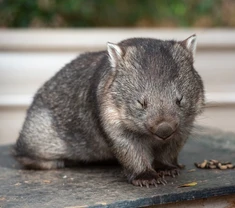
Only In Australia - Wombats
First published: Friday April 11th, 2025
Report this blog
The Wonderfully Weird World of Wombats
Australia is famous for its one-of-a-kind wildlife such as kangaroos, koalas, platypuses, and the topic of this first blog, wombats. These chunky, short-legged marsupials might not be as internationally famous as their eucalyptus-munching cousins, but they are arguably even more fascinating. Burrowers, bulldozers, and cubic poopers (yes, really), wombats are full of surprises.
In this first installment of Only in Australia, we will dive deep like a wombat into its burrow into the quirky, clever, and captivating life of one of Australia’s most underrated icons.
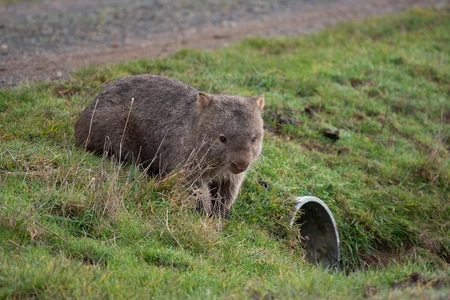
What is a Wombat?
Wombats are burrowing marsupials found only in Australia. They are stocky, ground-dwelling animals with short legs, powerful claws, and big personalities. Despite their resemblance to small bears, wombats are most closely related to koalas. But make no mistake, these creatures are built for a very different life.
There are three different species:
Common Wombat (Vombatus ursinus)
Southern Hairy-nosed Wombat (Lasiorhinus latifrons)
Northern Hairy-nosed Wombat (Lasiorhinus krefftii)
While they vary in coat texture and habitat preference, all wombats share some incredible features that make them evolutionary standouts.
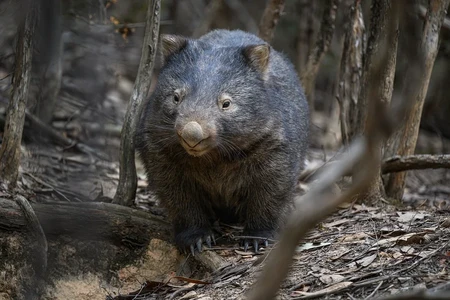
The Art of the Backward Bump
Surprisingly Speedy Sprinters
Though they might look slow and cuddly, wombats are surprisingly quick when they need to be. In short bursts, they can run up to 40 km/h (25 mph) which is about the same speed as a human sprinter.
This speed is especially impressive considering their low center of gravity and stout build. They rely on this burst of speed to dash for cover when danger approaches, diving into the safety of their burrows with seconds to spare.
Their compact and muscular bodies not only help with digging and defense but give them the propulsion they need to outrun many natural predators—at least over short distances. This means if you ever get challenged to a race by a wombat make sure that it is a long distance run or you might just find yourself as the loser.
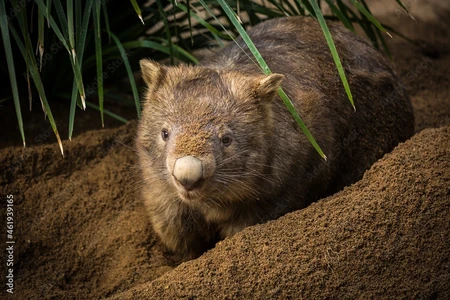
Home Sweet Tunnel
Wombats are world-class diggers, constructing burrow systems that can stretch over 30 meters (100 feet) in length and plunge more than 3.5 meters (11 feet) underground. These tunnels provide not only shelter from predators but also insulation from Australia’s often extreme climate.
Burrows usually include multiple entrances and chambers. A single wombat may maintain several burrows in its territory, rotating between them. While generally solitary creatures, there’s evidence that wombats sometimes share burrow systems especially during harsh weather or bushfires.
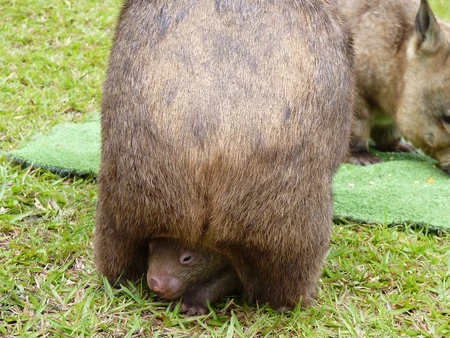
Their claws, reinforced paws, and sheer determination make them some of nature’s most efficient excavators. And thanks to their backward-facing pouch (more on that in a moment), they can dig without filling their baby’s cradle with dirt.
The Backward Pouch
Like kangaroos and koalas, wombats are marsupials, meaning their young develop in a pouch after birth. But wombats have a clever twist: their pouch opens toward the rear. This ensures that dirt doesn’t pour in while the mother digs because really, what baby wants to be buried alive while nursing?
After birth, the wombat joey (barely the size of a jellybean) climbs into the pouch, where it nurses and grows for about 6–10 months. Once it leaves the pouch, it continues to stay close to its mother, often riding on her back or trailing behind until it’s ready to go off on its own.
Geometric Feces?
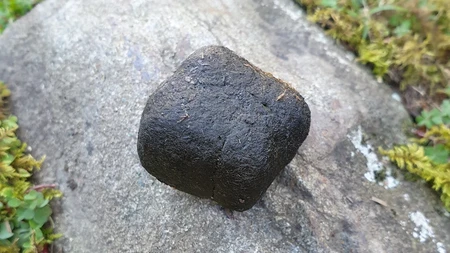
Perhaps the most infamous feature of the wombat is its cube-shaped poop. Yes, cubic feces are a real thing and only wombats do it.
This unusual trait helps wombats mark their territory. They often place droppings on rocks and logs to communicate boundaries. The cube shape prevents the poop from rolling away which is very practical for a ground-level communicator.
Scientists have discovered that this shape is due to the way wombat intestines contract. Uneven elasticity and strategic muscular contractions over an exceptionally long digestion process, up to 14 days, create these quirky cubes.
Endangered Cousins
While the common wombat is relatively safe, the northern hairy-nosed wombat is critically endangered, with fewer than 300 individuals remaining. Restricted to a protected area in Queensland, their survival depends on active conservation efforts, including habitat management, disease prevention, and breeding programs.
Organizations like The Wombat Foundation and countless dedicated carers work tirelessly to protect these rare marsupials, along with treating common wombats suffering from issues like sarcoptic mange.
In recent years, wombats gained international praise when wildlife cameras captured them allowing other animals to shelter in their burrows during bushfires which is a testament to the impact their engineering has on the broader ecosystem.
Why Wombats Matter
More than just cute animals with armored butts and cubed poop, wombats are critical components of the Australian ecosystem. Their burrows serve as shelter for other species, their digging aerates the soil, and their slow metabolism offers unique biological insights.
In a world of flashy predators and photogenic tree-dwellers, wombats quietly carry on digging, running, defending, and, yes, pooping in cubes. And that’s why they deserve a spot in the spotlight.
Extra Wombat Facts!
Before we wrap up, here are some fun facts to take with you:
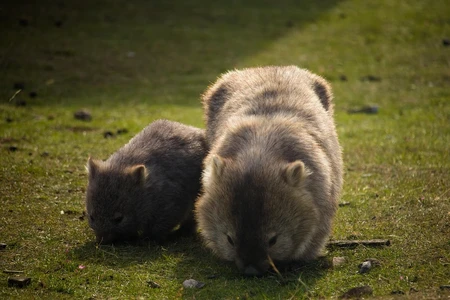
A group of wombats is called a “wisdom.”
Their teeth never stop growing which is perfect for gnawing tough native grasses.
Despite their stocky bodies, wombats are incredibly agile underground.
Their cube poop has inspired everything from children’s books to scientific journal articles.
Coming Up Next...
For the next blog in this series, we'll explore the thorny devil, a desert-dwelling lizard that drinks through its skin and looks like it crawled out of a dragon’s den.
Australia never runs out of strange. And we’re just getting started.
Not only is their poop square, but they pretty much are too! This is a good informational, MCY2. Looking forward to what you bring us next