
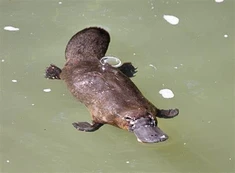
Only In Australia - Platypus
Last updated: Friday April 18th, 2025
Report this blog
The Platypus – Too Strange to Be Real
There are strange animals, there are unique animals, and then there’s the platypus.
A mammal that lays eggs, uses electricity to see, has venomous spurs, no stomach, no nipples, and that uses its bill to forage blindly underwater, storing food in cheek pouches and chewing with gravel.
The platypus (Ornithorhynchus anatinus) is so unlike anything else that the first British scientists to examine a specimen in the late 18th century thought it had to be a hoax, possibly the work of a prankster who stitched a duck’s beak onto a mammal’s body. And yet, every part of the platypus serves a purpose that come together to make a mammal that is uniquely Australian.
In this entry of Only in Australia, we dive deep into the life of one of the most unique animals on the planet and learn how its baffling traits have helped it thrive in the rivers and streams of eastern Australia.
More Than a Bill
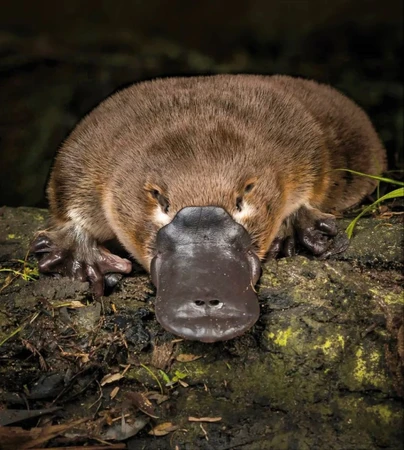
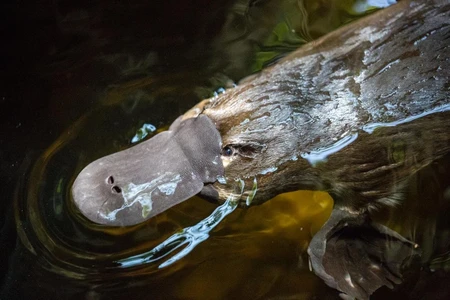
If you had to pick just one feature that makes the platypus instantly recognizable, it would be the bill. Duck-like in appearance but soft, flexible, and rubbery in texture, this bill isn’t used for pecking or preening like a duck. It’s a sophisticated sensory organ, packed with over 40,000 electroreceptors and mechanoreceptors to detect anything imaginable.
When a platypus dives underwater to hunt, it closes its eyes, ears, and nostrils. It relies entirely on its bill to navigate and detect prey. Tiny electrical signals given off by the muscle contractions of insects, worms, and crustaceans in the sediment are picked up by the bill with extraordinary accuracy.
This ability known as electroreception is exceedingly rare in mammals. It allows the platypus to effectively “see” with electricity, giving it an edge in murky or dark environments where visibility is limited. It can even detect the direction of electrical signals, helping it triangulate the precise location of any hidden prey.
Feeding Without Teeth
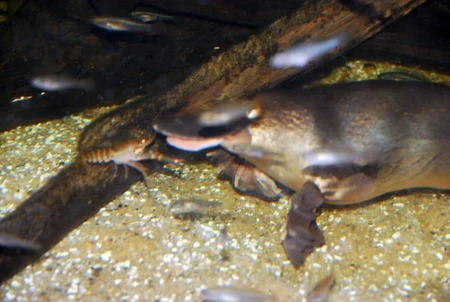
Once it detects prey, the platypus uses its bill to scoop up small animals from the riverbed, often along with a helping of gravel and sediment. But here’s where things get even stranger: adult platypuses don’t have teeth.
Instead, they carry their catch in cheek pouches and return to the surface. There, they mash the mixture together using the gravel like makeshift molars, grinding their food before swallowing. It's an improvisation that allows the platypus to chew without ever needing traditional teeth, which is very convenient considering they don't have any.
And as if that weren’t enough, the platypus doesn’t have a stomach. That’s right, food passes straight from the esophagus to the intestines. This shortcut, which is seen in only a few other species, is thought to reduce the energy needed for digestion or help streamline the platypus’s unique feeding process. Either way, this trait just checks one more box for the platypus being one of the strangest animals on the Earth.
Built to Swim
The platypus is perfectly suited to life in the water. Its body is sleek and streamlined and covered in thick, waterproof fur that traps a layer of insulating air close to the skin to keep it warm in chilly waters. Its limbs are short and strong, and its front feet are fully webbed. These wide, paddle-like feet provide powerful strokes underwater, allowing it to swim with surprising agility.
What’s unusual is how the webbing works. When walking on land, the webbing folds back, exposing sharp claws for digging and walking. This reversible design makes the platypus equally capable in water and on land, though it definitely looks far more graceful in one than the other.
Its broad, flat tail also plays several roles. It acts as a rudder while swimming, helps with balance on land, and stores fat for periods of food scarcity or breeding. A well-fed platypus has a noticeably plump tail, often used by researchers to assess overall health.
Venomous Spurs
The list of venomous mammals is extremely short and, on that list, of course we have the platypus. Male platypuses have a sharp, keratinous spur on each hind leg, connected to a venom gland located in the thigh. The venom is delivered through the spur, typically during fights with rival males in the breeding season. While it’s not lethal to humans, it causes intense pain, swelling, and tissue damage, and there is no known antidote. In some documented cases, the pain has persisted for months, so you definitely do not want to get a dose yourself.
Females are also born with spurs, but they fall off before adulthood and are non-functional. This is believed to reinforce the role of venom in male competition rather than general defense. It’s certainly a fascinating trait not only for its rarity, but for the glimpse it offers into how even mammals can provide a danger in the form of some well-placed venom.
An Unconventional Parenthood
The platypus is one of only two types of monotremes (egg-laying mammals) the other being the echidna who may just be the topic of a later blog. Unlike reptiles or birds, monotremes combine reptilian reproduction with mammalian nurturing making for a very interesting animal.
During the breeding season (typically June to October), female platypuses retreat into nesting burrows—long, tunnel-like constructions dug into riverbanks. These burrows are highly engineered, with multiple plugs of soil to regulate moisture and temperature and keep the young platypuses as safe from predators as possible.
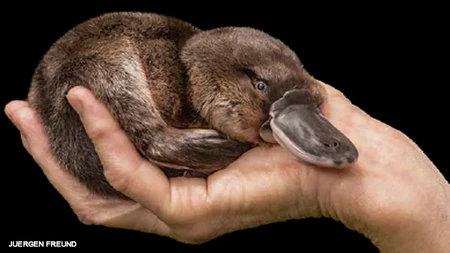
The female lays 1–3 leathery eggs and incubates them for about 10 days. Once the eggs hatch, the young (puggles) are blind, hairless, and entirely dependent. The mother does not have teats. Instead, milk is secreted through openings in the skin and absorbed from grooves on her abdomen, where the puggles lap it up directly.
The puggles remain in the burrow for 3–4 months, slowly growing under their mother’s care before emerging into the world. It’s one of the most secluded and protected developmental stages of any mammal.
Shy, Solitary, and Secretive
Despite their iconic status, platypuses are rarely seen. They are solitary, nocturnal animals that prefer quiet, undisturbed watercourses. Their range extends across eastern Australia, including Tasmania, where they inhabit rivers, creeks, and freshwater lakes.
Seeing a platypus in the wild is a special experience, often only possible with patience, stillness, and a little luck. They are fast and agile swimmers, capable of diving for up to two minutes at a time and covering large territories which makes them quite difficult to spot as a human.
They can even travel considerable distances over land to relocate to new water bodies, especially in times of drought or habitat disturbance. These overland journeys can span several kilometers which is a strong a reminder of the platypus’s resilience and adaptability in times of difficulty.
Conservation Challenges
Although not officially endangered, the platypus is considered vulnerable in some parts of its range. Habitat destruction, pollution, land clearing, and changing rainfall patterns have all contributed to declining populations, particularly in Victoria and New South Wales.
The construction of dams can also fragment river systems, making it harder for platypuses to move between habitats. Efforts to protect freshwater ecosystems, manage catchment health, and monitor platypus populations are crucial to their long-term survival as a species
Recent studies have prompted calls for greater protection, with conservation groups advocating for federal listing under Australia’s threatened species framework which could help to protect them for future generations to admire.
Why Platypuses Matter
Beyond their curiosity-inducing design, platypuses play a vital role in Australia’s freshwater ecosystems. As predators of insect larvae, crustaceans, and other invertebrates, they help maintain ecological balance in the rivers and streams they inhabit. Their presence is also a sign of healthy, unpolluted water systems as they are a natural indicator species that reflects the condition of their environment.
Culturally, platypuses are an enduring symbol of Australia's natural uniqueness. They feature on the Australian twenty-cent coin, appear in Aboriginal stories, and continue to inspire animal lovers around the world.
In a changing climate and increasingly fragmented landscape, the platypus reminds us that Australia’s wildlife isn’t just diverse but irreplaceable. Protecting animals like the platypus means protecting the delicate systems that support life across the continent and ensuring that future generations can enjoy seeing these strange mammals in the wild.
Fun Facts About Platypuses
They glow under UV light. Platypus fur fluoresces a greenish-blue color under ultraviolet light, though it’s unclear what purpose this serves in the wild.
Each bill is unique. Much like a human fingerprint, the ridges and structure of each platypus’s bill are individually distinct.
They use tail slaps to communicate. Platypuses have been observed slapping the surface of the water with their tails, possibly as a warning or territorial signal.
They're incredibly quiet. Platypuses are nearly silent creatures. They don’t vocalize, and their movement through water is almost noiseless, making them very difficult to spot in the wild.
Coming Up Next on Only in Australia
In the next blog, we’ll climb up into the trees to meet one of the most beloved faces of Australian wildlife: the koala. Often misunderstood, these eucalyptus-eating marsupials have fascinating biology, complex behavior, and a lifestyle that’s truly unique.
A Platypus?!?
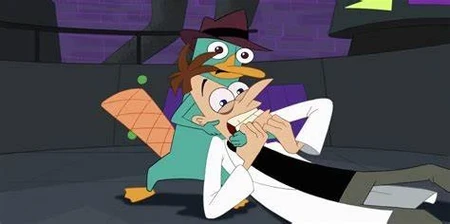
PERRY the Platypus?!?
Great blog!
I got a platypus controlling me
Now let me sum it up
It was a strange set of circumstances
Strange set of circumstances
I fell down the hill, I got glue on my hands, now I got records on my fingers and I just can't stop
Don't stop! Don't stop!
There's a platypus controlling me, he's underneath the table
There's a platypus controlling him- WHAAAT?