
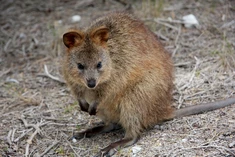
Only In Australia - Quokkas
Last updated: Tuesday April 15th, 2025
Report this blog
Quokkas – The World’s Happiest Marsupial
If you've spent even a little time on the internet, chances are you've seen a quokka selfie. A grinning little marsupial posing happily beside a delighted tourist is just too good not to post. But behind that adorable smile lies a fascinating, uniquely Australian creature that’s far more than just a viral sensation.
Found primarily on a few small islands off the coast of Western Australia, quokkas (Setonix brachyurus) are members of the macropod family, relatives of kangaroos and wallabies, but they’ve carved out a lifestyle and personality all their own. From their island survival strategies to their surprisingly hardy constitution, quokkas are a masterclass in charm, resilience, and just being photogenic.
In this third entry of Only in Australia, we head to Rottnest Island to meet the marsupial that’s stolen hearts around the world and learn why quokkas are worth more than just a smile.
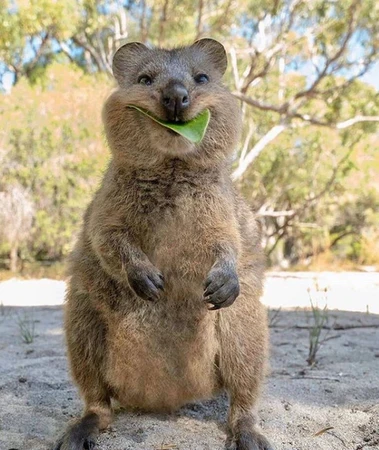
Meet the Quokka
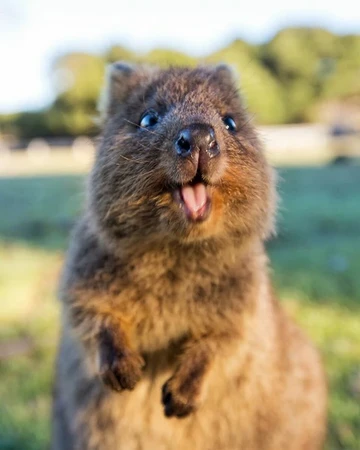
Quokkas are small, herbivorous marsupials about the size of a domestic cat. They measure around 40–54 cm (16–21 inches) long, with a short tail and stocky build. What sets them apart, though, is their expressive face, which often gives the illusion that they’re always smiling.
But quokkas aren’t just cute they are also clever survivors. Most wild quokkas live on Rottnest Island, a protected area about 18 km off the coast of Perth. Smaller populations also exist on Bald Island and in isolated parts of mainland Western Australia, but it’s Rottnest where they thrive and where their global fame was born.
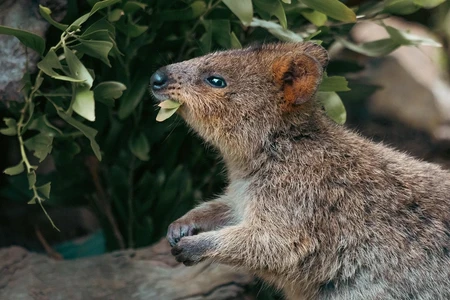
Smile!
While their facial expressions might seem humanlike, quokkas aren’t smiling because they’re happy in the emotional sense. Their grin-like appearance is due to the natural shape of their mouths and faces, which curve upward. It’s a complete coincidence but one that’s captured the imaginations of wildlife lovers and internet lurkers around the world.
That said, quokkas are naturally curious and relatively unafraid of humans. On Rottnest, where predators are few and tourists are many, they’ve become accustomed to people often hopping right up to investigate bags, cameras, and snacks (don’t feed them, though, it’s illegal and bad for their health!).
An Island Lifestyle
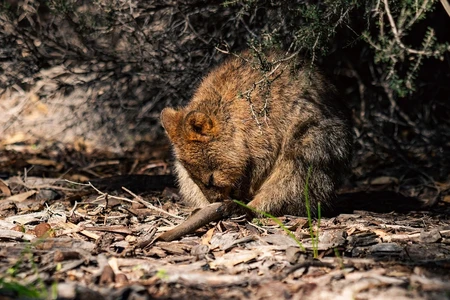
Quokkas are most active at night and during the cooler parts of the day. They spend their time foraging for leaves, grasses, and succulent plants, which provide them with nearly all the water they need. Their diet is adapted to dry conditions, and they can go months without drinking fresh water which is an essential skill for island life.
Rottnest Island, once misidentified by early Dutch explorers as rat-infested (hence the name: Rattennest), is now a sanctuary. With no foxes, minimal snakes, and plenty of vegetation, it's the perfect place for quokkas to live their best lives.
On the mainland, however, life is harder. Habitat destruction and introduced predators like foxes and wildcats have greatly reduced quokka populations, making their island homes critical for conservation.
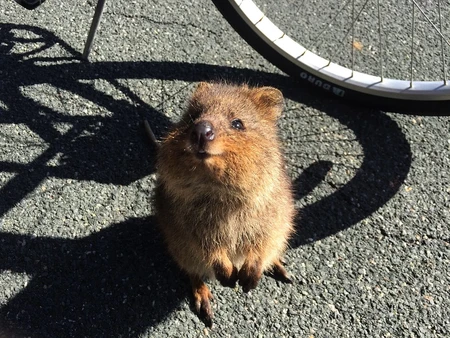
Tough Behind the Smile
It’s easy to look at a quokka and assume it’s soft, fragile, or defenseless. But quokkas are much tougher than they look. When threatened, they can:
1. Hop away quickly using strong hind legs (just like their kangaroo cousins)
2. Climb low trees and shrubs for shelter or food
3. Use thick undergrowth to disappear from predators
They’re also known for an infamous but misunderstood survival behavior: when under extreme stress, especially while being chased by a predator, a mother quokka may expel her joey from the pouch. The theory is that the thrashing baby distracts the predator, giving the mother time to escape.
While this might sound brutal, it’s actually a reflection of how high the stakes are for survival in the wild. And though the behavior is rare, it adds to the quokka’s reputation as both a cunning and determined survivor.
The Joey Journey
Like all marsupials, quokkas give birth to underdeveloped young that continue to grow inside the mother's pouch. A newborn joey is about the size of a jellybean when it crawls into the pouch, where it stays for about 6 months before emerging.
Even after leaving the pouch, young quokkas stay close to their mothers, hopping alongside her and occasionally nursing for a few more months.
Interestingly, female quokkas can delay the development of a fertilized embryo until conditions are right or the previous joey has left the pouch, a phenomenon called embryonic diapause. It's another clever reproductive adaptation for surviving unpredictable environments.
Internet Fame and Conservation Focus
The "quokka selfie" phenomenon began in earnest in the early 2010s, when tourists started sharing pictures of themselves smiling next to these charismatic creatures. From there, quokkas became international stars earning headlines as “the world’s happiest animal” and the subject of viral social media posts.
But with fame came challenges as increased tourism to Rottnest raised concerns about quokka welfare, with some visitors trying to touch, feed, or handle the animals. In response, local authorities implemented strict fines and public awareness campaigns to protect quokkas from harm and stress.
Thanks to these efforts, and the isolated safety of their island homes, quokkas remain one of Australia’s most stable marsupial populations, but their mainland cousins aren’t so lucky.
Why Quokkas Matter
Beyond their grin and social media fandom, quokkas are important indicators of ecosystem health and conservation success. Their thriving populations on Rottnest show what’s possible when wildlife is protected, and habitat is preserved.
They remind us that conservation isn’t just about saving species it’s about allowing them to thrive in the wild, on their own terms, and with as little human interference as possible.
So, the next time you see a smiling quokka online, remember that little marsupial is part of a much bigger story one of resilience, adaptation, and ecological balance.
Fun Quokka Facts
They weigh about 2.5–5 kg (5.5–11 lbs), depending on age and sex.
Their tails aren’t prehensile but help with balance when hopping.
Despite internet fame, they’re classified as vulnerable due to habitat loss.
They communicate with soft clicks, hisses, and possibly sneezes.
Coming Up Next on Only in Australia
Next time, we dive (literally) into the world of one of Australia’s most puzzling and extraordinary creatures: the platypus. Egg-laying, duck-billed, venomous, and aquatic, the platypus defies almost every rule in the mammal handbook. Get yourself ready for an exploration of nature's strangest success story.
Also don't want to be that person but there was a typoI think I’ll change “sometimes sneezes” to “possibly sneezes” so that way it’s more clear that one isn’t as certain.