
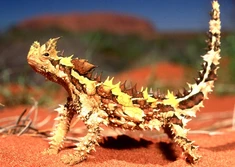
Only In Australia - Thorny Devils
First published: Sunday April 13th, 2025
Report this blog
The Thorny Devil – Nature’s Tiny Desert Dragon
In the vast, sun-scorched interior of Australia, where temperatures soar and water is scarce, lives a lizard so strange, so spiky, and so spectacularly adapted to its environment that it might just be one of the country’s greatest natural wonders. Meet the thorny devil.
Also known as the thorny dragon (Moloch horridus), this desert-dwelling reptile looks like something straight out of a fantasy novel—complete with spines, camouflage, and a false head on its neck. But every part of the thorny devil’s dramatic appearance serves a real and fascinating purpose.
In this second entry of Only in Australia, we head into the outback to uncover the secrets of a creature that doesn’t just survive in one of the world’s harshest environments—it thrives there.
What is a Thorny Devil?
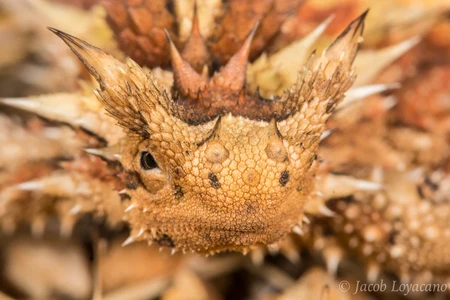
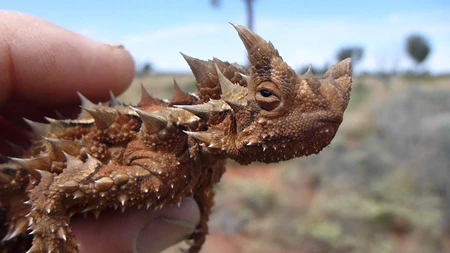
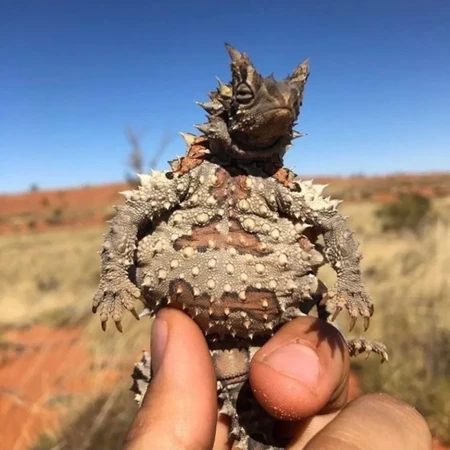
The thorny devil is a small lizard, measuring around 20 cm (8 inches) in length. But what it lacks in size, it more than makes up for in personality—and armor.
Its entire body is covered in rigid, conical spines, including a large false head behind its real one. These spines aren’t just for show; they deter predators, help collect water, and provide camouflage in the sandy, scrubby habitats of central and western Australia.
Despite its fearsome appearance, the thorny devil is completely harmless to humans so long as you can avoid stepping on their spikey backs.
Spikes, Scales, and Strategy
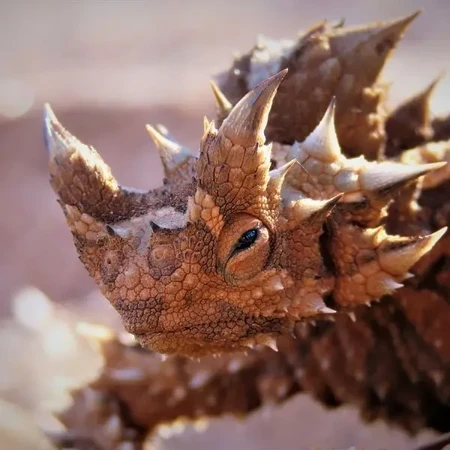
Thorny devils are brilliantly adapted for defense. Their spikes make them difficult and unappetizing for predators like birds to swallow. But they don’t stop there.
When threatened, the thorny devil tucks its real head between its front legs and presents the false head on the back of its neck. This decoy, combined with a frozen posture, can confuse predators long enough for the lizard to escape, or at the very least, survive an exploratory peck.
The combination of camouflage, spikes, and deception is so effective that the thorny devil has relatively few natural predators. Nature’s best defense? Look weird and stay still.
Drinking Through Its Skin
In a habitat where water is scarce, the thorny devil has developed one of the most remarkable hydration strategies in the animal kingdom.
Its skin is covered in tiny, hygroscopic grooves which are microscopic channels between the scales that can draw in moisture from the environment, such as dew, rain, or even damp sand. These grooves channel water directly to the lizard’s mouth.
This means the thorny devil doesn’t need to find standing water. It can drink with its feet firmly planted on the ground, saving valuable energy and letting the desert do the work for it.
A Feast of Thousands
The thorny devil’s entire diet consists of ants—primarily iridomyrmex ants, a common genus found in arid Australian regions. A single thorny devil can consume up to 5,000 ants in a day.
Rather than chasing prey, it waits for an ant trail, then uses its sticky, fast-moving tongue to scoop up ants one by one much like an anteater on miniature legs.
Its slow, robotic walk helps it avoid detection while conserving energy in the desert heat. This lizard is a specialist in patience and efficiency.
Strong Territory Game
Thorny devils are solitary and territorial. They spend their time slowly patrolling their patch of desert for ant trails. Despite their sluggish pace, they are highly attuned to their environment, using vision and vibration to detect approaching threats or prey.
They are mostly active during the cooler parts of the day, morning and late afternoon. During the hottest hours, they retreat to shady scrub or shallow burrows to avoid overheating in the scorching Australian sunshine.
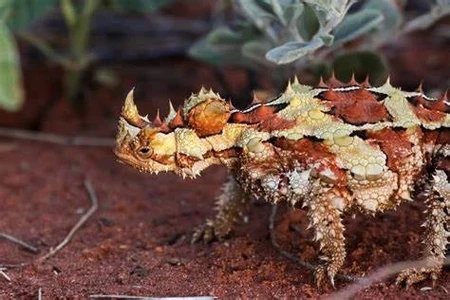
Changing Colors with the Weather
Thorny devils are natural color-changers. Their skin shifts from pale ochre or yellow in the heat to darker browns and reds when it’s cooler helping them regulate body temperature and blend into different environments.
This adaptive camouflage also plays a role in predator avoidance and thermoregulation, making the thorny devil a lizard of many talents and tones. Not only are they masters of defense, but they are masters of stealth too making for one hard to get meal for any hungry predators.
Surviving the Harshest Climate on Earth
The Australian outback is one of the most extreme environments on the planet. Temperatures regularly soar above 40°C (104°F), and rainfall is rare and unpredictable making it very difficult for animals to survive and thrive.
To survive here, you need to be tough, patient, and resourceful; qualities the thorny devil has in abundance. It’s no surprise that this lizard is often considered a symbol of desert resilience due to its incredible survival tactics.
Why the Thorny Devil Deserves the Spotlight
In a land full of strange and sensational creatures, the thorny devil still manages to stand out. Its surreal appearance, bizarre behavior, and desert-hardened survival skills make it a true marvel of nature.
From water-harvesting skin to the ability to ward off birds with a fake head, the thorny devil is not just an oddity but a masterclass in adaptation. And like so many of Australia’s unique animals, it reminds us just how wild and wonderful nature can be.
Thorny Devil Fun Facts
Before we wrap up, here are some intereting facts to impress your friends:
The thorny devil’s scientific name, Moloch horridus, comes from a demon in ancient literature but it’s not an insult, just a nod to its fierce appearance.
They can store water in their bodies, surviving long stretches without rain.
Their lifespan in the wild is around 15–20 years.
Thorny devils can puff themselves up with air to look even more intimidating to predators.
Coming Up Next on Only in Australia
Next time, we'll leave the arid outback behind and head to the sun-drenched islands off Western Australia to meet the quokka, a famously photogenic marsupial with a permanent smile and a curious, carefree attitude. But there’s more to these happy-looking hoppers than just selfies as you will soon find out.
Until then, keep looking to the wild corners of Australia where every creature has a story worth telling.
Have you ever heard of a snake-necked turtle? I have seen them and they are kind of odd. Perhaps they could feature in a later episode?