
The Most Dangerous Roads in America
First published: Friday April 10th, 2026
Report this blog
Driving In America
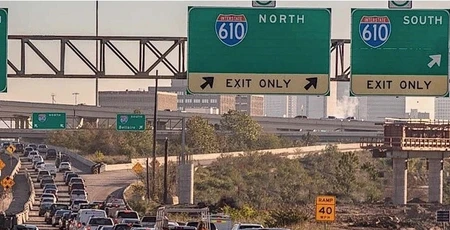
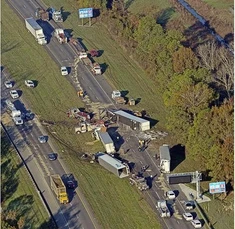
America is a nation for cars. With 3 million miles of paved roads and nearly 300 million registered cars it is hard to imagine not having a car in this country. Of course, not everybody is a good driver and not every road is a safe and well built. Whether it be heavy traffic or aging infrastructure (and usually both on this list), there are some stretches of road that are notorious for fatal wrecks and pileups. Here's some roads to avoid driving if you have your best interests in mind.
"The Devil's Triangle", Baton Rouge
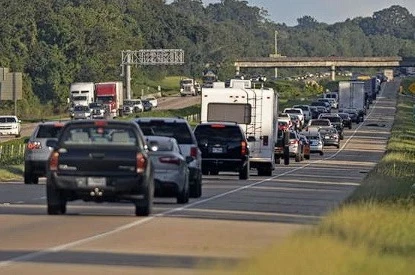
This is a stretch of I-10 where freight truckers, vacationers, and commuters all have to negotiate merging into a narrow one lane bridge. The bridge was built in the 1960's and was not designed to handle the rush hour traffic in modern day Baton Rouge. Thus hundreds of crashes and dozens of fatal accidents occur there. It is the deadliest stretch of road in Louisiana and one of the deadliest in America. When it's not closed due to a wrekc it is congested anyway due to the interstate and tributary roads all having to merge into one lane.
I-95 and I-595 Interchange, Florida
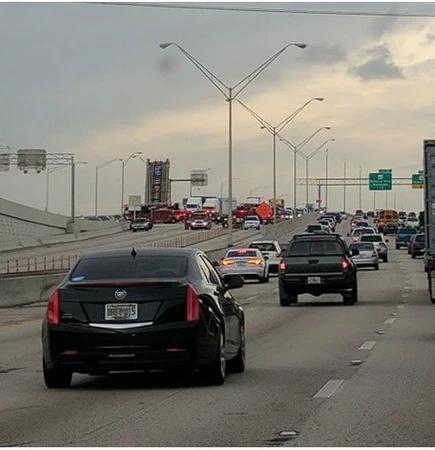
This is statistically the most dangerous mile of road in all of America. Located in Fort Lauderdale, I-95, a busy and freight heavy road, merges with State Road 84 and I-595. Being near an airport adds to the complexity and traffic on this road. Being full of Floridans does not help either. Between 2000-2019, 135 people died in just this area.
I-45, Texas
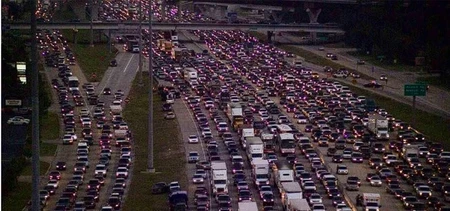
I-45 may not have the most dangerous stretch, but it is one of the most dangerous and deadly road, if not the most dangerous in the US. It is the primary route between Dallas and Houston, the 4th and 5th largest metro areas in the country, respectively. The route is known for high speeds, drunk driving, and naturally, heavy traffic. The Section between Exits 49 and 60 in Houston is up there with I-95 in Fort Lauderdale as the most dangerous stretch in the country. It featured 148 fatalities between 2000 and 2019.
I-4, Florida
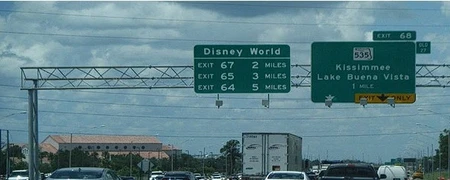
Surprise! I-4 is another major interstate linking large cities in the south. It spans 132 miles across the Florida Peninsula, from Tampa Bay to Daytona Beach and going through Orlando. It is notable for having one fatal crash every mile, the highest rate in the country. It is also extremely congested, especially in Orlando due to tourists, who make it even more dangerous by being unfamiliar with the road and Floridan driving habits.
I-285, Atlanta
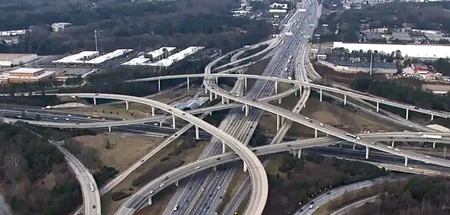
This 64 mile beltway around Atlanta is probably most famous for the massive Tim Moreland interchange (shown above), and being dangerous. It is incredibly busy, with the northern portion averaging 250,000 vehicles traveling a day per mile. 2 million people use this road daily, and the Atlanta Metro has 6.5 million residents. This is paired with heavy freight traffic again, and complex interchanges throughout. Also, it's in the south. This leads to 500 crashes a year, and with that comes fatalities- usually over 20 a year, and 3 every 10 miles.
US 550, Colorado
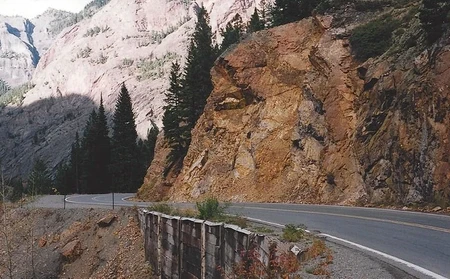
This is unique on the list as it is not in the south, does not feature heavy traffic or complex interchanges, and is not an interstate. It is simply just challenging to drive physically. It is narrow and crooked and steep, being in the Rocky Mountains. Long stretches have no guardrails right next to 1,000 foot drops to a fiery death. This sis to allow snowplows to push snow off the edge. While not as many fatalities occur on this road, that is likely for two reasons- 1. People know it's dangerous and will pay attention 2. Only the foolhardy would drive it in bad conditions. Take care.
US 71, Alma to Fayetteville, Arkansas
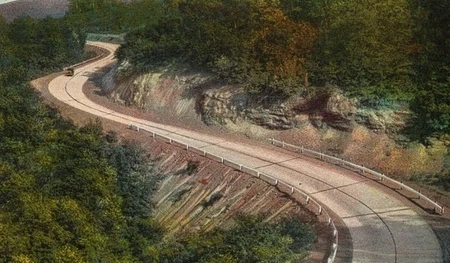
This has not been a dangerous highway in years, but it used to be rated as one of the most dangerous highways in America. Again, it is in the south, it had heavy traffic, and lots of freight. This is because it linked Fort Smith, an industrial city on the Arkansas river, to the Northwest Arkansas region, with Walmart and Tyson Chicken. That meant lots of freight and traffic in general. And this was a 2 lane, steep, curvy, hairpin road. Trucks would lose their brakes and push cars off the road, fall off cliffs, or other terrible things like that. This prompted the police to put up a running death toll sign, usually featuring counts in the 20s or 30s. But I-49 was completed in the 1990s and provided a faster and safer route between the two cities, and today US 71 is just a scenic byway in the Ozarks. At least this story is on a slightly happier note- these things can be fixed with better roads- or, unimaginably, not driving.
Conclusion
There's a common theme here-complex interchanges, heavy freight and commuter traffic, and high speeds, and in the south. This is just part of life in modern America. Sad.
After all, the road itself isn't dangerous, it's the people that drive on them!