The Countries Iceberg - Finale (1 / 2)
First published: Friday May 1st, 2026
Report this blog
It's been a minute, but welcome back to the Countries Iceberg.
You may be wondering why it's been so long since our last installment. There are a few reasons for this:
a.) The website that hosted the original iceberg has since shut down. While there are archives available, due to how much JavaScript the site used, they are buggy at best and completely inaccessible at worst.
b.) The iceberg itself has suffered from link rot. Nearly every entry has a link associated with it, but as time moves on, more and more have gone dead. Some lead to deleted Facebook groups, some to closed wikis, and others to Google Sites we need permission to access. Since these topics are so niche, there's almost no documentation or archives of them, making research herculean—if not impossible.
c.) The rest of the iceberg is, to be frank, kind of bland. Most of the entries from after where we took hiatus are micronations, totally illegitimate governments-in-exile, and dormant nationalist movements. That's not to say there isn't anything interesting down there—there 100% is—but there's so much banality that it wouldn't be worth covering in its entirety.
That said, we've decided to give the series a proper sendoff. In this double-wide finale (split over two blogs), we've compiled all the most interesting entries that we haven't yet covered, as well as some that were never on the iceberg to begin with.
Let's get right into it!
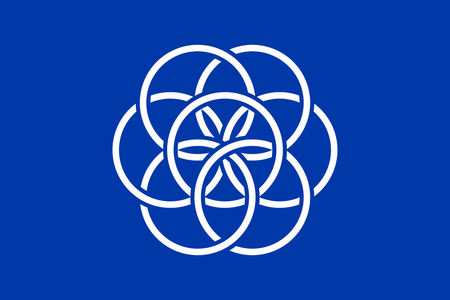
Tier Φ - Provisional World Government
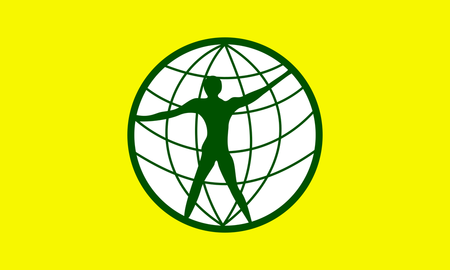
Provisional World Government
The Provisional World Government is an unrecognized international group that claims to be a transitional parliament for the world, with the end goal being unity under the Federation of Earth. It claims authority under the 1968 Constitution of Earth, a grassroots movement spearheaded by none other than Albert Einstein himself.
As you might expect, they don't hold much political power, but nonetheless continue to hold conferences and pass non-binding "World Legislative Acts," which essentially act as policy proposals.
Headquarters: Clarkesville, Georgia
World Service Authority
The World Service Authority is an international group that aims to educate and promote world citizenship. They register world citizens (that is, people who sign up) and sell world birth certificates, visas, stamps, etc. Which have sometimes worked!
They are most well-known for their World Passports, which you can buy on their website for just $75. They claim 97% of countries have recognized it, but there are many cases of folks getting turned away, arrested, or even incarcerated for using one... so maybe don't.
Headquarters: Washington, D.C.
Caribbean Coast Autonomous Regions
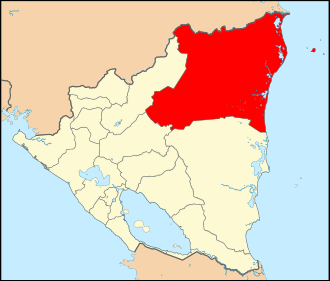
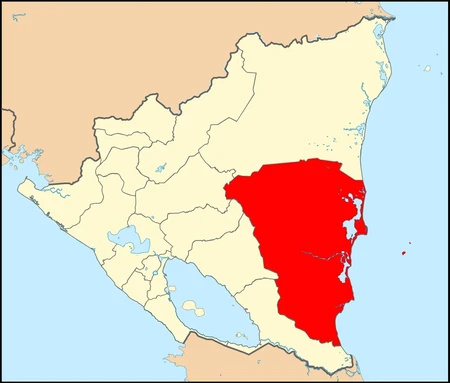
The Caribbean Coast Autonomous Regions are two regions within Nicaragua—North (NCCAR) and South (SCCAR)—that have a greater degree of authority than the country's other departments. Both have their own legislatures, as well as internal control over education, resource extraction, etc.
They were established in 1987 in order to satisfy local indigenous groups, such as the Miskito, who remain untethered to the country's Spanish-influenced western half.
Capital: Bilwi (NCCAR) / Bluefields (SCCAR)
Federal Dependencies
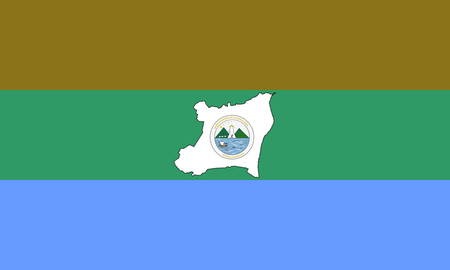
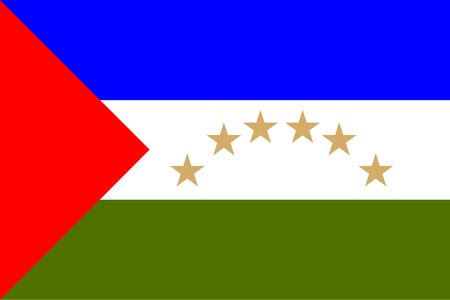
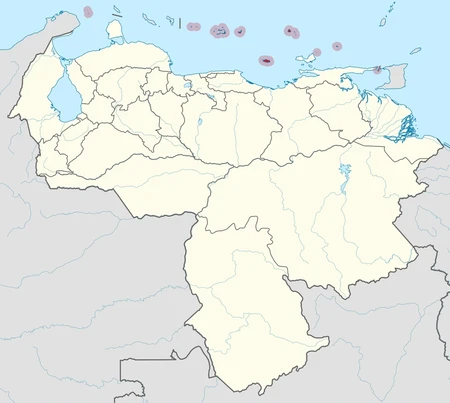
The Federal Dependencies of Venezuela are a group of islands managed directly by the federal government in Caracas (although substantial de facto power is held by local island leaders).
The islands are very lightly-populated, with only a few thousand inhabitants. Economically, they depend on fishing and tourism, which is stimulated by local coral reefs.
The Federal Dependencies also include what is by far Venezuela's northernmost point—Isla de Aves, about 140 miles west of Dominica (who claimed it up until 2006).
Capital: Gran Roque
Guayana Esequiba
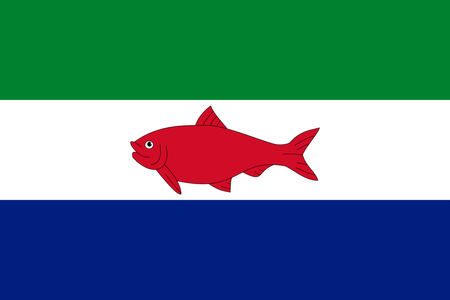
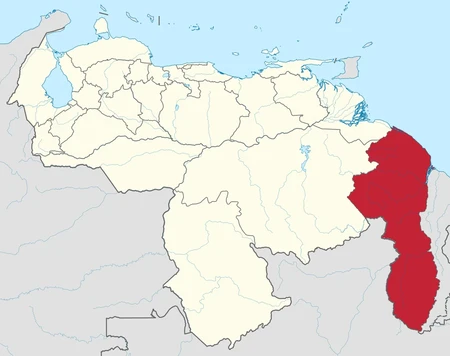
Guayana Esequiba is a disputed region that Venezuela claims as its twenty-fourth state. In practice, however, it functions as a government-in-exile, since the Co-operative Republic of Guyana (great name) actually controls the territory.
The dispute stems back to the colonial era, when the Spanish (who controlled Venezuela) and Dutch (who controlled Guyana) disagreed over where the border was. When Venezuela became independent and Guyana was ceded to the British, the dispute continued. Though it was mediated by the US in 1899 and awarded to Britain, Venezuela considers the agreement invalid, and has since held a persistent claim—even defying orders from the International Court of Justice.
Geographically, the area is mostly rainforest, and is highly prized for its deposits of gold and oil.
Capital: Tumeremo (provisional)
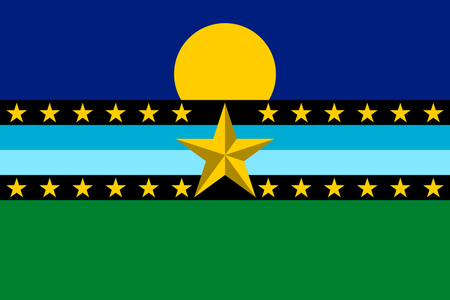
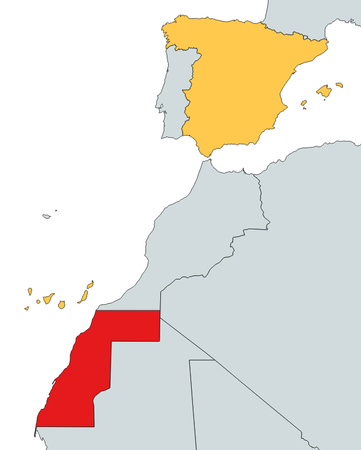
Western Sahara (Spain)
The Western Sahara is a territory in northwest Africa that was under colonial Spanish rule from 1884 to 1976. Before leaving, Spain signed the Madrid Accords with Morocco and Mauritania, promising the territory to the two countries.
However, the local Sahrawi people demanded self-determination and began clashing with the two occupying powers, eventually forcing Mauritania (but not Morocco) to withdraw. The United Nations has mediated the two since 1988, but so far a conclusive agreement has not been reached.
So who legally owns it? Spain officially gave it up in 1976, but the UN still considers it a "non-self-governing territory" under Madrid's de jure authority. Additionally, Spain continues to operate parts of Western Sahara's airspace.
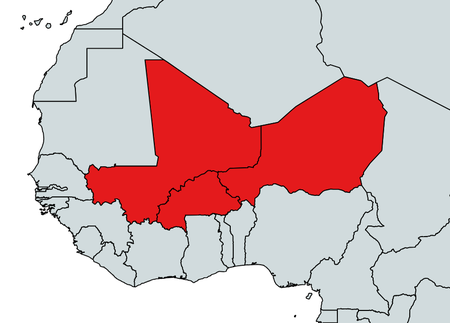
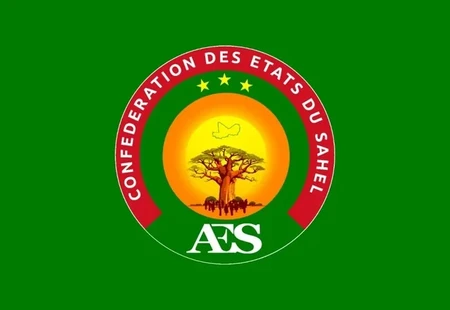
Alliance of Sahel States
The Alliance of Sahel States, also known by its French name Alliance des États du Sahel, is a supranational organization (self-described as a confederation) consisting of three West African countries: Niger, Burkina Faso, and Mali.
In 2021, a military junta seized power in Mali, followed by a 2022 coup in Burkina Faso and a 2023 coup in Niger. The three juntas formed a mutual defense pact in that same year, before upgrading to a full confederation in 2024.
The ultimate goal is to integrate the three countries—plans are underway to establish a currency union, cohesive defense, and a common market. In fact, they've already rolled out official Alliance passports.
Capital: Bamako
Government of Peace and Unity
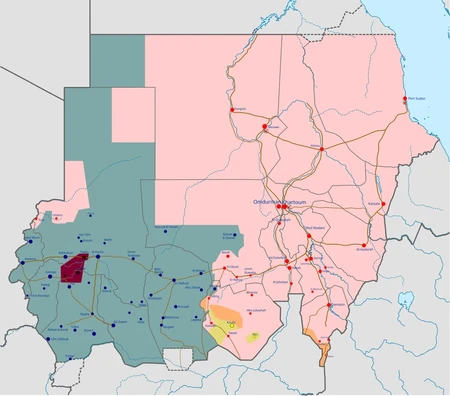
The Government of Peace and Unity (GPU) is a rival Sudanese government established in 2025, during the country's ongoing civil war. It is controlled by the Rapid Support Forces (RSF), a paramilitary group once employed by the government to fight rebels, particularly in the Darfur region.
However, once dictator Omar al-Bashir was overthrown in 2019 amid nationwide protests, the RSF became locked in a power struggle with the regular military. In 2023, they attacked government installations in Khartoum, and the country has been in civil war ever since.
The RSF has been accused of several crimes against humanity, such as genocide, mass rape, and destroying hospitals.
Capital: Khartoum (de jure), Nyala (de facto)
Liberated Areas
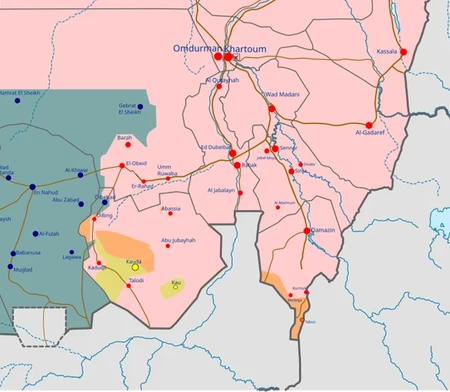
The Liberated Areas are a small pocket of land in southwestern Sudan under the control of the Sudan Liberation Movement (SLM), a Darfuri rebel group. Specifically, it is controlled by a branch of the SLM run by Abdul Wahid al-Nur, a liberal reformist who aims to establish a free, democratic, and secular Sudan—even helping the International Criminal Court take down high-profile felons within the country.
The Liberated Areas are very mountainous and isolated from the rest of Sudan, functioning as a self-governing quasi-state. This status quo is maintained by al-Nur's branch of the SLM, which has remained neutral amidst the country's civil war.
New Sudan
New Sudan refers to the territory under the control of the northern branch of the Sudan People's Liberation Movement (SPLM; not the same as the aforementioned SLM). To make matters more complicated, the SPLM has joined up with the RSF—however, New Sudan still exists independently. Whew!
The SPLM is opposed to the standing Sudanese government, wanting to see democracy, secularism, and so on. Unlike the SLM, however, the SPLM is actively engaged in warfare against the Sudanese government.
New Sudan functions as another self-governing quasi-state, issuing documents, founding schools, and even establishing a court system. However, its power has been limited by famine and government counterattacks.
Capital: Kauda
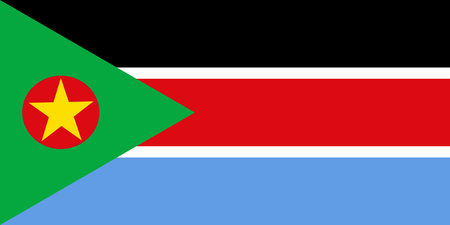
Northwest and Southwest
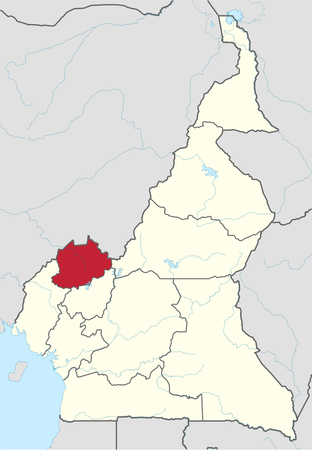
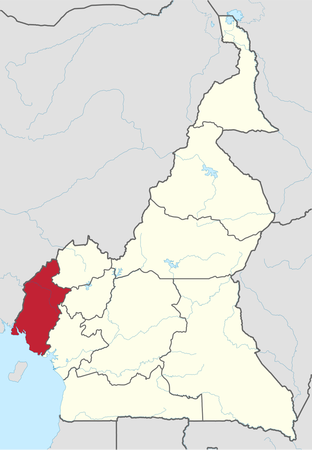
Northwest and Southwest are two "regions with special status" on the scut of Cameroon. They are allowed their own legislatures, as well as additional power over culture, the economy, etc. So why this arrangement?
After World War I, German Kamerun was divided between the British and French empires. When it was decolonized, the two halves were joined back together, leading to English speakers (Anglophones) being shackled to a French-speaking government. As you can imagine, this has caused unrest that continues to this day.
The regions were granted special status in 2019 to appease the Anglophones, however the breakaway Republic of Ambazonia continues to resist and claim the two as its sovereign territory.
Capital: Bamenda (Northwest) / Buea (Southwest)
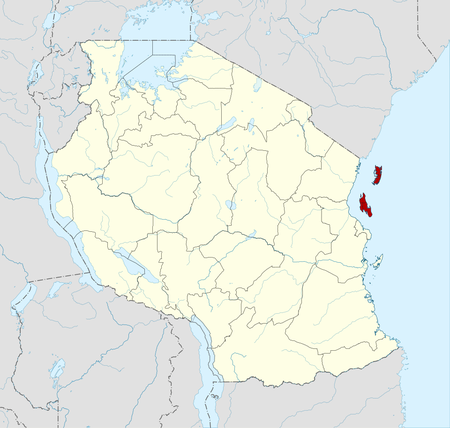
Zanzibar
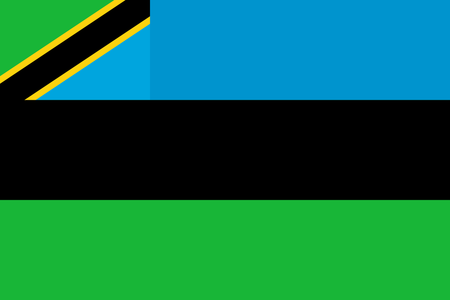
Zanzibar is an autonomous region of Tanzania consisting of two islands: Unguja and Pemba. Formerly, it was its own country, before uniting with Tanganyika in 1964 to form the Tanzania we know today. (Tan + Zan... get it?)
As an autonomous region, it has greater control over local affairs, and even has its own legislature and president.
Unlike the rest of the country, Zanzibar is almost entirely Muslim due to its intertwined history with Arabian merchants. It became an Omani colony around the turn of the eighteenth century—in fact, it became the imperial capital in 1832, when the sultan moved it to consolidate his power in the region.
Capital: Zanzibar City
Republics of Russia
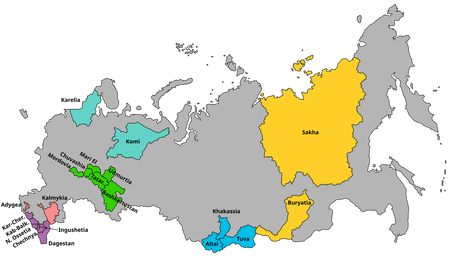
Russia claims twenty-four republics—twenty-one internationally recognized, as well as three generally considered Ukrainian (Crimea, Donetsk, and Luhansk). You're probably familiar with some of them, such as Sakha, Karelia, or Chechnya.
The republics all represent a titular nationality, and have autonomy in cultural affairs, being allowed constitutions, national anthems, and official languages. Indeed, for a while after the Soviet Union collapsed, they were considered sovereign states. However, this ended in 1993, and today the republics have very little political autonomy, thanks to the increasing centralization of Russia.
Ichkeria
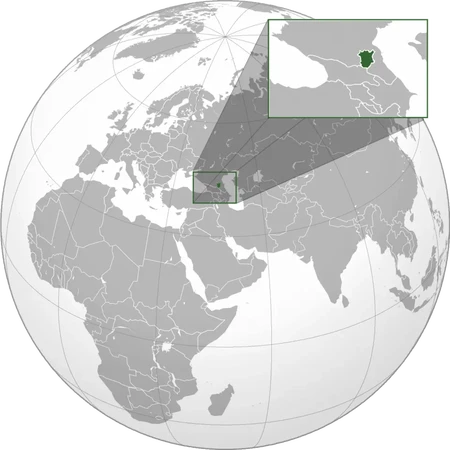
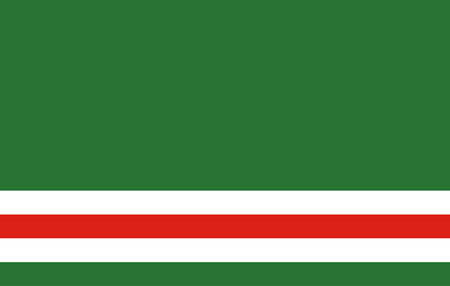
During the breakup of the Soviet Union, one of Russia's republics, Chechnya, declared its independence (to be renamed Ichkeria in 1994). No country recognized it, but due to the calamity in the region, it managed to exist as a de facto state.
In an attempt to reclaim it, Russia invaded in 1994. Chechnya stood its ground, but the chaos caused by the war led to warlords and gangs running rampant.
In 1999, Chechen Islamists invaded neighbouring Dagestan, leading to a Russian counterinvasion. This time, the Russians won and re-incorporated Chechnya, although insurgents continue to fight to this day.
Since the capture of the capital Grozny in 2000, Ichkeria has existed as a government-in-exile based in London. No country recognizes its sovereignty, but Ukraine has voted to recognize it as "temporarily occupied" by Russia.
Capital: Grozny (de jure)
Baikonur
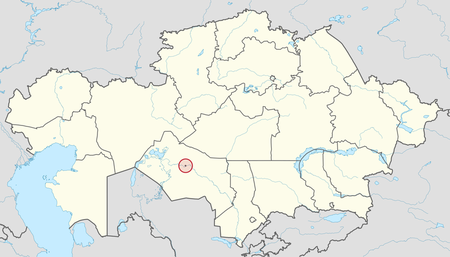
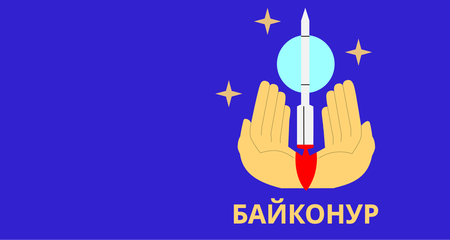
Baikonur is a city in Kazakhstan that is currently leased and run by Russia. It is most well-known for being the home of the Baikonur Cosmodrome, the oldest and largest spaceport in the world.
The town was founded in the mid-1950s by the Soviet government, who named it Leninsk. It was from here that Soviet spacecraft was launched—Sputnik, Vostok, Soyuz, etc.
After the Soviet Union collapsed, Russia signed a treaty with Kazakhstan leasing the city, to expire in 2050. It is administered as a part of Moscow and is a closed city, meaning you need a permit from the Russian space agency to travel there.
Azad Kashmir
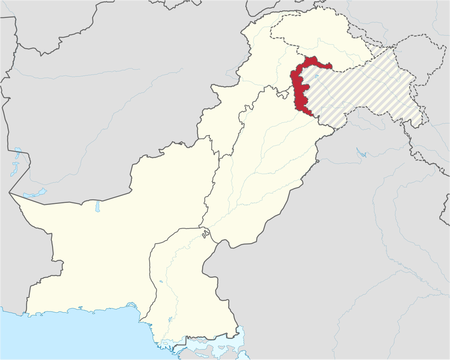
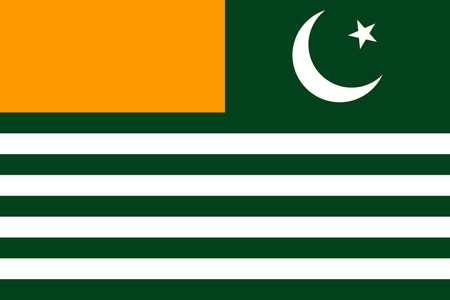
Azad Jammu and Kashmir, more often called simply Azad Kashmir, is a territory of Pakistan in the mountainous Kashmir region. India claims, but does not control, it.
As a "self-administrative territory," Azad Kashmir has its own president, prime minister, legislature, and court system. The region is heavily Muslim, and outside observers note that the Pakistani government exerts heavy control, making the territory integrated in all but name. Despite this, they do not have a vote in federal elections.
Its name means "Free Kashmir" in Urdu.
Union Territories of India
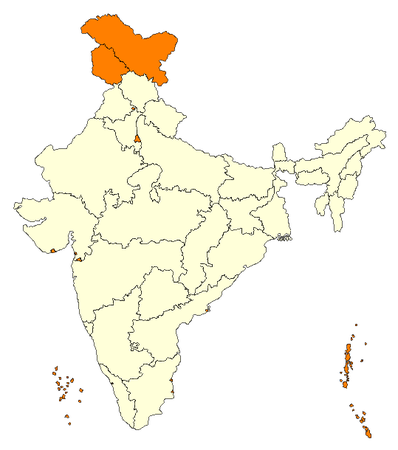
India currently has eight union territories:
1. Andaman and Nicobar Islands (island chain in the Bay of Bengal)
2. Chandigarh (utopian planned city)
3. Dadra and Nagar Haveli and Daman and Diu (creatively-named group of former Portuguese colonies)
4. Delhi (capital district)
5. Jammu and Kashmir (former state in the disputed Kashmir region)
6. Ladakh (also in the disputed Kashmir region)
7. Lakshadweep (island chain north of the Maldives)
8. Puducherry (group of former French colonies)
Most UTs are directly administered by the federal government; however, a few have been granted some self-governance.
Sabah and Sarawak
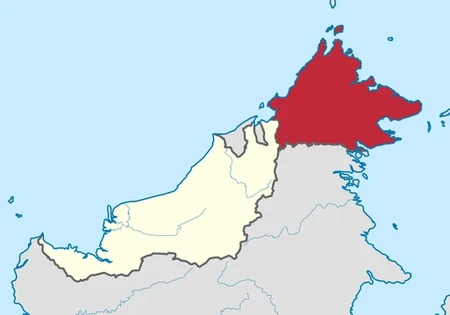
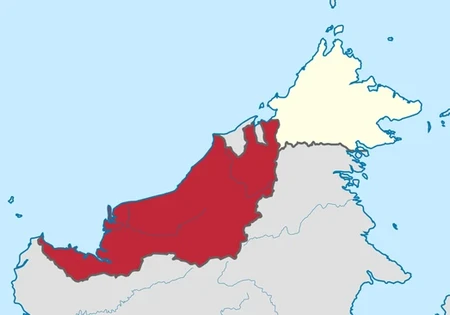
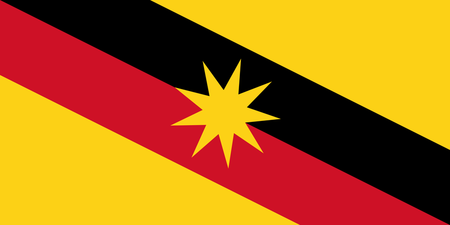
Sabah and Sarawak are two Malaysian (which is technically a union between the two and peninsular Malaya) states that encompass the country's territory on Borneo.
They have much greater autonomy than the rest of Malaysia's states. They have control over taxes, their own legal systems, and a hard veto on certain constitutional amendments.
Most incredibly, they have autonomy over immigration. This means peninsular Malaysians have to go through immigration checkpoints when traveling within their own country!
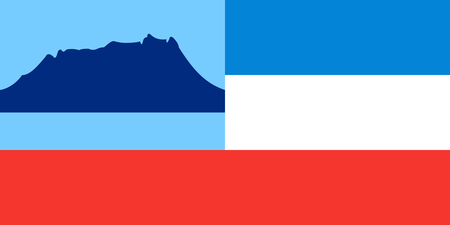
Capital: Kota Kinabalu (Sabah) / Kuching (Sarawak)
Bangsamoro
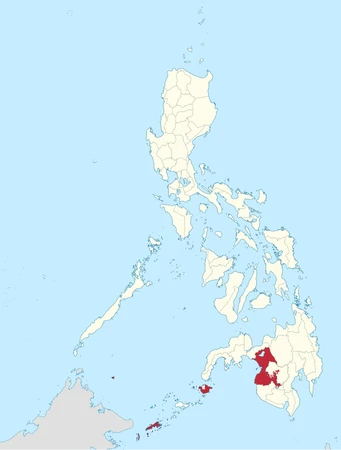
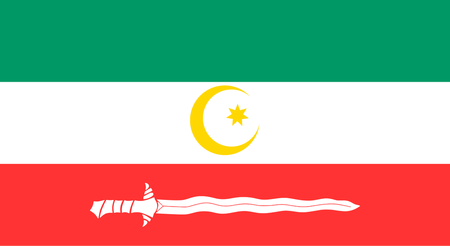
Bangsamoro is an autonomous region located in the southern Philippines. It is composed of all or part of six provinces, mostly on the island of Mindanao (the "hip" of the archipelago).
The region has long been inhabited by the Moro people, a Muslim group at odds with the Christian Filipino government. Following the 1968 Jabidah massacre, in which several Moro servicemen were killed, a full-scale separatist insurgency broke out.
To quell the war, a Muslim autonomous region was first outlined in the 1976 Tripoli Agreement (negotiated by Muammar Gaddafi himself), and was created in 1989 as the Autonomous Region in Muslim Mindanao. However, due to its ineffectiveness, it was supplanted by Bangsamoro in 2019.
The region continues to struggle to this day. It is consistently ranked as one of the poorest regions in the Philippines, and occasionally still sees clashes among separatist groups.
Capital: Cotabato City
Oecusse
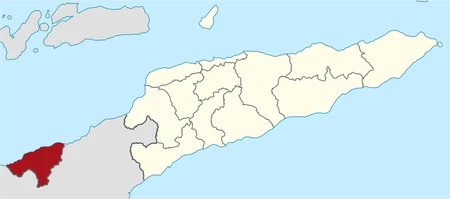
Oecusse, also known as Ambeno, is an exclave of East Timor. It is the country's only Special Administrative Region, giving it greater self-governance.
The Timorese government intends to turn the region into an economic powerhouse, focusing primarily on business and tourism. They offer tax breaks and casino licenses, even investing millions into building an airport (although it currently only flies to Dili, the national capital).
But why is it a part of East Timor in the first place? The answer is simple: it was the site of the first Portuguese landings on Timor. When the island was divided with the Netherlands, it was considered crucial to keep.
Capital: Pante Macassar
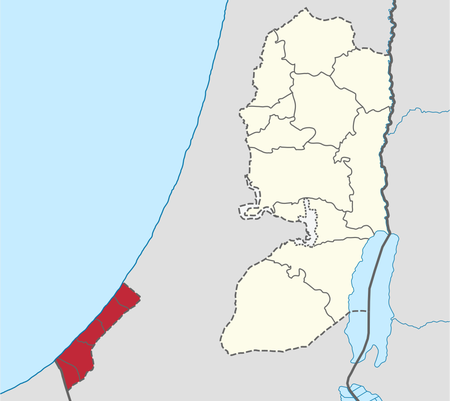
National Committee for the Administration of Gaza
The National Committee for the Administration of Gaza (NCAG) is a United Nations-supervised authority meant to govern the Gaza Strip in the aftermath of the Gaza War.
The NCAG is run by Palestinian officials who are nominated by local groups (Hamas, Fatah, etc.), although they must be approved by Israel. It is held accountable to the Board of Peace, which observant readers may have guessed by looking at the logo.
As it stands, the NCAG has very little power. Israel has blocked many of its members from entering the Gaza Strip, which continues to suffer violence and instability.
Headquarters: Cairo (provisional)
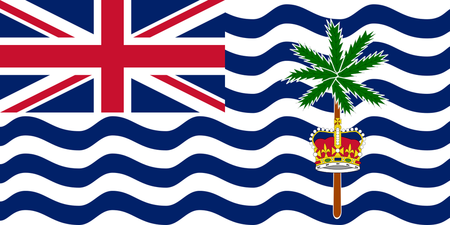
Chagossian Government
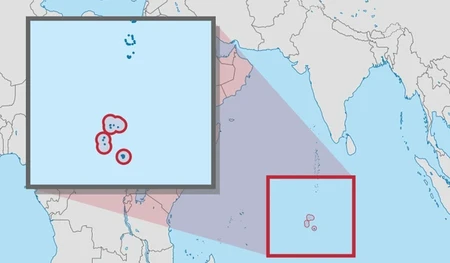
The Chagossian Government (CG) is a self-declared organization that claims to represent the Chagossian people, an Indian Ocean ethnic group who were forcibly displaced in the 1960s to make room for a joint British–American military base.
The CG opposes the Chagos Archipelago's transfer to Mauritius, on the grounds that ethnic Chagossians were not consulted. In fact, the CG firmly stakes its allegiance to the British crown, instead merely seeking the repatriation of the Chagossians to their homeland.
The CG is probably most notorious for attempting to settle six people on the islands, who are still there (in spite of a deportation order)!
Headquarters: Île du Coin
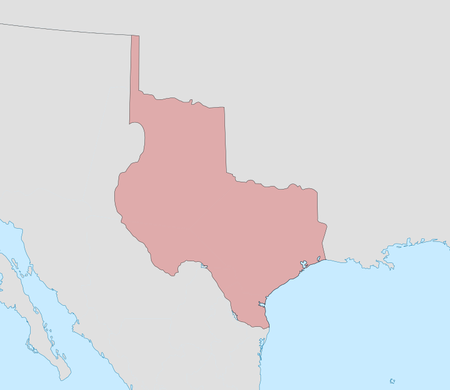
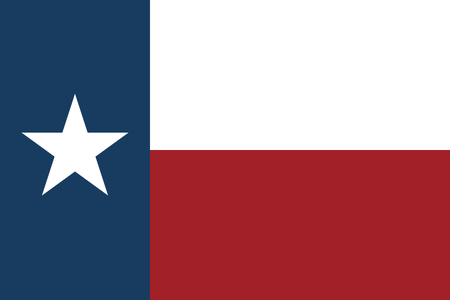
Republic of Texas
The Republic of Texas is an umbrella term for several groups who claim Texas is legally an independent country, just under "occupation" by the United States. The most common arguments for this are:
a.) Texas's original annexation was invalid in some way
b.) Texas is legally a "captive state" due to it being forcibly reintegrated after the Civil War
Although it has no legal binding, the Texas nationalist movement has made an impact. Several Republic of Texas groups have had violent standoffs with the police, including a 1997 hostage incident that left one person dead.
Recently, the Texas Republican Party has entertained ideas of Texas secession (or Texit, if you prefer). Some lawmakers have even called for a referendum on leaving the country.
Nova Roma
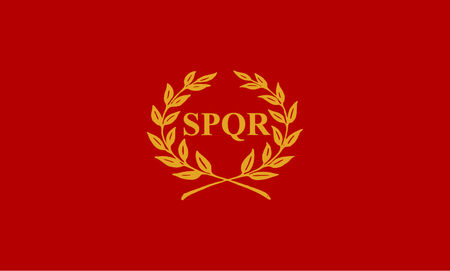
Nova Roma is an ancient Roman education and reenactment group based in Maine, although they mainly exist as an internet club.
So what puts it on the iceberg? They declare themselves to be a "sovereign nation," and the true successors of Rome. They have a government, citizenship, courts, and even (voluntary) taxes—however, they are also pragmatic and don't try to enforce anything in the real world.
Their main territorial claim is a small pocket of land the size of Vatican City, to serve as the "world capital for the administration of our culture." Obviously, no government has offered that up.
G9 Family
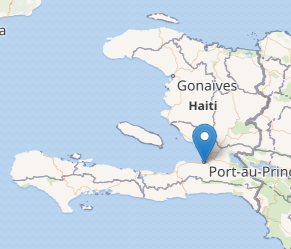
The G9 Family and Allies is a federation of about twelve (it ebbs and flows) gangs led by Haitian warlord and former police officer Jimmy "Barbecue" Chérizier. Due to the longstanding instability of the Haitian government, the league controls over 80% of Port-au-Prince, the country's capital.
According to several human rights watchdogs, former Haitian president Jovenel Moïse supported and funded the Family, using them as his personal paramilitary. After his assassination, the Family seized the power vacuum and began to control large swathes of Port-au-Prince.
Since then, it has fought ardently against other gangs and the national police, inflicting heavy civilian casualties in the process. In 2024, a UN-authorized coalition sent troops to try and stabilize the country, but they haven't been too effective.
Nunatsiavut
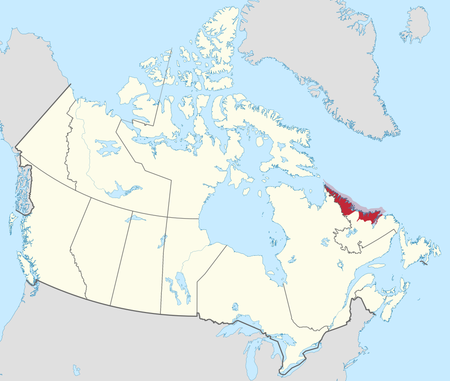
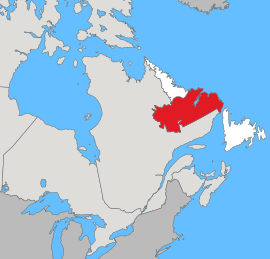
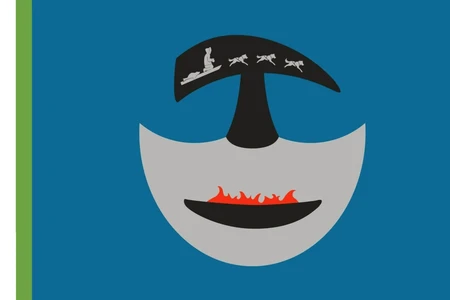
Nunatsiavut is a self-governing region for the Inuit people in northern Labrador. It has a high degree of autonomy, including its own constitution, legislature, and justice system.
Its name means "our beautiful land" in Inuttitut; you can find polar bears, seals, and Arctic foxes there, running along the extremely cold and mountainous landscape.
The current president, Johannes Lampe, was first elected in 2016—although elected may be a strong term, considering he automatically won after nobody else stood for the office. Did we mention only ~2,300 people live there?
Capital: Hopedale (legislative), Nain (administrative)
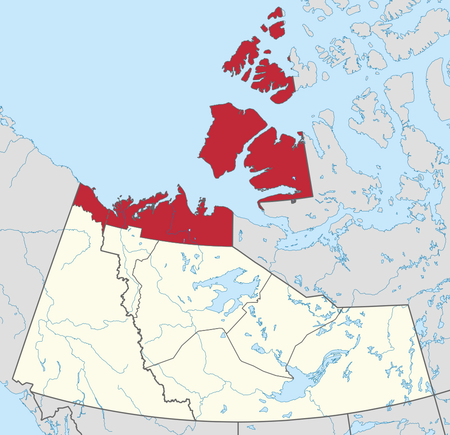
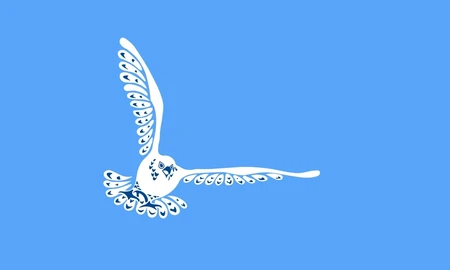
Inuvialuit Settlement Region
The Inuvialuit Settlement Region (ISR) is a special district set aside for the Inuvialuit people of northern Canada. It spans the coasts of the Yukon and the Northwest Territories, including all of the latter's many Arctic islands.
Unlike Nunatsiavut, the ISR doesn't have political autonomy; instead, it is dedicated to ensuring Inuvialuit control over land use and resources.
The ISR is run by the Inuvialuit Regional Corporation (IRC), whose main goals are supporting the Inuvialuit people and preserving the environment. Much of the IRC's profit goes into supporting local businesses, schools, etc.
Headquarters: Inuvik
Nunavik
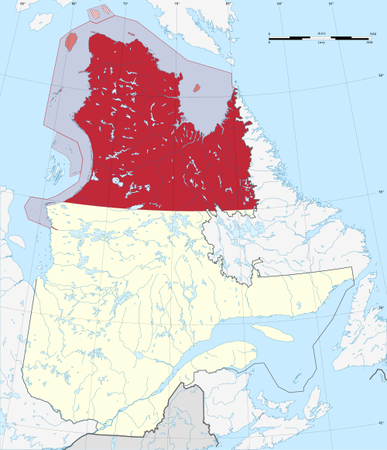
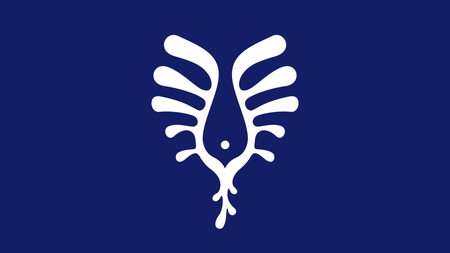
Nunavik is a proposed autonomous region, much like Nunatsiavut, advocated for by the Inuit of northern Quebec.
Negotiations for the creation of Nunavik have been ongoing since the 2000s, although a 2011 referendum rejected the plan at the time.
Historically, the region is most infamous for the Inuit relocations of the 1950s. During that time, the Canadian government forcibly resettled nearly a hundred Inuit into the Arctic, as a means of establishing their territorial sovereignty up there. They were dropped off with very little supplies and were not allowed to go back home.
Its name means "great land" in Inuktitut. Geographically, it is mostly tundra, making it one of the harshest living environments on Earth.
Capital: Kuujjuaq (proposed)
NunatuKavut
NunatuKavut is another proposed autonomous region in Canada. It is to be carved out of southern Labrador, and granted to the NunatuKavummiut people.
Who are the NunatuKavummiut, you ask? The term refers to an ethnic group consisting of the mixed descendants of Inuit and Europeans (specifically those in southern Labrador).
Although they are recognized as an "indigenous collective" by the federal government, that status is controversial, with some arguing they shouldn't be considered indigenous at all.
Capital: Happy Valley-Goose Bay (proposed)
Naso Tjër Di
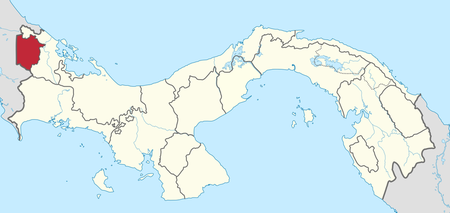
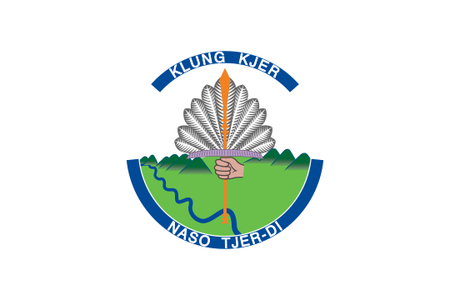
Naso Tjër Di is a landlocked region of Panama on the country's northwestern frontier. Like much of the country, it is quite mountainous and forested—in fact, over 90% of the region is under a nature preserve!
What puts it on this iceberg is its unique system of governance. The region was created in 2020 for the Naso people, one of the last indigenous groups in the Americas to retain a monarchy.
The king, currently Ardinteo Santana Torres, is officially recognized; however, his power is limited, and he mostly acts as a figurehead with some minor administrative oversight.
Capital: Sieyic
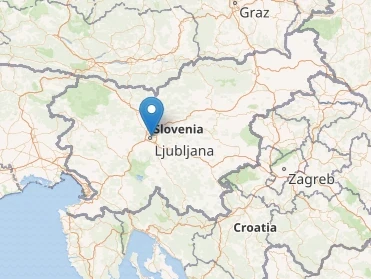
Metelkova
Metelkova is an autonomous cultural center in downtown Ljubljana, the capital of Slovenia. It was created in 1993, when several countercultural groups moved into an abandoned Yugoslav army base.
Today, it stands as a self-managed community, with some even calling it anarchic. It serves as a hub for alternative art, music, ideologies, etc., especially within LGTBQ and feminist circles. Although its autonomy has no legal standing, it was recognized as a National Cultural Heritage Site in 2005.
Atarashiki-mura
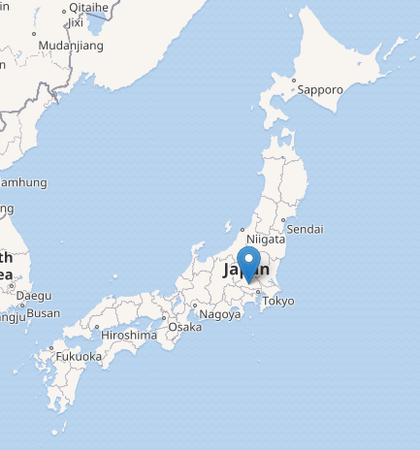
Atarashiki-mura ("New Village") is a Japanese utopian commune, located about an hour northwest of downtown Tokyo. It was founded in 1918 by playwright and philosopher Saneatsu Mushanokōji.
It was founded on the principles of cooperation, self-expression, and equality. Even to this day, it remains largely self-sufficient, supporting itself primarily through agriculture and tourism. Labor and decision-making is collective, and—should the community accept—you could theoretically join!
Unfortunately, Atarashiki-mura may be nearing the end of its lifespan. Since peaking at about sixty residents in the 1970s, many of the children raised there have left, and recent reports indicate there may be as little as two people remaining.
Tier Χ - Isla de la Juventud
Isla de la Juventud
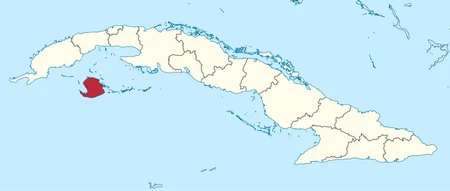
Isla de la Juventud ("Isle of Youth" in Spanish) is the second-largest island in Cuba. Despite having a population of 73,000, it's not a part of any province, and is instead directly run by the national government.
During the late seventeenth and early eighteenth centuries, the island was a hub for piracy, possibly inspiring parts of the book Treasure Island. Later, it was occupied by the U.S. after the Spanish–American War, and not transferred back to Cuba until 1925.
Probably the island's most notable feature is the Presidio Modelo, a former panopticon that now serves as a museum. Fidel Castro was imprisoned there for a while, before later using it to detain his own political enemies.
Capital: Nueva Gerona
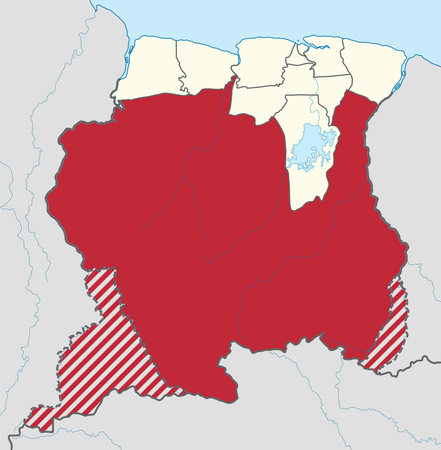
Sipaliwini
Sipaliwini is the largest (79% of the country!) and southernmost district of Suriname. Like Isla de la Juventud, Sipaliwini is directly controlled by the Surinamese government.
The district is entirely within the Amazon Rainforest. As a result, the population is very low and mostly tribal—making it one of the least densely populated regions on Earth.
The district is also the site of Suriname's two territorial disputes, claiming parts of Guyana to the west and French Guiana to the east.
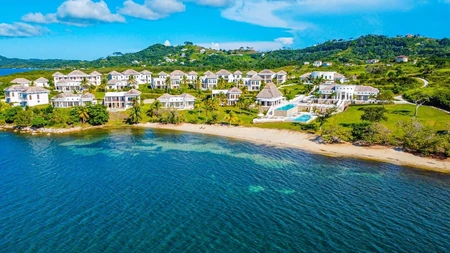
Zones for Employment and Economic Development
The Zones for Employment and Economic Development (ZEEDs) are special regions within Honduras that have a high degree of political and economic independence. Although legally controversial (having being ruled unconstitutional by the Honduran Supreme Court), three continue to de facto exist.
The most famous ZEED is Próspera, which is located on an island north of mainland Honduras. It promotes low taxation, Bitcoin, biotech, etc.
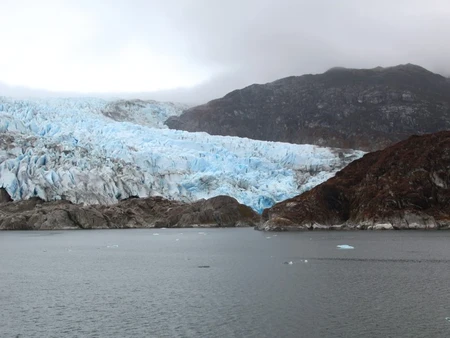
Glacier Republic
The Glacier Republic is a micronation formed in 2014 by Greenpeace activists. Meant to protest mining damage, it claims all of Chile's many glaciers as its territory.
Chile—which contains 80% of South America's glaciers and some of the largest outside Antarctica—has very few laws protecting them. Environmental activists claim to have discovered a loophole in Chile's constitution, where the glaciers aren't stated to be either public or private property. Thus, the Glacier Republic exists as a sort of caretaker government, until Chile can step up and protect the glaciers themselves.
Capital: A random tent... somewhere (no joke!)
Val d'Aran
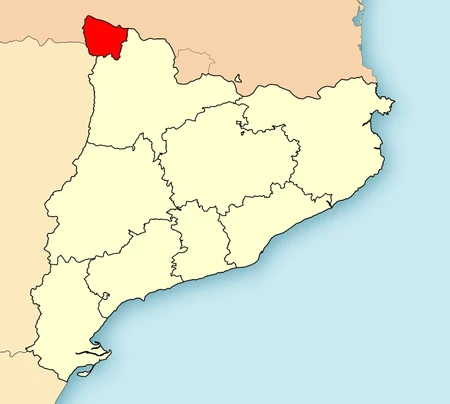
Val d'Aran is an autonomous region within Catalonia, Spain. Located in the middle of the Pyrenees Mountains, it borders France's Occitania region to the north; Andorra, roughly equal in size and shape, lies just twenty miles to the east.
So why the arrangement? Val d'Aran is one of the few places in Spain on the north side of the Pyrenees, making it geographically isolated from the rest of the country—and also making it the only place in Spain where Occitan is widely-spoken.
Due to this, Val d'Aran has several autonomous powers. These include its own tourism and language policy, as well as its own legislature.
Capital: Vielha e Mijaran
Districts under Central Government Jurisdiction
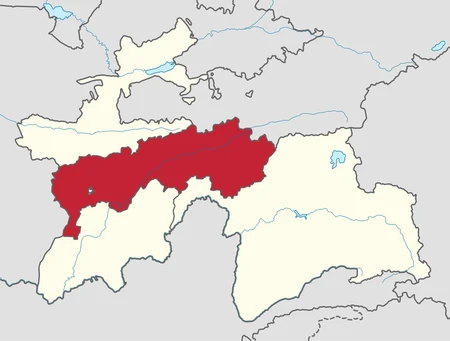
The Districts under Central Government Jurisdiction (DCGJ) is a region of Tajikistan that is exactly what it sounds like. It surrounds, but does not include, the national capital of Dushanbe.
The DCGJ came about during Soviet times, when several oblasts were dissolved without replacement. Their territory was put under the direct control of the Tajik SSR, and that dynamic has carried on post-independence.
The Kirghiz SSR also had something similar, but it was granted a local government in 1990.
Zangezur Corridor
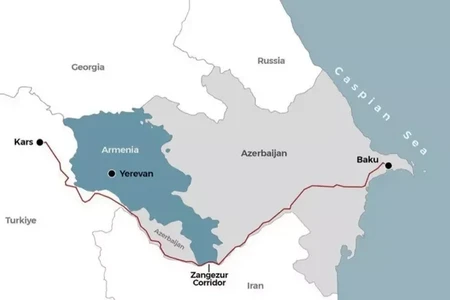
The Zangezur Corridor is a proposed transport corridor promoted as a direct link from the Nakhchivan exclave to mainland Azerbaijan through southern Armenia. Originally proposed by Azerbaijani president Ilham Aliyev, it would still be legally Armenian, but have no entry or travel restrictions.
The plan has been supported by Turkey, who has long blockaded Armenia in tandem with Azerbaijan (as both are Turkic nations).
If the name sounds too foreign to remember, don't worry. In 2025, Donald Trump brokered a deal between Armenia and Azerbaijan, whereby the United States will operate the corridor—now renamed the... Trump Route for International Peace and Prosperity (TRIPP). Yeah.
The TRIPP has not been opened yet, but construction is underway, led by private U.S. infrastructure companies.
Darién Gap
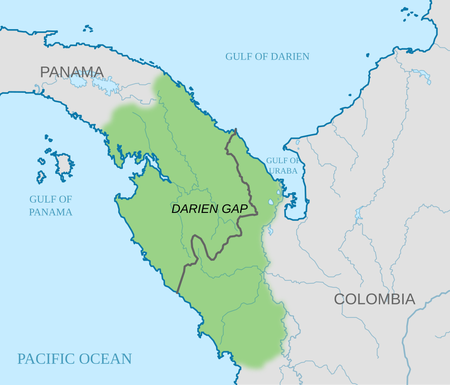
The Darién Gap is a stretch of rainforest along the Colombia–Panama border. It is extremely inhospitable, covered in dense rainforest and mountains—so much so that no roads cross it, meaning you need to take a ferry to get from Panama to Colombia.
Due to its remoteness, neither government has much control over the gap. This has led rebel groups and drug cartels, mostly from Colombia, to hide out there. Besides them, there is a small indigenous population.
Valley of the Apurímac, Ene, and Mantaro rivers
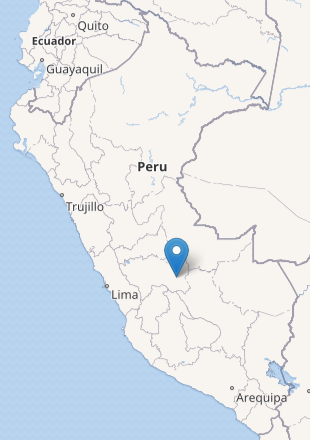
The valley of the Apurímac, Ene, and Mantaro rivers is a geographic region in the mountains of central Peru. Much like the Darién Gap, it is very loosely under the control of the Peruvian government.
The valley is extremely poor, and its economy relies on the drug trade, particularly coca farming—the plant used to produce cocaine.
Probably the valley's most famous inhabitants are the Shining Path (now rebranded as the "Militarized Communist Party of Peru"), who have been locked in a guerrilla war / terrorist campaign against the Peruvian government since the 1980s. As you might expect, they control the local drug trade, making most of their money by trafficking coca.
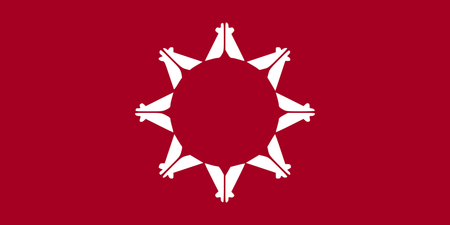
Lakotah
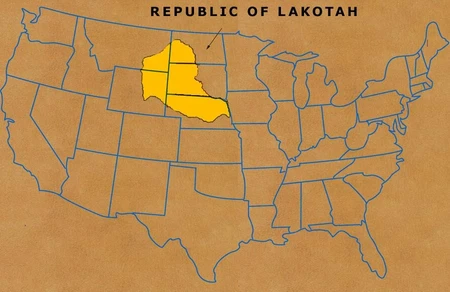
Lakotah is a proposed independent republic for the Lakota people, a branch of the Sioux. Activists declared its independence in 2007, but it has no effective control.
Its proposed borders come from the 1851 Treaty of Fort Laramie, which promised the land to the Lakota people—however, it was quickly broken as American settlers moved in. Lakotah activists argue this was illegal settler colonialism, and that the land should be returned to its rightful owners.
The republic is intended to be a confederation based on the traditional Lakota way of life: no taxes, mob justice, etc. The republic's officials have tried suing the federal government, but obviously have gotten nowhere.
Capital: Porcupine, South Dakota (provisional)
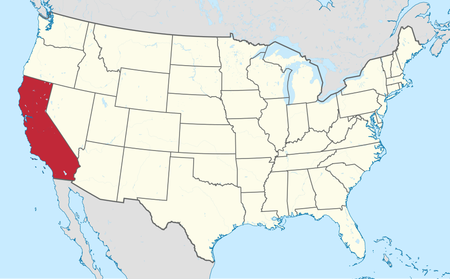
California
California is, of course, the wealthiest and most populated U.S. state, but there have been several movements calling for it to break away.
Support for California's secession, affectionately called CalExit, mostly gained traction after Donald Trump won the 2016 presidential election. The most notable group was Yes California, advocating for an independence referendum (which polling suggests only ~20% of the state supported).
Proponents argue that California is too politically liberal compared to the rest of the country, and that its huge economy (the fourth-largest on the planet) would be more than enough to sustain it.

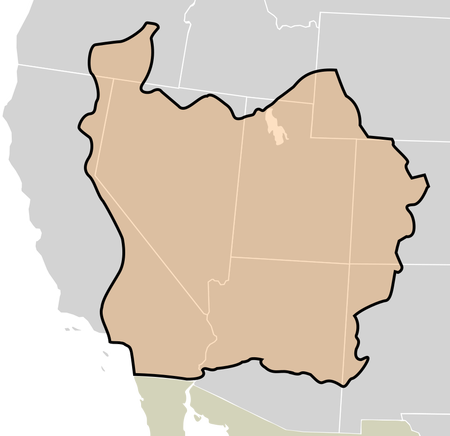
Deseret
Deseret was an unrecognized polity formed in 1849 by Mormons, who had recently settled the sparsely-populated western United States. Claiming the territory of nine modern-day states, it acted as a de facto theocratic government for two years, and even applied for statehood.
However, in 1850 Congress created the Utah Territory, appointing Brigham Young as its first governor. Deseret dissolved itself a few months later, after which the Utah Territorial Legislature voted to adopt its laws. Utah became a full state in 1896.
Almost two hundred years later, Twitter users have used the #DezNet to advocate for a revived independent Deseret. Often described as alt-right, common themes include theocracy, white nationalism, and even blood atonement—a now-condemned Mormon practice where serious sinners would have to be killed in such a way that their blood spills on the ground.
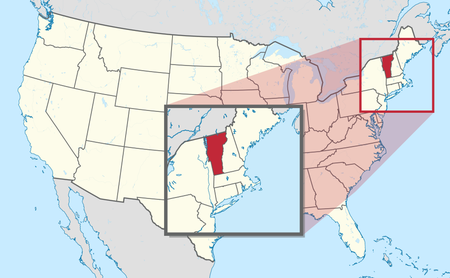
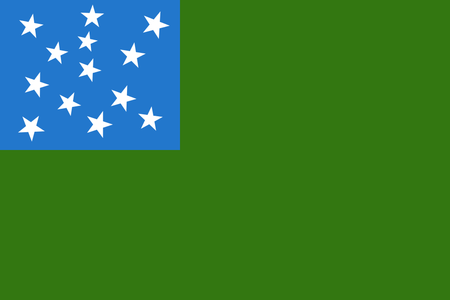
Vermont
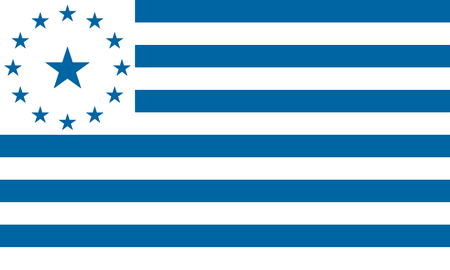
Did you know Vermont was an independent republic from 1777 to 1791? Well, okay, you probably did, but did you know there are movements for it to be reestablished?
Most advocates for the so-called "Second Vermont Republic" are liberals opposed to what they see as federal overreach. It has had a decent amount of support—in fact, the pro-secessionist Vermont Independence Party once held a rally inside the state capitol! More recently, marijuana usage, anarchism, and especially anti-Trump sentiment have all been common threads within the movement.
However, not everyone involved is so progressive. As the whitest state in the country, some white supremacists have proposed turning Vermont into an independent ethnostate.
Hawaii
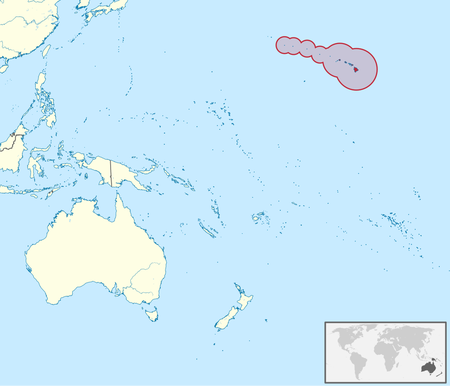
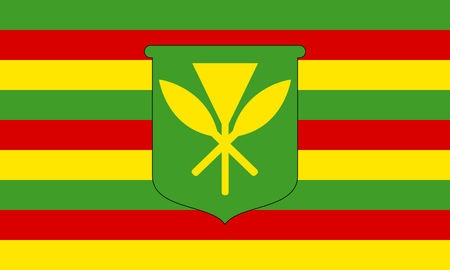
Hawaii is the southernmost U.S. state, and it has several movements advocating for its independence.
Unlike in the rest of the United States, Native Hawaiians do not get reservations or governments, and their communities are often marred by poverty, homelessness, and violence. On top of this, the federal government has been accused of mismanaging its land in Hawaii (including bomb testing on Kaho‘olawe, the smallest major Hawaiian island), leading some people to call for the archipelago to be returned to the Natives.
Some people even argue that the 1898 annexation of Hawaii was illegal—essentially making it a prolonged military occupation. Under this argument, Hawaii is technically still independent!
Probably the most famous advocate for Hawaiian independence was Israel Kamakawiwoʻole, singer of "Somewhere Over the Rainbow."
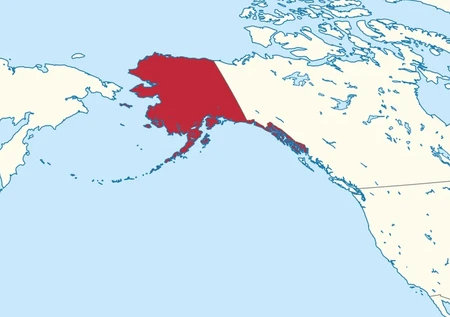
Alaska
Alaska is the largest, coldest, northernmost, and widest (in all three dimensions) U.S. state, but not everybody thinks that should be the case. Many argue that Alaska is too disconnected from the rest of the country, and that the federal government has too much local influence.
One of the largest proponents of the cause was the Alaskan Independence Party (AIP). It peaked in 1990, when AIP candidate Wally Hickel won the governorship with an astounding 38.9% of the vote. Hickel never acted on secession, and became a Republican near the end of his term. Since then, interest has declined, and the party formally folded in December 2025.
Side note: the AIP's founder, Joseph Vogler, was a real character. Originally from Nebraska, he was quoted as saying "the fires of hell are frozen glaciers compared to my hatred for the American government." Vogler mysteriously disappeared in 1993, just weeks before he was supposed to give an Iran-sponsored speech at the UN—the conspiracy being that he was assassinated by the federal government.