
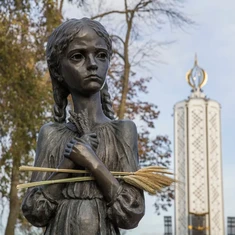
The Holodomor: The Ukrainian Famine of 1932-33
First published: Sunday July 6th, 2025
Report this blog
The Holodomor is a Ukrainian portmanteau meaning “death by hunger”. The term is used to denote the Ukrainian famine of 1932 to 1933, one of the deadliest in world history, an event that left a huge scar on the Ukrainian national consciousness. As the “Breadbasket of Europe”, Ukraine has been a major producer and exporter of grain throughout history, thanks to its abundant black soil in the fertile Dnieper basin.
Historical Context
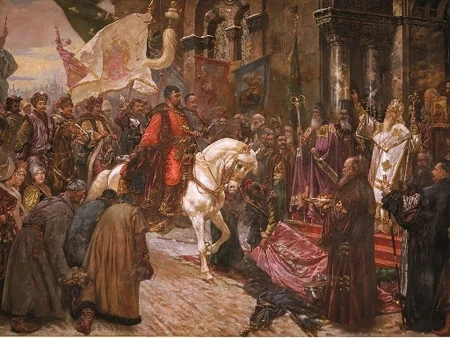
So what happened? Why did Europe’s leading grain producer face a famine that killed four million people? Before we dive into the details of the famine, we must first position Ukraine in its historical context. Eleven centuries ago, the land of Ukraine first embraced statehood with the establishment of Kyivan Rus, a proto-Slavic state considered to be the ancestor of modern Ukraine, Belarus, and Russia and straddling the modern territories of all three countries. With the Mongol capture of Kyiv in 1240, the Rus lands were divided; Ukraine was later absorbed by Lithuania and Poland in 1350, while Russia gained its independence from the Mongols as the Duchy of Muscovy in 1480. The independence of the Ukrainian lands due to the 1648 Cossack Uprising led to a political union with Russia termed the Pereiaslav Agreement to fend against Polish-Lithuanian threats in 1654, after which Russia gradually incorporated Ukrainian lands into its own territory. Ukraine again briefly gained its independence in 1917 after Russia pulled out of WWI, yet this was followed by the victory of the Red Army in the Russian Civil War and the admission of Ukraine into the Soviet Union.
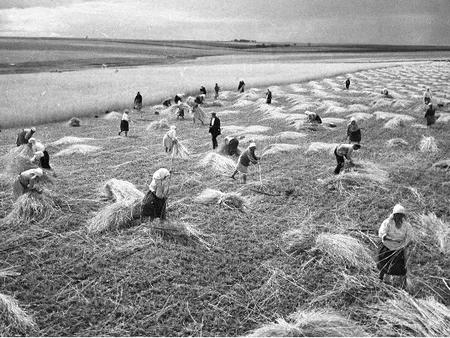
As the world’s leading communist power in the early twentieth century, the Soviet Union embarked on an agricultural policy of collectivization, in which individual farms are consolidated into large farms under state management, where farmers work together and receive the same food ration as well as pay. Collectivization was intended to increase agricultural productivity to support the Soviet Union’s Five-Year Plan to develop its heavy industry. Collectivization efforts in Ukraine were met with much resistance as many Ukrainian peasants actively disobeyed Soviet official orders and conducted acts of sabotage to stop the transition from occurring. The Soviet government in turn decided to punish these dissenters by raising procurement quotas and blacklisting localities. Procurement quotas are the set values of grain allotments that must be handed in to the state in exchange for government compensation, while blacklisting entails the blockage of trade and the confiscation of all grain supplies and livestock. The obvious consequence of both measures is a drastic reduction in the supply of grain and food, forcing Ukrainian farmers to submit to starvation.
The Famine
As a result, an artificial famine occurred. Procurement quotas rose until every grain harvested had to be handed in. As whole village populations began to starve, unharvested crops were left in the fields until they rotted. Anyone found to have hoarded even one grain or who attempted to escape was executed without trial. Yet outside of Soviet Ukraine, few knew that a famine was taking place. Walter Duranty, the New York Times correspondent in Moscow who had just won a Pulitzer Price for covering the Soviet industrial Five-Year Plan, reported that Ukrainians “were hungry, but not starving.” This was the result of the Soviet government’s block of media information and the complete prohibition of foreigners from entering the Ukrainian countryside.
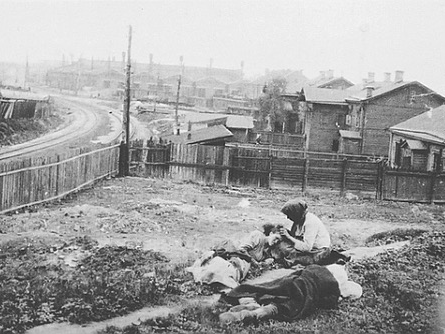
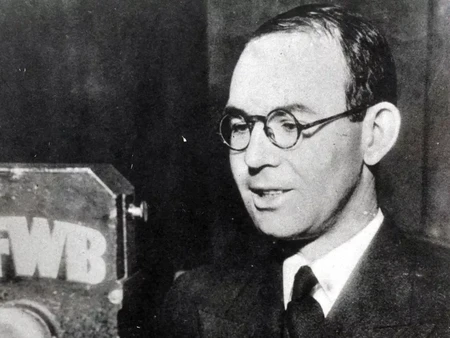
However, there was a group of righteous reporters who risked their own lives to see for themselves what was happening. Among them was Gareth Jones, a Welsh journalist fluent in Russian who slipped into the Ukrainian countryside, living in hiding and evading Soviet authorities. Among his reports were first-hand witnesses of the famine on Ukrainian lands and devastating photographs of starving people and rundown villages. Jones wrote that:
I walked along through villages and twelve collective farms. Everywhere was the cry, “There is no bread. We are dying.” … [In the train] I flung a crust of bread which I had been eating from my own supply into a spittoon. A peasant fellow-passenger fished it out and ravenously ate it. I threw an orange peel into the spittoon and the peasant again grabbed it and devoured it… I stayed overnight in a village where there used to be 200 oxen and where there now are six. The peasants were eating the cattle fodder and had only a month’s supply left. They told me that many had already died of hunger.
Jones’s writings were among the first to expose the terrible Ukrainian famine to Western society, leading to furious retaliation by Soviet authorities culminating in Jones’s assassination by Soviet agents in 1935. However, scarce reports were unable to raise public awareness that such a catastrophe had occurred, and memories of such a famine soon faded among Western journalists. Meanwhile, the famine itself had ended in little more than a year, as the remnant of Ukraine’s rural population submitted to Soviet agricultural policy and as the labor supply was left devastated.
Aftermath and Remembrance
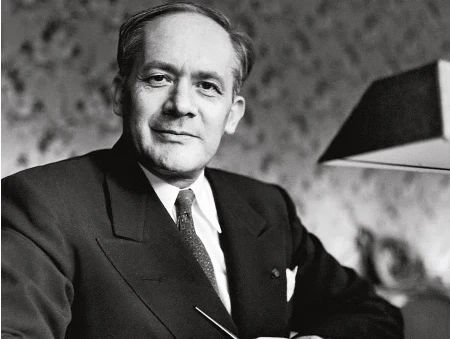
In 1948, Polish-Jewish lawyer Raphael Lemkin, a self-trained historian who coined the term genocide to denote the mass killings of an ethnic group, wrote the first historical papers about the Holodomor. Lemkin delivered his speech, “Soviet Genocide in The Ukraine,” at Madison Square Garden in New York City in 1953, in front of 150,000 Ukrainian spectators. However, details of the Holodomor would not become widely known throughout the international community until nearly sixty years later, when the dissolution of the Soviet Union provided a free Ukraine with the opportunity to commemorate its history. Historians such as Robert Conquest began a new wave of studies on the Holodomor, and it was only in recent decades that the world came to understand this catastrophe.
Though the famine seemed to be completely orchestrated by Soviet policy, many historians argued that the Holodomor did not constitute genocide. It has been pointed out that natural factors led to poor harvests, as significant deaths also occurred within Soviet Russia, and the condition in Ukraine had been exacerbated by the aggravation of Ukrainian farmlands through the farmer’s own sabotage, which inflicted significant damage on agricultural infrastructure. Others argued that the famine was caused by Soviet agricultural mismanagement, the ambitions to fulfill an unrealistic plan, which did not imply genocidal intentions.
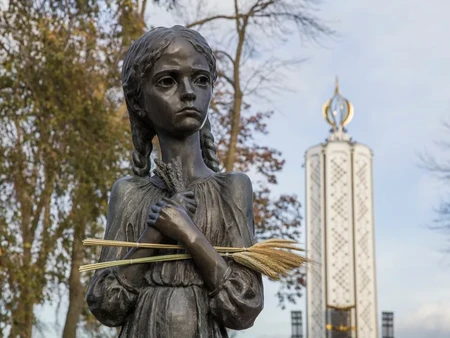
The Holodomor had left a huge scar on the Ukrainian national memory. Much as the Cossack Uprising had been remembered as a heroic struggle for Ukrainian national sovereignty, the Holodomor had been remembered as the prime example of Russian oppression of the Ukrainian national identity. In today’s era, as Russia launched its invasion of Ukraine, painful memories left by the famine began to serve as a unifying force for Ukrainians, prompting their continued resistance against Russian aggression. It is important for us to remember the Holodomor as a tragedy caused by agricultural mismanagement. Whether or not the Holodomor constituted a genocide, remembering its occurrence allows us to contemplate on the causes of such disasters to prevent them from happening again in the future.
They also promised to pay India 375 million pounds at the end of World War 2 for India’s involuntary contribution to the war effort, which they never have.
They did pay the US the entire amount they owed them, though, finishing the payments in 2006.
I'm disturbed by such articles. I've noticed for a long time that the anti-communist agenda has been steadily advancing in recent years, much more so than the anti-fascist agenda. This article is a perfect example of the spread of such an agenda. And already in the second or third order, published by a driven person whose thinking was shaped by the mainstream thoughts.