
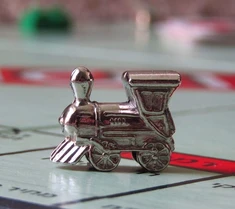
A Trip Around The Monopoly Board - London
First published: Tuesday December 30th, 2025
Report this blog
Introduction
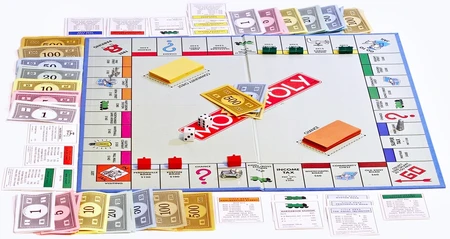
In case you, dear reader, don't know, Monopoly is a board game for up to six players where you have to try and make your opponent go bankrupt. This is achieved, usually over many hours, by buying property and charging rent whenever a fellow player lands on your purchased square. It is a little more involved , but that's the gist of it.
Every square available to buy represents a street or area in a particular city. There are many versions available showcasing many places around the world.
I'm writing this blog about the London version, mainly because that is the board that I played on as a kid, and obviously argued over with my parents and brother. Many happy and traumatic memories were made over the Monopoly board.
GO
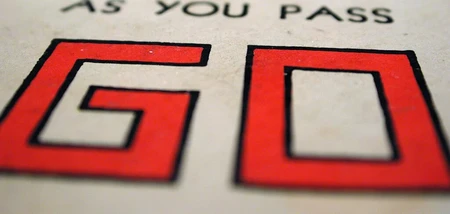
In a game of Monopoly, we always start at the corner square marked GO. But where in London is the point of no return. Well, no-one really knows. It is just an arbitrary point that starts the game. I suppose in this version of the game it is somewhere near to the first property.
Back in 1935, the managing director of Waddington's Games in the UK took his secretary on a trip to London to "look for suitable locations for the board game". I bet his wife was happy about that!
Anyway, at the end of our first proper location is a roundabout, but in 1935 there stood in this place an old coaching inn called the Bricklayer's Arms, the roundabout is named after this pub. So, it is a possible location for the start, as good as any I suppose.
I won't be featuring the odd square on the board that depicts various components of the game, for example "Chance" or "Community Chest" and the "Income Tax" or "Super Tax". "Electric Company" and "Water Works" are likewise just city wide corporations and as such locations for these aren't included.
We'll start in the order one would proceed around the board, from the cheapest property to the most expensive.
Old Kent Road
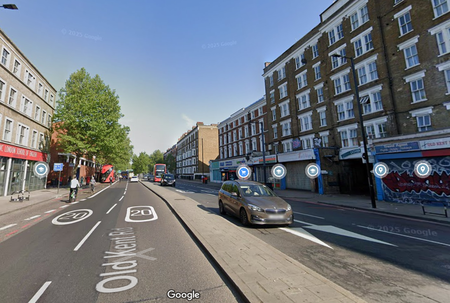
Old Kent Road is the only location south of the River Thames. As the name suggests it is a thoroughfare that heads to the county of Kent. In fact it was a route to the south at the time of the Roman occupation of England, and had been for some time prior. It now forms part of the A2 road that runs from London to Dover.
Whitechapel Road
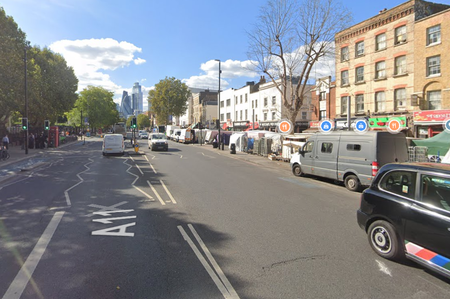
Whitechapel Road is another old road that was used by the Romans, this time heading east to the county of Essex. It begins in the East End of London and is now part of the A11 road to Colchester. In the 1930's the road was the centre of the Jewish Community in London with market stalls lining the street. The market still exists but the community has changed to Asian origin, mainly India and the sub-continent.
##### King's Cross Station #####
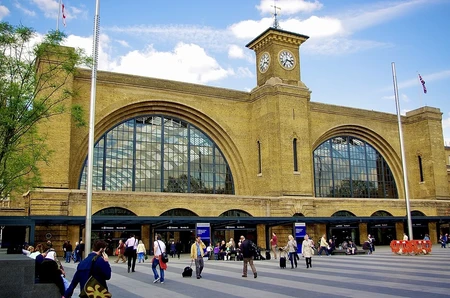
This station was built in 1851 to support the East Coast Line. According to folklore, it was built on the site of a battle between the Romans and the Celtic Queen Boudica. It is said that she was killed in battle roughly where platforms 9 and 10 now stand. It is also reported that her ghost haunts the passageways beneath the station.
The Angel, Islington
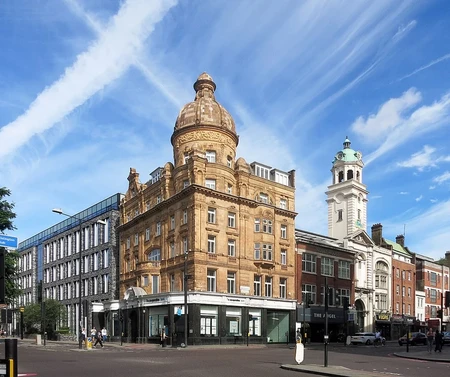
The Angel in Islington is not a street but a pub, although nowadays, it isn't even a pub anymore. It is now offices, but at the time of the design of the Monopoly board it was apparently where our aforementioned MD and his secretary had lunch.
Euston Road
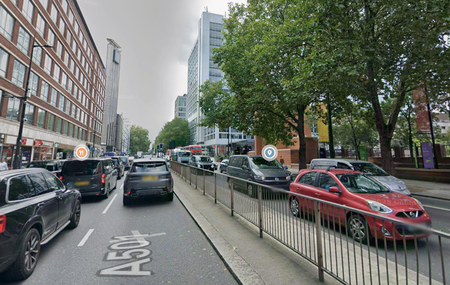
Euston Road takes it's name from Euston Hall, in the village of Euston in Suffolk. While this may seem strange, the owners of Euston Hall owned lots of land around that area in the mid 19th century. When the road was first opened in 1756, it was London's first bypass, it was built as a route to drive cattle to Smithfield Market without going through central London.
Pentonville Road
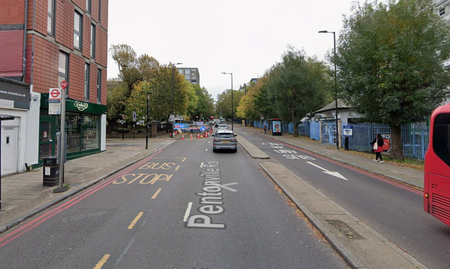
Strangely, Pentonville Road runs between the Angel, Islington and Euston Road, it seems like our designers may have got the roads the wrong way around on the board, perhaps a robust lunch was partaken of in the Angel pub.
Anyway, Pentonville Road was named after a landowner called Henry Penton. There was a law passed in the 18th century that forbade any development within 50 feet of the road. Over the years this was largely ignored as you can see in the picture above.
Jail
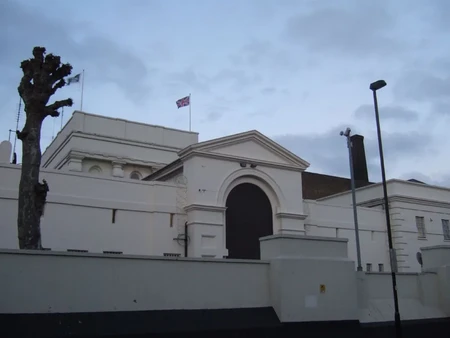
At this point, I think our illustrious business owner and his secretary have given up walking around the city, and just jotted down a few names from a map. You would think that the prison, or jail, or gaol if you're British, would be near to Pentonville Road, but no. There is a famous prison called Pentonville, that is about one and a half miles north. It was built in around 1840 and was such a good design that many prisons around the world copied it's layout.
Our next street is some 3.6 miles away to the south...
Pall Mall
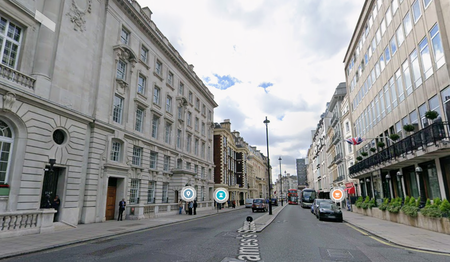
Pall Mall is a rather grand thoroughfare, street seems too common a word for it. It's buildings are home to some of the remaining "Gentlemen's Clubs" such as the Reform, and Travellers clubs.
Pall Mall takes it's name from a lawn game of the same name that was similar to croquet. It was introduced to London's elite by King James I in the early 17th century. The street was built on the site of a Pall-mall court that was replaced by another court nearby.
Whitehall
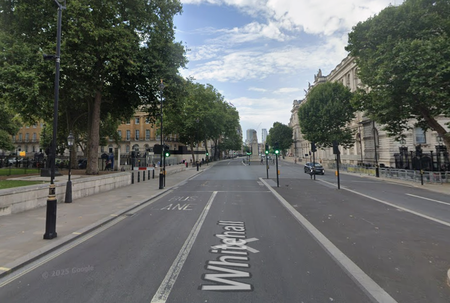
Whitehall is home to many government offices, including the Foreign Office and the Ministry of Defence. Downing Street, home of the British Prime Minister is behind steel gates just to the side. The street leads in the direction of the Houses of Parliament.
It takes it's name from the Palace of Whitehall, that stood at the end of a long drive, which is now the road. The original palace was destroyed in a fire in 1698.
Northumberland Avenue
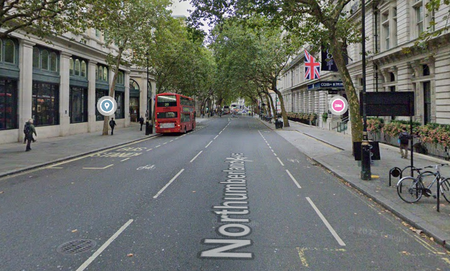
Northumberland Avenue, like Whitehall, was named after a building that previously stood on the land. It was named after Northumberland House, that was the home of the Percy Family, one of whom just happened to be the Duke of Northumberland.
The street was originally built with hotels, however over the years many of these have been turned into offices providing corporate headquarters to well known companies such as Marks and Spencer. Other buildings became government offices.
##### Marylebone Station #####
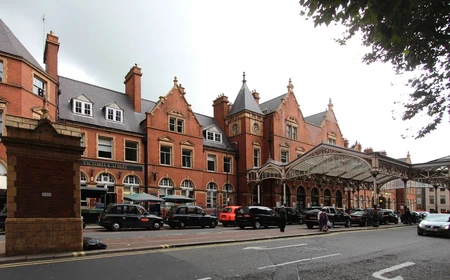
This next station is around two miles from Northumberland Avenue, I think our Monopoly guy has just picked a few stations at random and just chucked them on the board.
Anyway, Marylebone Station connects the capital with places such as Oxford, Birmingham and Stratford upon Avon, handy for Old Bill Shakespeare to get to his Globe Theatre, I suppose.
The station has been used as a location in several films including A Hard Days Night featuring the Beatles, The Thirty Nine Steps, and some episodes of Doctor Who in the 1970's.
Bow Street
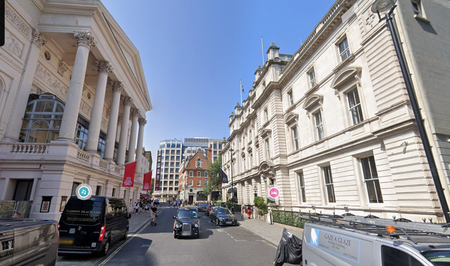
Bow Street is famous as the place where the Metropolitan Police was formed. They were formed as as the Bow Street Runners and made up of volunteers in 1750. At the time, the street was known for prostitution as there were several brothels disguised as public houses in the area.
The street takes it's name from it's shape that loosely resembles a bow. The former Bow Street Magistrates Court, on the right in the above picture, was closed due to maintenance costs, but is now a boutique hotel and Police Museum
Marlborough Street
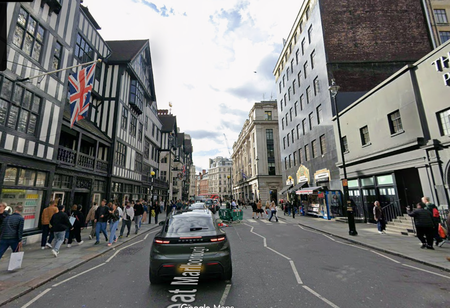
Marlborough Street provides more evidence that our boss man at Monopoly wasn't really scouting for addresses when he came to London with his secretary. Marlborough Street doesn't actually exist! Great Marlborough Street does, but the criminal court in the street is known as Marlborough Street Magistrates Court.
The street was named after the 1st Duke of Marlborough. Bizarrely the street was the inspiration for a brand of cigarettes, the Philip Morris company had a factory there in 1881 and named the Marlboro brand after the street.
Vine Street
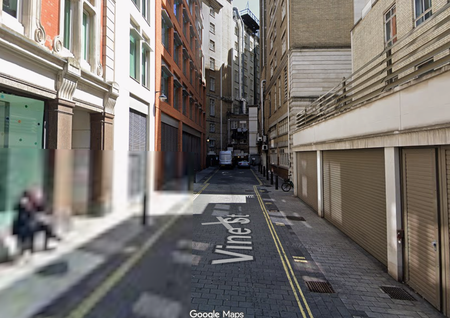
At first glance, Vine Street seems a strange addition to the Monopoly board. However, dig a little deeper and you will find a connection to the other to orange properties. From the 18th to the 20th century, the street was home to the Vine Street watchhouse, a police station that grew to be one of the busiest in the world. All three orange properties have a connection to the law.
Vine Street was named after an 18th century pub called The Vine, which it is rumoured was in turn named after a vineyard that was present in the area during the Roman occupation of England.
Free Parking
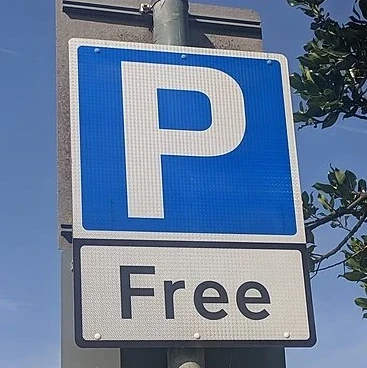
Halfway around the board from GO! is Free Parking.
I tried to find some, but nowadays, in London at least, there doesn't appear to be any Free Parking. In fact parking a car anywhere in the capital is very expensive. Even driving in London is expensive unless you have the latest car or electric power. With Emissions Zones and Congestion Charges, there is little point in driving within the Orbital Motorway, the M25.
Strand
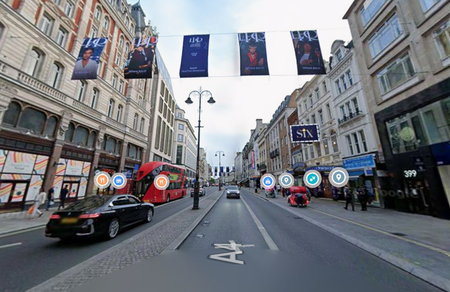
Commonly referred to as "The Strand" even though officially it is just Strand, this road's name comes from the Old English word strond meaning beach or edge of a river. Between the road and the river were many grand houses up until the 17th century. After this time, many theatres and taverns could be found in the area, some of which remain to this day.
A pub that existed in the 17th century on the Strand, the Duck and Drake Tavern, was supposedly the meeting place for Guy Fawkes and the rest of his crew that were involved in the Gunpowder Plot to blow up parliament, a terrorist act that is celebrated every year on Bonfire Night (November 5th) in the United Kingdom.
Fleet Street
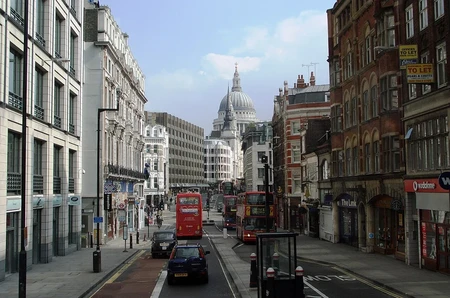
Fleet Street has been an important route since Roman times. Speaking of Times, most of the British newspaper press had offices in Fleet Street since the 16th century right up until the late 20th century when production was moved to cheaper premises in the Wapping area of London.
Fleet Street is named after the River Fleet that runs into the Thames nearby. The fictional barber and serial killer Sweeney Todd, a.k.a. The Demon Barber, was based in Fleet Street, where he would murder his customers and serve their remains as fillings in pies.
Trafalgar Square
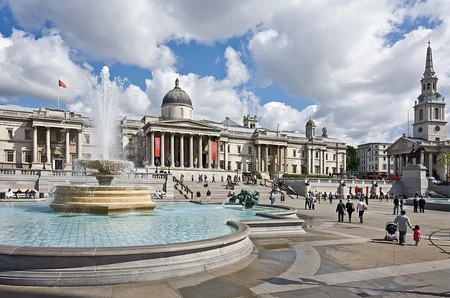
Trafalgar Square is named after the Battle of Trafalgar that occurred in 1805 and was a victory for the British Navy during the Napoleonic Wars. The leader of the British Navy, Horatio Nelson, who died in the battle is commemorated on Nelson's Column in the Square. The base of the column is guarded by four bronze lions weighing around seven tons each.
All distances to London on road signs in the UK are measured from a point at the centre of Trafalgar Square. A popular pastime in the Square used to be feeding of the numerous pigeons that live on or near Trafalgar Square. However, since 2003 it has been illegal to feed the birds due to the amount of guano being deposited on the statues and around the area.
##### Fenchurch Street Station #####
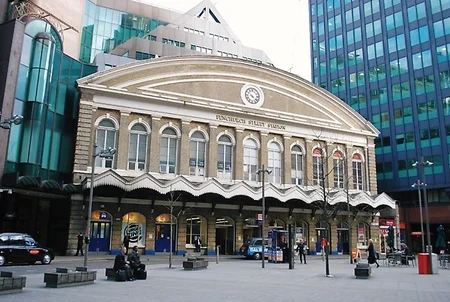
Fenchurch Street station was the first to be built within the City of London. It was constructed in 1841. The name Fenchurch comes from the Latin word faenum, meaning hay, and referring to the hay markets that were in the area.
The first murder to take place on British railways was on a train that left Fenchurch Street for North London in 1864, when a German tailor, Franz Muller, killed Thomas Briggs, a banker, by throwing him from the train after stealing his gold watch.
Leicester Square
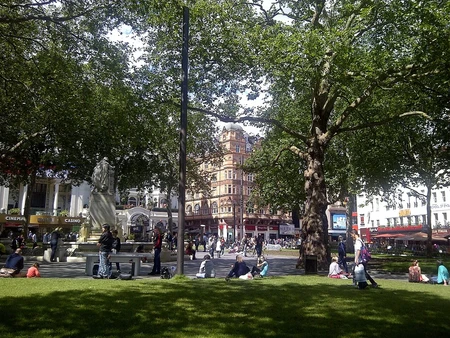
Leicester Square, named after the Second Earl of Leicester, is a pedestrianised square incorporating a small park in the centre. It is surrounded by shops and theatres, including the famous Odeon cinema, that hosts many film premiers.
In the 18th century the square was home to several brothels, and there was a booth that charged people to use a telescope to view the severed heads of traitors that were executed at Temple Bar.
There are several statues in the square including such celebrities as William Shakespeare, Charlie Chaplin, and Mr. Bean!
Coventry Street
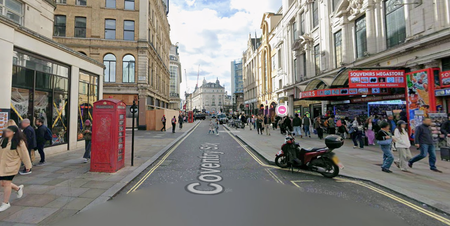
Coventry Street despite it's name was not named after the city in the Midlands. It was named after Henry Coventry who was secretary of state to Charles II. The street was constructed to provide entertainment venues and retail. However, it soon became a street full of gambling houses and brothels. In the 19th century, the area was cleaned up and theatres and music halls were built.
In 1922, three men were stabbed in Coventry Street, by someone inserting a thin tube into their necks. The perpetrator was never found, but rumours of a vampire attacking in the street continued for several weeks.
Piccadilly
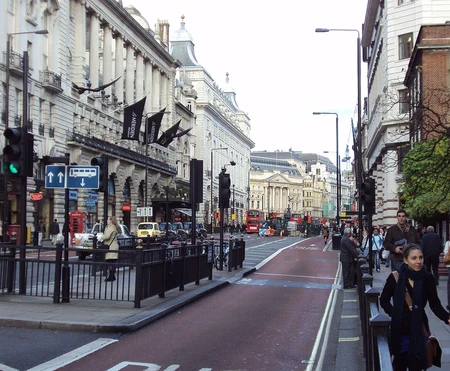
Piccadilly takes it's name from a fashion accessory that was popular in the late 16th century. Piccadills were broad lace collars that were worn around the neck, the most prolific manufacturer was based in the area, then called Portugal Street.
In the 1960's Piccadilly was known as the centre of London's illegal drug trade with heroine and cocaine being sold in unscrupulous pharmacy shops. By the late 1980's, the street had ben transformed into a retail shopping street. Amongst it's residents are luxury outlets such as Fortnum & Mason and the Ritz Hotel. The Embassy of Japan is also in Piccadilly.
Go To Jail
The "Go To Jail" corner on the UK board is unchanged from the US version. The pointing policeman is wearing a US style cap rather than the normal helmet worn by the British "bobby".
Regent Street
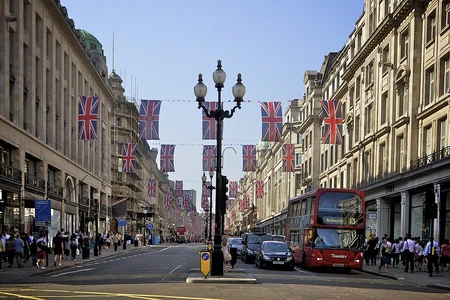
Regent Street is a major shopping thoroughfare in London. The famous Hamleys toy store, listed in the Guinness Book of Records as the world's oldest toy shop. Also in the street is Apple's flagship store in the UK. At one end of the street is the BBC's Broadcasting House, in constant use since the 1930's.
The street was named after King George VI, but prior to his reign when he was Prince Regent. In July 2004, around half a million people lined Regent Street and the surrounding area to witness a parade of Formula 1 cars. It was to gauge the popularity of a possible future London Grand Prix utilising the streets around Regent Street.
Oxford Street
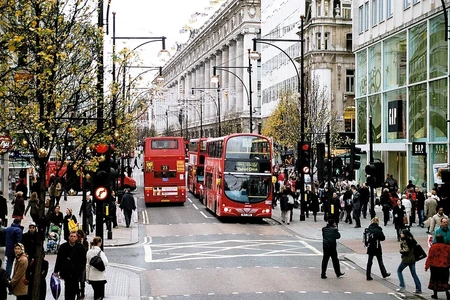
Oxford Street is yet another retail haven, with many shops including the famous Selfridges department store. It is thought to be Europe's busiest shopping street with almost half a million visitors every day and around 200 stores.
Also in Oxford Street is the 100 Club, in constant use as a music venue since it's opening in 1942, it was one of the leading venues in the punk rock era, hosting bands such as the Sex Pistols, and The Damned, amongst many others.
Bond Street
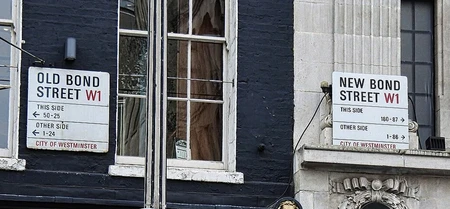
Bond Street as portrayed on the Monopoly board technically does not exist. There is a New Bond Street and an Old Bond Street, although most Londoners just refer to both as Bond Street as one just runs into the other.
The street is well known for it's luxury stores, and was once described as the second most expensive street in Europe, after the Avenue des Champs-Élysées in Paris. Because of it's reputation as a high value retail area, Bond Street has suffered more robberies than other roads in the capital. The robbery in 2009 of the Graff Diamonds jewellery store amounted to a loss worth around £40 million.
##### Liverpool Street Station #####
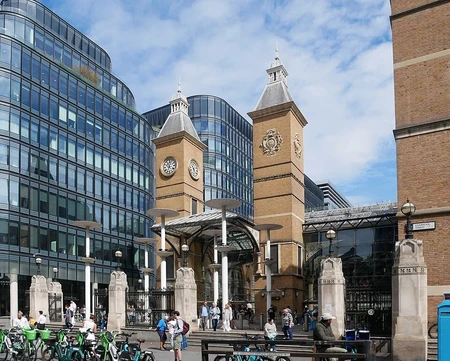
Liverpool Street Station served as a transport hub in the 1930's as part of the Kindertransport rescue mission to save Jewish children from the Nazis in the run-up to World War II. Thousands of refugee children passed through the station.
As well as receiving damage during the Blitz, the station was also hit by an IRA bomb in 1993 and also in the 7/7 terrorist attacks on London in 2005.
Park Lane
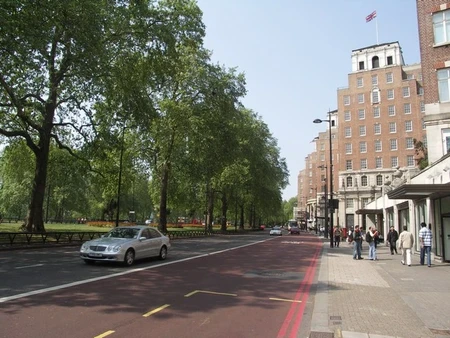
Park Lane is one of the most prestigious streets in London, the famous Dorchester Hotel, owned by the Sultan of Brunei, is located there, along with other luxury hotels and residencies. In 2015, it was reported that the average monthly rent for a two bedroom apartment was £5200.
The World Monopoly Championships was held at the Park Lane Hotel in 1988, sponsored by the British manufacturers of the game, Waddingtons.
Mayfair
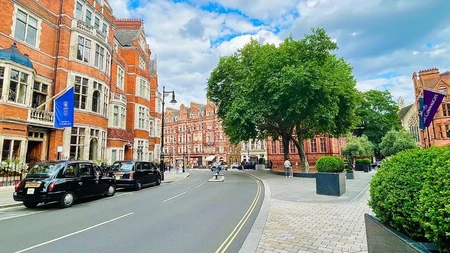
Mayfair is not a street in London, it is actually an area of the capital. It is one of the most affluent places in the city, with many high-end hotels and foreign embassies located amongst its many streets. Mayfair is bordered by four of the above streets on the board, Park Lane, Oxford Street, Regent Street, and Piccadilly.
The Rothschild Family owned several properties in the area. John Adams established the American Embassy in the area, and Franklin D Roosevelt spent his honeymoon there.
The north western part of Mayfair has been nicknamed "Little Doha" due to the ruling family of Qatar owning around a quarter of the 279 acres of Mayfair.
Conclusion
So there you have it, "A Trip Around The Monopoly Board", well the London version at least.
There are many versions of the Monopoly board, even this one isn't the original, that accolade belongs to the US version based in Atlantic City, although there are versions for many other Stateside cities.
The UK version was sent out to all four corners of the Commonwealth, and it has been known for visitors from as far afield as Singapore and New Zealand to visit London just to tour the locations.
I don't think this will become a series, I enjoyed making this blog, because I used to play on this board, however, with so many variations covering many cities, I fear I may get board bored (see what I did there!) of it quite easily. If anyone wants to make a similar blog about any of the other places, then please go ahead with my blessings, I look forward to reading about them!
Oh, just a quick note, the colours of the heading are the same as the colours for the properties on the board.
So long for now, and look out for more blogs soon.
boardborder so shipping board games across the pond isn’t too likely.Canada was apparently one of the few places in the Commonwealth that didn't get the UK board.
Also, the photo of the board you used is the exact copy of the game that I own!
Also, I snuck in and took a picture of your board, while your back was turned!