
Country and Flag Origins - Part G
First published: Friday March 28th, 2025
Report this blog
Introduction
Anyways, on to the blog proper, it's all about the G countries this time, such a surprise after F I know, but what can you do? There are eleven in all, so quite a bit longer than the last blog. There are five African, two each for Europe and North America, and one each for Asia and South America. Nothing from Oceania this time. So without further ado, let's get going....
Gabon
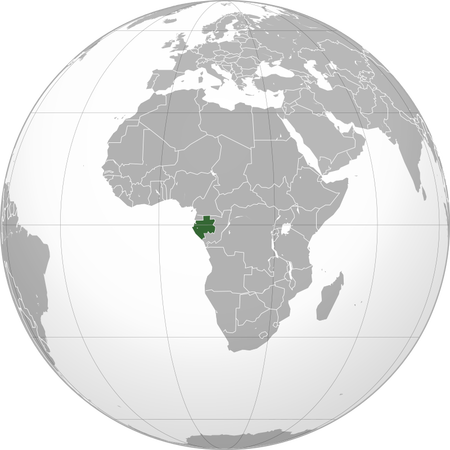
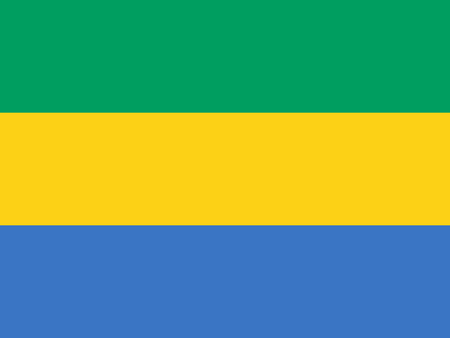
The flag of Gabon was adopted in the year of their independence in 1960. The previous flag was similar, but with the French tricolour in the top left corner. The green colour represents the natural resources of Gabon and it's extensive forests, the yellow stripe symbolises the sun and the Equator that runs through the country, whilst the blue stands for the Atlantic Ocean and Gabon's coastline.
The first European visitors to Gabon were the Portuguese in the 15th century, they settled on the offshore islands of Sao Tome, but were regular visitors to the mainland in order to trade. The Portuguese named the country after their word gabão, which is a coat with sleeves and a hood that resembles the shape of the Komo River estuary on which they would trade.
GABON = HOODED COAT
(The) Gambia
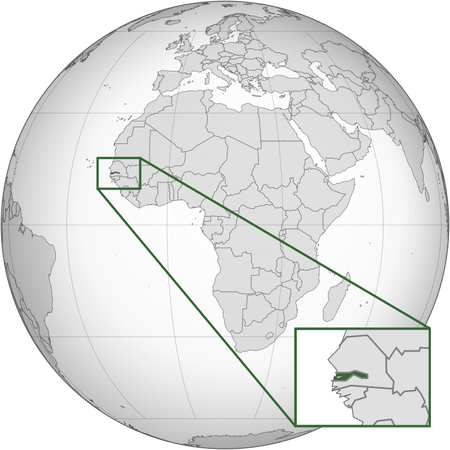
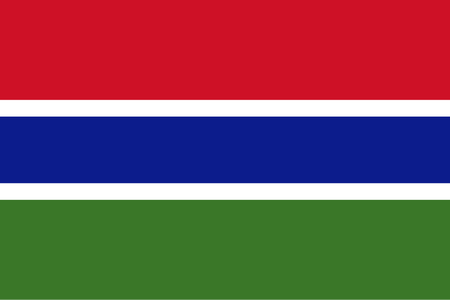
First used in 1965 following independence from the United Kingdom, the flag of Gabon consists of five horizontal stripes. The thin white stripes represent unity and peace, the blue stands for the Gambia River that splits the country in two from east to west. The red symbolises the sun and the savannah, and the green colour is for the forests and agriculture that the Gambian people rely on.
The country is named after the river that flows through it. The river gets it's name from a Mandinka language word, Kambra or Kambaa, which means "Gambia River", although it may be derived from a Serer word, Gamba, which is a sacred gourd or squash that is beaten whenever a Serer elder passes away.
GAMBIA = NAMED AFTER THE GAMBIA RIVER
Georgia
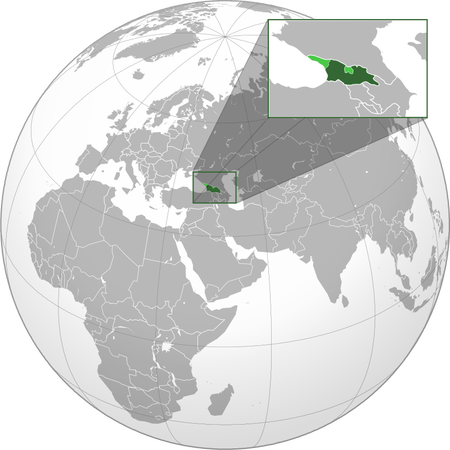
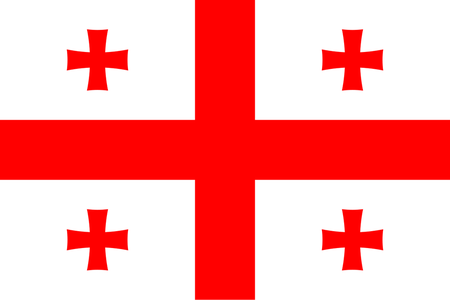
The flag of Georgia is also known as the Five Cross Flag, for obvious reasons. It is thought to have originated in the Kingdom of Georgia in around 1008 AD, it was reintroduced after the collapse of the Soviet Union. The central red cross on a white background is the same as the flag of England, and of Saint George. It is surrounded by four red Bolnisi crosses that were a design from a fifth century ornament found in a church in the village of Bolnisi in Georgia. The crosses on th eflag are said to represent either the Five Holy Wounds suffered by Jesus on the cross, or to Jesus and the Four Evangelists.
The origin of the name of Georgia was thought to be from either the popularity of St. George amongst people of the region, or from the Greek word γεωργός meaning 'tiller of the land'. However, amongst scholars these explanations have been mostly debunked. The theory now is that the name comes from the Persian gurğ or gurğān meaning "wolf". Wolves are still part of Georgia's fauna.
GEORGIA = WOLF (or LAND OF THE WOLF)
Germany
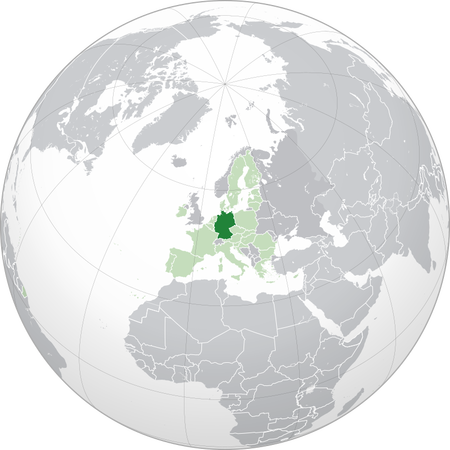
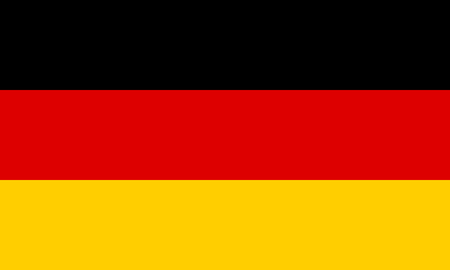
This has been the flag of Germany off and on since around 1778 when it was the flag of the Principality of Reuss-Greiz in the Holy Roman Empire. It was used during the Weimar Republic, but changed during the Nazi era, and then reintroduced in 1949 after the end of World War II. During the Napoleonic Wars, the colours were used by the Lutzow Free Corps, a resistance group against the French. It was stated then that the colours represented "Out of the blackness (black) of servitude through bloody (red) battles to the golden (gold) light of freedom". Over many years and conflicts, the three colours became to be a symbol of Germany.
Germany's name is derived from the Latin name, Germania, which was introduced by Julius Caesar when referring to the peoples that inhabited lands to the east of the River Rhine. The German term Deutschland, originally from diutisciu land meaning ''the German lands'', comes from the Old German, diutisc, meaning "of the people".
GERMANY = OF THE PEOPLE
Ghana
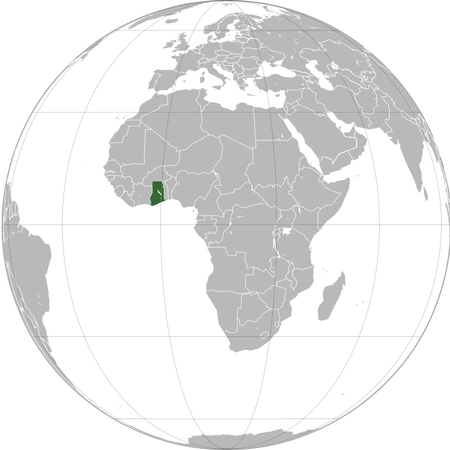
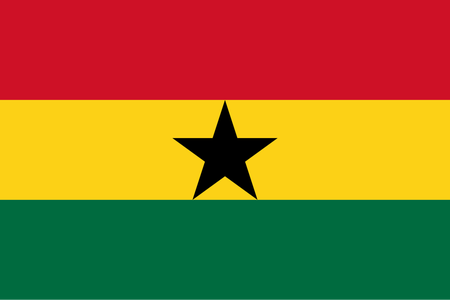
In line with many other African countries, Ghana uses the colours of the Pan-African Movement on its flag with the addition of a black star. The red colour stands for the blood lost during the struggle for independence from British colonial rule, and for the love of the Ghanaian nation. The yellow symbolises the wealth of minerals in Ghana, it was originally called Gold Coast after all. The green represents the forests and natural wealth such as oil, food and crops. The black star is a symbol for the emancipation of Africa and unity against colonialism. The Ghana national football team are known as the "Black Stars"
The name of Ghana originated in the 3rd century when it was part of a large empire in West Africa called Wagadu. Wagadu was called Ghana by Arab traders on the Trans Sahara route, It is thought to come from Kaya Maghan, the name given to the rulers of Wagadu and which translates to "Ruler of Gold". Following the countries independence, the first President, Kwame Nkrumah, decided on the name Ghana to evoke a sense of unity and liberation among the nation's people.
GHANA = GOLD
Greece
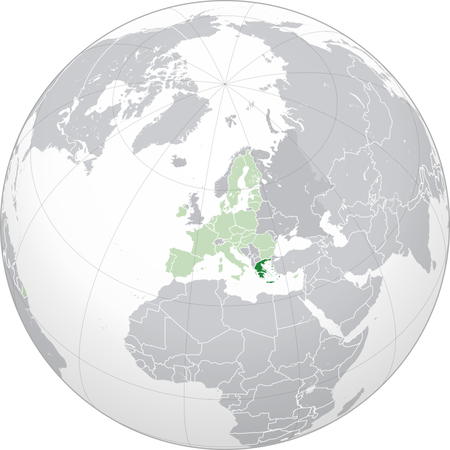
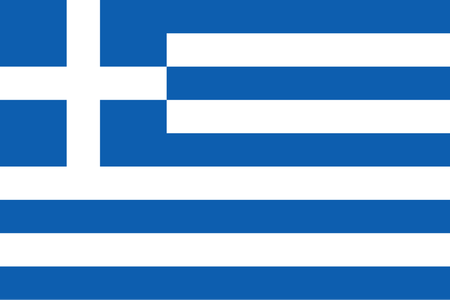
There have been many theories about the Greek flag over the years. Ranging from the colours of the shield of Achilles, to varying coats of arms, uniforms, empirical clothing, and navy flags. However, according to the Great Greek Encyclopedia published in 1934, none of the theories have any historical merit. The main theory nowadays is that the colours represent the Greek seas and sky and the stripes, five blue and four white, represent the syllables in the Greek phrase Ελευθερία ή θάνατος or Eleftheria i thanatos which means " Freedom or Death".
The English names Greece and Greek are derived from the Latin Graecia and Graecus, from the name of one of the first ancient Greek tribes to settle in Southern Italy in the 9th century BC, the Graeci.
GREECE = NAMED AFTER THE GRAECI TRIBE
Grenada
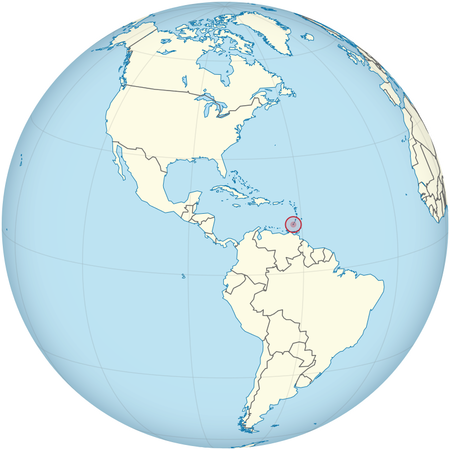
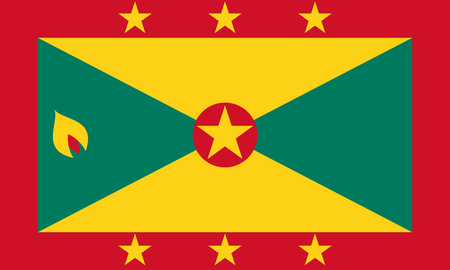
Grenada adopted this flag in 1974 following it's independence from the United Kingdom. The green of the flag represents the agriculture and vegetation of the island, the yellow colour epitomises the sun as well as the warmth and wisdom of the islanders. The red stands for vitality, courage, unity, and harmony. The six yellow outer stars represent the six parishes, whilst the larger star in the centre represents Grenada's two sister island dependencies, Carriecou and Petite Martinique. The symbol of a nutmeg on the left green triangle stands for the countries main export. Grenada is the world's second largest exporter of nutmeg, after Indonesia.
The origin of the name of Grenada is lost in history, however it is probable that it was named by Spanish sailors after the town of Granada in Spain. Early Spanish maps show the island as Granada, and the smaller nearby islands as Granadillos or "Small Granadas". When the French took over they continued the name but with a French twist, calling it La Grenade. The island was then ceded to the British after the Treaty of Paris of 1763, they anglicised the name to Grenada.
GRENADA = NAMED AFTER GRANADA IN SPAIN
Guatemala
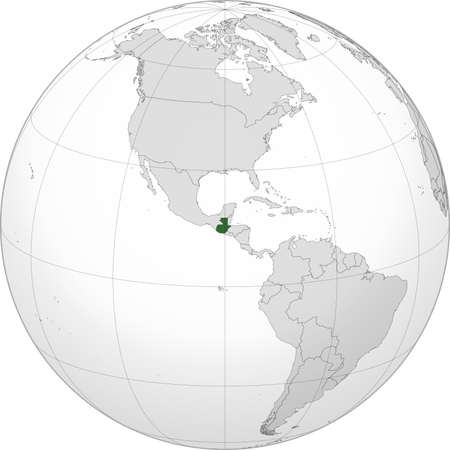
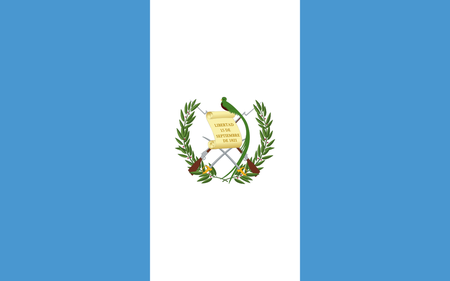
This flag dates back to 1871 and is based on the former flag of the Federal Republic of Central America. The blue stripes represent strength, justice, truth and loyalty. The white stripe stands for purity, integrity, firmness and light.
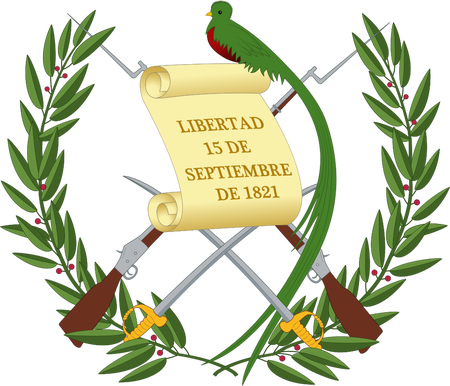
In the centre of the flag is the Guatemalan coat of arms. It consists of the countries national bird, the Quetzal, that symbolises liberty and a parchment scroll displaying the date of independence of Central America from Spain. It also shows crossed rifles symbolising the country's willingness to defend itself, a bay laurel crown representing victory, and crossed swords for honour.
The name of Guatemala originates from the Nahuatl language word, Cuauhtēmallān, meaning "place of many trees". The name was originally used by the Mexica people to refer to the ancient city of Iximche, but the Spanish extended it to stand for the wider region of what is now Guatemala.
GUATEMALA = PLACE OF MANY TREES
Guinea
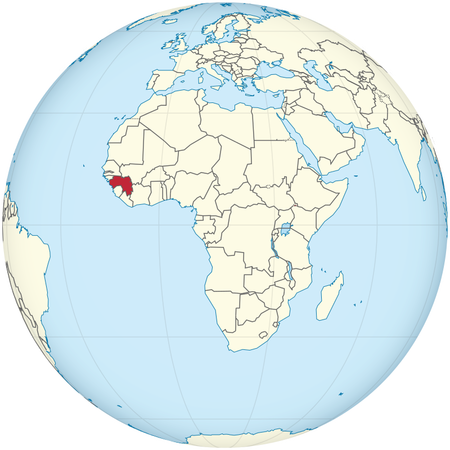
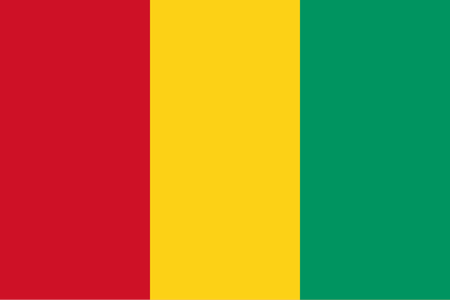
The flag, like many others in Africa, uses the colours of the Pan African Movement. However, according to Guinea's first Prime Minister, Ahmed Sékou Touré...
"The three colours of the flag represent the following: red symbolizes the blood of anti-colonialist martyrs, the labour of the working classes, and the wish for progress; yellow represents Guinean gold, as well as the sun, which is "the source of energy, generosity and equality for all men to which he gives light equally"; and green represents the country's vegetation, continued prosperity arising from its natural resources, and the historically difficult life of the Guinean masses who live in the countryside." Couldn't have put it better myself!
The name of the country of Guinea comes from the name of the region of Guinea, that stretched from the coast to the Sahara, alongside the Gulf of Guinea. The English term, Guinea, comes directly from the Portuguese word, Guiné, which emerged in the 15th century as a generic term to refer to people that lived south of the Senegal River.
GUINEA = NAMED AFTER THE GUINEA REGION SOUTH OF THE SAHARA
Guinea-Bissau
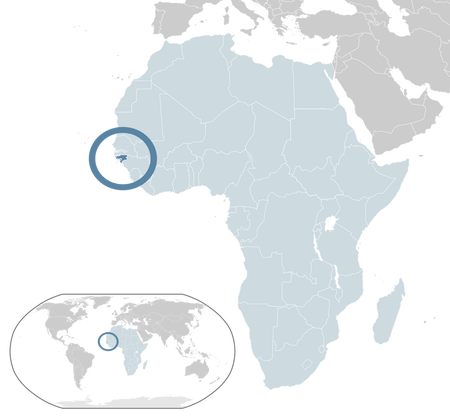
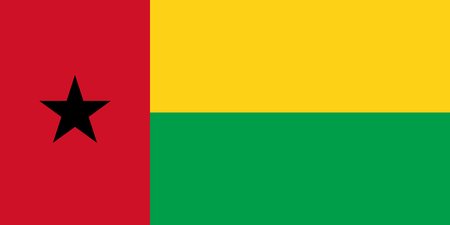
This flag was adopted by Guinea-Bissau in 1973, when the country declared it's independence from Portugal. The flag's design was inspired by the flag of Ghana and uses, like others, the colours of the Pan African Movement. The black star stands for the unity of Africa, red is for the blood of martyrs, green for forests, and yellow for the country's mineral wealth.
The country was colonised as Portuguese Guinea, and on independence the name of the capital city was added to prevent confusion with neighbouring Guinea. For the origin of Bissau, see my much earlier blog about Capital City Origins. The Guinea part of the name has the same origin as Guinea above, it is named after the region.
GUINEA-BISSAU = NAMED AFTER THE REGION AND THE COUNTRY'S CAPITAL
Guyana
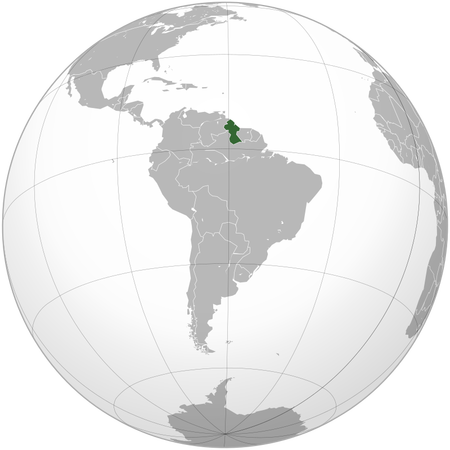
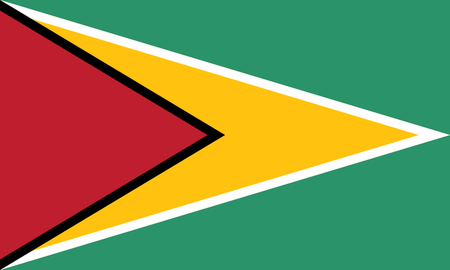
The flag of Guyana is also known as the "Golden Arrowhead", it has been in use since the country gained it's independence from the United Kingdom in 1966. The colours represent a number of things, red for zeal and dynamism, green for agriculture and forests, yellow(or gold) for mineral wealth, black for endurance, and white for rivers and water.
The name of Guyana derives from an earlier name of Guiana, which referred to a much larger region that included British Guyana (Guyana), Dutch Guiana (Suriname), French Guiana, Spanish Guyana (the Guayana region of Venezuela), and Portuguese Guiana (the Amapa state of Brazil). According to the Oxford English Dictionary, the word guyana comes from an Amerindian language and means "land of many waters".
GUYANA = LAND OF MANY WATERS
Summary
Well, here we are again, another summary at the end of another blog. I got fed up with typing Guinea and Guyana towards the end. Still, "never mind, mustn't grumble", as my grandmother used to say. She said some stupid things at times, God rest her soul. And she was a terrible cook too. I remember once she made a cake that wasn't cooked in the middle but was burnt on the outside. But I digress, you don't want to hear about my family's culinary efforts.
Next up in the series, H. With only three countries starting with H, it will be a short blog again. I may try to get that one finished on Saturday, I'm at work Sunday, or I could write a dual blog and include H and I in the same one. That will be 3 H and 9 I which, if my maths are correct, makes 12 entries. Too long? or OK? What do y'all think? That may take longer but probably still published next weekend at the latest.
Anyhoo, that'll do donkey, that'll do!
Catch you on the flip-flop 10-4 good buddies!
One can see more info on Guinea etymology here
I would be interested in such a blog but I'm more interested in all of your travels!
I fear Astana is a formidable opponent and will take some catching!
Here's a few more...🇬🇩🇬🇩🇬🇩🇬🇩
And yeah, Hooded Coat is my favourite too in this one. I always thought Georgia was named after St.George, especially with the flag being similar to his.
Appreciated toowise.
Nice blog anyways
Funny story: a Polish girl at work thought I was Greek because I have a flag on the inside of the truck. It is a Cheshire flag which consists of three gold wheatsheaves and a sword on a blue background. Totally like the flag of Greece!