
Country and Flag Origins - Part I
First published: Sunday April 6th, 2025
Report this blog
Introduction.
To avoid any confusion, the letter in the title is "I" and not "l". Clear as Mississippi Mud. So I will elaborate, it's I pronounced "eye", not l pronounced "ell", Ok now? Good.
Now then, there are nine entries in this edition, so it will be a longer blog, I don't want you all to get disheartened at around the six or seven mark and jump to the end. Put your boots on, pull up your socks, and plod on through to the end for me, thank you! Or rather, pull your socks up first, then put....well you know what I mean, stop being pedantic. No-one likes a smartar clever clogs.
We start our i journey in Iceland, a warm temperate place, with long hot summers, swaying palm trees and chirping cicadas. (Sorry, I wrote the last bit on April 1st.).
And we're off.....
Iceland
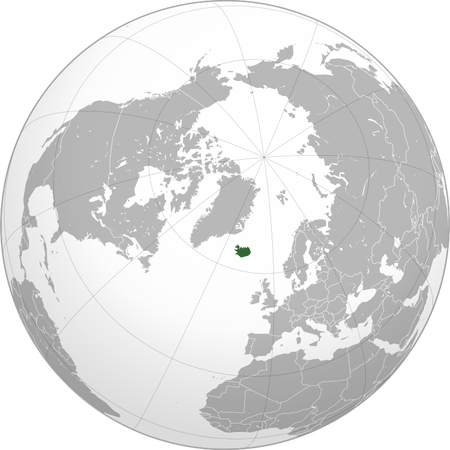
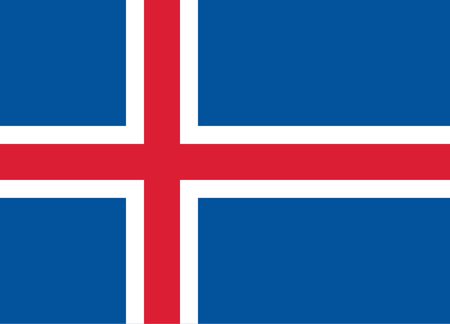
The flag of Iceland was flown for the first time on 17th June 1944, on the day Iceland became a republic. The colours of the flag represent three different aspects of the country's environment. Red is for the fire produced by the volcanoes, white stands for the ice and snow that covers the ground, and the blue symbolises the mountains. The cross stems from a symbol of Christianity.
Iceland is the country's third name. According to Icelandic Sagas, the first name, given by a Norwegian named Naddodd, was Snæland or "Snowland", because when he sighted it in the ninth century it was snowing. The second name came from a Swede called Garðarr Svavarsson, he modestly named it Garðarshólmur, which means "Garðar's Isle". The country finally got it's current name from a Viking that went by the rather grand name of Hrafna-Flóki Vilgerðarsson. He was an unlucky chap, during his voyage, his daughter drowned and all of his livestock starved to death. The sagas recount that he was despondent and climbed a mountain, whereupon he saw a fjord full of icebergs that gave him the inspiration to name the country Iceland.
ICELAND = LAND OF ICE (Who would have guessed it)
India
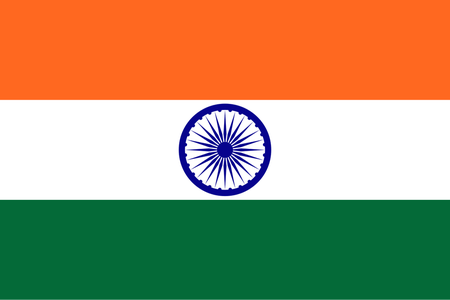
The Indian flag was adopted in 1947, and at that time could only be made of a certain material, khadi, a spun cloth popular with Mahatma Gandhi. The top colour is saffron, not orange, and it signifies disinterestedness, meaning that the leaders must be indifferent to material gains and be dedicated to work. The central white symbolises light, and the path of truth to guide the country's conduct. The lower colour of green denotes the association with the soil. The wheel in the centre is the "Ashoka Chakra" and represents the wheel of law. It also stands for motion, and the importance of not standing still as a country.
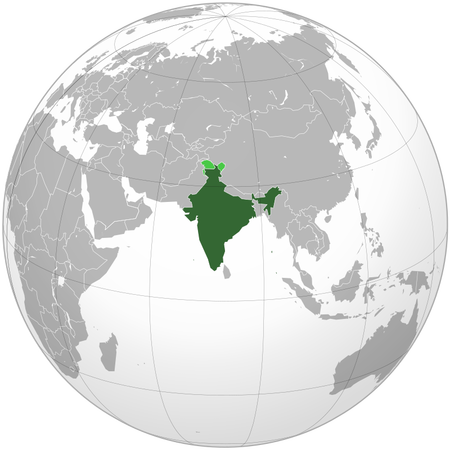
The name of India is derived from the Classical Latin, India, and referred to a land to the east. In Hellenistic Greek, India (Ἰνδία), in Ancient Greek, Indos (Ἰνδός), and in Old Persian, Hindush, all refer to the same meaning. In Sanskrit, Sindhu, refers to a river, specifically the Indus river and it's populated basin. The Ancient Greeks referred to the Indians as Indoi, or "People of the Indus"
INDIA = LAND OF THE EAST or EAST RIVER PEOPLE or NAMED AFTER THE INDUS RIVER
Indonesia
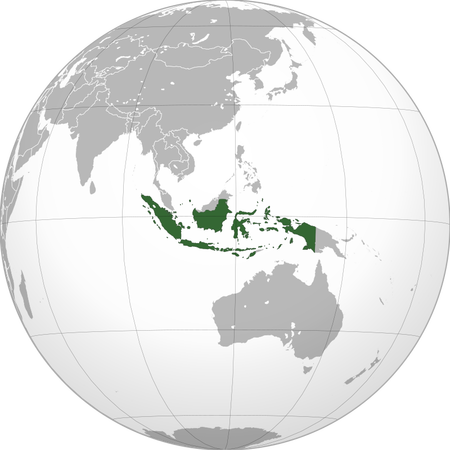
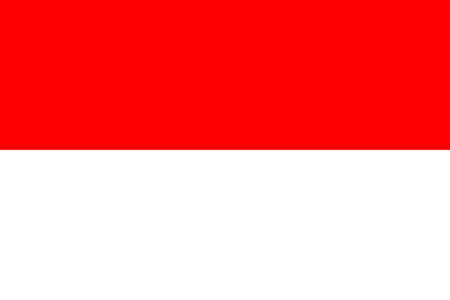
Although similar to Poland (colours reversed) and Monaco (almost identical), the red colour on the flag of Indonesia is slightly lighter. One opinion is that the colours stand for the human body or physical life for the red, and the soul and spiritual life for the white, making a whole human body with both. However, the first president of Indonesia, Sukarno, said "Red is the symbol of courage, White is the symbol of purity. Our flag has been there for 600 years"
The name of Indonesia derives from two Greek words, Indos and nesos, meaning "Indian Islands".
INDONESIA = INDIAN ISLANDS
Iran
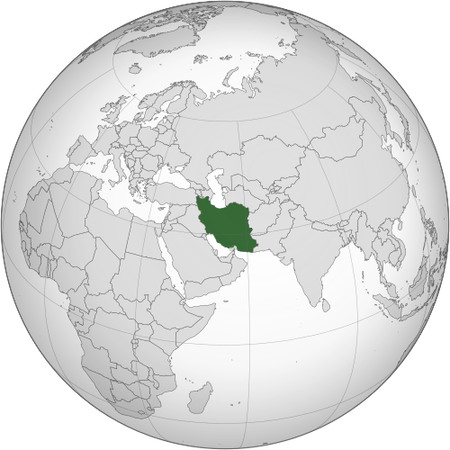
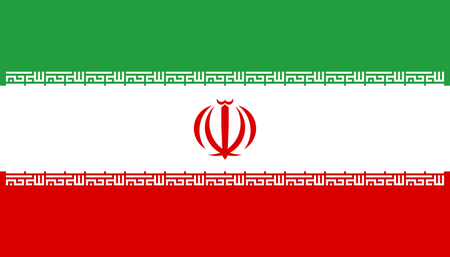
The flag was adopted in 1980 following the Iranian Revolution in 1979. The flag contains the Pan-Iranian colours of green, white and red symbolising unity and victory of the Iranian people. In the centre is the symbol of Allah, and the script on the green and red sections is the takbir written eleven times on each colour representing 22 Bahman, or the date of the revolution in the Iranian calendar. The takbir is the name for the Arabic phrase "Allahu Akbar", meaning "God is the Greatest"
Iran's name comes from the Middle Persian word, Ērān, and dates back to the 3rd century. It means "Land of the Aryans. According to Iranian folklore, the word comes from Iraj, who was a legendary king.
IRAN = LAND OF THE ARYANS
Iraq
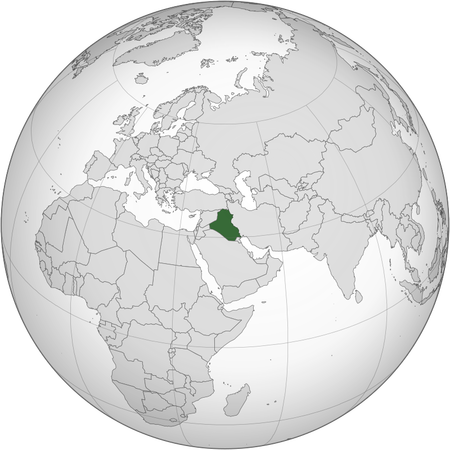
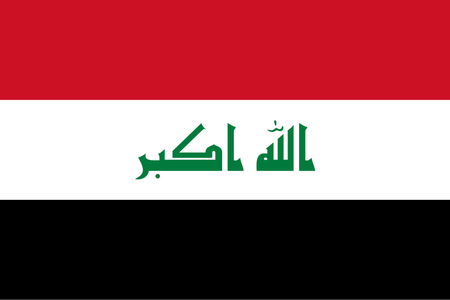
The Iraqi flag contains the traditional Arab colours, and the Arabic phrase "Allahu Akbar" in the centre. The colours were inspired by a 14th century Arab warrior and poet, Safi al-Din al-Hilli, who wrote ""Our actions are bright, our battlefields are dark, our lands are green, and our swords are red with the blood of our enemies"
There are several theories to the origin of the name of Iraq. Firstly, from a Sumerian city known as Uruk, which was in the plains of Mesopotamia. Another theory is that the name derives from the Middle Persian word, erāg, meaning "lowlands". And yet another idea is that it comes from the an Arabic word, عراق ʿirāq meaning "hem", "shore", "bank", or "edge". All of the theories, to me at least, point towards the lowlands area.
IRAQ = LOWLANDS (Maybe)
Ireland
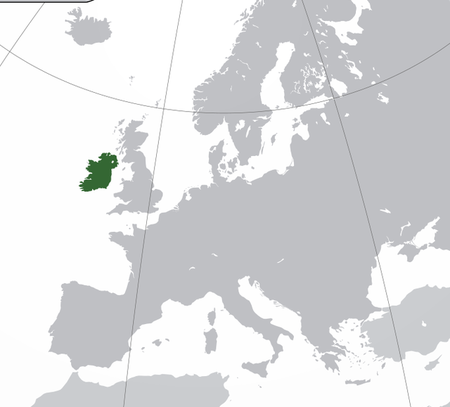
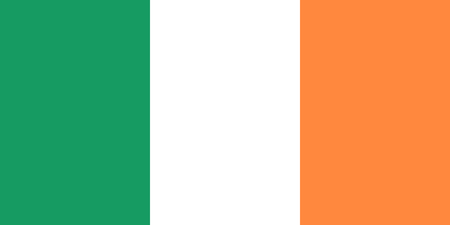
The Irish flag became a national symbol of Ireland when it was hoisted over the General Post Office building in Dublin during the Easter Rising in 1916. The colours are said to represent the Catholics (green) and Protestants (Orange) of Ireland whilst the white symbolises the hope and lasting peace between the two. It also is a symbol of the hope for a united Ireland with the Northern part, that is currently part of the United Kingdom.
The Irish name for Ireland is Eire, and both names derive from the same source. They come from the Old Irish, Eriu, who was a goddess of Irish mythology first mentioned in the ninth century. The origin of Eriu is disputed but is thought to maybe come from the Proto-Indo-European root of *h2uer, referring to flowing water.
IRELAND = NAMED AFTER THE GODDESS ERIU
Israel
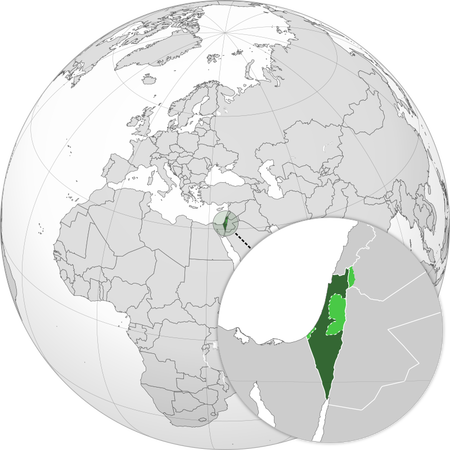
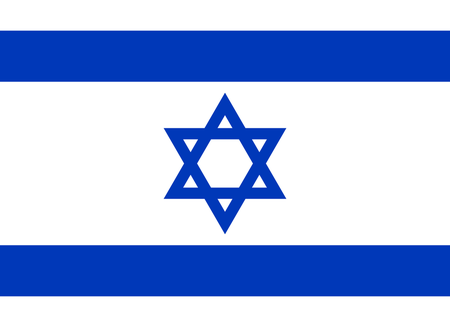
The flag of Israel was first used in 1897 by the Zionist movement, it was then adopted by the State of Israel on it's formation in 1948. The white background with blue stripes is designed in the same way as the tallit, a prayer shawl used by religious Jews. In Judaism, the blue colour symbolises God's glory, purity and severity. The white field represents Divine Benevolence. The blue Star of David is a symbol of the Jewish people and of Judaism.
The name of Israel was chosen by the first prime minister of the State of Israel, David Ben-Gurion, when the state was first established in 1948. Other names were considered including Judea, Ever, and Zion. The term "Land of Israel" has traditionally been used to describe the biblical Kingdom of Israel. The name "Israel" refers to Jacob, who was given the name after wrestling with the Angel of the Lord, at least according to the Hebrew Bible anyway.
ISRAEL = JACOB ?
Italy
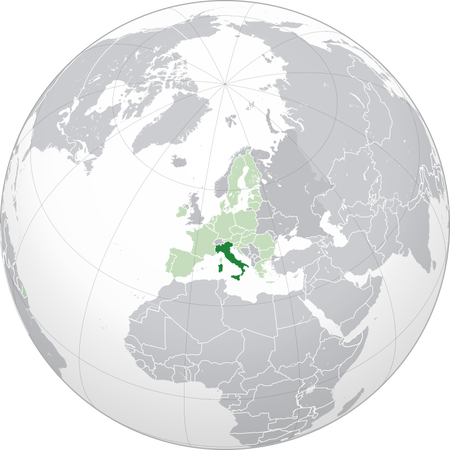
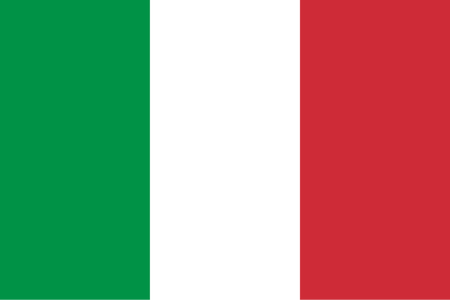
The Italian flag was introduced in 1946 when the Italian Republic was established, although the colours had been used in banners much earlier. There is some argument over the interpretation of the colours of the flag. It is Italy after all, there's always arguments. One of the two main theories is that the green represents meadows and the Mediterranean Sea, white for the snow in the Alps, and red for blood spilt in various wars. However, a more religious theory is that the colours symbolise hope(green), faith (white), and charity (red).
There are numerous theories as to the origin of the name of Italy. It may come from the Ancient Greek Italói, which referred to an area now known as Calabria, a region in the south of Italy. Another theory is that it comes from a legendary King, Italus. His realm was also Calabria. It is also thought that the name may have come from Vitulus, the Latin for "Calf" There are so many theories that it would take a whole blog to describe them all. So if you are really interested in this, here is the Wikipedia article. Enjoy!
ITALY = NAMED AFTER ITALUS (THE KING) or A BABY COW or something else!
Ivory Coast
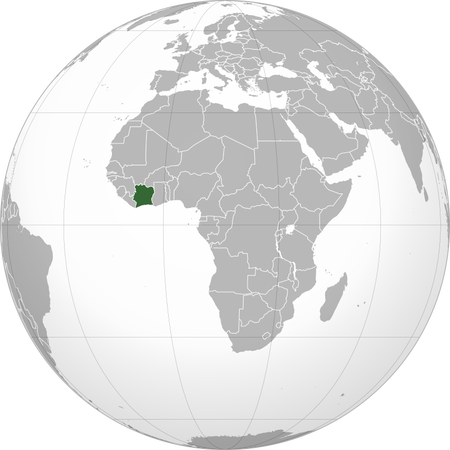
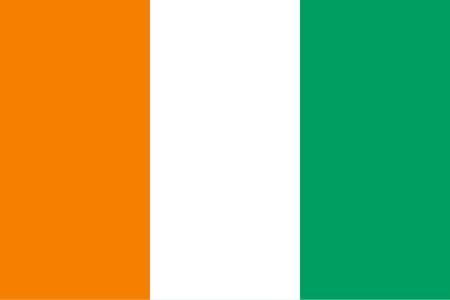
The flag of Ivory Coast (or Cote d'Ivoire if you're French), was adopted when the country became independent from France. The orange colour represents the savannas in the north of the country and the fertility of the land, the white symbolises peace, and the green is for hope and the forests. Not to be confused with the flag or Ireland, which is the same colours, but reversed. See above.
During the 15th and 16th centuries, Portuguese merchants named various parts of the east African coast. There was the "Pepper Coast", which was sometimes named Grain Coast, now present day Liberia. There was the Gold Coast, which is now Ghana. And the Slave Coast, which encompassed Togo, Benin and Nigeria. Along with these there was the Ivory Coast. These names reflected the type of trade that particular area of the coast dealt with. Quite why a modern nation would want to be associated with an old trade that is now not just frowned upon but downright illegal is beyond me, but hey, each to their own!
IVORY COAST = NAMED AFTER THE TYPE OF TRADE IT HAD
Summary
All the countries beginning with I , thats a I not an l, (sorry, already explained that in the introduction) have been done now, next up J. There are only three entries for this one, similar to H. I had considered lumping J and K together, there are only five in K after all, however it didn't seem fair on H to be left out alone, so J will be on it's own too. If you can understand all that, you're doing better than me. I don't half write some rubbish sometimes. I put it down to age and the British national eccentricity. Let's be honest, it wouldn't be me if I didn't rabbit on about something.
So that's that then. Thanks in advance for reading my blog.
I'm off to cut the grass now, that's not a reference to something else, I am really off to cut the grass, with a lawnmower, in front of the house, and at the back, I may even do next door, she's an old lady of 85, and it only takes me five minutes at the most. See ya soon!
Enjoy cutting the grass :)
Anyway, good read!
Let me know when it melts, I'll pop round and give it a trim.
Note: I'd say India means Indus more than Land of the East as the word doesn't mean East. That's kinda like saying Indonesia means Islands South Of Johor or something.
Fun Fact! All of these following words derive from the word Sindhu (the Sanskrit word for the Indus):
Sindh
Sindhi
Hindustani
Hindi
Hindu
India
Indian
Indiana
Indus
Indonesia
Indonesian
Indic
(and I'm sure theres some more)