
Country and Flag Origins - Part P
First published: Tuesday April 29th, 2025
Report this blog
Introduction
When I was at school, we had a tongue-twister that featured the letter P.
"Peter Piper picked a peck of pickled peppers,
If Peter Piper picked a peck of pickled peppers,How many pickled peppers did Peter Piper pick"
I literally thought of that on the way home from work, when I was trying to think of what to write in this introduction. Apparently, it is an old rhyme from at least the 19th century, maybe even earlier. A peck is a unit of measurement and the name of Peter Piper is thought to originate from a French horticulturist of the 17th century called Pierre Poivre. Wait, hold on, this isn't a blog about the origin of nursery rhymes, I seem to have strayed from the straight and narrow, although it has given me an idea for the future. More research needed in that quarter I think.
Anyway, back to the main feature, the P countries. There are a few more than last time, nine in total, all continents are represented except for Africa. So without further ado, here is the first one...
Pakistan
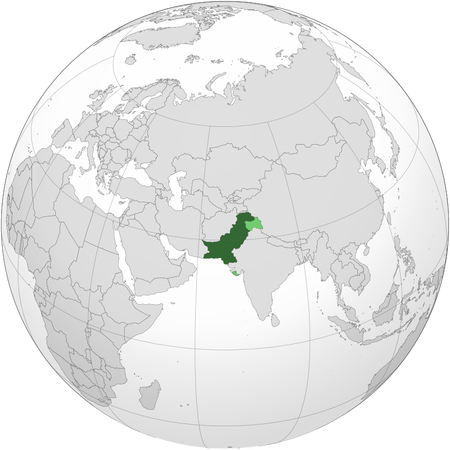
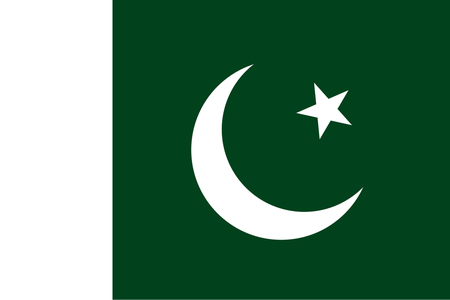
The green colour of Pakistan's flag represents the majority Muslim population of the country. The White stripe on the left represents citizens of other non-Muslim faiths. The combined star and crescent are a symbol of Islam, the crescent symbolises progress, and the five pointed star represents light and knowledge as well as a reference to the Five Pillars of Islam. The flag as a whole symbolises the commitment of Pakistan to the rights of the people to worship in the Islamic faith as well as other minority religions.
The name Pakistan was originally written as Pakstan and was an acronym composed by a Pakistan Movement activist in 1933. It came from the letters in Panjab, Afghania, Kashmir, Sindh, and Baluchistan. All names of homelands of Pakistani people. Pakistan is a Persian and Urdu word meaning "Land of the Paks, the spiritually pure and clean". Pāk, is 'pure' in Persian and Pashto. The suffix -stan is Persian for "land of" or "place of"
PAKISTAN = LAND OF THE PURE AND CLEAN
Palau
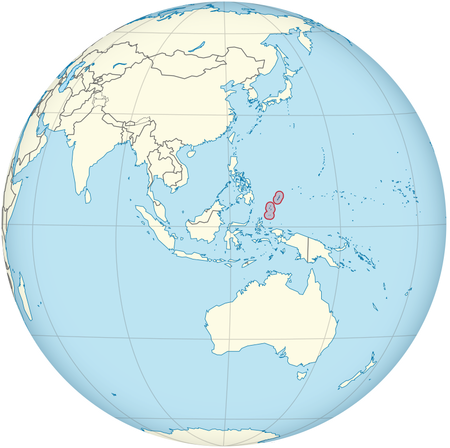
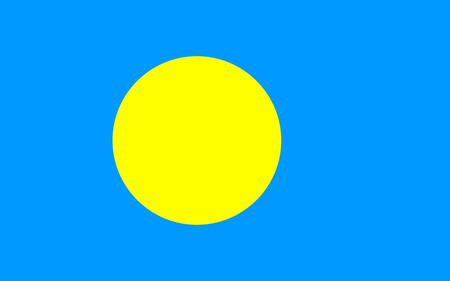
The flag of Palau was adopted in 1981, when the country left the United Nations Trust territory it was part of. The blue colour represents the Pacific Ocean and the country's transition from foreign domination to self-government. The yellow disc stands for the full moon, which is very important to the Palauan people. They consider it the best time for human activity, celebrations, harvests and traditional canoe building take place at the time of the full moon. The full moon is also a symbol of love, peace, and tranquillity.
The Palauan name for the islands is Belau which is derived from the Palauan word for "Village", beluu. However, the name Palau is the German version of the word, which was borrowed into English. The archaic English name was the Pelew Islands.
PALAU = VILLAGE
Panama
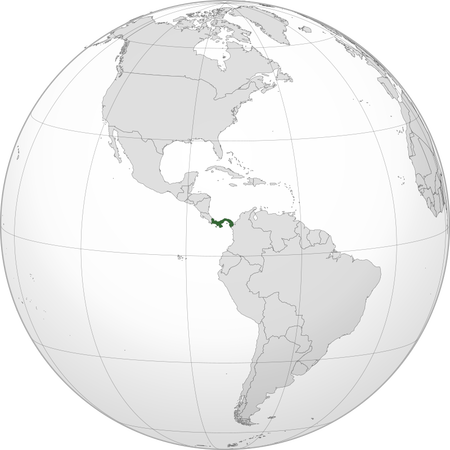
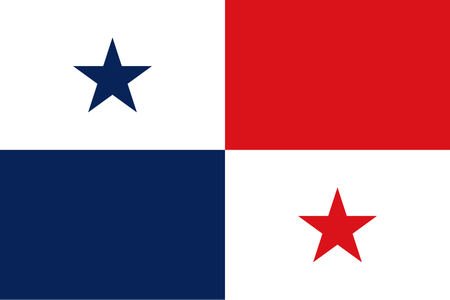
The flag of Panama was created as a political symbol. The blue colour represents the Conservative Party and the red colour stands for the Liberal Party, Both parties were on opposition at the time of Panama's independence from Colombia in 1925. The white colour stands for peace and purity. Both stars together symbolise the new republic, with the blue star representing honesty in the country, and the red star standing for authority and law.
The actual origin of the name Panama is unknown, although there are theories and even an official etymology. One theory is that it is named after the Panama Tree, which is abundant, however it is thought that the tree was named after the country. Another theory states that it comes from a Guna language word, bannaba, meaning "distant or far away". Another theory is that it references the large amount of butterflies in the land. Yet another theory is that it was taken from the name of a fishing village, Panamá, meaning an abundance of fish. The country's Ministry of Education combines these theories and the official explanation is that Panama means an "abundance of fish, trees and butterflies".
PANAMA = AN ABUNDANCE OF FISH, TREES, AND BUTTERFLIES
Papua New Guinea
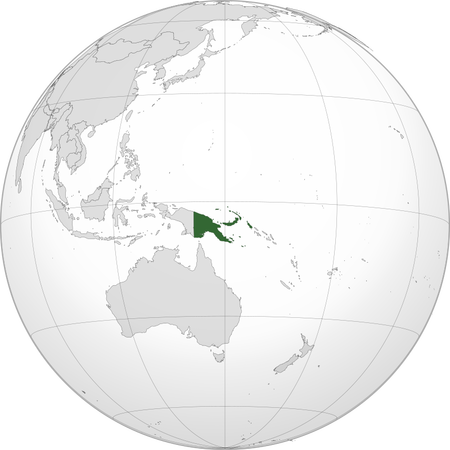
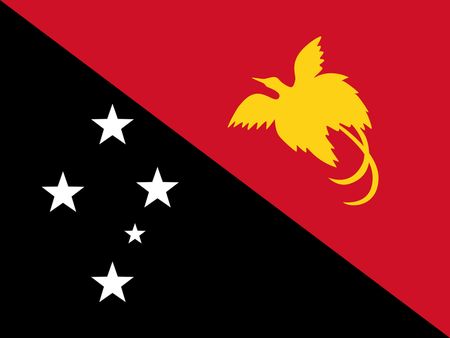
The flag of Papua New Guinea was adopted in 1971 following a nationwide competition, it was designed by the then 15 year old student, Susan Karike. The black and red colours are traditional amongst the many tribes of PNG. The black symbolises the people and their art, whilst the red is for the bloodshed and strength of the people. The Southern Cross represents the country's location and its association with Australia. The Raggiana Bird of Paradise is also found on the nation's coat of arms. The yellow colour stands for the wealth of the country's resources, and the sun.
The "New Guinea" part of the name derives from a Spanish explorer, Yñigo Ortiz de Retes, who named the island after the Guinea region of Africa, because he thought the people were of similar race and colour. Guinea is derived from the Portuguese, Guiné, that ultimately means "foreigner" or "someone that speaks different", although it was used to refer to "Land of the Blacks" (Not the most politically correct phrase nowadays, fortunately). The "Papua" part is of an unknown local origin, although the Portuguese captain and geography was quoted as saying, "The people of all these islands are blacke, and have their haire frisled, whom the people of Maluco do call Papuas". So it may just be a local name for the people or their hairstyle.
PAPUA NEW GUINEA = PEOPLE WITH FRISLED HAIR FROM THE NEW LAND OF THE BLACKS.
Paraguay
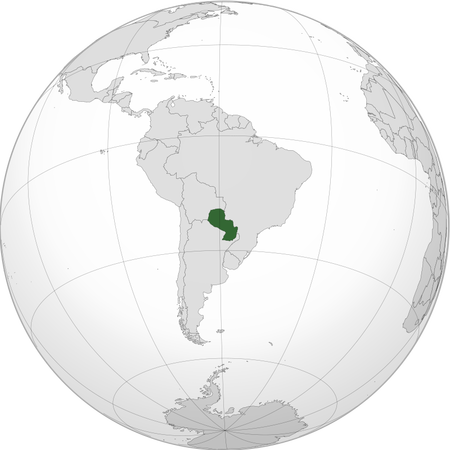
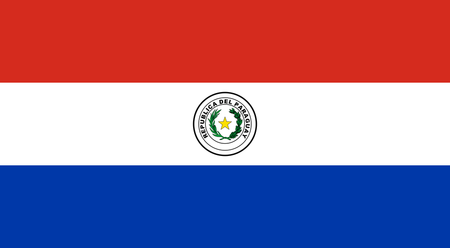
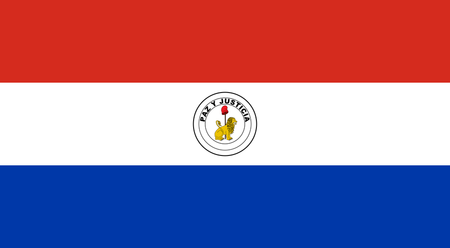
The Paraguayan flag is unique amongst sovereign nations, it's two sides are different. One depicts the national coat of arms, whereas the other side depicts the seal of the treasury. The red, white and blue colours derive from the Netherlands flag, which derives from the French flag, as a whole they symbolise independence and liberty.
The coat of arms of Paraguay on the obverse side, a gold star surrounded by palm and olive leaves is thought to signify the independence of Paraguay.
The emblem on the reverse side depicts a lion beneath a Phrygian on top of a pole, with the slogan "Peace and Justice", symbolises strength and courage.
There are several versions of the origin of the name Paraguay. One version is that the name comes from the Guarani language, paraguá meaning "feather crown" and y meaning "water". However another theory is that it comes from the name of the indigenous people, the Payaguá, they gave their name to the Paraguay River. Yet another theory is that it comes from other Guarani words, para meaning "sea", gua, originates, and y, river. All three theories seem to have a connection to the river. The final one above, ultimately means "River that gave birth to the sea".
PARAGUAY = FEATHER CROWN OF WATERS or RIVER THAT GAVE BIRTH TO THE SEA
Peru
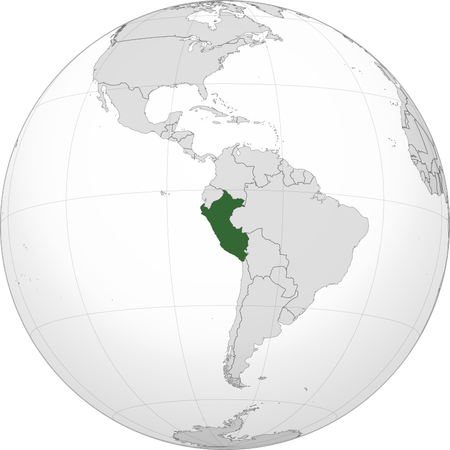
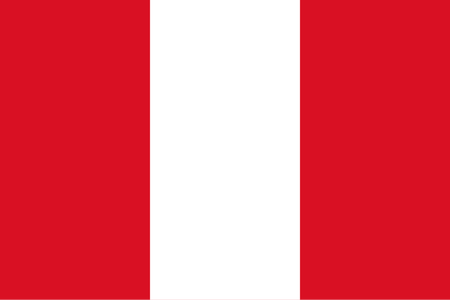
This simple flag was adopted in it's current form in 1950. The red colour represents the blood spilled by freedom fighters in the struggle for independence. The white colour signifies peace and purity.
The name of Peru is thought to derive from the name of a local ruler from Panama City, Birú. When Spanish conquistadors arrived in the 16th century, they thought Panama was the furthest point south of the New World, subsequent exploration saw all lands south of Panama being named Birú or Perú. The Spanish Crown then renamed the newly discovered Inca Empire as the province of Peru.
PERU = NAMED AFTER BIRU, A TRIBAL RULER
Philippines
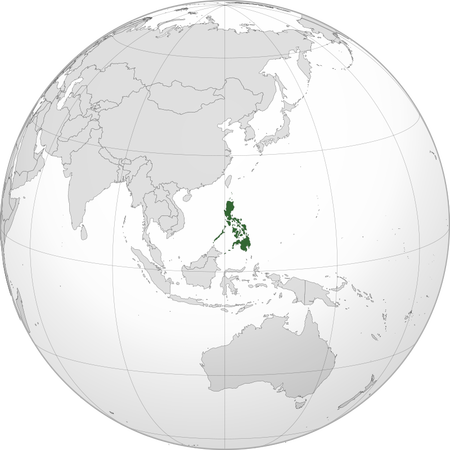
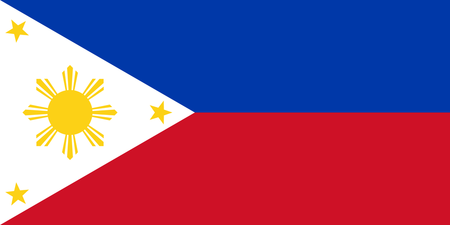
The red and blue colours come from the flags of country's two largest ports, Manila and Iloilo respectively. They also represent peace, truth, and justice (blue colour) and patriotism and valour (red colour). The white triangle symbolising liberty, fraternity, and equality. The three small yellow stars represent the three main island groups, Luzon, Visayas, and Mindanao. The large yellow sun in the centre of the triangle has eight points, each representing a province or district that had significant involvement in the Philippine Revolution of 1896 against Spain.
The name of the country dates from the 16th century, when Spanish explorers named some of the islands Felipinas, this eventually encompassed many more islands and a change of name to Las Islas Filipinas. American influence altered the name to the Philippine Islands, and subsequently the Philippines. The original name was derived from the Prince of Asturias, who later became Philip II of Castile.
PHILIPPINES = NAMED AFTER PHILIP II OF CASTILE
Poland
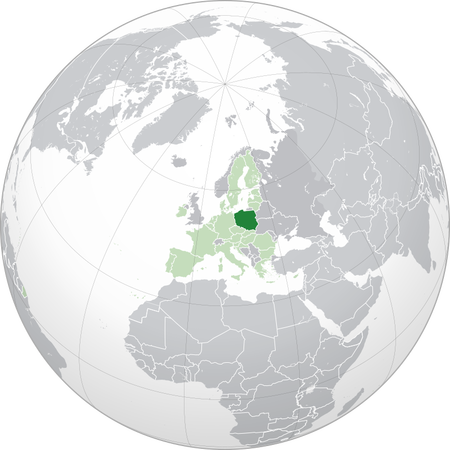
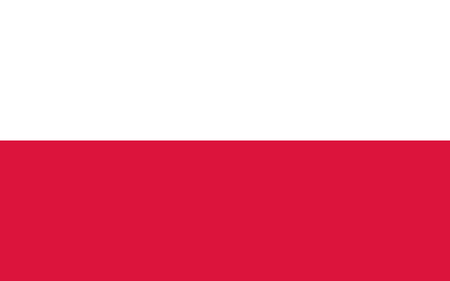
The white and red design of the flag derives from the coat of arms of Poland, which dates back many centuries. The colours originate from the Polish-Lithuanian Commonwealth and symbolise the Polish white eagle and the Lithuanian white horse, both of which were on a field of red. The Polish coat of arms depicts a white eagle on a red background. According to the Culture.pl website "The colours of the Polish coat of arms were not accidental: white symbolised spiritual purity and nobility, while red symbolised fire and blood."
The Polish name for Poland is Polska, it is believed that this name derives from a Slavic tribe called the Polans. The tribe's name comes from the Proto-Slavic word *pole meaning "field" or "flatland". The etymolgy refers to the land upon which the Polans tribe lived, the flat area of Greater Poland.
POLAND = LAND OF FIELDS
Portugal
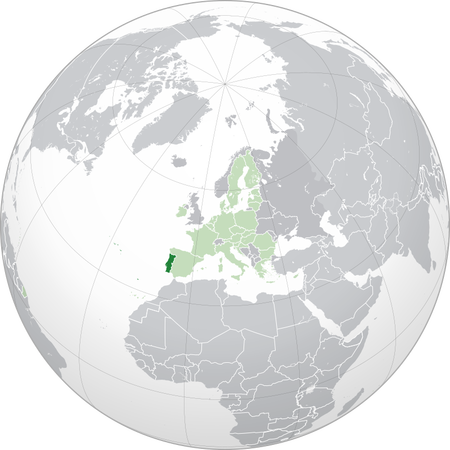
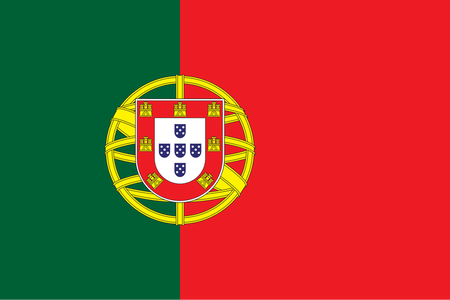
This flag was introduced following the republican defeat of the monarchy in 1910. The green symbolises the hope of the nation in a new era, the red represents blood shed during the Revolution. The yellow behind the shield depicts an armillary sphere, an astronomical navigation device that was used by Portuguese explorers during the "Golden Age" of discovery. The shield consists of seven yellow castles that represent the seven castles taken back from the Moors, and the five blue shields represent the five Moorish kings killed in battles. Within each blue shield are five white dots that symbolise the five wounds that Christ suffered at the crucifixion.
The name of Portugal derives from a Roman-Celtic combination, Portus Cale. Portus is the Roman or Latin word for "port". Cale is thought to derive from the Callaeci or Gallaeci people that lived in the North-west of the Iberian Peninsula. One theory is that Cale comes from the Celtic word for "port", or that Cala was a Celtic goddess. There is also a theory, although just from French scholars, that it derives from Portus Gallus, "The port of the Gauls".
PORTUGAL = PORT OF CALE
Summary
Well, this took a little longer than the last one. I am very busy at work at the moment for some reason unknown, it is usually quiet in my field of work at this time of year, but it's all hands to the pumps this week. Although I haven't been too far from home, furthest so far this week is Oswestry, about 35 miles from the depot and located on the border with Wales. In fact, due to the irregularities of the border between the Principality and England, I actually have to cross into Wales for a few miles and then back out again. It's a little strange to some to suddenly have signposts written in English and Welsh, but it's just a small quirk of the British Isles. Tomorrow I head a little further in a southerly direction to the West Midlands, and the small town of Kidderminster, a distance of around 50 miles. But you're not interested in my travels are you ? Or are you?
Anyways, that's it for P, next up Q. Similar to O there is only one entry, Quwait. Sorry, Qatar. Why hasn't Qatar got a U after the Q? Perhaps we will find out in the next episode, who knows?
Just before I go, Kidderminster derives from Cydda's monastry, and Oswestry comes from Oswald's tree. I wonder if there could be a series on the origins of English town names, anyone interested in reading about that subject at some time in the future?
See y'all soon!
In the UK we use miles on all the roadsigns rather than km. Almost all cars register their total distance covered in miles. Although bizarrely, the emergency markers on the sides of motorways are marked out in kilometres. We have a bit of a mishmash of standards here in the UK, some are imperial, others are metric. We're a strange bunch!
As the resident iceberg boy, I will be asking about Príncipe and the Pitcairn Islands. 😉
Pitcairn was named after Robert Pitcairn, a 15 year old midshipman that was the first to sight the island in the 16th century. Although the island was already known to the Polynesians. Will that do?