
Country and Flag Origins - Part S1
First published: Tuesday May 6th, 2025
Report this blog
Introduction
Once again I find myself with a quandary, what shall I write about in the introduction section of the blog. I was stumped, my mind blank, nothing was coming to me. So, I went off and did some chores around the house. I mowed the grass, fixed a leaking outdoor tap (faucet for those of you across the pond), and made myself some noodles. Then I cleaned up after I dropped the noodles on the kitchen floor, my own fault, I was trying to carry too much, and the dogs had got the scent of food. It didn't end well, but at least by the time I had got the paper towels, the dogs had helped to clean up the noodles. The wife doesn't realise what goes on at home when she's at work, it a never ending round of excitement. I shall have to sit in a darkened corner for a short while.
Anyway, onto the reason we are here, the countries starting with the letter S. This is the first part of a trilogy of S blogs, the first nine countries out of 26. An epic in the making, it may take a while. Out of the first nine, five of the countries are island nations. I'm not sure what to do with that information if I'm honest but it's out there now. Anyway, orf we jolly well go....
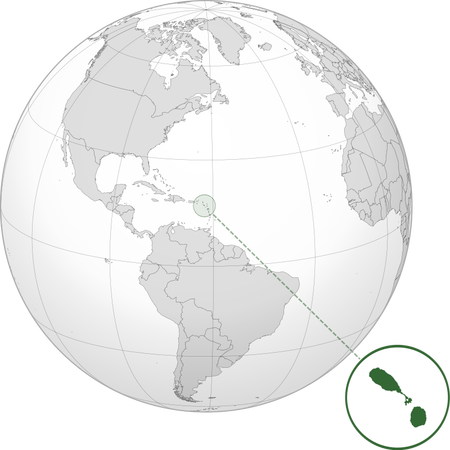
Saint Kitts and Nevis
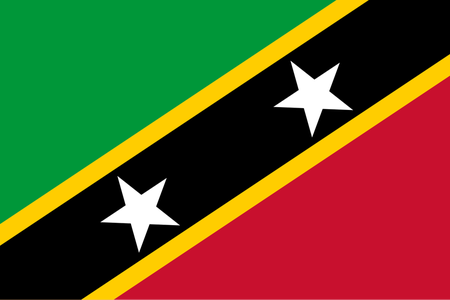
The flag was designed by a student, Edrice Lewis, in a competition, and was hoisted on the day of independence in 1983. The green colour represents the fertile land, and the red the fight against colonialism and slavery. The yellow stripes symbolises the year round sunshine and the black stands for the African heritage of the people. The two stars represent the two islands as well as hope and liberty.
As the name suggests, Saint Kitts and Nevis, has two parts, both islands, as I'm sure you know. Saint Kitts was named San Cristobal by Christopher Columbus, either after himself or Saint Christopher, the patron saint of travellers. In the 17th century a common nickname for Christopher, and incidentally Katherine, was Kit. The name of the island was known informally as St. Kitts Island, in a similar vein to St.Barts I presume.
Nevis is derived from a Spanish name, Nuestra Señora de las Nieves, meaning "Our Lady of the Snows". This is a reference to a miracle of snowfall on a hill of Rome in the 4th century. It is thought that the consistent white clouds on top of Nevis Peak reminded sailors of this miracle.
SAINT KITTS AND NEVIS = SAINT CHRISTOPHER AND SNOWS
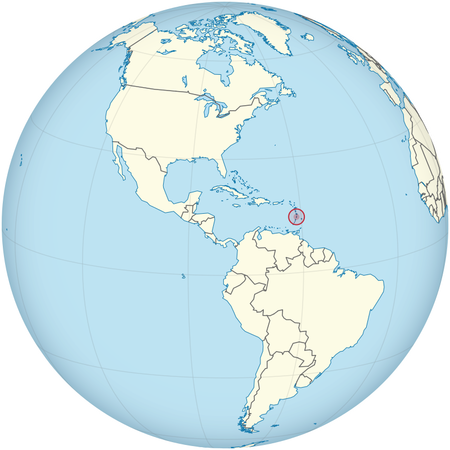
Saint Lucia
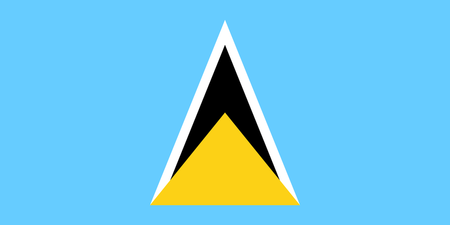
This flag was first used when the country changed from a territory of the United Kingdom to one in an association, this subtle difference became full independence in 1979. The blue background represents the sky and seas around the island. The black and white colours symbolise a harmonious relationship between races, and the yellow stands for the sunshine and prosperity. The triangle shapes represent the Pitons, twin volcanic peaks that are a national symbol of St. Lucia.
St.Lucia was first known to the Arawak Indians as Louanalao meaning "Land of the Iguanas", unfortunately the name was changed to St. Lucia, which was named after Saint Lucy of Syracuse. One of only two sovereign nations to be named after women, the other being Ireland. Legend states that French sailors were shipwrecked on the island on the feast day of St. Lucy, however a globe in the Vatican dating from 1520 has the name on the island suggesting Spanish sailors named it earlier.
SAINT LUCIA = NAMED AFTER SAINT LUCY
Saint Vincent and the Grenadines
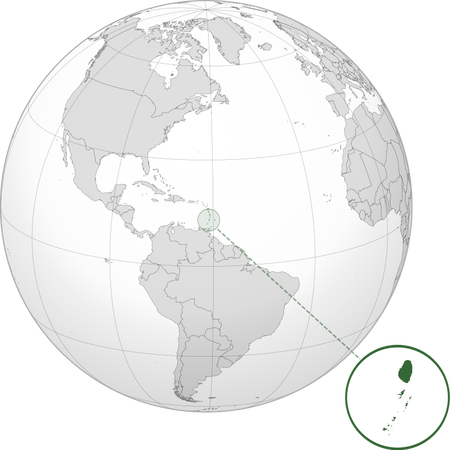
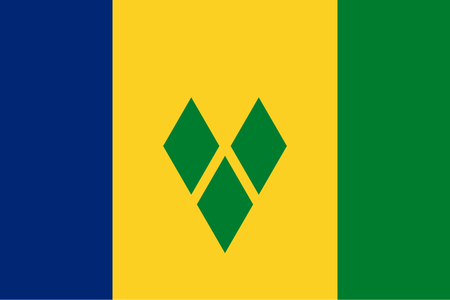
Like St. Lucia above, this flag was adopted whilst the country was in association with the UK, and then upon independence in 1979. The blue colour represents the sky and sea, the yellow symbolises the sands, the sunshine and the "bright spirit" of the islanders. The green stands for the lush vegetation of the islands. The three diamonds allude to the nicknames of "Gems of the Antilles" and "Jewels of the Caribbean". Their position at the slightly lower part of the flag represents the islands position in the Antilles, whilst their placing creates a V for Vincent (not Vendetta!).
Our old friend Christopher Columbus, also named this island, although this time after St. Vincent of Saragossa. It was upon his feast day that the islands were sighted in 1498. The Grenadines were named after the Spanish city of Grenada. To avoid confusion with the island of Grenada, the form Grenadines was used.
SAINT VINCENT AND THE GRENADINES = NAMED AFTER SAINT VINCENT, AND GRENADA
Samoa
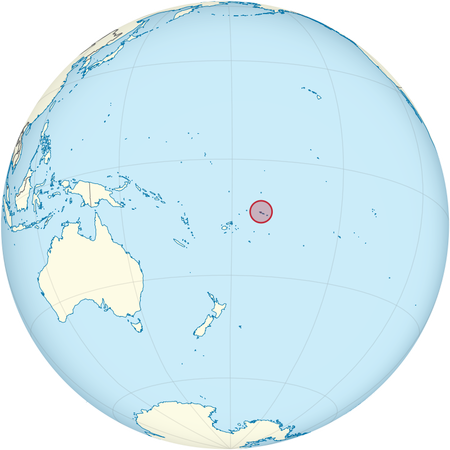
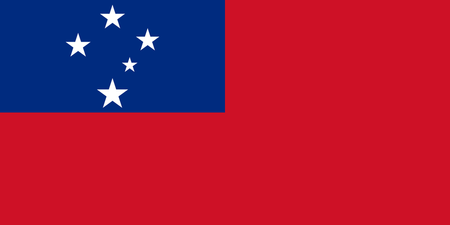
The flag was first adopted when Samoa came under UN trusteeship in 1949. The blue of this flag represents the ocean and freedom, the red colour symbolises courage, strength, and the determination of the people. The white stars represent the Southern Cross, that is visible in the night sky, and stands for guidance and purity.
There are only theories as to the origin of the name Samoa. One theory is that it comes from two words, sā meaning "sacred" or "holy" and moa meaning "centre" or "place of". Other theories state that it could derive from the name of a bird, the Moa. Or it could come from the name of a tribal chief of the islands.
SAMOA = SACRED PLACE or PLACE OF THE MOA or NAMED AFTER A CHIEF
San Marino
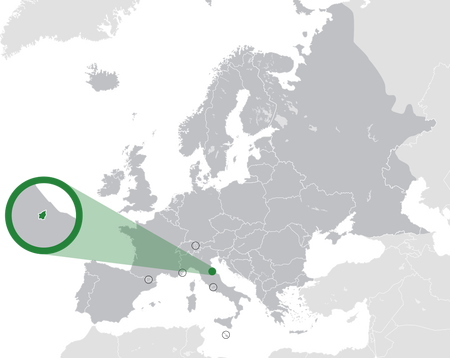
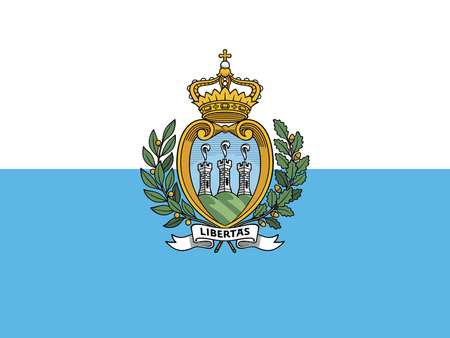
This flag was adopted by San Marino in the 19th century, it's blue colour represents liberty and it's white colour stands for peace. It also displays the coat of arms of the country which originated much earlier in the 14th century. In the shield there are three green mountains topped with towers, each with a weather vane made of an ostrich feather. These three buildings symbolise the three citadels of San Marino, and the hills the three peaks of Monte Titano. The motto "Libertas" meaning freedom, is thought to reference the taking in of victims of persecution and the freedoms of a small state within a larger nation. An oak and laurel branch, which surrounds the coat of arms are symbols for the stability of the republic and the defence of freedom. The crown stands for sovereignty.
The country is named after Saint Marinus, who was a legendary stonemason that lived on the Roman island of Rab, now in present-day Croatia. It is believed that he established a monastic community on Monte Titano.
SAN MARINO = NAMED AFTER SAINT MARINUS
Sao Tome and Principe
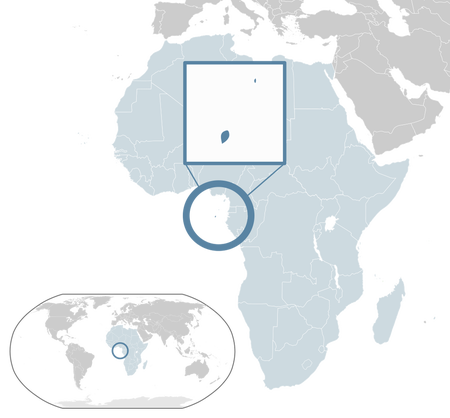
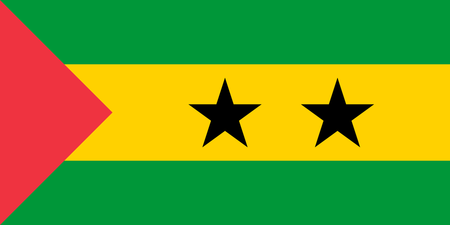
The flag was adopted in 1975, when the country gained independence from Portugal. The green, yellow and red colours are those of the Pan-African Movement as used in many of Africa's flags. The represent the nations freedom, as well as the green representing the lush vegetation, the yellow standing for the sunshine, and the red for equality and the independence movement. The two black stars represent the two islands of Sao Tome and Principe.
Like earlier entries, this nation's name is divided into two parts. Sao Tome is Portuguese for "Saint Thomas", and was named due to the European date of arrival on St.Thomas' day in 1471. Principe was initially called Santo Antão or "Saint Anthony" for the same reason, although it's name was changed in 1502 to Ilha do Príncipe or "Prince's Island". This was in reference to the Prince of Portugal who collected taxes on the island's sugar crop.
SAO TOME AND PRINCIPE = SAINT THOMAS AND THE PRINCE (Now there's a tabloid story!)
Saudi Arabia
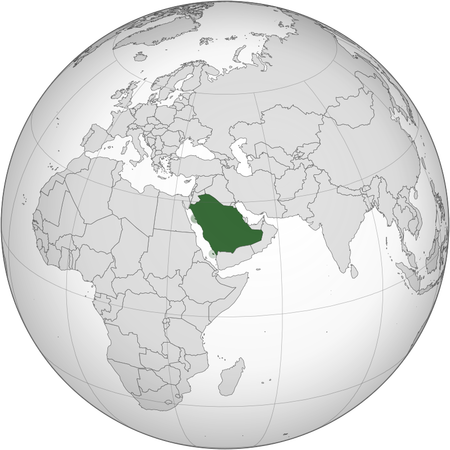
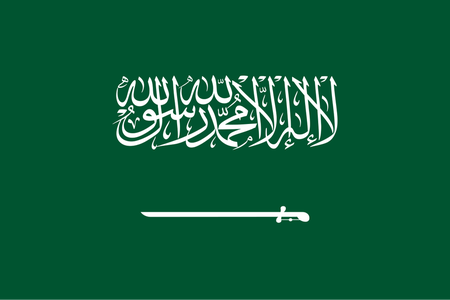
The green background of the Saudi Arabia flag represents Islam. The sword symbolises safety and justice. The Arabic inscription is known as the shahada or Islamic declaration of faith. It reads "There is no god but Allah; Muhammad is the Messenger of Allah."
The word Saudi derives from as-Suʿūdīyya in the Arabic name for the country. It comes from the name of the Saudi royal family, Al Saud. It's inclusion hints that the country is the personal possession of the royal family. Arabia is the name of the peninsula, and means "Island of Arabs". But what about the word Arab? Well, it is thought to have come from the name of the first person to speak Arabic, Ya'rub.
SAUDI ARABIA = ROYAL LAND OF THE ARABS (I think)
Senegal
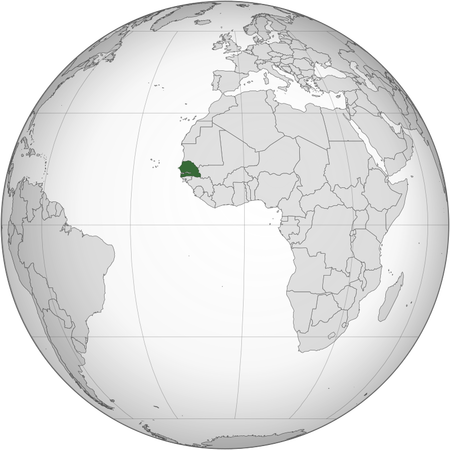
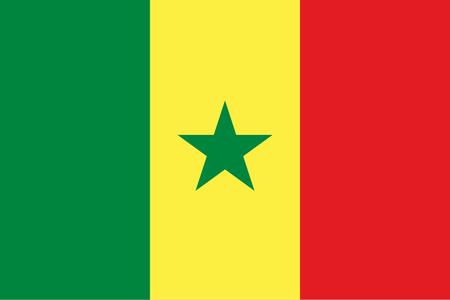
Once again we come across the colours of the Pan-African movement, although each country has it's own meaning for the colours. In Senegal, the green is representative of the majority religion of Islam, red symbolises the blood shed for independence, and the yellow is for work and wealth. The three colours also represented the three political parties present in the country. The star symbolises good fortune and destiny.
The country of Senegal takes it's name from the Senegal River, the name of which may derive from the name of the supreme deity in the indigenous religion, Serer. The name of the god was Rog Sene added to o gal meaning "body of water" in the Serer language. French author David Boilat put forward a theory that the name comes from the Wolof language words sunuu gaal meaning "our canoe". I like that one!
SENEGAL = WATER OF THE GOD ROG SENE or NAMED AFTER THE RIVER or OUR CANOE
Serbia
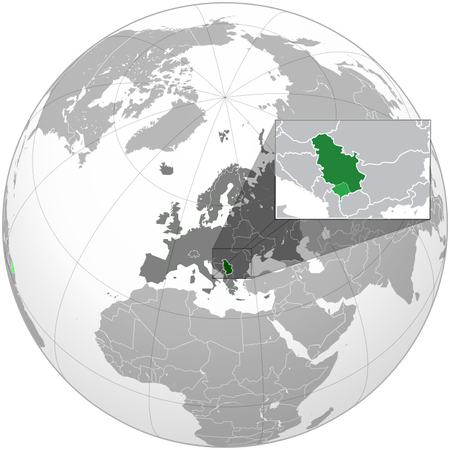
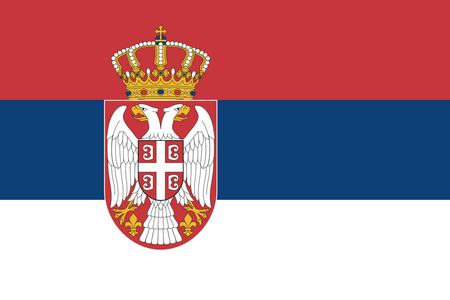
The three colours of the background of the Serbian flag have no official meaning, however traditionally they have symbolised wartime bloodshed (red), freedom (blue), and a mother's breastmilk (white). The coat of arms of Serbia is depicted on the flag. The double-headed eagle dates back to the 11th century. The Serbian cross on the shield has four Cyrillic letters S standing for the motto Samo sloga Srbina spasava which translates as "Only Unity Saves the Serbs.
The origin of the word Serbia is not known, although it does mean "Land of the Serbs", the derivation of Serbs is unclear. It may have evolved from the German tribe known as the Sorbs, or may have a meaning of "family" or "kinship" although this is argued amongst scholars.
SERBIA = LAND OF THE SERBS
Summary
There you have it, the first instalment of the trilogy of S country blogs. I make it nine blogs to go in this series, S2, S3, T, U, V, W, X, Y and Z. W and X will be a challenge I should imagine, but I will come up with something. I have two countries in mind, one in each, at the moment, but I would like to get at least two in each letter, if not more. We shall see. A little more research needed I think. I may have to delve into the world of fiction.
It is also at this time, when a series is on the downhill slope, that I like to think of the future. I may, and at the moment it is just may, revive my Five Islands series, but concentrating on various seas and oceans. I'm not 100% convinced yet, but I'm getting there. What do you think? Check out the past blogs in the series to see what they were like. Another shameless plug for my older blogs, sorry about that!
Anyway, for now, it is time for the dogs to go out, they've been sitting next to me expectantly for the last five minutes. They must know I've nearly finished. "OK, OK, Poppy and Eddie, I'm just typing the last sentence". Time to get the leads (or leashes if you like), they can't wait any longer. Bye for now all !
You have satisfied me with Príncipe. But, spare a thought for Svalbard?