

Country and Flag Origins - Part S2
First published: Saturday May 10th, 2025
Report this blog
Introduction
The start of another blog and writers block again! It happens every time, and then I waffle on about it. You must be bored of this drivel by now. hum, hum....doobiedoo....oh..hum..what to write about? Work was good today, easy enough, two farm deliveries with bedding products, one to a dairy farm and one to a chicken farm. Both with their individual smells, you get used to those after a while. The dairy farm was down a lane that was just wide enough, great until you meet a tractor coming the other way, then someone has to make way or reverse. Today it was me that reversed, I'd just passed a side road, so with a little creative manoeuvring, we all got on with our days. The worse part is trying to get through tiny villages with cars parked everywhere. Here's a Google Street View image of the village I had to get through today. All part of the joys of truck driving, it's not all fast roads and truckstops!
Anyway, I've got into my stride now, let's get on with the blog shall we. Part S2, the second of three S's. We start of in the Indian Ocean with.....
Seychelles
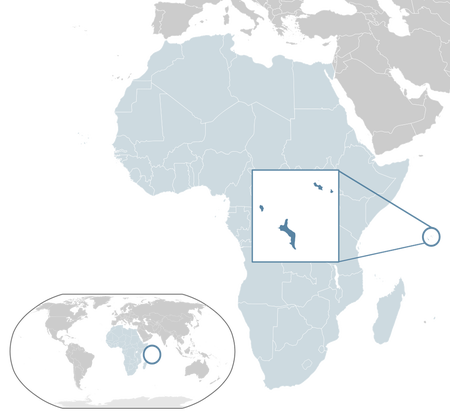
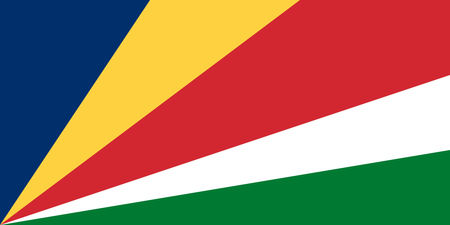
This flag was adopted in 1996, the third design since the country's independence from the United Kingdom in 1976. The shape of the oblique bands of colour symbolise the new country and it's movement into the future. The blue colour represents the sky and sea, the yellow stands for the sun and it's light, red symbolises the people and their determination to work towards a brighter future. The white colour is for harmony and social justice, whilst the green stands for the land and natural environment.
The islands of the Seychelles were probably uninhabited until discovered in the 18th century. the French were the first to lay claim to the islands despite the discovery being by the Portuguese explorer Vasco de Gama. the islands were named the Seven Sisters at first, however the French renamed them in honour of a French politician, Jean Moreau de Sechelles.
SEYCHELLES = NAMED AFTER JEAN MOREAU DE SECHELLES
Sierra Leone
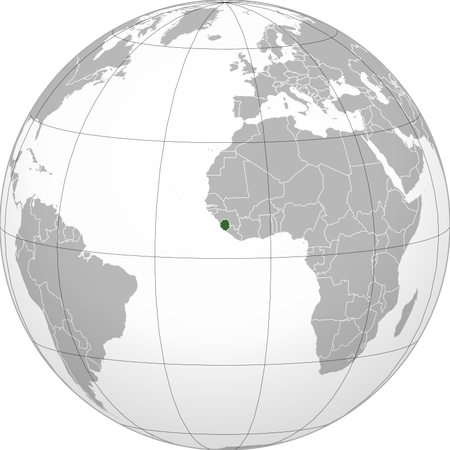
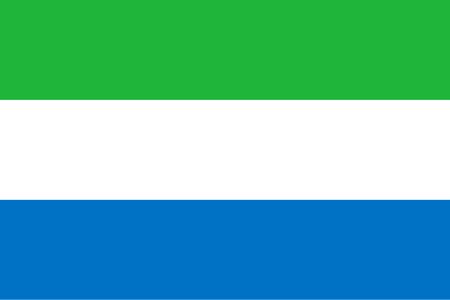
Sierra Leone adopted it's flag in 1961, the year it gained it's independence from Britain. The green colour represents the countries natural resources, agriculture and the mountains. The white colour symbolises justice and unity, and the blue colour stands for the natural harbour of Freetown, the capital, as well as the hope of peace.
The original name of Sierra Leone was Serra Leoa and was given by Portuguese explorer, Pedro de Sintra in 1492. The name now was derived from the Venetian spelling of the first name. The name translates to "Lioness Mountains" and refers to the nearby range to Freetown, the Lion Mountains as they are now called.
SIERRA LEONE = LIONESS MOUNTAINS
Singapore
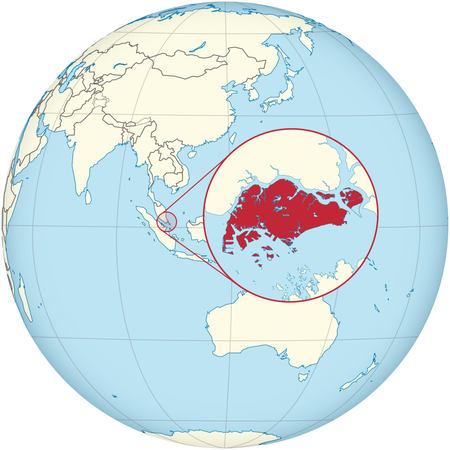
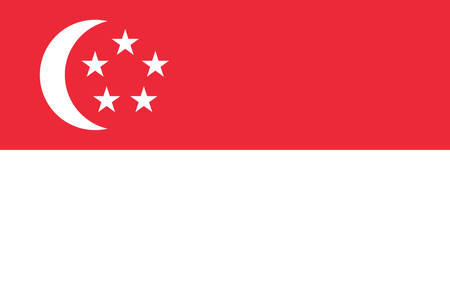
Singapore's flag was adopted in 1959 when it became a self-governing part of the British Empire. Singapore has a National Symbols Act which defines the symbolism of the flag. The red colour is for "universal fellowship and equality" and the white colour stands for "pervading and everlasting purity and virtue". The crescent represents "a young nation on the ascendant", and the five stars are for "democracy, peace, progress, justice and equality". Muslim activists in the country consider the crescent as a symbol of Islam.
Singapore is the anglicized version of the Malay name for the country, Singapura. This name is in turn derived from the Sanskrit words Siṃha and pura meaning "lion" and "city" respectively. The name refers to a story in the Malay Annuls about a prince encountering a beast that he assumed was a lion, and then establishing a settlement in the same area.
SINGAPORE = LION CITY
Slovakia
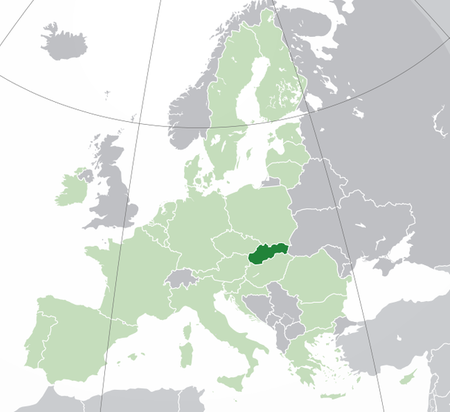
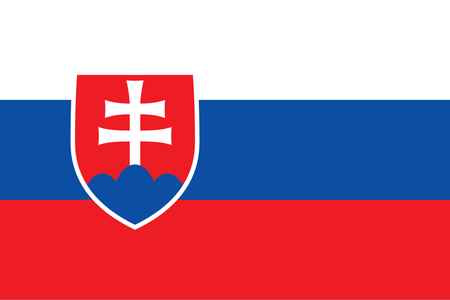
This flag, first hoisted in 1992, uses the Pan-Slavic colours of red, white, and blue similar to other Slavic nations. These three colours represent unity, independence and a shared cultural heritage. The coat of arms was added to distinguish the flag from other similar flags, especially of Russia. The coat of arms features an Eastern Orthodox cross, the two horizontal bars represent Saints Cyril and Methodius, who brought Christianity to Slovakia in the Middle Ages. The three blue peaks below the cross represent three mountain ranges, the Tatra, Fatra, and Matra ranges.
Slovakia derives it's name from the name given to it's people, the Slavs. This name is thought to have come from the word slovo meaning "people that understand each other"
SLOVAKIA = LAND OF THE SLAVS
Slovenia
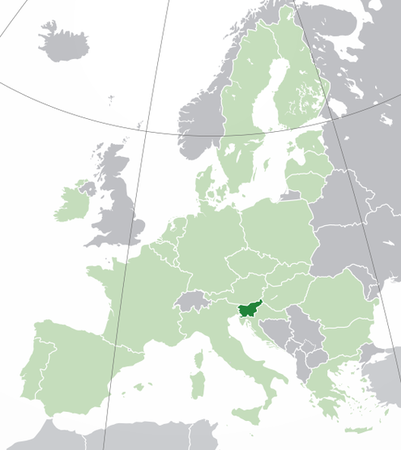
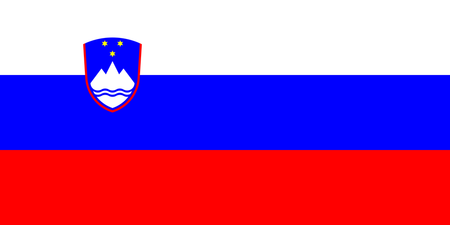
Although similar to Slovakia's flag, and whilst the colours are considered Pan-Slavic, in this instance they derive from the colours of the coat of arms of the Holy Roman Duchy of Carniola, which encompassed Slovenia and much of Austria-Hungary as well as parts of Croatia and Italy. The coat of arms contains a symbol of Mount Triglav, Slovenia's highest peak. The wavy blue lines represent the Adriatic Sea and local rivers. The three golden six pointed stars are taken from the coat of arms of the Counts of Celje, the great dynasty of Slovenia in the 14th century.
Like Slovakia, Slovenia means "Land of the Slavs" with the same derivation as above.
SLOVENIA = LAND OF THE SLAVS
Solomon Islands
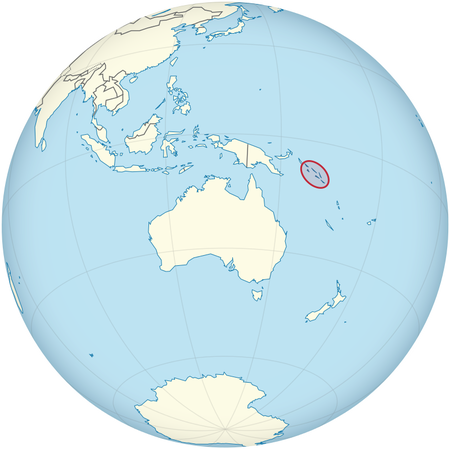
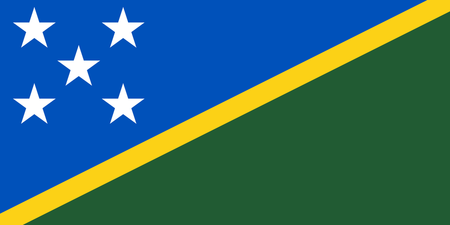
The flag of the Solomon Islands was decided in a competition in 1975, won by a New Zealander that was teaching on the islands, and was first raised a few months prior to the nation's independence from the United Kingdom. The blue colour represents the Pacific Ocean, rain, and rivers. The green colour symbolises the land with the trees and crops that grow on it. The yellow line stands for the sun and it's rays separating the sea and land. The five stars represent the origin five sub-divisions at the time of independence, Central, Western, Eastern, Malaita and Honiara Capital.
In 1568, Spanish explorer, Álvaro de Mendaña, was the first European to visit the islands. He didn't name the group, just a few individual islands. However, on his return, he embellished his stories of the islands to be the mythical land of King Solomon, as mentioned in the Bible of the time, and the wealth of riches contained in the archipelago. The name stuck and was used by subsequent explorers and traders, and known as Islas Solomon.
SOLOMON ISLANDS = NAMED AFTER KING SOLOMON
Somalia
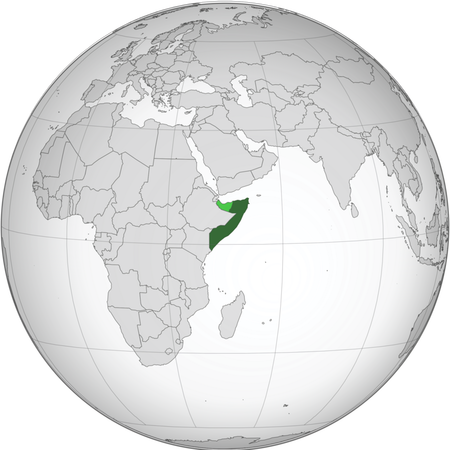
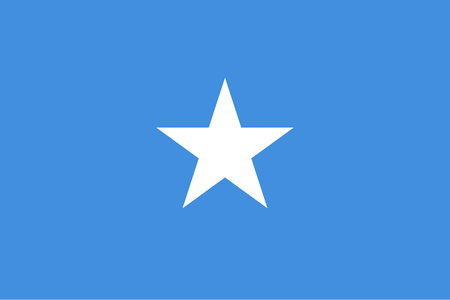
The blue colour of the Somali flag was chosen as a tribute to the United Nations that helped to establish the country, it is said to represent the sky, the Gulf of Aden, the Guardafui Channel, and the Somali Sea. The white star represented the five regions where Somalis are a majority of the population, Djibouti, Somaliland, the Somali region of Ethiopia, North Eastern Province in Kenya, and Somalia. Although, the flag is now strictly prohibited in Somaliland.
Like other etymologies, Somalia is derived from the ethnic name Somali, however it is thought that this name comes from the words soo and maal meaning "go" and "milk" and refers to camel's milk. Another theory is that it comes from the Arabic word for "wealthy" (zāwamāl) refering to the nation's wealth of livestock.
SOMALIA = LAND OF THE SOMALIS
South Africa
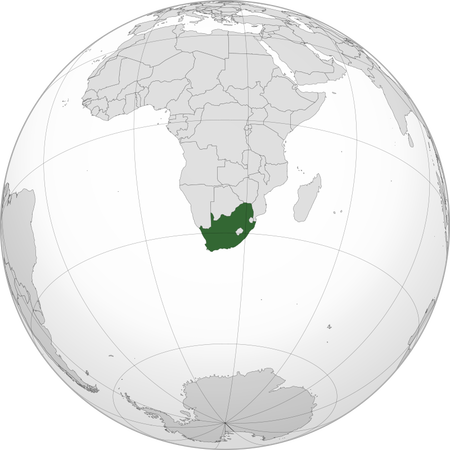
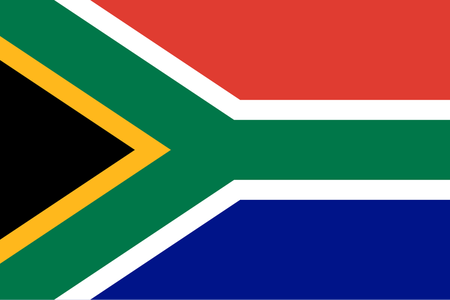
The colours of the South African flag were taken from the colours of the South African Republic, which itself were derived from the flag of the Netherlands, from the Union flag of Britain and from the colours of the African National Congress. According to South African government sources the colours have no symbolism but the flag is "a synopsis of principal elements of the country's flag history." and "no universal symbolism should be attached to any of the colours". The V or Y shape is said to represent "the convergence of diverse elements within South African society, taking the road ahead in unity"
Now here's the shocker, the name of South Africa derives from the nation's position on the continent of Africa. It is in the South of Africa. A colloquial name for the country is Mzansi which means "south" in the Xhosa language.
SOUTH AFRICA = NAMED FOR IT'S POSITION IN THE SOUTH OF AFRICA, (who knew ?)
Summary
That's it for this edition, only eight countries out of the S list. Nine in blog S1, eight in this blog S2, and there will be nine in blog S3, totalling twenty-six countries beginning with an S. And then we are on the slippery slope downwards towards the end of the alphabet. I am still undecided about W and X. Whilst there are a few unofficial micronations beginning with W as well as Western Sahara, an unrecognised nation, there are few flags, even less information about them, and even less beginning with X. I think it may make a bit of a mockery of the whole series including those two letters. I think my time would be better spent on finishing the legitimate countries, and then moving on to my next project.
I have already started researching some of that. I have decided to revive my Five Islands series. But this time, I will be concentrating on seas and oceans (or at least areas of them) or specific qualities of islands. For example, I am thinking of titles such as "Five Islands South of the Antarctic Circle", "Five Islands of the Baltic" or "Five Islands that are Tidal". What do you guys think?
So, I have another four more blogs to write before I decide if I am including W and X in this series or not. I shall put my thinking cap on, but I personally know which way I am swaying to be honest. We shall see!
That's it for now, I hope you enjoy the blog, and I look forward to your comments.
"The Land of the Slavs!"
"Which one?!"