
County and Flag Origins - England Part Two
Last updated: Sunday May 3rd, 2026
Report this blog
Introduction
Here we are again, this is Part Two of my newest series, that phrase won't seem quite right in a few years, never mind, it's what I'm thinking as I write. Or type, I'm not sure which you're supposed to use. You write a blog, but you actually type it? So is it really writing? Who knows? Who cares?
Enough with the jibber jabber, this second episode features some more of England's counties, starting with Cumbria, home to the Lake District National Park. a beautiful part of England that contains it's highest peak, Scafell Pike. Incidentally, in the last episode I covered Cambridgeshire which has the lowest point, Holme Fen. This isn't just thrown together you know!
Anyhoo, let's get on with the real reason we are here, the Counties!
Cumbria
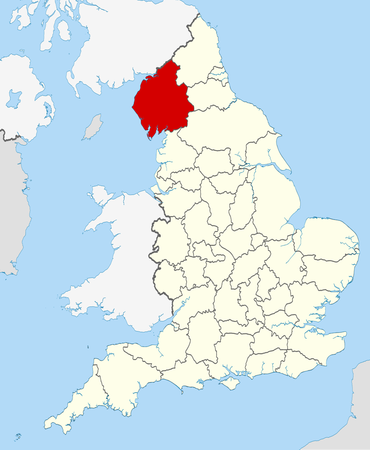
Cumbria has also been known as Cumberland in the past, both names meaning "Land of the Cumbrians". Cumbrian as a description of a people likely comes from Cum-ri meaning "Fellow Countrymen", the word is similar to the Welsh name for Wales, Cymru which is pronounced Cumri. During Anglo-Saxon times, Cumberland was a kingdom and was thought to stretch from Loch Lomond to Leeds.
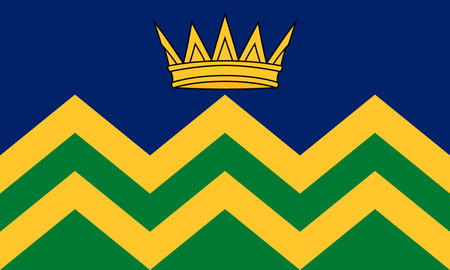
The flag of Cumbria was only adopted recently in 2025 following a competition that received over 200 entries. The blue represents the many lakes, rivers and the coastline. The yellow and green zig-zags symbolise the hills, valleys, and farmland, whilst the pattern describes the rugged terrain of the county. The crown represents unity, heritage and civic pride. as well as the county's history as a kingdom.
Derbyshire
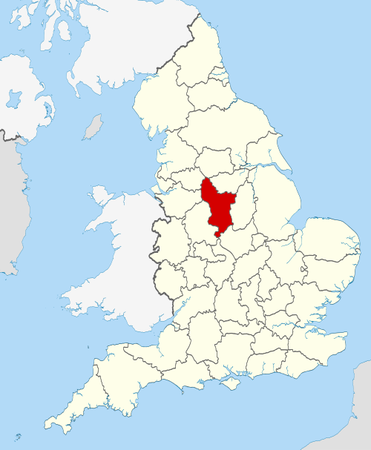
Derbyshire is another county that contains a National Park, well, at least part of it, The Peak District National Park. The county is named after the city of Derby. Originally named by the Romans as Derventio which became Derbentio over time, both coming from the River Derwent that flows through the area. Derwent comes from Celtic and means "Valley thick with Oaks". The name appears as Darbye on old maps from the 16th century.
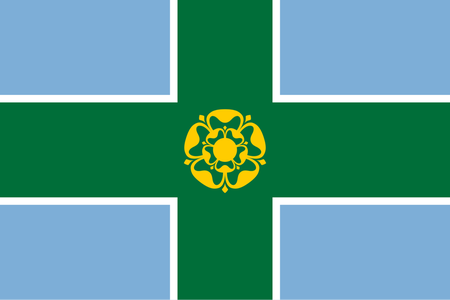
Another fairly recent addition to the flag world, Derbyshire's flag dates back to 2006 when a proposal by a local radio station brought the emblem into being. The blue denotes the many rivers and reservoirs in the county, whilst the green symbolises the large areas of open countryside. The golden Tudor rose is an ancient symbol of the county. The radio station also commissioned a "Derbyshire Anthem" that was first performed in 2017.
Devon
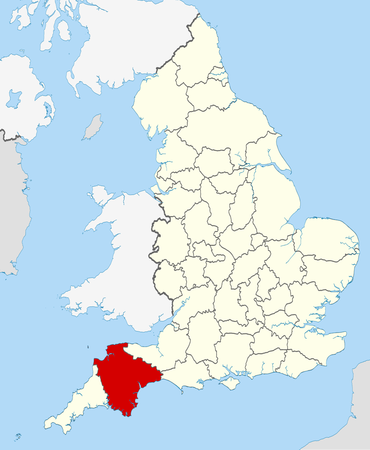
Devon is unique amongst England's counties in that it has two distinct and separate coastlines. There are two National Parks, Dartmoor and Exmoor and it is the third largest county.
The name derives from the Dumnonii tribe of Brythons that lived in the area at the time of the Roman invasion. Dumnonii is thought to mean "deep valley dwellers", and indeed, the Welsh, Breton and Cornish words for the county all translate to "deep valleys". Many villages in the county have -combe as a suffix which comes from the Celtic word cwm meanin "valley"
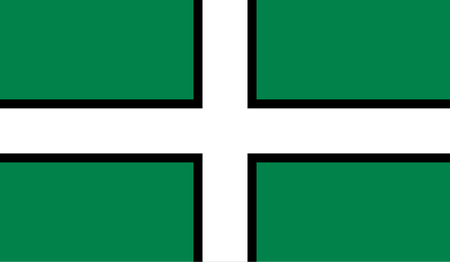
This is another flag that was chosen after a competition on the local radio station, (what is it with radio stations and flags?) with this winning design taking almost half of the votes. The flag is dedicated to Saint Petroc, the county's patron saint, and the colours have been associated with the county since at least the early 19th century. The green colour represents the rolling and lush green hills of the county. The black colour symbolises the dark windswept moors of Dartmoor and Exmoor and the white stands for the salty sea spray of the coasts, as well as the China Clay industry and mining in general.
Dorset
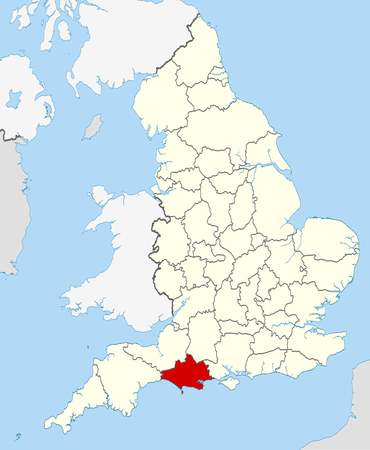
Just a short hop along the southern coast to the neighbouring county of Dorset. This Jurassic Coast county gets it's name from the county town of Dorchester. During Roman times the town was called Durnovaria which meant, possibly, "place with fist sized pebbles", no I don't get why either!
Anyway, Dorchester to the Saxons was Dornwaraceaster, the -ceaster suffix meaning "Roman Town", now, people from the area were known as Dornsæte being a name that joins together the words Dorn which is a shortened version of the town name, and sæte meaning "people". With me so far? Good! Jump forward to the year 845 and the Anglo-Saxon Chronicles list the county as Dorseteschyre or Dorsetshire. At a moment in time sometime between then and now, the -shire suffix was dropped.
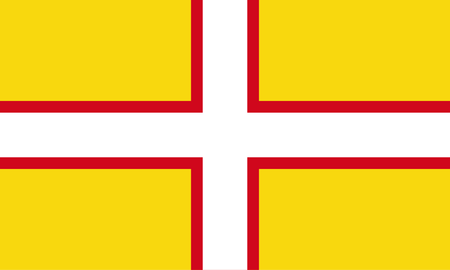
First designed in 2008, and the most voted for flag in a competition, Dorset's flag is the cross of Saint Wite, an Anglo-Saxon holy woman that was martyred by the invading Vikings in the 9th century, and is buried in the county. The white and red are also the colours used in the England flag. The yellow colour originally was added just as a contrast and because the designer thought that not many flags were this colour. However, it has since been assumed that it represents many things from the sunshine and sandy beaches, a nod towards the golden dragons depicted on the flag of Wessex (of which Dorset was part), rapeseed, wheat and barley that is grown in the county and the fact that the flags of the Channel Islands of Jersey and Guernsey also contain those colours and are traditionally accessible by ferry from the county.
County Durham
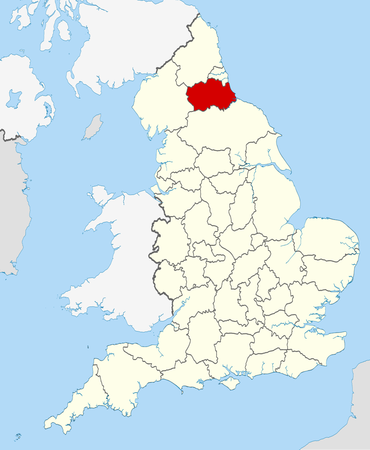
Uniquely, County Durham is the only English county to be prefixed by the word "county". This is common practice in Ireland. The reason is explained by the county's relationship with the Bishops of Durham who governed the area for centuries as a County Palatine outside of the normal governmental channels. Over time the "Palatine" bit was dropped. It was partly named as such to differentiate from the city of Durham.
The name of Durham comes from two sources, dun in the Brythonic language, and holme from the Old Norse language. Durham was previously known as Dunholme. Dun meaning "hill fort" and holme meaning "island" is thought to refer to Lindisfarne Island, with has an abbey.
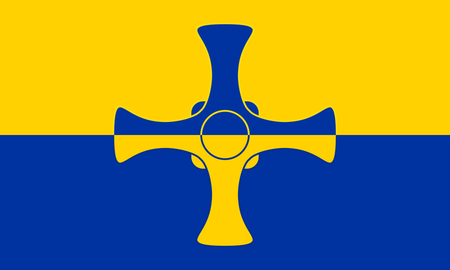
Another flag designed within a competition, Durham's flag contains the cross of Saint Cuthbert. Yellow and blue are the traditional colours of County Durham, being on their coat of arms. However, the designer that won the competition stated that he only used the colours because they were the favourites of his two daughters, and the cross of Saint Cuthbert was used because the first present he received from them was a badge with the cross bought on a school trip to Durham Cathedral.
East Riding of Yorkshire
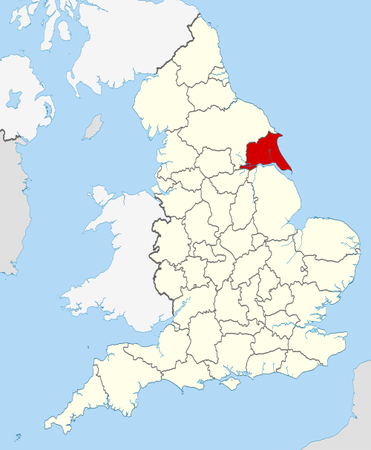
The name of this county comes from a time when Yorkshire, as in the House of York (War of the Roses and all that malarkey), was divided into Ridings, or districts. Yorkshire is divided into four parts currently, we shall learn about the other three later, with the Eastern part being the only one that still retains the ancient name. It is obviously the part of Yorkshire that is in the East. It is often called just East Yorkshire or simply The East Riding.
The county takes it's name from the city of York, which is actually in North Yorkshire. In Anglo-Saxon times the town was known as Eoforwīc meaning "boar town" presumably for the abundance of Wild Boar that roamed the area at that time. Along came the Vikings who changed the name into their language, calling it Éorvík, which later became Jórvík or simply Jórk. This was then anglesized back into York. See, it all makes sense in the end!
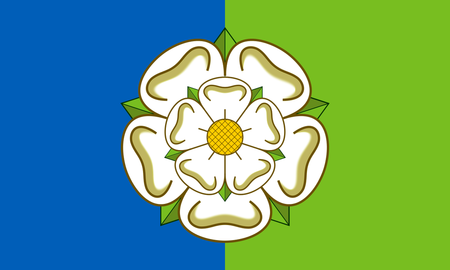
Despite the long history of Yorkshire in general, East Yorkshire didn't have it's own flag until 2013, when a competition was organised by the council (not a radio station this time). The flag features a white rose, a symbol of Yorkshire for many generations. The background colours of blue and green symbolise the sea and the rich agricultural land, I'll leave it to you to guess which is which!
East Sussex
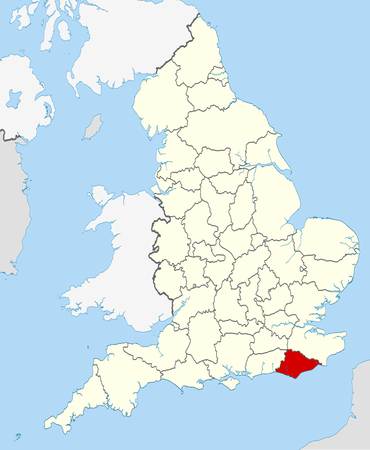
East Sussex is, with it's Western counterpart, part of the historic county of Sussex which hails back to the ancient South Saxon kingdom. In fact the name of Sussex translates to "Land of the South Saxons". East Sussex was only created in 1974, so is a newcomer in the county list. There ya go, an easy one for a change!
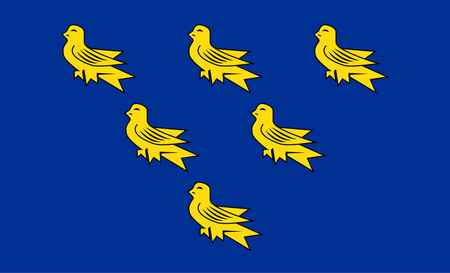
Either due to it's recent creation or just laziness of the inhabitants, East Sussex does not have it's own flag. Instead it uses a flag of the greater county of Sussex. Presumably West Sussex does as well, we'll find out later in the series. Strangely the flag was only incorporated in 2011 after the two counties split. I knew this wouldn't that easy! And indeed it isn't! The flag above featured six martlets(a heraldic swallow) symbolising the original six divisions of the county. The design originates from the coat of arms first used in the 14th century.
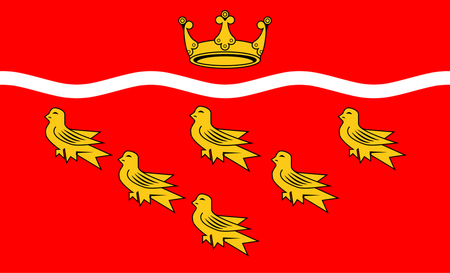
However, to add another twist, East Sussex has indeed got it's own flag. I found this after writing the above, and couldn't be bothered to change the whole entry, mainly because the council don't really use their own flag that much. As you can see below, it is similar, but in a different colour. I couldn't find any explanation for the symbolism of the flag.
Essex
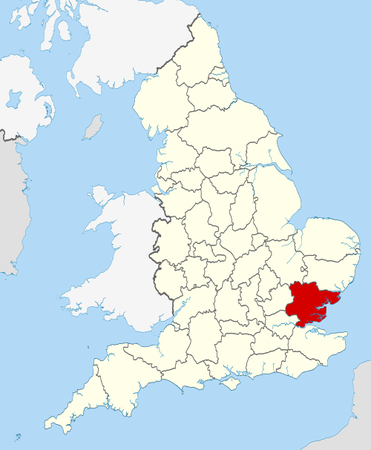
Essex can trace it's roots back to the earliest days of England. One of it's cities, Colchester, is the oldest recorded settlement in the country. It takes it's name, Essex that is, not Colchester, from the ancient Kingdom of the East Saxons, known then as Ēastseaxe. The kingdom at the time encompassed London and parts of the south of England.
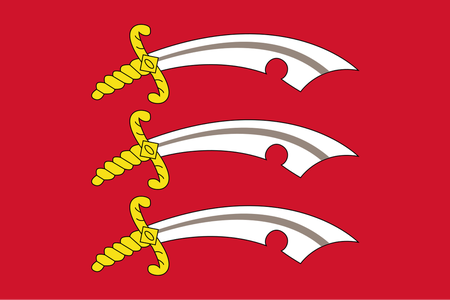
The symbolism on this flag also dates back to the Anglo-Saxon era, the scimitars depicted are actually Saxon seax knives. The red background has been used for so long that the symbolism is lost, although I'm going to go out on a limb here, and say that when I was researching the many flags I've done in past blogs, red almost always represented blood.
Summary
So that's another eight counties featured, a third of the way through England. I'm enjoying writing and researching these entries, I think I've found my calling...maybe. My research as always has been helped by Wikipedia, an excellent source for information that I'm sure you all know. However in this blog series I have been using an even better information source through a website I only found very recently. British County Flags is a wonderful resource for anything about the flags of English, Welsh, and Scottish counties and the history and symbolism behind them. Check them out if you want to explore this subject in greater detail. I don't have any connection to the site, so I'm not advertising it, I just think it is an amazing resource on the subject.
The next edition to this series contains two city counties and an island county amongst it's entries.
That'll do for now I think, the next episode will probably be posted in a few days time, unless my wife has other ideas and wants to go shopping, or visit the grandchildren.