
County and Flag Origins - England Part Three
First published: Sunday May 3rd, 2026
Report this blog
Introduction
To quote the mighty Eminem, "Guess who's back, back again?" It's me. Not music I used to listen to, but I've recently got into some of the older hip-hop stuff, I don't know why, nostalgia? maybe. anyway, I digress...
Welcome to the third episode of my blog series, which reminds me, I haven't made it into an official series yet, I shall do that forthwith. As I mentioned at the end of the last blog, this edition has two city-counties and an island county, to find out which you'll have to read on, unless of course, you've already read the quick links. In which case, don't tell everyone, keep it to yourself, if they can't be bothered to read everything, then they deserve to miss out. I'm beginning to sound like my old chemistry teacher from school. Wow, didn't think I could remember that far back. That must mean this blogging lark is working to keep my brain active, I shall have to continue. And I've strayed again, haven't I?
Let's get on with the show shall we...
Gloucestershire
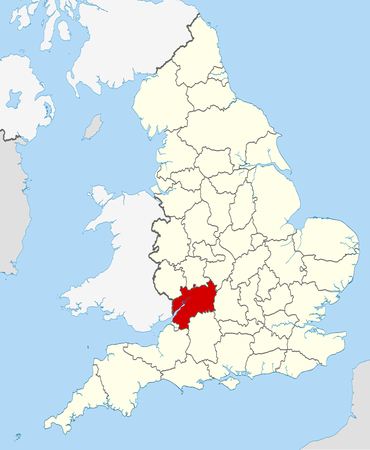
This county, pronounced Glost-er-sher, is named for it's county town of Gloucester. The city was named Glevum by the Romans, then the Saxons arrived in the 5th century and changed it to Caerloyw, which is still the Welsh name for the city. Caer means "fort" or "castle" and the loyw bit translates as "bright" or "shiny". Put together they mean "Shiny fort", it is thought that this referred to the Roman fort that stood where the city is now. Although there is a train of thought by some scholars that the name means "fortress of the valiant".
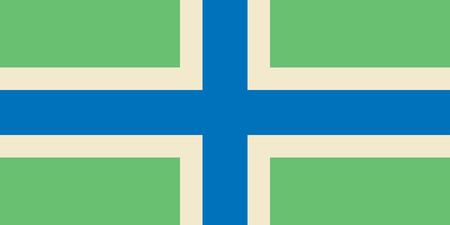
The flag of Gloucestershire is often referred to as the "Severn Cross", it was introduced in 2008 to commemorate the 1000th anniversary of the county. prior to this an unofficial flag that was based on the county's coat of arms was used. The blue colour represents the River Severn that flows through the county, the white symbolises the Cotswold Stone that can be found there, and the green is for an area called the Golden Valley.
Greater London
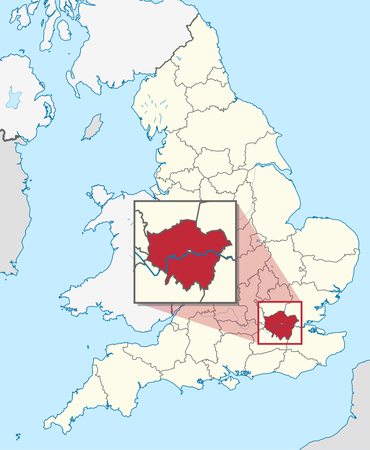
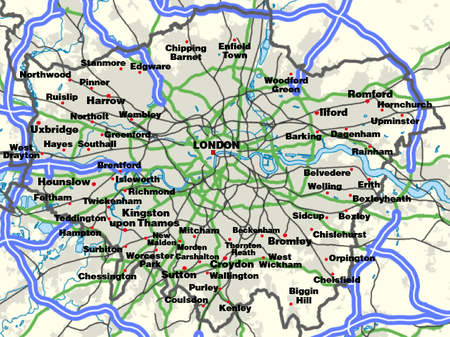
As previous discussed London's etymology states that the name means "Place that floods". Greater London is the name for the larger parts that surround the city. The area is mostly urban and has a population just shy of 10 million at the last count. The county is almost completely surrounded by the M25 orbital motorway as can be seen by the below map.
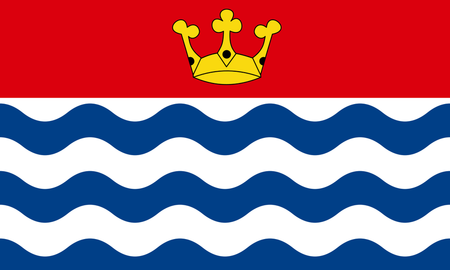
There is not an official flag for Greater London, however many different flags have been flown at city hall.



Greater Manchester
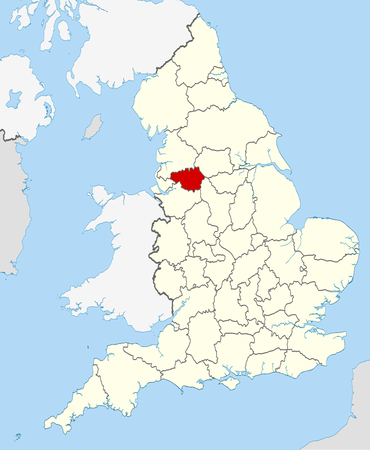
Similar to our last entry, Greater Manchester encompasses the area surrounding the city of Manchester. It includes the city of Salford, and the towns of Stockport, Wigan, Rochdale, and Bolton amongst other smaller communities. The -chester part of the name indicates a Roman Fort, there are many towns and cities in England with the same suffix. It is thought that the Man- part of the word comes from either mamm- meaning "breast-like hill" or mamma meaning "mother", thought to refer to a local river goddess. The Roman name for the city was Mamucium which is a Latinised version of the original Brittonic name.
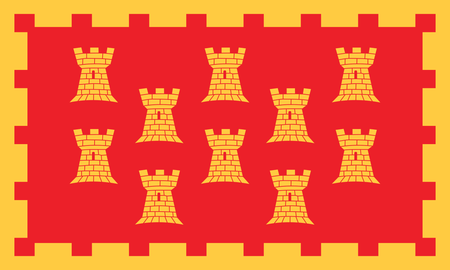
Like London, Greater Manchester does not have an official flag, however the above pictured flag of the GMC (Greater Manchester Council not General Motors Corporation!) is sometimes still flown. It was never registered officially and was supposed to have been relinquished in 1986. The ten castles represent the ten local authorities within the Greater Manchester area, and the areas urban environment. The red field symbolises manpower and the red-brick architectural history. The gold castellated border represents the shared future and unity within the region. Come on Manchester, either get the flag back or design a new one. You and London could have a competition!
Hampshire
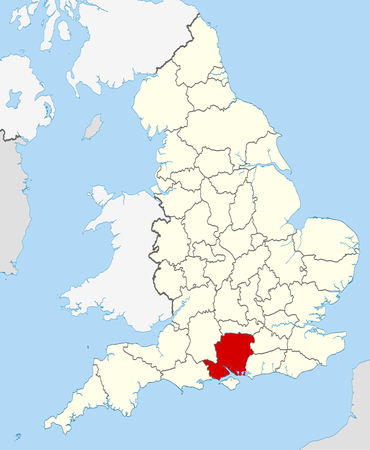
Many groups of colonists left this area for a new life in the Americas during the 17th century, hence the state of New Hampshire being named after this county. The original Saxon settlement at Southampton was called Hamtun and the area around it, Hamtunscīr. The suffix -scir meaning "shire". The old name was recorded in the Domesday Book as Hantescire which is where the modern abbreviation for the county, Hants, comes from. The county is named after this settlement. Southampton was so called to differentiate it from the town of a similar name that is now Northampton. The county originally contained parts of Dorset and one of the other counties that we shall read about later.
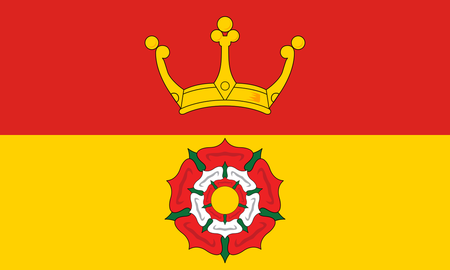
This flag was only registered in 2019, after a redesign of the county's coat of arms. The rose and crown symbols have been used in the county for centuries. The coat of arms features the background colours as well. The crown on the coat of arms however, is a royal crown, but when the flag was designed it was thought that the council shouldn't use a royal symbol. Therefore a Saxon crown was substituted.
Herefordshire
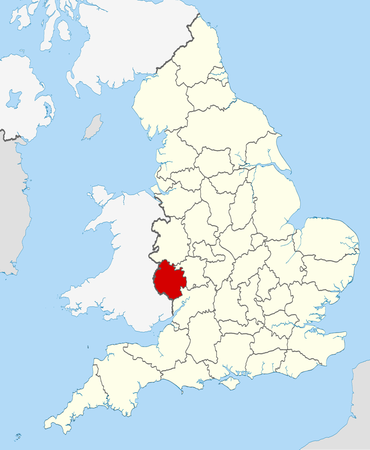
As with most of the "shire" counties, Herefordshire takes it's name from the main town or city, in this case Hereford. The name comes from the Anglo-Saxon words here and ford, meaning an "army" and "water crossing", The German city of Herford has the same root meaning. The Welsh name for Hereford is Henfford meaning "old road". The water crossing is probably over the River wye that flows through the city.
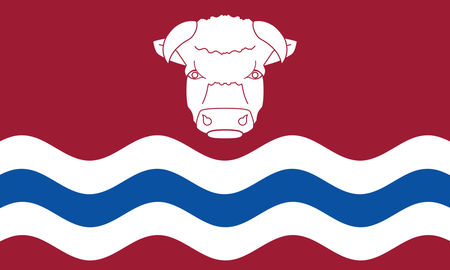
This flag was adopted after a competition in 2019, it is, as are most county flags, based on the coat of arms of the county. The dark red background symbolises the dark earth for which the county is renowned, The bull's head is representative of the famous Herefordshire breed of cattle, and the three wavy stripes represent the River Wye that flows through the county.
Hertfordshire
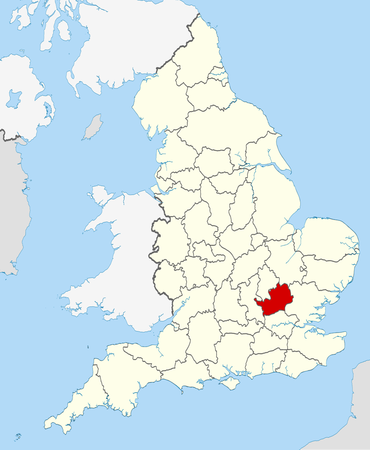
As with the previous entry, Herefordshire, this county takes it's name from the town of Hertford. As we have already seen, the -ford suffix refers to a water crossing, normally a river. Hert is derivation of an old English word herut of hart meaning a fully grown stag. So the name means a water crossing where stags are found.
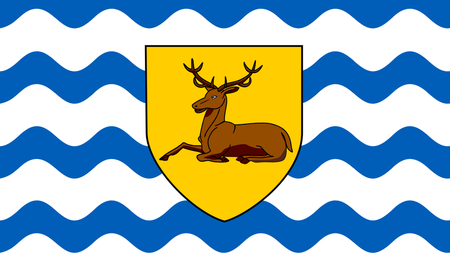
First registered in 2008, the flag is a representation of the coat of arms of the county. it was introduced after a parade of local flags at a county show, when it was realised that the county did not have it's own flag! The wavy lines represent the many rivers in the county, and the shield is taken directly from the coat of arms. The stag is added because of the name of the county. The gold colour of the shield was chosen purely to contrast between the other colours.
Isle of Wight
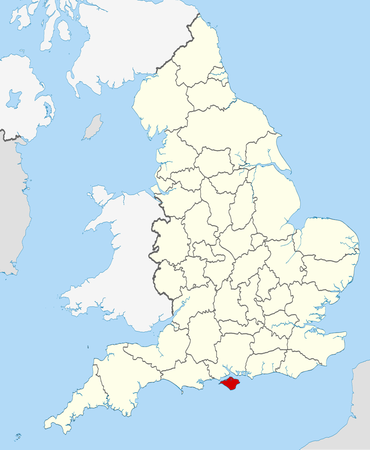
The Isle of Wight became a completely separate entity in 1974, prior to this it was administered both internally and from Hampshire. The island was called Vectis by the Romans meaning "lever", and in Old English it was Wiht, meaning "weight". It is thought that both refer to the island's location that splits the Solent (area of sea between the island and the mainland) into two. So the island's name roughly translates as "weight" rather than the colour white.
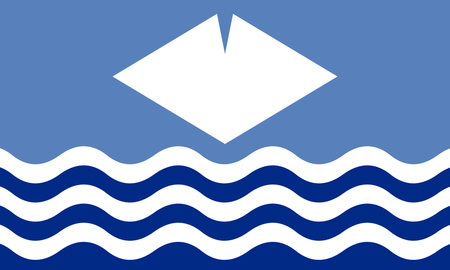
This flag was first introduced in 2009 after a competition, it's recent introduction is evidenced by the modernity of the design. The diamond represents the shape of the island, the indent is for the River Medina, the largest on the island. The wavy lines symbolise the English Channel in which the island sits, with the light blue colour representing the Solent, a relatively calmer stretch of water between the island and the mainland.
Kent
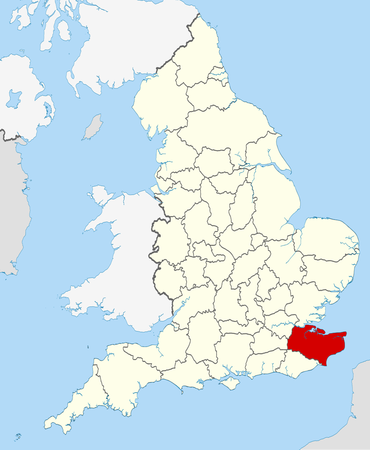
Kent is thought to be the oldest placename still in use in the British Isles. It was first recorded in around 320BC by the Greek explorer Pytheas. He stated that Kantion, as he called it, was several days sailing from Keltike, which was Celtic Gaul, or France to me and you! The meaning of the name is "coastal district", "corner land" or "land on the edge" which can be derived from several sources, all very similar. From Welsh cant meaning "bordering" or "edge", from Breton cant meaning "circle", and from Dutch kant meaning "edge" or "side". Although it is also thought that the name may derive from the Cantii tribe of people that occupied the area prior to the Roman invasion.
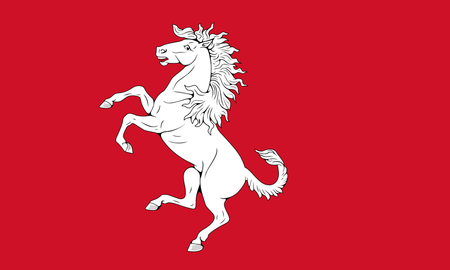
The rearing white horse has been a symbol of Kent for centuries, and is thought to either reference the ancient practice of excavating white horses into the chalk downs of the county, or to the coins minted with a horse emblem by pre-Roman tribes. It is also thought that the symbol could have been introduced by Germanic or Danish invaders many centuries ago. If you look closely, you'll notice that the horse isn't centred on the flag, this is to create an illusion when the flag is flying in strong winds. It then appears that the horse is in the centre.
I can't find any reference to the reason for the red background, possibly bloodshed, maybe not.
Summary
That's number three done and dusted. In the words of Bon Jovi, "woooah, we're halfway there!". I think I may have used that one before, but I'm not going through all of my blogs to find it. In fact, I may have used it more than once before, and commented on it as such. It does ring some bells for me!
Anyway, what is your favourite flag so far? I personally like the modernity of the Isle of Wight flag, easy to interpret, and a simple and effective design.
Next time, another eight entries, starting from Lancashire, home of the famous Hot Pot, a type of stew that features sliced potatoes on the top, very delicious, especially on a cold day.
I found a link to a quiz on the flag website I use featuring the counties of the British Isles, you can try it HERE, it's not as good as JetPunk obviously, but it is quite interesting.
That'll do for now, the dogs need feeding…again, and I'm getting a little hungry, time for a sandwich I think, Ham and Mustard sounds good, anyone else want one?