

County and Flag Origins - England Part Five
First published: Sunday May 17th, 2026
Report this blog
Introduction
The fifth episode is upon us, only one to go after this, well for England anyway. Wales to follow, I think that would be the logical direction to go, well I don't real care if it's logical or not Mr. Spock, I'm gonna do it that way anyway, coz it's my blog!
Sorry, I went off on one then. I do apologize, it's been a long day. I've been busy, mowing my grass, and the 85 year old neighbours grass, fitting new lights and reflectors to my small camping trailer, a recent second-hand purchase. I've been tidying the garage as well, and now I'm "relaxing" and typing out this drivel as I think about it. Ah well, no rest for the wicked, as the saying goes. When I typed that phrase, I wondered where it came from. My initial thought was that it sounds biblical, as so it is. It is a paraphrase from the Book of Isaiah (57:21) in the King James Version, which states: "There is no peace, saith my God, for the wicked".
Anyway, that's enough chit chat for now, on with the show...
Nottinghamshire
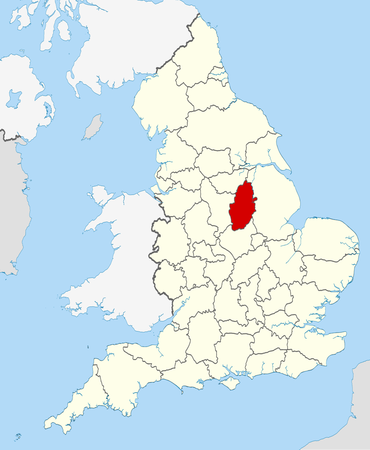
Once again, we see a count that takes it's name from it's largest settlement, often the county town (or capital if you like). The name of Nottingham comes from the Old English name of Snotingaham, meaning "homestead of the Snotingas", this also derives from the phrase "the family or followers of a man called Snot". The "S" was dropped by the Normans for some reason.
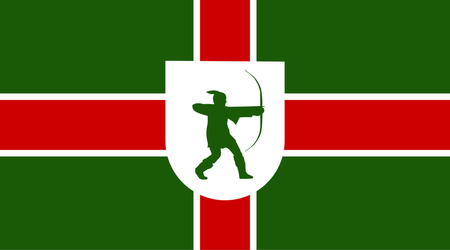
The green background of this flag represents the green fields of the county. The white and red cross is a St. George's cross from the flag of England. The figure of Robin Hood symbolises the heritage in the county of the Robin Hood story. It is a direct silhouette of a statue that stands near to Nottingham Castle. It's central position represents the position of the county within England. This flag is one of very few around the world that features a fictional character.
Oxfordshire
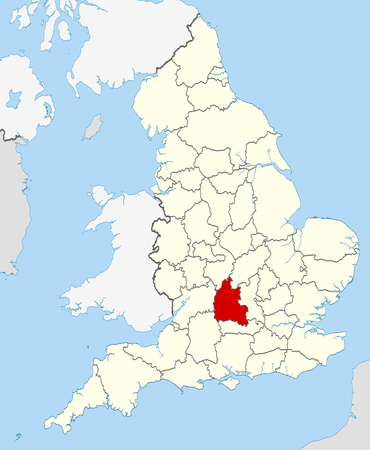
Named after the county town of Oxford, like so many other English counties, this name dates back to Saxon times. The name of Oxford derives from the Old English name, Oxenaforda, which means “ford of the oxen” and refers to a shallow crossing in the river where oxen could pass without harm. The ford in question was either on the River Thames or the River Cherwell, both flow through the town to their confluence nearby.
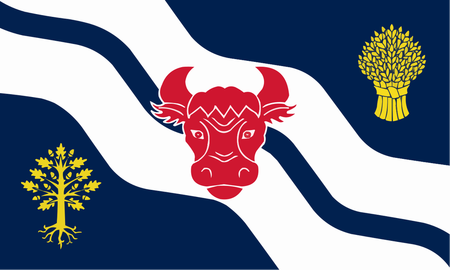
The dark blue colour in the background of this flag is the same blue colour that has been used by the University of Oxford for several centuries. The wavy lines represent the River Thames, with an ox head within the river. The oak in the lower left of the flag symbolises the woodland within the count, and the bushel of grain stands for the county's agricultural pursuits.
Rutland
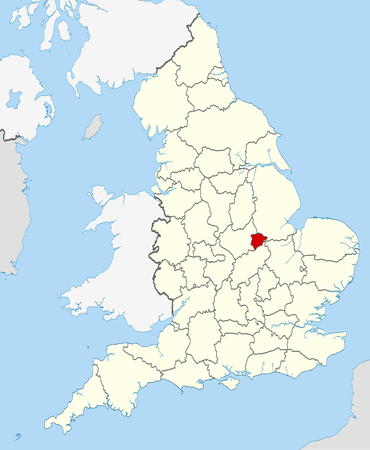
England's second smallest county after the City of London, Rutland has been occasionally merged with other counties, usually Leicestershire. However, with many locals protesting it is now, once again, a county in it's own right.
The county was mentioned in the Domesday Book of 1086 as Roteland, and means "Land belonging to Rota". Rota was an Old English name that meant 'the pleasant or cheerful one'.
Up until 2020, Rutland was the only English county without a McDonalds.
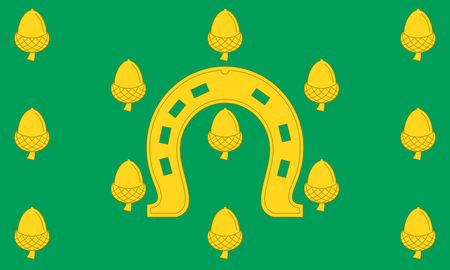
The green background of Rutland's flag depicts the rich pastureland and agriculture of the county. The acorns represent the former forests that covered the county as well as a hint towards the largest town, Oakham. The horseshoe is an ancient symbol of Rutland, originally used to depict the tradition of visiting dignitaries and Royals to leave a gift of a horseshoe to the Lord of the area. The large collection of horseshoes can still be seen in the main hall of Oakham Castle. The seven holes in the shoe follow the tradition in England of affixing shoes to the horses hooves using seven nails. The orientation of the shoe is the same as used in the collection display.
Shropshire
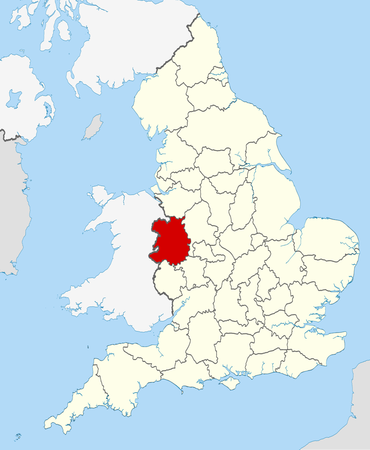
Shropshire is sometimes abbreviated to Salop, this is also an abbreviation for the county town of Shrewsbury, in fact people from the county are known as Salopians.
The name of Shropshire derives from the Old English name Scrobbesbyrigscīr, meaning Shrewsburyshire which in turn means "the shire of the fortified place in the scrublands".
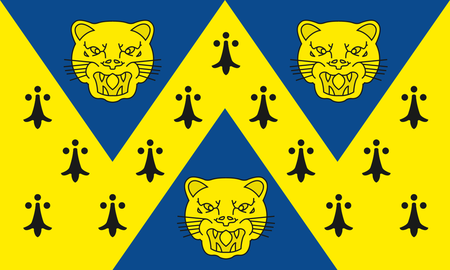
The flag of Shropshire is a derivation of the flag used by Shropshire County Council, which in itself is a derivation of the coat of arms of Shrewsbury, the county town. The three feline heads appeared on the town arms in the 15th century, but the reason is lost in time. It may have been a link to the English three lions, but there is some debate that the heads may be of leopards rather than lions. The gold ermine was added in the 19th century, although there is no record of what it represents. Definitely an enigma of a flag.
Somerset
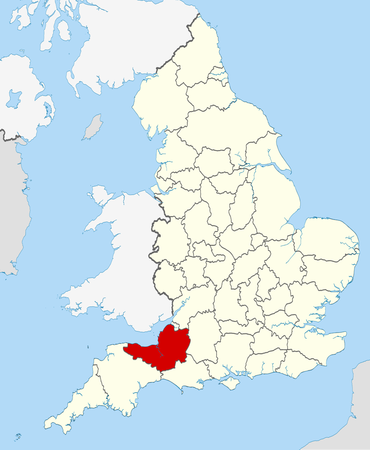
One of my favourite counties, my dad ended his days in Somerset. The first use of a word similar to Somerset, came in the 7th century when Somersæte, was acknowledged by the Saxon King of Wessex, King Ine. It derives from Old English and is short for Sumortūnsǣte, meaning "the people living at or dependent on Sumortūn”. There is a suggestion that the name derives from Seo-mere-saetan meaning "settlers by the sea lakes".
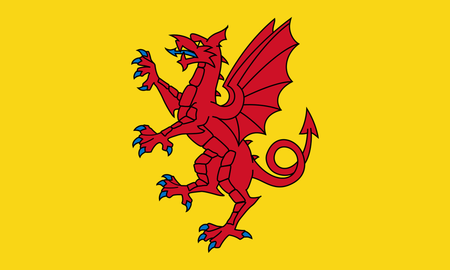
This flag was chosen from the entrants of a competition run in 2013 to design a new flag for the county. The competition was run by a local law firm when it was discovered that the flag currently being used was the one for the local council, rather than the county itself. Although designed in 2013, the flag is very traditional, the Draco dragon symbol being used by the military at the time of the Roman occupation, and as such can trace their roots back at least 2,000 years.
Once the flag was introduced, the local radio station held a competition to name the dragon. The dragon's name is Dunkery. No, I have got no idea why either!
South Yorkshire
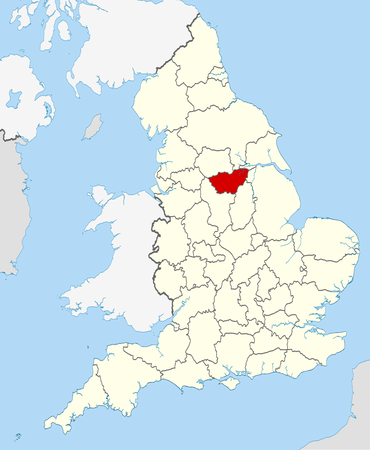
Anyway, this county is the southernmost "riding" of Yorkshire, hence South, and it was part of the larger county of Yorkshire, named after the county town of York.
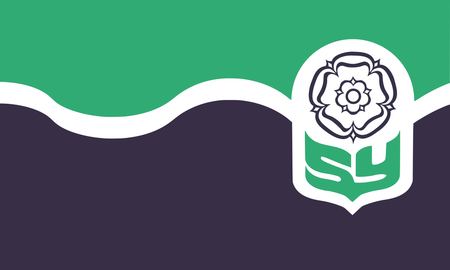
South Yorkshire does not currently have an official flag. There is however, an unofficial one, as shown above. It features the white rose of Yorkshire with the letters S and Y forming the shape of the leaves of the rose. SY denotes South Yorkshire presumably. The wavy line may represent the River Don that flows through the county. Because it is unofficial there are some variants in colours made by different manufacturers, some even being green and pink in colour.
Staffordshire
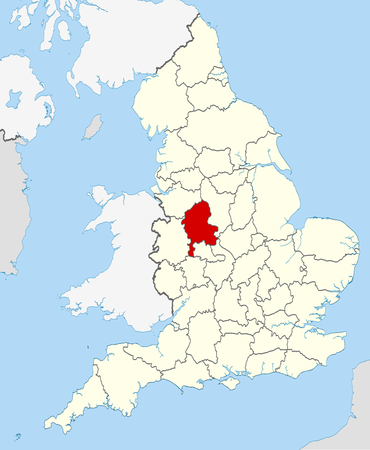
Another county named after a town, this time Stafford, obviously! The town was founded in the 10th century as a stronghold for Anglo-Saxons against the Viking invasions, and quickly became a market town. It's name derives from it's place on a near island. The -ford part of the name denotes a river crossing, whereas the Staf- part refers to a staithe or "landing place".
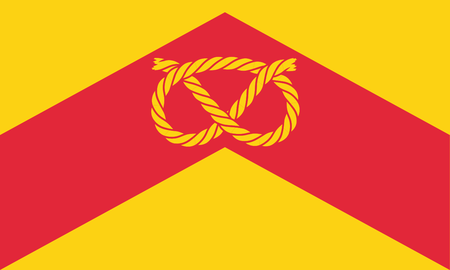
The rope design featured is known as the "Staffordshire Knot" and is used extensively in designs for many organisations in the county. It dates back at least 1400 years, and has been found on Anglo-Saxon stones. One theory is that an executioner found himself with one rope but three criminals to hang, he designed the know to be able to dispatch all three miscreants at the same time. Another less gory theory is that it is symbolic of a bind of three different local areas which joined to form what is now known as Staffordshire when Ethelfleda, eldest daughter of Alfred the Great, removed her girdle and said “With this girdle, I bind us all as one”. The gold background and red chevron come from the coat of arms of the de Stafford family, landowners of the area.
Suffolk
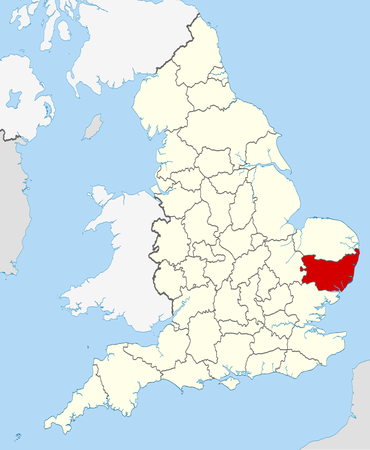
As you may have read previously under the "Norfolk" heading, Suffolk, like Norfolk, has similar origins. Norfolk, if you remember derived from "Northern Folk", and now we have Suffolk meaning "Southern Folk", mainly to distinguish between the two parts of the Kingdom of East Anglia.
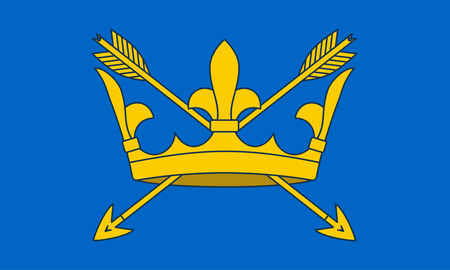
This flag was registered in 2017, although it's design is based upon Saint Edmund's banner. Edmund was the King of East Anglia who was supposedly murdered by the Danes in 870, he is buried in the town of Bury St. Edmunds in the county. The crown obviously denotes the King, the two arrows represent his manner of death. He was allegedly tied to a tree, shot with arrows, and then decapitated. They didn't mess around in those days!
Summary
So, that's the penultimate episode of the English counties finished, just one more to go until I start on Wales. I'd like to apologize for the goriness, (Is that a word?) of some of the entries on this blog, it seems that medieval times weren't as pleasant as nowadays, at least for some anyway.
On a wider note, I have decided that I won't be carrying this series on after Ireland. I have done some research to see if it was worthwhile, but the data is rather sketchy and, in some cases, non-existent. i think I would get bogged down too much and then get bored and just not make a decent job of it all.
I have got a few ideas floating about though, I have already got the title done for one of the later blogs, it's sat in my "blog editor file" as a reminder, and I will be adding bits to it as and when I have some time, and inclination!
That's it for now, so I will look forward to your comments, and I will always try to reply. Even if it is just to say "Thanks"
See you next time with the final England episode!
Anyway, thanks for replying and the compliments.
Enjoyed reading about the counties and seeing the flags.