

County and Flag Origins - England Part Four
First published: Tuesday May 5th, 2026
Report this blog
Introduction
"Mamma Mia, here we go again", sang ABBA in 1975, and here we go again over 50 years later, at the start of another blog edition. Not quite the same though I agree. What do Agnetha, Bjorn, Benny and Anna-Freda know about blogging. Although, I wonder if there is anyone famous using JetPunk under a pseudonym, hiding within the realms of this site just chilling and taking quizzes? It would be amazing if there was, maybe a famous singer or a member of the Royal Family, or a well known dictator just wiling away the hours until their next appearance. After all, Quizmaster is from Seattle, as are Bill Gates and Kenny G, but do you ever see any of them in the same room at the same time? I rest my case m'lud! Come on whoever you are, own up!
Enough of my ramblings, onwards and upwards we go...
Lancashire
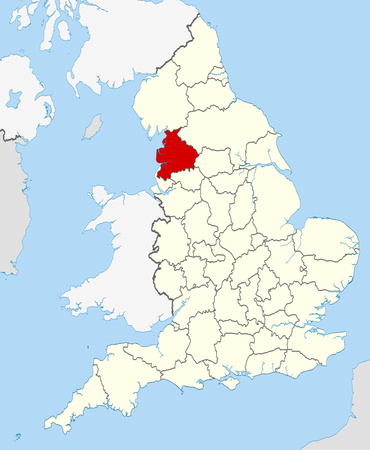
Lancashire historically contains parts of Cumbria, Greater Manchester, Merseyside, and Cheshire but under the Local Government Act of 1974, it lost most of the above parts, but gained a small part of Yorkshire. It takes it's name from the city of Lancaster, recorded in 1086 in the Domesday Book as Loncastre. The -castre bit refers to the Roman fort, just a different spelling of -chester or -cester. The Lon prefix is referring to the name of the river that flows through Lancaster, the Lune.
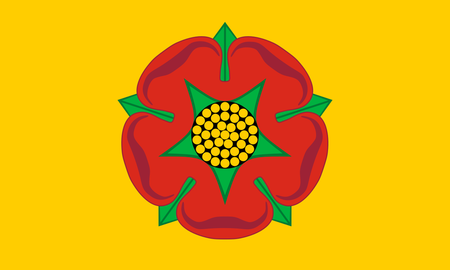
The red rose in the centre of the flag is an old heraldic symbol of Lancashire that dates back at least to the War of the Roses, although scholars agree that it was adopted by the House of Lancaster in the 14th century. The original design of the flag had a white background but, when it was presented to the Flag Institute it turned out that the town of Montrose in Scotland had registered this design several hundred years earlier. The yellow background was chosen as a contrast to the white clouds in the sky, and because it also featured amongst other colours on the coat of arms.
Leicestershire
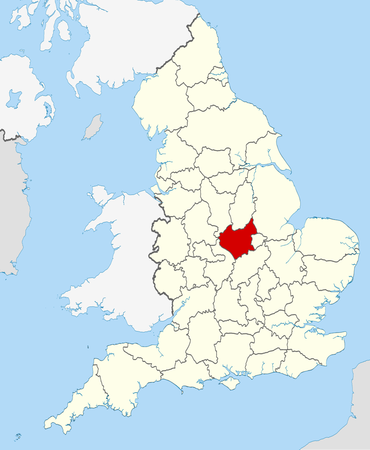
Formerly known as just Leicester, or to avoid confusion "County of Leicester", this county only became a "shire" in 1969. The local council had to get government permission to change the name to Leicestershire, this was for the same reason as above, to avoid confusion with the city of Leicester.
In the Domesday Book it it is recorded as Ledecestre, again the -cester/-cestre bit refers to a Roman fort. The start to the name is thought to have come from the people that lived in the area, known as the Ligore, whose name comes from the River Ligor, which is now called the River Soar, just to confuse people.
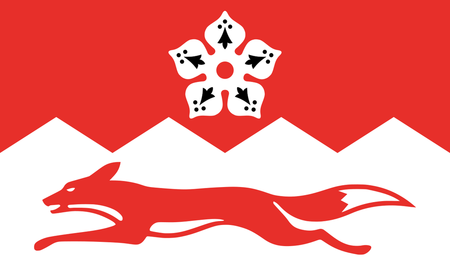
This flag was only incorporated in 2021, and Leicestershire was the last county to have a flag registered. The red and white background is taken from the arms of Simon de Montfort, the 6th Earl of Leicester. The cinquefoil flower represents the de Beaumont Earls of Leicester. The fox is a historic symbol of Leicester that has been used for many centuries.
Lincolnshire
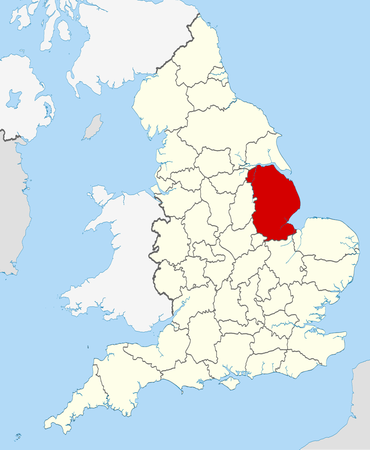
Lincolnshire takes it's name from the county town of Lincoln. During the Iron Age, the Brythonic name for the area was Lindon meaning "a pool", presumably referring to a place called Brayford Pool which was well known at the time. Lindon over time and language changes came to become Lincoln.
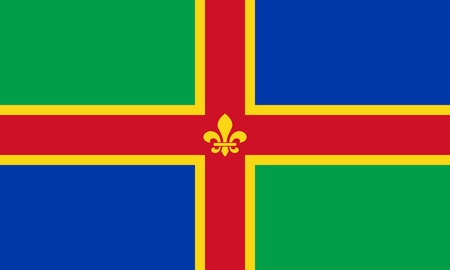
This flag was introduced after a competition organised by BBC Lincolnshire, the local radio station(again). The style was chosen as the best of six entries and was designed by a web producer at BBC Lincolnshire (wait a minute, organised by the BBC, and the winner worked for the BBC).
The red cross is the Saint George's Cross that represents England. Yellow symbolises the crops grown in the county, as well as the nickname of "Yellowbellies" that is given to people born and bred in Lincolnshire. The blue colour represents both the sea and the wide skies of Lincolnshire, and green symbolises the fenland fields.
Merseyside
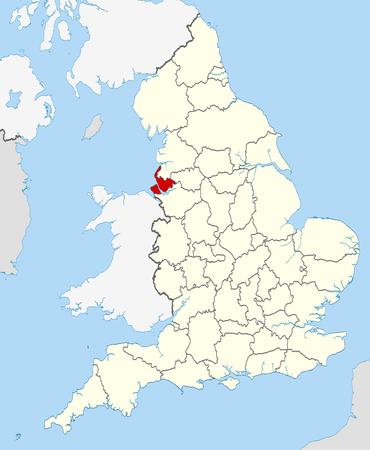
The county of Merseyside was created in 1974 from parts of Lancashire and Cheshire, it is mostly urban with a population of around 1.5 million. The name comes directly from the area, the River Mersey runs through the centre of the county, and it's lands are on either side of the river, as can be seen in the location map.
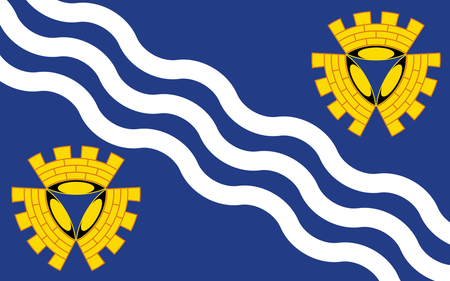
The wavy lines, although I think you may be ahead of me on this, represent the River Mersey flowing through the county, who'd have thought it eh? The six castellated crowns depict the six boroughs, Birkenhead, Bootle, Liverpool, Southport, St Helens, and Wallasey, that made up the county on it's creation. They are arranged into a cog shape to represent the industry of the area.
Norfolk
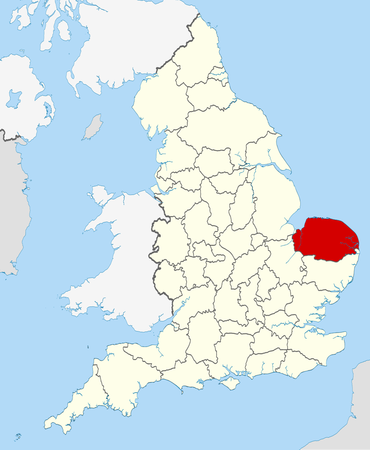
The name of this county is first mentioned in Anglo-Saxon wills dated from around 1044, and in 1075 as Norðfolc in the Anglo-Saxon Chronicles. It is described in the Domesday Book as Nordfolc. The name translates to "Northern Folk" possibly to distinguish from the inhabitants of the neighbouring county of Suffolk.
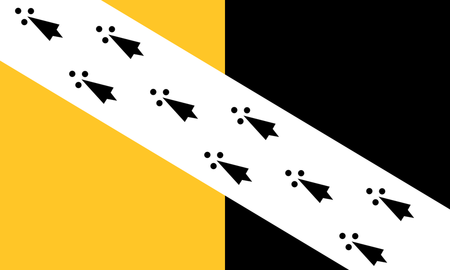
This flag is based on a 12th century design used by Ralph de Gael, the first Earl of Norfolk. The colours are taken directly from his coat of arms. The diagonal design is representative of ermine, a sash made from the animals fur, that was traditionally a symbol of Brittany where Ralph was Lord of Gael.
North Yorkshire
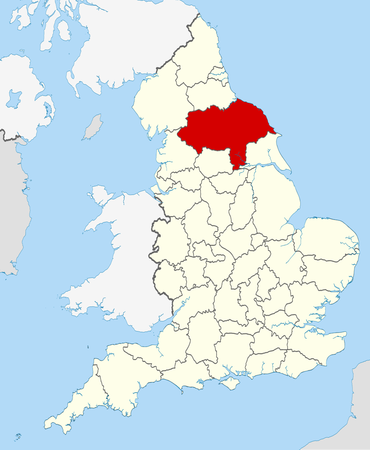
North Yorkshire is obviously the northern part of the county that used to be just Yorkshire, derived from the city of York. (see the entry for East Riding of Yorkshire). The county contains two National Parks, the North York Moors and most of the Yorkshire Dales.
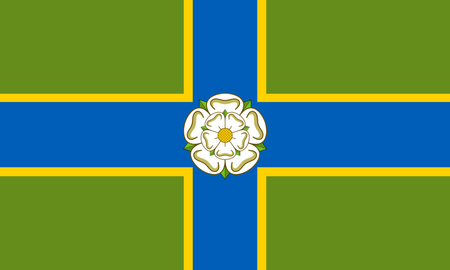
The blue and yellow cross originate from the colours of the arms of Saint Wilfrid, a major figure in the early history of the area. The colours are also representative of the sea and sandy beaches. The green symbolises the large area of the national parks. The White Rose is a traditional symbol of Yorkshire.
Northamptonshire
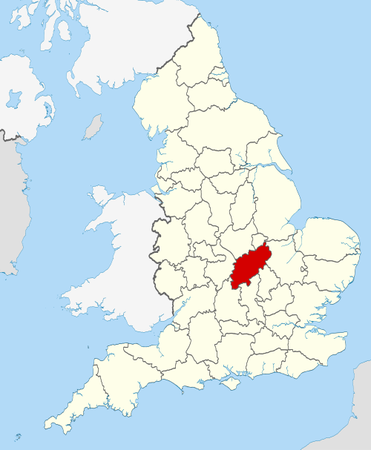
This county was originally called Hamtunscire, the -scire meaning "shire" and Hamtun meaning "the homestead". The "North" was added to distinguish it from the larger town in the south that we learnt about in Hampshire, Southampton. Though both settlements have a similar reason for their prefix, the rest of the names have different etymologies.
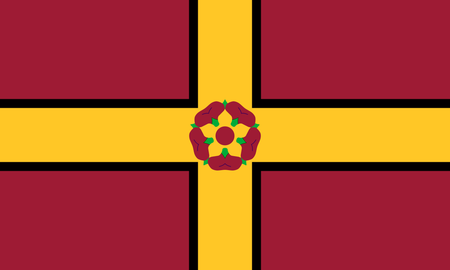
The red rose is a common symbol of the county, it is even occasionally called "The Red Rose of the Shires" and was first used in around 1665 by magistrates. The flag was designed in 2014 as an entry in a competition. The cross design represents the county's position as a crossroad in the Midlands of England, the colours were chosen to reflect the colours of the county cricket team and Northampton Town Football Club. The black lines symbolise the county's leather industry.
Northumberland
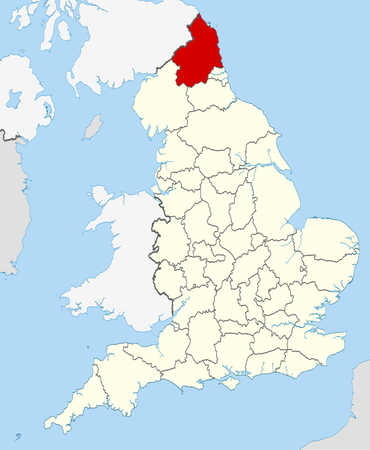
This county has changed over many centuries, at the time of the Roman occupation, much of it was north of Hadrian's Wall, effectively placing at least parts of it in Scotland. In fact some parts have changed sides many times. The name is recorded in the Anglo-Saxon Chronicles as norð hẏmbra land, meaning "The Land North of the Humber", even though the River Humber is much further south. But, in the 7th century, the kingdom of Northumbria stretched from the Humber in the south to the Forth which is north of Edinburgh.
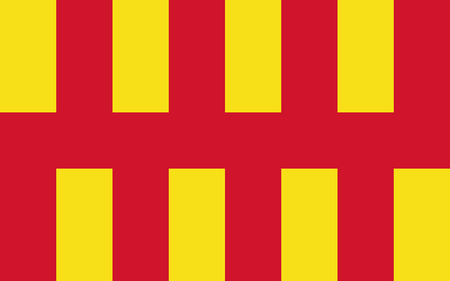
Incorporated in 1951, the flag is of the same design as the county's coat of arms. It is based on a flag that was draped over the tomb of Saint Oswald in the 7th century. The design is such that it represents the bricks in Hadrian's Wall, a famous Roman defensive structure that runs through the county.
Summary
Another eight entries done, that's thirty-two down, sixteen to go. Four out of the six blogs on England.
At the moment I am thinking of doing Wales after England, then Scotland and Ireland after. At this point I have no plans to go elsewhere, I don't want to get bored with it, although that may happen before I finish the series, who knows.
But, I have some ideas for future series of blogs, mostly geography based, but I haven't done enough research yet on those, just preliminary stuff to see if they are possible. That's for a later date. I won't say anything yet, because I haven't decided if they are worth making, well, one series is definitely worth making, but it's a big one and I'm not sure if it can be done efficiently without it becoming too concentrated. like I said, I need to work a few things out on that one first.
So, anyway, I shall continue with this series whilst I'm working out the details.
Until next time my fiends...friends, I shall bid you adieu!