

County and Flag Origins - England Part One
First published: Thursday April 30th, 2026
Report this blog
Introduction
It's been a while since I wrote a blog. I sort of lost my way a little. The Five Villages weren't doing anything for me, I realised the reason I stopped the five Islands series was rearing it's ugly head again in that theme. The research was too tedious and time consuming and I wasn't enjoying it. Writing should not be a chore, it should be an exploration, but that wasn't happening.
The Road Trip idea was a good one, but I think I bit off more than I could chew with the first one, and that too became a hard slog that I just had enough of. Maybe I should have started with a shorter trip, maybe Lands End to John O'Groats in the UK. Ah well maybe at some time in the future.
Both of those blogs will stay on my "Create" page, and may be resurrected at some point.
Anyways, I have been having a long think about blogs, and I have decided to go back to what I enjoy.
Flags and Etymology. I am starting with, as you may have guessed from the title, the 48 ceremonial counties of England.
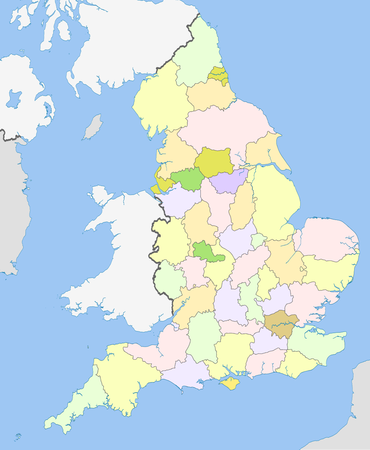
As you can see in the above map, they come in all shapes and sizes. Each has it's own name (obviously) and flag. Many of the flags are quite elaborate as we shall see further on in this blog and the following ones in the series. I expect there may be five or six blogs covering England and then some more exploring the counties of Scotland, Wales and the two parts of the island of Ireland. At this point I haven't decided about drifting further afield than the British Isles, we shall see what happens later on.
I will be highlighting the origins of the county names and the meaning behind the design of the flags.
Similar to THIS SERIES of blogs that I made between March and May of 2025. Was that only a year ago? I thought it was further back than that, ah well.
It's been too long since I wrote and published a blog, so without further ado, let's head out, alphabetically, to our first county...
Bedfordshire
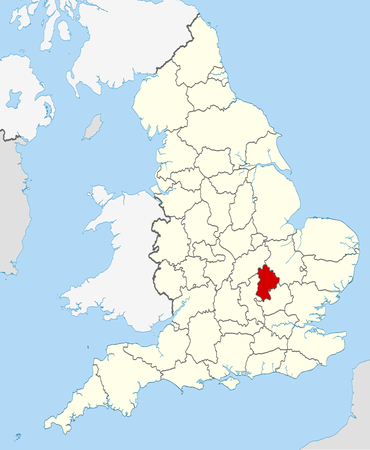
You may notice that many of the counties end in the suffix -shire, this is just an old word meaning county, so instead of "County of Bedford" we use Bedfordshire, just sounds more British don't you think? It is pronounced as sher rather than shire. Anyway...
The first recorded use of the name was in the year 1011 when the word Bedanfordscir evolved into Bedfordshire. The Bedford part of the name derives from an old river crossing and comes from "Beda's Ford". Beda was a Saxon chief and the ford crossed the River Great Ouse in the area that is now the county town of Bedford.
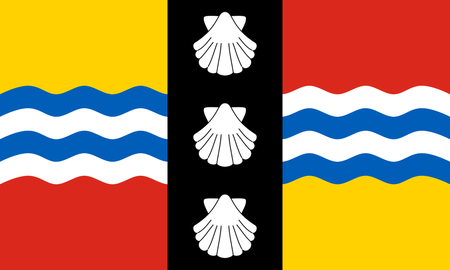
The flag of Bedfordshire derives from the coat of arms of the county as well as the heraldic symbols used by wealthy families in the area from the time of the Norman conquests.
The red and yellow is taken from the arms of the Beauchamp family who built Bedford Castle. The wavy blue and white stripes signify the River Great Ouse that flows through the county, whilst the shells and black panel are taken from the arms of the Duke of Bedford.
Berkshire
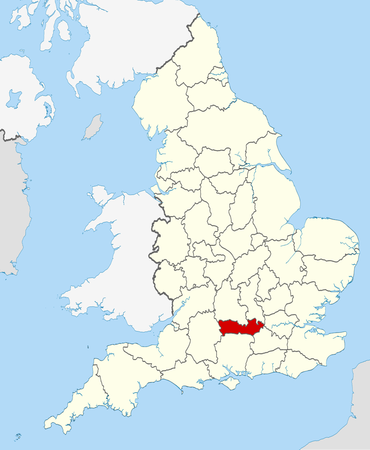
This county takes it's name from a forest that no longer exists. According to Asser, (a Welsh monk that advised King Alfred) in his biography of the King, the name comes "from the wood of Berroc, where the box-tree grows most plentifully". He wrote this in the year of 893AD, presumably a lot has changed since then. The county was given the name of Berrocscir or the "County of Berroc". Bearroc incidentally is a Celtic word meaning "hilly".
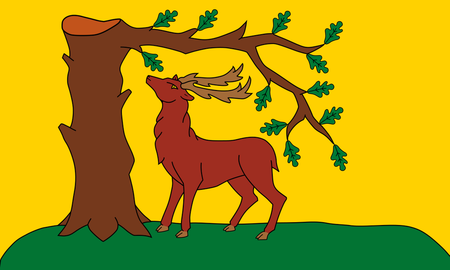
The flag depicts a "Royal Stag", one with 12 pointed antlers, beneath an Oak tree. This is an old symbol of Berkshire being incorporated into many of the county's organisations from military, and fire service to sports clubs and asociations. It was a symbol carried at the Battle of Agincourt in 1415, and represents the county's Royal status. Windsor Castle is in the county of Berkshire. The gold background is also a symbol of the Royal connection.
Bristol
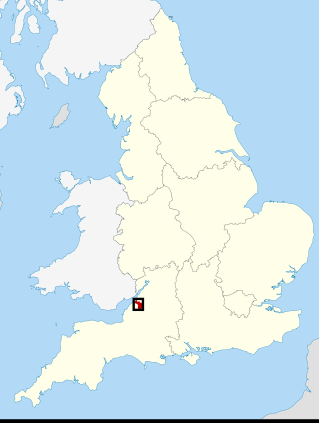
Bristol is the first of our counties that is also a city. In a similar way that Singapore is a city and a country. The name of Bristol comes from Old English, Brycgstow, and means "assembly place by the bridge" or just "site of the bridge". This presumably means a crossing of the River Avon that flows through the city. Another name for the city was Bristow, a name that survives as a surname, the final L was added sometime in the past, and it is thought it comes from the local dialect.
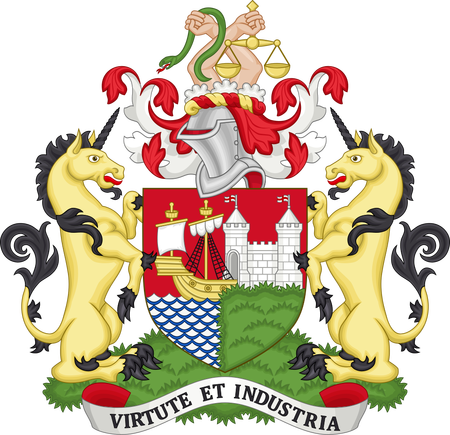
Bristol does not have an official flag, although one has been proposed that is similar to the centre of the Coat of arms. The ship sailing out of the castle symbolises the city's importance and history as a port. The unicorns stand for courage and strength, while the crossed arms with a scale and snake evoke justice and wisdom respectively. The Latin motto translates to ''By virtue and industry''.
Buckinghamshire
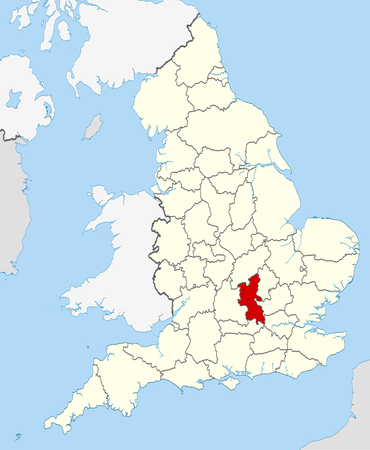
Buckinghamshire must be the county with one of the longest names, no wonder it's always abbreviated to Bucks! Anyhow, the name originates from the Anglo-Saxon language and means "The district (scire) of Bucca's home". Bucca was an Anglo-Saxon land owner. The name only originates from the 12th century, although the area has been inhabited for much, much longer.
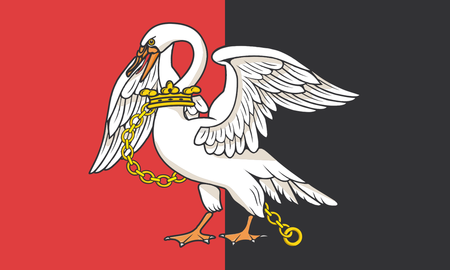
The black and red background comes from the official coat of arms of the county, but it also dates back to the early Duke of Buckingham, and his coat of arms. The swan with a chain represents the historic importance of the county as an official breeder of swans for the royal family of the time. Swan was considered a delicacy in Anglo-Saxon times. It's chain symbolises the connection to royalty. This connection can still be seen today, where an archaic law of the UK states that all swans are the property of the monarch.
Cambridgeshire
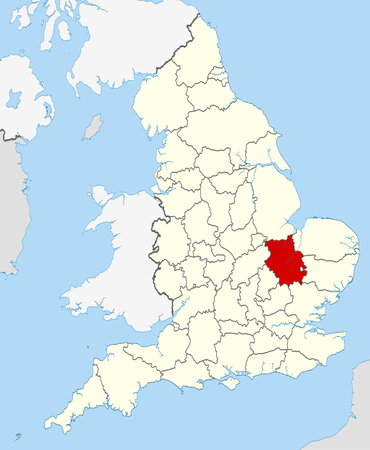
The name of this county is pretty straightforward, the River cam flows through it and there is a bridge over the river. However, as with most things, it isn't as simple as that. The river was originally called the Granta, and it's current name of the Cam derives from the city of Cambridge which used to be called Grantebrycge. When the name of the city evolved from Grantbridge to Cambridge, the name of the river was changed to suit the city. Got that? Good, because I haven't!
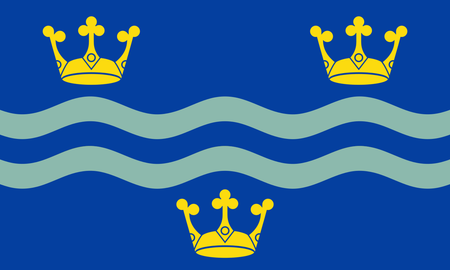
The background blue and the three crowns are taken from the flag of East Anglia and represent the area's origins. They are virtually identical to the coat of arms of Sweden. The wavy lines symbolise the River Cam, and are in the colour known as Cambridge Blue as used by the famous university of the same name.
Cheshire
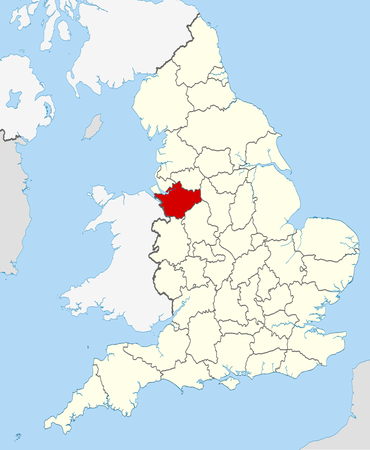
The name of the county of Cheshire derives from Roman times when it was called Legeceasterscir or "county of the city of legions". Over many years the name was shortened and changed as the language of the country changed, to eventually end up as Chestershire, then further shortened to Cheshire.
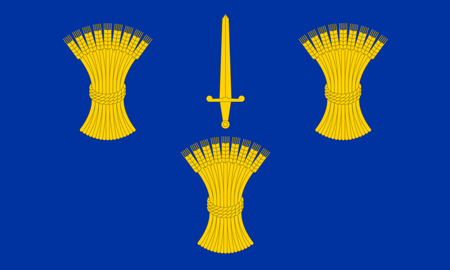
The design of this flag dates back to at least the 12th century, when the arms of the city of Chester were just three wheatsheaves, the dagger was added by the Earl of Chester prior to 1580, to symbolise that the lands of Cheshire were held “as freely by his sword as the King of England held by his crown”. The bales of wheat are thought to represent the rich agricultural heritage of the county.
City of London
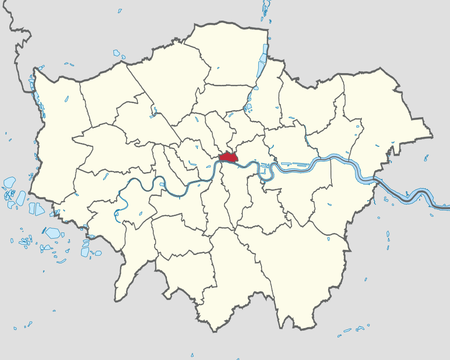
As you can see from the map, the City of London is tiny. In fact it is often referred to by it's nickname, The Square Mile. It's name comes from the Roman name of Londinium, or does it? Many scholars now think that London means "place that floods" and predates the Roman invasion. See here in my much earlier blog from 2021.
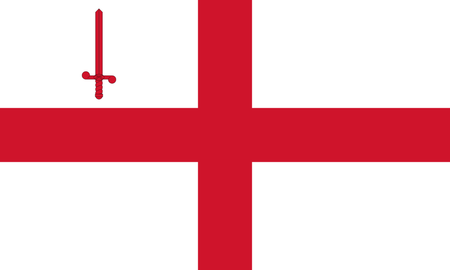
The flag incorporates the cross of St. George, the patron saint of England, with a sword in the upper left quarter. The sword is supposed to represent the sword that beheaded St. Paul, the patron saint of the city. The sword should always point upwards, therefore when it is used as a banner the flag should be made accordingly.
Cornwall
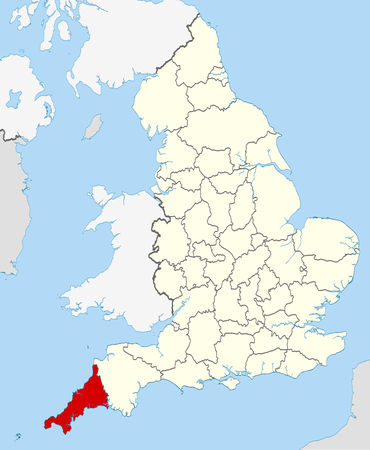
Cornwall is the English language version of this county, the name stems from Celtic words meaning "horn" and "foreigner". No, it doesn't mean horny foreigner. The "horn" part means headland, think Horn of Africa. and the "foreigner" bit refers to the fact that to the English the inhabitants of Cornwall spoke another language. That language was Cornish, which is still taught in some schools today, and is similar to Celtic or Welsh. However, the name of the county in the local dialect is Kernow, which basically means the same but in a different language.
Just to confuse matters, the Anglo-Saxons called it West Wales, to distinguish it from North Wales. It was also known over the years as On Corn walum in the Anglo-Saxon Chronicles, Cornualia in the Domesday Book, as well as Cornwal. It has also been called Cornubia and Cornugallia at various times in the past. well done if you could follow all that!
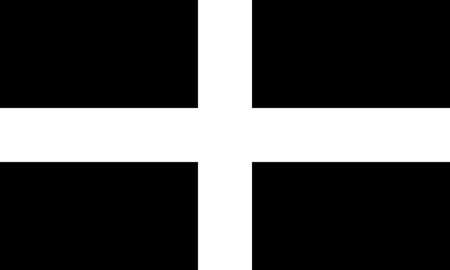
The Cornish flag is the cross of St. Piran, Cornwall's patron saint. Legend has it that St. Piran chose these colours after seeing the white tin amongst the black coal when he discovered tin in the county. Cornwall was once the world's largest exporter of the metal.
Summary
Well, what do you think? Am I back? I think so! I have enjoyed making this blog very much, and can't wait to get onto the second part. We start at the opposite end of the country in Part 2, Cumbria.
I thought I would put eight counties in each blog, making six altogether for England...6x8=48..yep, that's good then, my mental arithmetic still works. Following the England section, I shall proceed with haste to Wales, where there are only eight counties with a similar provenance as the ceremonial ones in England, they call them the "Preserved Counties". So that will be just the one blog. Scotland is a different matter, there are, 32 counties conveniently, so that will be four blogs then.
After that Ireland, with the six counties of Northern Ireland and, I think, 29 in the south, although I'm not 100% on that, I haven't checked yet.
Anyway enough waffle, it's way past my bedtime, and one of the dogs want to go outside for his evening ablutions (That's a polite way of saying he wants a wee).
So until the next time my friends...adios!
Sadly, such a topic doesn't grab my attention quite as much. I'm not knowledgeable about England's counties
WE are SO back