
County and Flag Origins - England Part Six
First published: Wednesday May 20th, 2026
Report this blog
Introduction
Here we are again, this time in the final England episode. The final eight ceremonial counties of England. In one way I shall be sad to see the end, but also excited for the next episode on Wales, The Old Land of My Fathers or Hen Wlad Fy Nhadau as they say in Wales. That's the name of the Welsh National Anthem by the way, not just a random sentence spouted out in the shops and cafes of the principality. But I am getting ahead of myself here, back to England, Blighty if you like. And that's another thing, what the heck does Blighty mean? Well, it comes from an Urdu/Hindi word vilāyatī meaning "foreign" or "belonging to a foreign country". It was used by soldiers stationed in India during the days of the Raj. That's the British Empire Raj, not the character from the Big Bang Theory!
Anyways, enough twaddle, let's get on with the last episode for England shall we?
Surrey
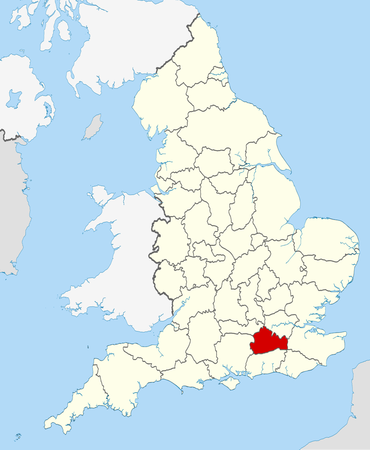
Despite being so close to London, Surrey has the densest cover of woodland in the country, at 22.4 per cent, almost a quarter of the county is under the shade of various types of woodland. The name Surrey is derived from the Anglo-Saxon Suthrige, meaning "southern region". The county has been used as a setting for several books and movies including War of the Worlds (The opening scenes take place there), Harry Potter's home village of Little Whinging is set in Surrey, and the cathedral scenes in The Omen were filmed at Guildford cathedral in the county.
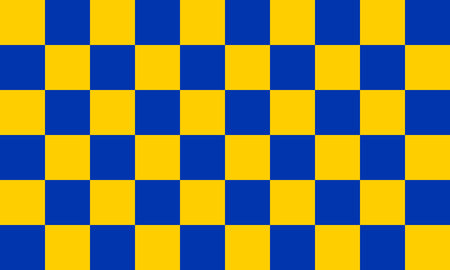
The gold and blue checkerboard design of the county's flag is based on the coat of arms of William de Warenne, 2nd Earl of Surrey. He died in the year 1138 and was possibly the third or fourth richest person in England at the time, and donated some of his fortune to priories in the area
Tyne and Wear
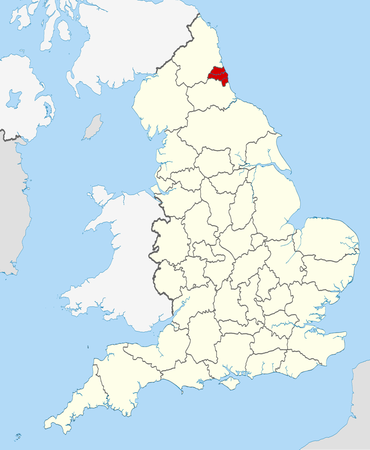
As you may have guessed, this county is named after the two rivers that flow through it, the Tyne and the Wear. The county was formed in 1974 as an amalgamation of several boroughs and included parts of Durham and Northumberland. There are too many theories as to the origin of the names of both rivers to write in this blog, suffice to say, no-one really knows where the names came from.
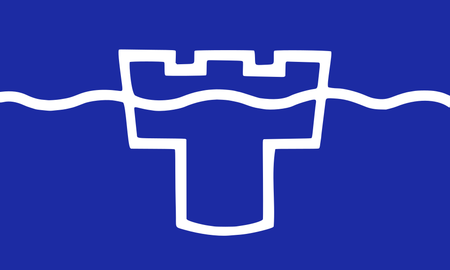
Our second unofficial flag, remember South Yorkshire in the previous episode? Anyway, the white wavy shape that runs across the flag is meant to represent the two rivers that the county is named after. The castle shape on the flag is shaped as a T to represent the Tyne and the top of the T-shape is shaped as a W to represent the Wear. I quite like the simplicity of this flag, what about you?
Warwickshire
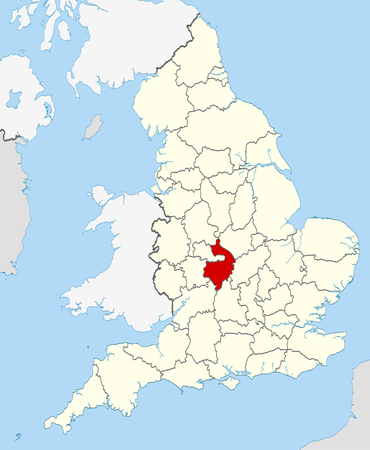
By now I hope that you've learnt that the -shire suffix means that the county is named after a town, Warwickshire is no different. The town of Warwick has been inhabited since at least Neolithic times, in Old English the town was called Wæringwīc, the suffix -wīc meaning a settlement. The prefix of Wæring being a tribal name. Another theory is that it may be derived from wering, meaning a 'fortification'.
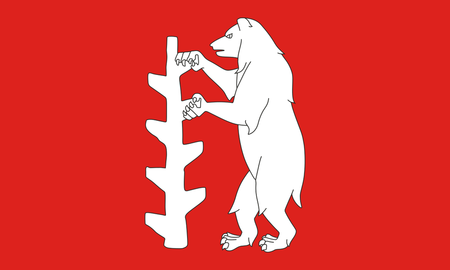
The county's flag depicts a bear and a staff, both being symbols used since the Middle ages by the Earl of Warwick on his coat of arms. However, the symbols may have been used much earlier. It is thought that the bear comes from the legendary Arthgallus, a knight of King Arthur’s Round Table, an early Earl of Warwick, whose name derived from the Welsh “artos” or bear. The staff comes from another tale of another Earl that killed a giant with a tree branch. Whether the tales are true or not, at least the flag is interesting.
West Midlands
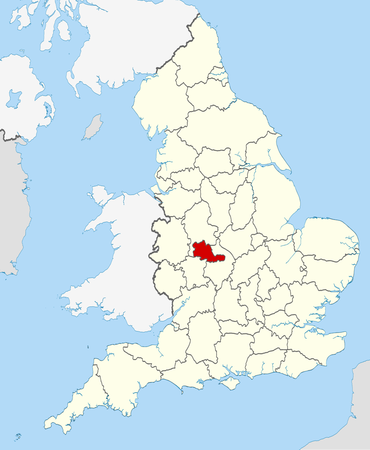
Like the previous entry of Tyne and Wear, West Midlands was only created in 1974. It comprises some of the most built-up areas in the country, the second city of Birmingham is at the centre of the county. It's name obviously refers to the location within the Midlands of England. The popular TV series Peaky Blinders was set in the area now known as the West Midlands.
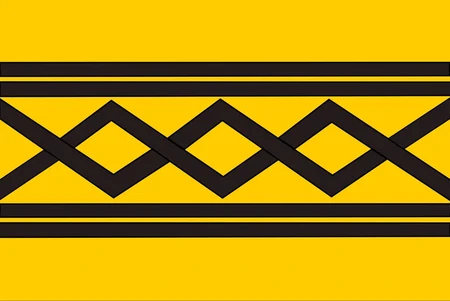
This rather gaudy flag derives from the coat of arms of the former West Midlands County Council that was abolished in 1986. The black and gold colours signify industry. If you look closely the fretwork across the centre forms the letters "W M" intertwined. The bars above and below represent strength.
West Sussex
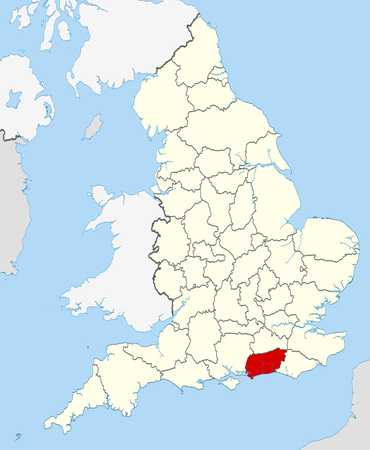
If you can remember, way back in Episode Two, we discussed the neighbouring county of East Sussex. The name of Sussex translates to "Land of the South Saxons". So this county 's name means "Western Land of the South Saxons". That was easy!
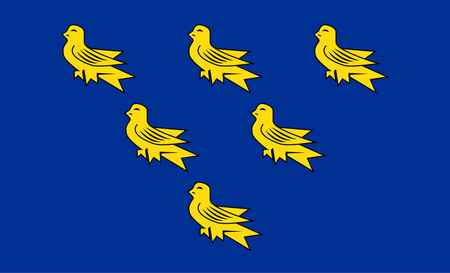
The above flag is actually the flag of Sussex as a whole including the Eastern part. Although it is used within West Sussex, as is the below flag that was the former emblem of the West Sussex County Council. Just to confuse matters, both flags are available commercially as flags of West Sussex.
The birds are heraldic martlets, a mythical bird said to resemble a swallow, that have been used as emblems of both parts of Sussex for centuries.
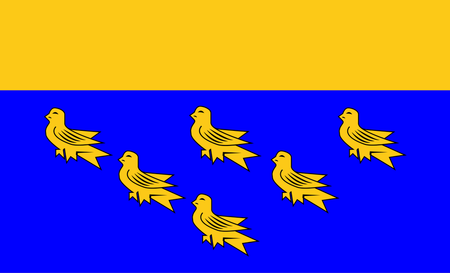
Come on Sussexes, sort your acts out and decide on a flag each. You're confusing an aging JetPunker here.
West Yorkshire
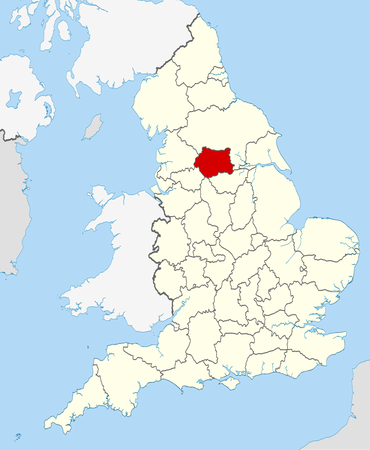
I think Yorkshire has been done to death now, I think we all know what it means. It's the Western part of the county named after the city of York. Got it now?
Strangely coincidentally, I'm writing this after spending the day delivering and travelling through West Yorkshire. Bradford, Leeds and Otley if you must know, never saw the flag flown once!
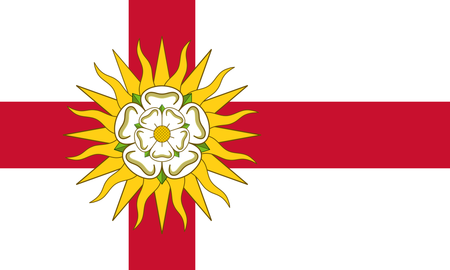
This flag features the obligatory "white rose of Yorkshire", this time emblazoned with the sun emblem that was used by King Richard II. The colours of the English flag but in a Scandinavian Cross design represents the joint English and Viking heritage of the county.
Wiltshire
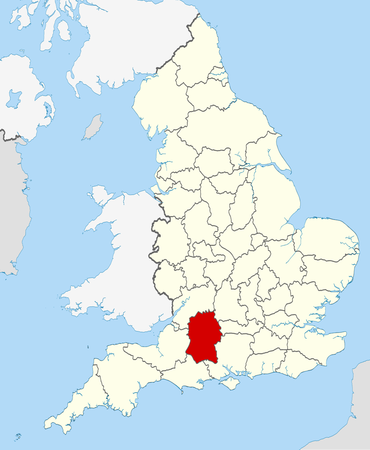
Even though you may not know of Wiltshire, you will surely know it's most famous landmark. Within the county is Salisbury Plain, parts of which have been used as a military training ground for decades, and within Salisbury Plain sits Stonehenge, the world famous prehistoric megalithic structure thought to have been built from around 3000BC.
The county name, which was written in the 9th century as Wiltunscir, is named after the former county town of Wilton.
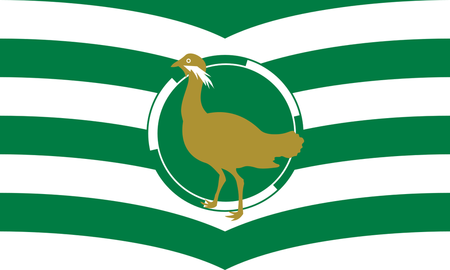
Ever since this flag was raised over the council offices in 2007, it has attracted criticism. It was designed and adopted without any consultation with the residents of Wiltshire, and even the Flag Institute, has criticised its irregular design and intricate details.
The green and white stripes represent Wiltshire’s pasture-lands and chalk downs, whilst the central disc symbolises the open grasslands of Salisbury Plain. The bird is a Great Bustard, reintroduced to the county between 2004 and 2012, after being extinct in England since 1832. As of 2024, there were around 70 of these birds on the plains.
Worcestershire
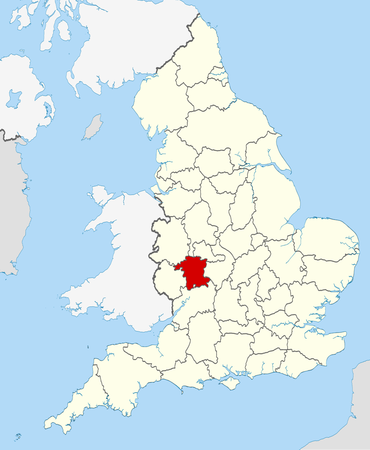
It takes it's name from the city of Worcester, pronounced Wuster, that is the county town. That city's name derives from the Old English title of Weogorna ceaster, meaning "the Roman town of the Weogoran people".
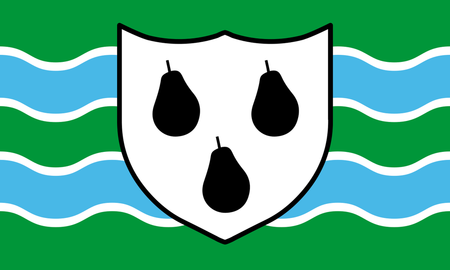
Another flag designed for a competition run by the local BBC radio station, (what is it with radio stations and flags?) and won by a Mrs Elaine Truby. The flag features a pear design, the Worcestershire Black Pear, that was said to have been part of the colours worn by Worcestershire units at the Battle of Agincourt in 1415. The background colours and design represent the River Severn that flows through the county and the green flood plain that surrounds it.
Summary
Well, there ya go! The sixth part of six, the final eight entries of the counties of England. What was your favourite? Mine was, I think, Nottinghamshire with the figure of Robin Hood, although Cheshire(biased) and Tyne and Wear come a close second. My least favourite I think would be Surrey's checkerboard design.
What's next? Well, Wales is calling, so I think there next, there are only eight ceremonial counties, although they are known as "preserved counties", same idea, different name. As there are only eight, they will all fit neatly into one blog of a similar length to the English ones, I like to keep things neat and tidy!
"What else in is the pipeline?", I hear you ask. Well I have a "secret" blog under construction that will be released at a certain, as yet, unspecified time as part of cathlete's Summer Blog Challenge. I also have several ideas that are bubbling away beneath the surface, just waiting to see the light of day. Got to try and retake the throne from Capybara as the user with the most blogs! Joking Capy, it's not a race.
That'll do for now folks, see y'all next time!
I have the most blogs, not "Capybara"So it's -barra like the Scottish Island then?