
Even More Strangely Named UK Places
First published: Thursday May 29th, 2025
Report this blog
Introduction
Way back in the summer of 2021, August to be exact, I published two blogs about strangely named British places. May I humbly suggest that you check out one or both of them...
More Strangely Named UK Places
Hopefully, you've had a quick shufty of at least one of those blogs and now know what I'm wittering on about. Incidentally, the village of Wittering is the first entry on this blog, see what I did there?
Anyway, I was thinking of what blog to write next and was just browsing through my older blogs, and I thought to myself, "There must be a few more places like this that I can write about" and here I am.
I may even make it into a series with strange names from around the world, who knows, it could be fun. The only problem I can see with that is the language barrier. What may seem like a strange name in one country, could be a perfectly normal one in another. There are several places in Germany and Austria that have normal names in German, but in English those names are extremely rude and definitely NSFW. Suffice to say, I will NOT be using them, sorry to disappoint you, but JetPunk is not that type of website.
So, enough of the waffle, let's get on with the main feature...
Wittering
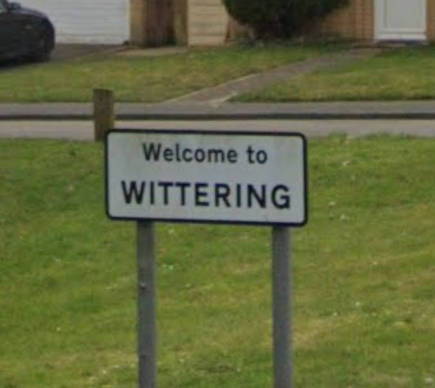
Situated just off the Great North Road or A1 as it is known nowadays, Wittering, in the ceremonial county of Cambridgeshire, was first spoken about in 972 as Wiðering ige meaning "Settlement of the people of Wiðer", although it is believed to have been founded much earlier in the 7th century.
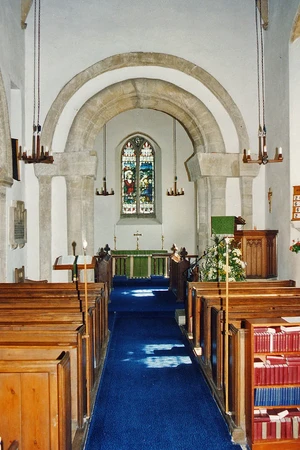
The local church, All Saints, was first built in around 950 to 981, and some Anglo-Saxon sections are still in existence. For example, the archway in the photo opposite dates back to that era. The church has grown over the years with sections being added in the 12th, 14th, 19th, and 20th centuries. There are six bells in the tower, with the oldest being cast in 1399.
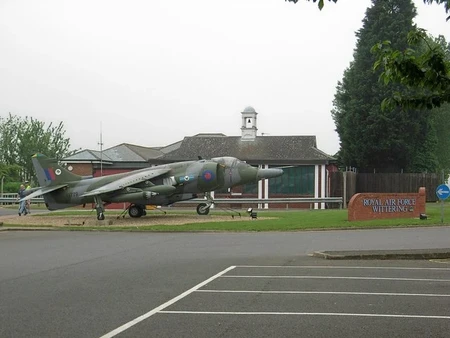
In 1916, the Royal Flying Corps, a predecessor of the Royal Air Force built a base on the edge of the village. Now known as RAF Wittering, it was an important base during World War II and later became the home to part of the British Nuclear Strike Force in the 1960's. After a spell as the base for inflight refuelling aircraft, RAF Wittering is now a logistics and support facility.
Dundrum
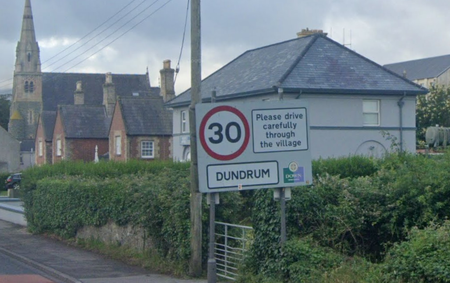
Located on the south east coast of Northern Ireland, Dundrum has been a settlement since at least the 12th century. It's name comes from the Irish Dún Droma, meaning 'fort of the ridge'.
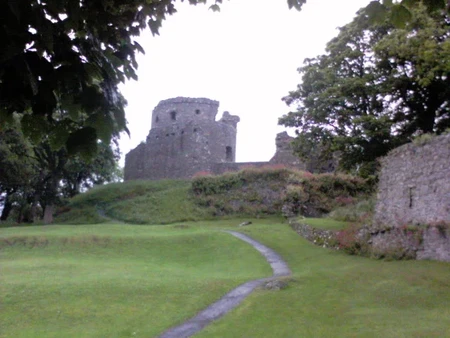
The village is best known for it's ruined Norman castle. First built in the early 13th century to guard the land routes from the bay to the interior. There were various changes of ownership over the following centuries as many factions took over the area. The most recent battle was fought in the English Civil War.
Dundrum Bay was an important port for many years until it was forgotten in favour of deeper harbours in Belfast and Warrenpoint. At one time a ferry service operated from Dundrum to Whitehaven in Cumbria across the Irish Sea. The bay was a commercial port until 1984.
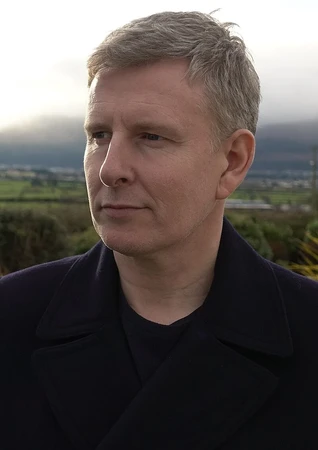
Dundrum was the birthplace of Irish comedian and TV host Patrick Kielty. He was born in 1971 and is the host of the Late Late Show on Irish TV station RTE1, as well as presenting a radio show on BBC Radio 5. patrick's father John Kielty was shot dead by the Ulster Freedom Fighters (UFF) in 1988. He was due to be the witness at a trial involving racketeering.
Beeswing
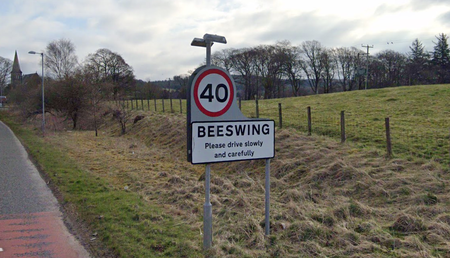
Beeswing can be found in Dumfries and Galloway in Scotland on the A711 between Dumfries and Dalbeattie. The village has had other names in it's past. It was called West Park of Loch Arthur because the first house was called West Park. When it grew in size it became Scalte Row which means a "row of houses with slate roofs"
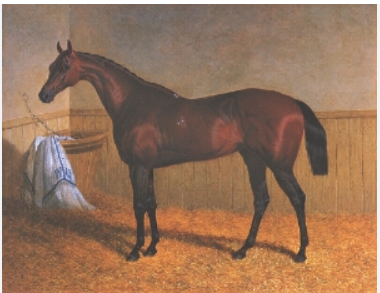
The village then became Beeswing. It was named after a famous racehorse of the time, a much loved horse that was thought to have been the greatest of all time. Between 1833 and 1854 she was entered into 63 races, she won 51 of them, and in the rest she was second. She won the Ascot Gold Cup in 1842, the Newcastle Cup six times, and she retired after winning the Doncaster Cup for the fourth time.
Nearby is the Loch Arthur Community, a working farm where people with learning disabilities live and work alongside volunteers and whose mantra is to "recognise the dignity and uniqueness of each human being and not distinguish between those who are called disabled and those who are not"
Slaughterbridge
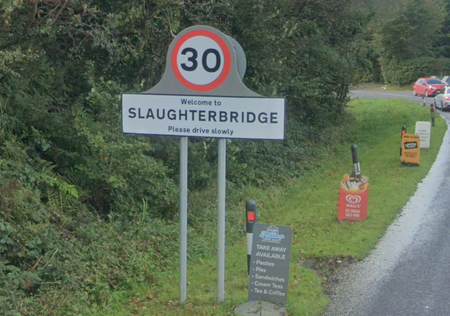
Slaughterbridge is part of a three settlement village along with Teague and Camelford Station. It's name comes from the Old English word slohtre meaning "marsh" and not the word associated with killings.
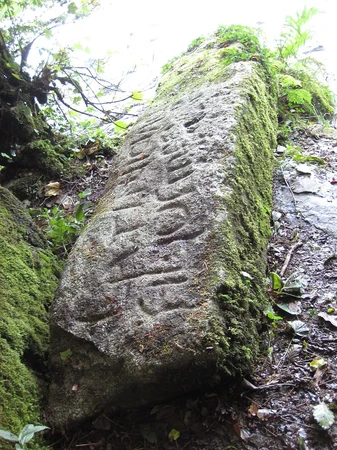
Next to the river in Slaughterbridge, there is an inscribed stone known as the Worthyvale Stone. It's name comes from the Hall that owns the land where it lies. It is inscribed in Latin and Ogham, a primitive Irish and Pictish alphabet. It dates from the 6th century and is thought to commemorate an unknown Celtic chieftain. It is often referred to as King Arthur's Stone, local legend states that it marks the place where King Arthur met Mordred for the legendary Battle of Camlann in 537. It is also thought that nearby Camelford was the site of King Arthur's Camelot. Mainly due to the name of the town and the River Camel on which it stands.
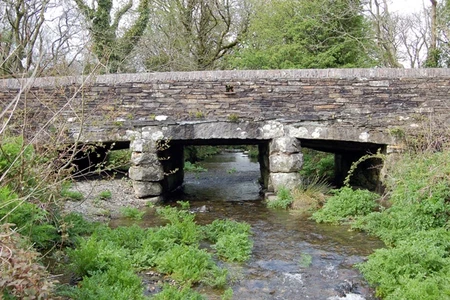
Obviously, Slaughterbridge as a village name would be pretty silly if there wasn't an actual bridge. This three span stone bridge carries the B3314 road over the River Camel in Cornwall. It is protected by English Heritage as a Grade II Listed building.
Blackgang
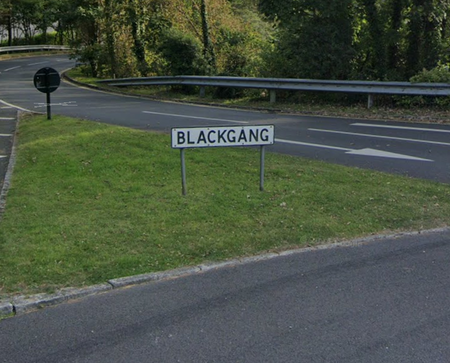
Blackgang is a village on the Isle of Wight that is slowly falling into the sea. Historically, the area was a haven for pirates and smugglers. The name of the settlement comes from the Old English blaec and gang, meaning the dark path – probably the path along the bottom of the nearby ravine known locally as a "chine".
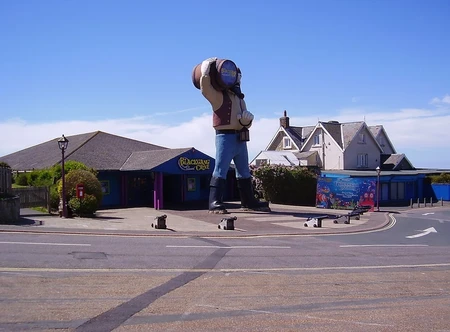
Blackgang Chine is the name of a theme park in the village. It is the oldest amusement park in the United Kingdom and was opened in 1843. The theme of the park is pirates and dinosaurs, both being a feature of the area, although the dinosaurs were a lot earlier than the pirates by a few million years. The coast of the Isle of Wight is littered with fossils of various dinosaurs.
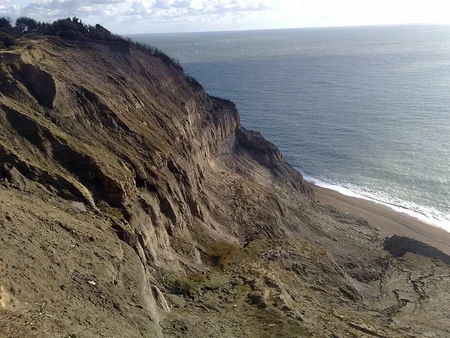
Over the whole of the 20th century, there have been landslides on the cliffs around the area. The most devastating occurred in 2008, the erosion taking away the coastal road. The cliffs are eroding at an average rate of 3.5m (11 feet) per year. Despite this the park continues to entertain many tourists each year, although parts have been moved or lost over the years.
Indian Queens
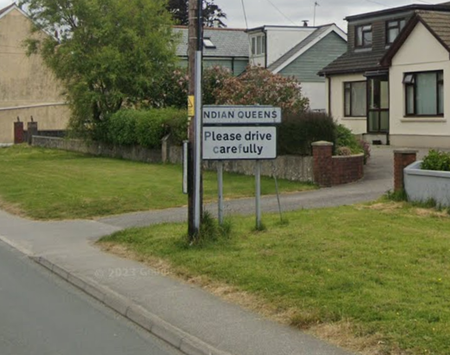
Indian Queens is located just off the A30 in between Bodmin and Redruth in Cornwall. It used to be a "bottleneck" for travellers with queues of several miles until the village was finally bypassed in 2005, almost twenty years after the first proposal for the road.
The village was named after a pub of the same name, that dated from the 18th century. There are several theories on the origin of the name, an inscription on the porch of the inn told the story of a Portuguese princess that stayed in the inn on her way from Falmouth to London. Her dark appearance caused the local people to assume she was Indian. It has also been suggested that the pub was named after Queen Victoria, who was Empress of India.
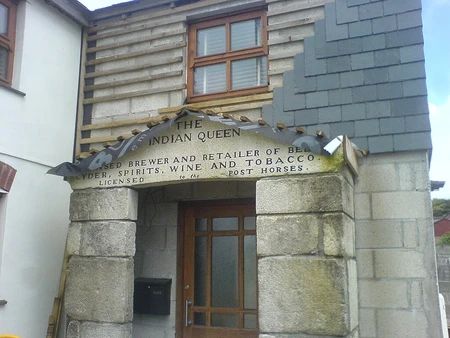
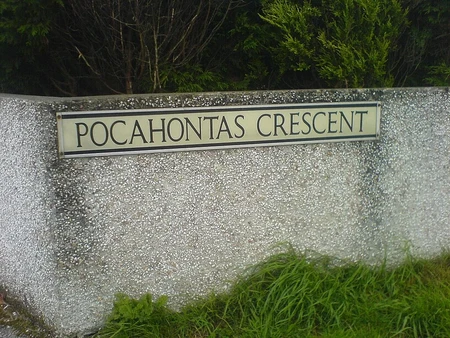
However, the name of the pub predates Victoria by almost a hundred years. Another discounted theory is that it was named after Pocahontas, the indigenous American that came to England. This theory, despite having no evidence to support it, is often stated as the origin, so much so that a housing development in the village named a road after her.
Summary
I'm thinking of maybe making one of these blogs for a number of other countries, what do you think? I personally think the idea has legs, although there may be a small conflict with different languages, as I mentioned in the Introduction. Perhaps I should stick to the English speaking countries, or just add a disclaimer to the ones that are in a different language. I know of a few places in France that may be suitable, but the names probably don't appear strange if you don't view them in English. But then, this is an English speaking blog, so readers, I would presume, will have a reasonable grasp of the language. Please, let me know what you think.
For now though I shall carry on my research into some place names from elsewhere. I'm not sure about the US, I may have to write one for each state, there are so many strange names. Maybe that's the way to go? Six village or town names from each US state, or Canadian province, or Australian state. That should keep me busy for a while.
Thanks for reading, and please comment any thoughts you may have, even criticism is welcomed, and I will try to reply to each comment.
Bye for now!
Or do you mean just a generic term for somewhere that is remote or backwards? In that case we usually just hint that the folks are inbred. or call it "the back of beyond".