

Five Islands of The Americas - Part 2
First published: Saturday July 13th, 2024
Report this blog
Introduction
I can see the light at the end of the tunnel! As long as it isn't a train coming the other way, I should be OK. Just got to finish off South America, then write Central and North America and that's it! Should be a breeze.
In this blog, we shall travel further around the southern continent of the Americas ending up in Venezuela. Another five islands with a smattering of history and interestingness. (Is that a word, I don't think so, but then at this point in this series, I'll be honest and say, "I don't really care". Sorry, I'm fed up with islands now)
So, without further ado, let's get on with the list....
El Fronton (Peru)
El Fronton is a dry, and deserted island seven kilometers off the coast of Peru, near to Callao, just about halfway between the country's northern and southern borders.
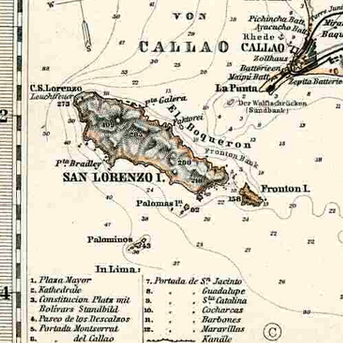
Until the early 19th century, the island was inhabited only by pirates and privateers, and was also known as Dead Mans Island.
After this, the island, like many others, became a penal colony. It was a maximum security prison that later held many political prisoners.
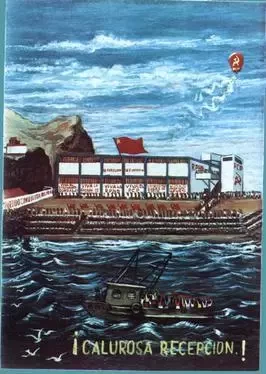
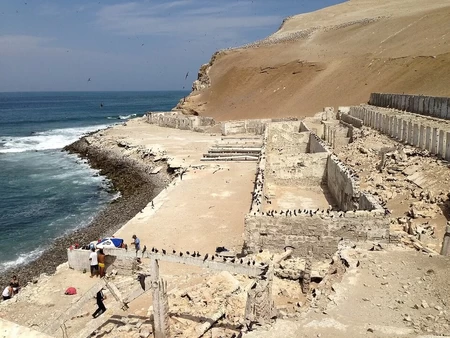
On June 18, 1986, the Shining Path led an uprising in this and other prisons which led to the Peruvian Navy being sent to the island. Many of the prisoners were killed in the rebellion, leading to the government being investigated by the American Court of Human Rights.
Regular tours of Fronton and the larger San Lorenzo island can be chartered from the port in Callao on the mainland.
Youtube drone footage of the island.
Floreana Island (Ecuador)
The Ecuadorian coast doesn't have many islands, at least not many with a history to write about. Fortunately, there is an archipelago that is a part of Ecuador called The Galapagos Islands. This group of islands is situated some 900km or 560 miles east of the South American mainland.
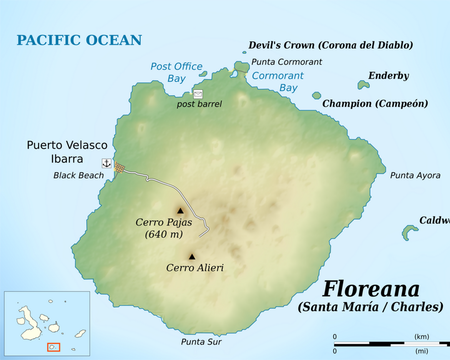
The island has been known by several names over the years, the Spanish called it Mercedes Island, not after the car but in honour of the president of Ecuador's wife. It has also been called King Charles Island in honour of the king of England at the time. Not the current king but Charles II.
Due to the island being relatively flat and with a supply of fresh water and flora and fauna, it was a regular stopover for whalers and other seafarers. Whalers started a mail system from the island with a barrel where travellers could place letters. Visitors would then sift through the mail and take any they could deliver by hand. The barrel mail system is still functional today after over 200 years!
In 1820, a prank by a crew member of the whaling ship "Essex" caused a fire that swept across the whole island. The ship's cabin boy returned many years later to find a wasteland with no trees, nor plants of any kind. It is believed that the fire caused the extinction of several animal species.
When Charles Darwin visited in 1835, he saw no sign of the Floreana Tortoise, and assumed it had been wiped out by whalers, pirates and visitors. No native tortoises remain on the island.
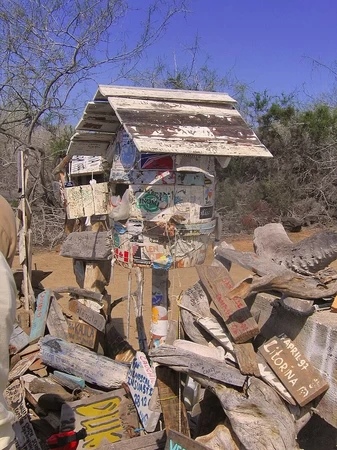
Visiting the island involves first getting to the Galapagos archipelago. Regular flights are available from several countries. There are then several tour operators within the islands that organise visits to Floreana as well as most of the other islands.
This YouTube video documents a visit to the island.
Diitabiki (Suriname)
This island isn't on the coast, but is in the Tapanahoni River in the eastern part of Suriname close to the border with French Guiana. The name translates as "Three Islands".
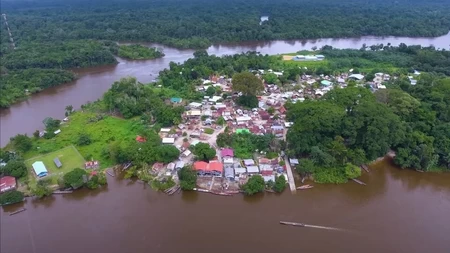
Diitabiki is the residence of the Chief of the Ndyuka people, descended from African slaves brought over by the Dutch to work in their plantations in the 17th and 18th centuries. many slaves escaped and fled to the surrounding jungle, where they grouped together to form a community for protection from slave masters. Villages were built on river islands for greater security.
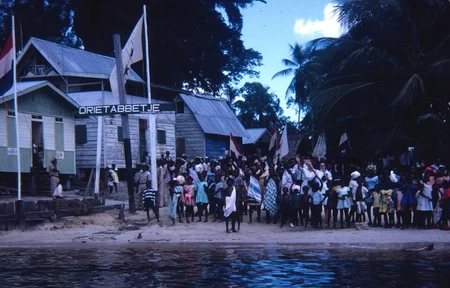
The island has its own airstrip that is served by scheduled flights from the capital, Paramaribo. Several holiday resorts have been built nearby that promote eco-tourism.
The main way of visiting the island and village is by air via Gum Air and then by river boat to the village.
This YouTube video shows how the village is hidden amidst the jungles of Suriname.
Fort Island (Guyana)
Another river island, this one is closer to the sea, being just 16km (10miles) from the mouth of the Essequibo River in the north of Guyana.
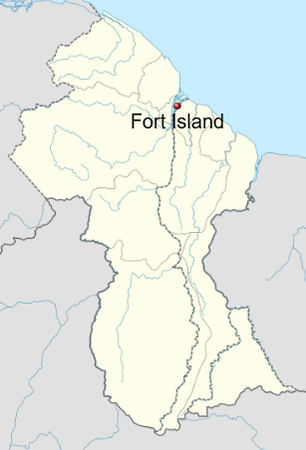
In 1679, the incumbent Dutch governor ordered the construction of a fort on, the then named, Flag Island. The following governor decided that a fort made of bricks would be more suitable and ordered its construction. (It reminds me of a story about three pigs, but that's for another day). Fort Zeelandia was completed in 1744 and its ruins still stand today.
In 1752, a courthouse was built that still stands, and is today the oldest building in Guyana.
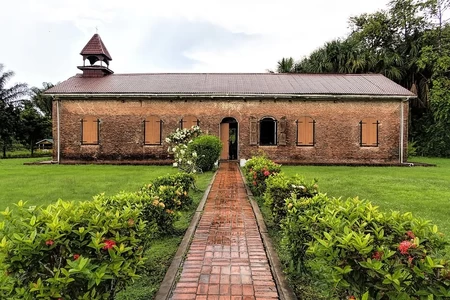
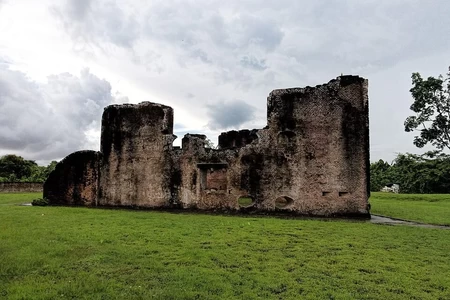
The island is inhabited and the most recent count in 2021 showed 95 residents involved in mainly agriculture and fishing.
Getting to the island is by the ferry between Parika and Bartica that calls at Fort Island. A new harbour is under construction to promote tourism.
This website is a report of a visit to the island in 2014.
Ankoko Island (Venezuela)
Ankoko Island is situated where two rivers meet, the Cuyuni and the Wenamu Rivers, on the border between Venezuela and Guyana.
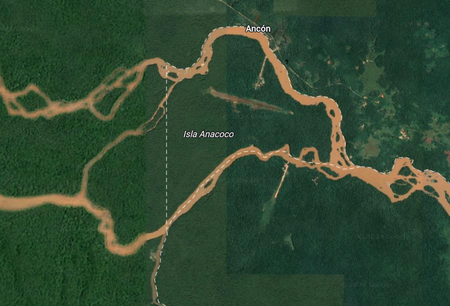
The island's ownership has been disputed since the early twentieth century. It was originally split in half in 1905 and was partly owned by British Guiana. In 1966, just five months after Guyana gained independence from the UK, Venezuelan forces crossed the border on Ankoko Island, and have been there ever since. A military base and airstrip were quickly constructed and despite protests from the Guyanian Government, Venezuela remains in control.
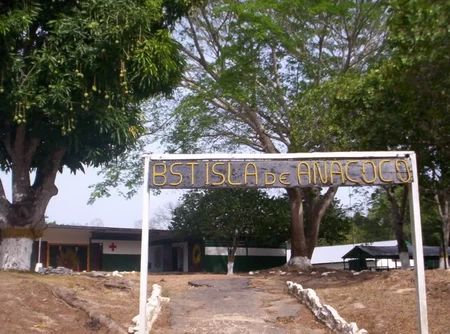
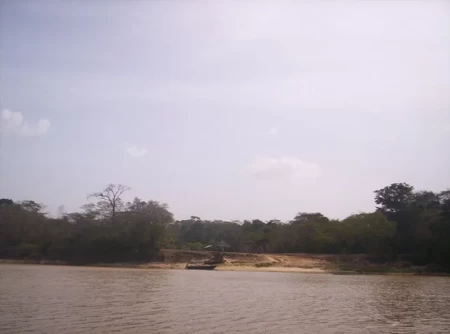
Worryingly for the Guyanese, Venezuela has recently built a bridge to the island and there is a build-up of military equipment at the base.
Although it may be possible to reach the island by river or even air, under the current climate it would probably be unwise.
This short YouTube video shows some of the island but it was made in 2012.
Summary
That's South America done....but "Where's Colombia?" I hear you shout. Don't worry, Colombia features in the next episode along with Central America as far as the Mexican border. Then the final episode of my Five Islands series will be Mexico, USA, and Canada. Once that is finished, I will be concentrating on my next blog project, sorry, not telling yet, but I have already started it in the background.
So for now, I'll try and finish this series in a couple of weeks or so, if I can, and then crack on with the new stuff.
Once again, thanks for reading my ramblings and stay safe !
Nwas blog!