
Other Capital Origins ~ Part Five
First published: Sunday February 23rd, 2025
Report this blog
Introduction
Part Five. And we're about halfway around the world, but that doesn't mean there's only five more. I still don't know how many episodes are in the series, this one will only skirt around Australia and the rest of the South Pacific. One thing is certain, I won't be doing the same thing with every county of the US, Freestater has already shown an interest in doing that, and I have given him my blessing. I wish him the best of luck. He must be mad!
I'm back to full health now, and back at work, so I haven't as much time on my hands. However, I will endeavour to write these blogs in a timely fashion, but they will take longer than the last three.
I can't think of anything else to write at the moment, so without any more delay, here's the first one....
Avarua ~ Cook Islands
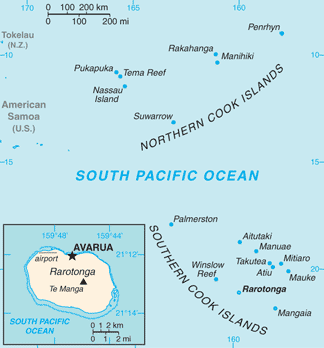
The Cook Islands are a self-governing archipelago that is in free association with New Zealand. This means that the residents have the right to be New Zealand citizens, and have a free trade agreement with New Zealand, whilst legislating their own laws and taxes. The Cook Islands were given the name of Gente Hermosa by the early Europeans, meaning "beautiful people". However they were named the Cook Islands after a visit by Captain James Cook in the 1770s. The islands' official name in Cook Islands Māori is Kūki 'Āirani, a translation of the English name.
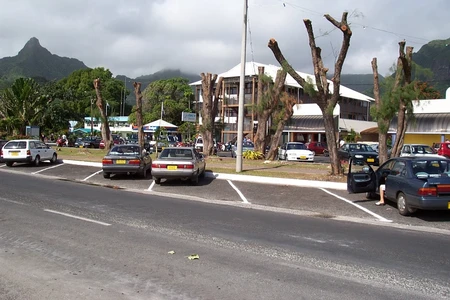
Avarua is the capital of the Cook Islands. It has a tropical rainforest climate and in 2024 became a sister city to Honolulu, Hawai'i. The name is of Cook Islands Maori origin, a language similar to New Zealand Maori but with some distinct differences. The name means "Two Harbours"
AVARUA = TWO HARBOURS
Alofi ~ Niue
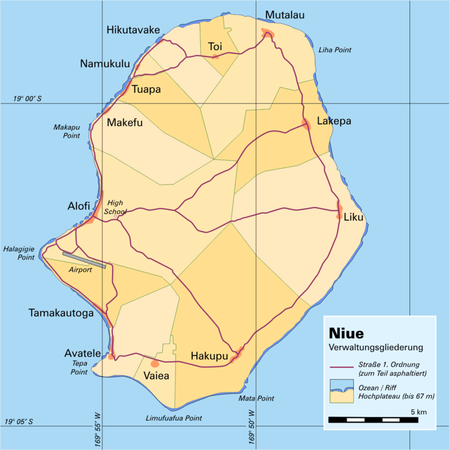
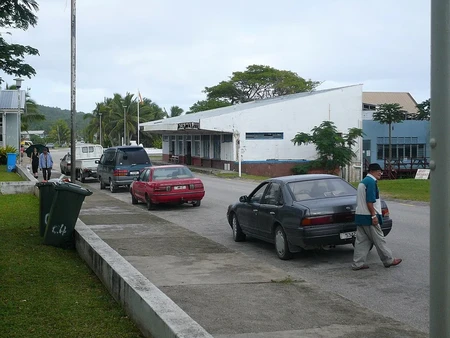
Like the Cook Islands, Niue is a self-governing nation in free association with New Zealand, and has the same rights and regulations. Niue is one of the largest coral islands and is sometimes called "The Rock" or "Rock of Polynesia". The first Europeans to sight Niue sailed with Capt. James Cook in 1774, he made three attempts to land without permission and renamed the island "Savage Island" due to what appeared to be blood on the natives teeth. It was in fact, the residue of the local red banana. A couple of centuries passed before it's original name of Niue was reinstated. Niue is a native name meaning "behold the coconut" !
Alofi is split into two villages, Alofi North and Alofi South, they both serve as the seat of government but South has more official buildings.. With a population of only around 600 it is the second smallest capital after Ngerulmud, Palau which features in my Capital City Origins blog series, follow the link above it's got a great meaning! Unfortunately I can't find any etymology of Alofi. If anyone knows please let me know. I have e-mailed the tourist office in Niue, if I get a reply I will update the blog.
ALOFI = AS YET UNKNOWN
Pago Pago ~ American Samoa
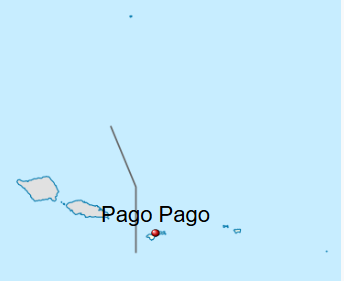
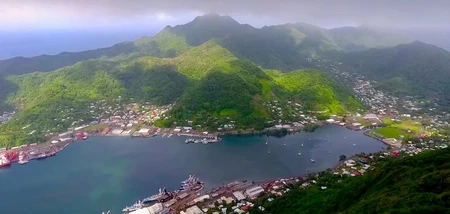
American Samoa, which if you are particularly intelligent, you will be able to surmise is an overseas territory of the USA, and it is near Samoa. It is named American Samoa to distinguish it from the sovereign nation of Samoa next door. Go figure! Traditional Polynesian history suggests a large empire of Polynesia that spread across the Pacific Ocean until Europeans started to "discover" the many islands in the early 18th century. The islands of American Samoa were part of this "empire". Following a conflict between the US and Germany over the islands, Samoa was split into two, with the US taking control of the eastern islands.
The harbour of Pago Pago is one of the deepest and most sheltered in the South Pacific ocean. It is ideal for ships to land fish and other goods, but industry in the city is mainly concentrated on tuna fishing. Pago Pago is home to the worlds largest tuna processing and canning factory. An early name for the city was Long Bay, this was used by the first European settlers. At the same time, the Samoans called it O le Maputasi meaning "The Single Chief's House". For a short time in the 1830s it was known as Cuthbert's Harbour in honour of the first European to enter the harbour, British Captain Cuthbert. The origin of Pago Pago is thought to be Samoan and means "Place of Prayer"
PAGO PAGO = PLACE OF PRAYER
Mata Utu ~ Wallis and Futuna
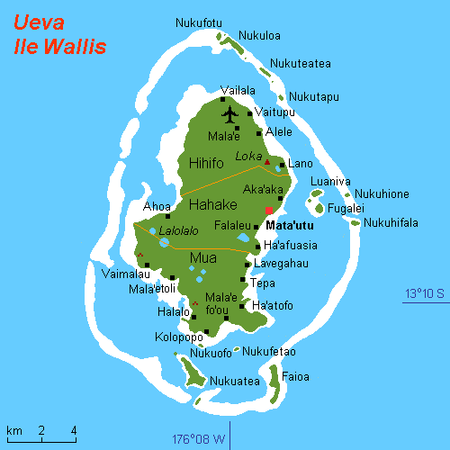
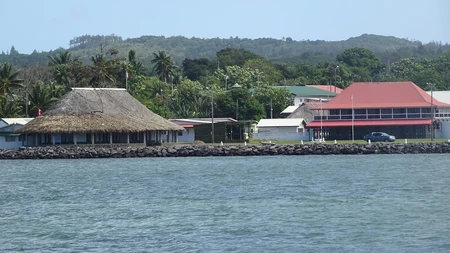
Wallis and Futuna is a French collectivity consisting of two main islands and several smaller islets. French missionaries were the first European settlers on the island, although the Dutch had visited in 1616, and the British in 1767. Wallis Island is named after the British explorer Samuel Wallis, who apparently sailed past them without calling to say "hello". How rude! Futuna is derived from the local language word futu meaning "fish-poison tree". the tree gets its name due to being poisonous, the seeds of the fruit are ground up and used to poison fish, making them easier to catch. The fish are still edible afterwards.
In medieval times, Tongan warriors took over the islands and made Mata Utu their base, recent excavations confirm their presence in the Middle Ages. Following the arrival of French missionaries, that converted the entire island to Catholicism in just five years, France invested in infrastructure to supply food and maintenance facilities to visiting ships. The name Mata Utu comes from the Wallisian language. Mata translates to "eye" and Utu means "to watch over", essentially together they mean "the watchful eye" and relates to the location of the town being in a position to see incoming vessels.
MATA UTU = THE WATCHFUL EYE
Kingston ~ Norfolk Island
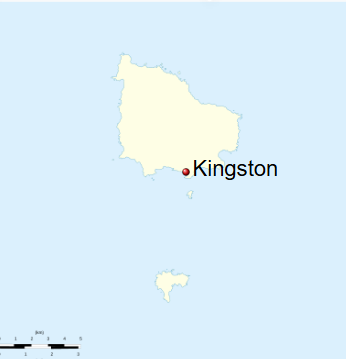
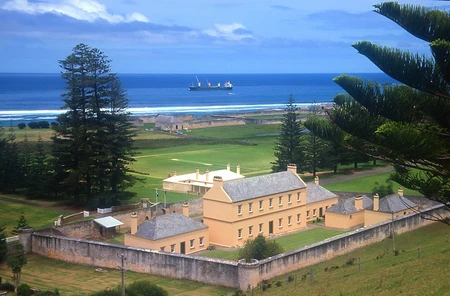
Norfolk Island is an external territory of Australia. The first settlers, early Polynesians, had already left when the island was "discovered" by Capt. James Cook in 1774. He named it after Mary Howard, who was the Duchess of Norfolk. The island was a penal colony of Great Britain from 1788 until 1855, the first prisoners arriving just a few weeks after the settlement of Sydney on mainland Australia. In 1856, permanent residence began with the relocation of Pitcairn Islanders, after their island became too crowded. 193 people left Pitcairn, but 194 arrived following a birth on board the ship.
Kingston is the second oldest settlement in Australia, after Sydney. Prisoners arrived there just a few weeks after settling on the mainland. There were originally 23 settlers that arrived in 1788 including nine male and 6 female prisoners. The town was originally called Sydney Bay in honour of Viscount Sydney, the British Home Secretary at the time. The man in charge of the 23 settlers was Lieutenant Philip Gidley King and eventually the town was named after him. Kingston derives from King's Town.
KINGSTON = KING'S TOWN (NAMED AFTER PHILIP GIDLEY KING)
Noumea ~ New Caledonia
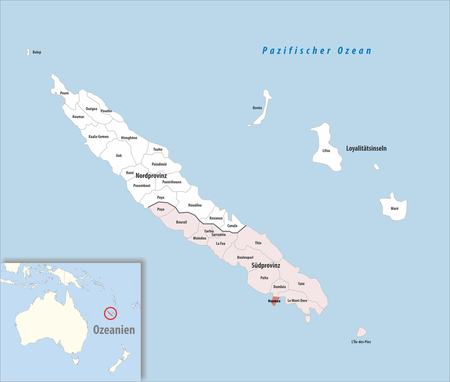
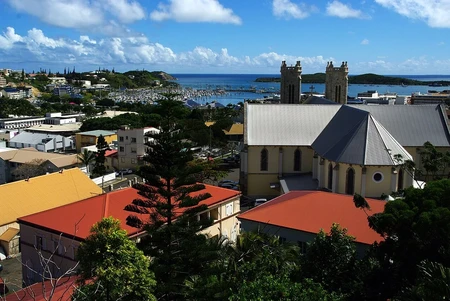
New Caledonia is a French overseas territory, however there have been three referendums on independence, none of which created a "yes" majority. The island was first sighted by James Cook, (yes, him again. He gets about more than Chris Columbus) in 1774, however the island had been inhabited by Polynesians since around 1600BC according to archaeological evidence. The island reminded him of Scotland, so he called it New Caledonia, Caledonia being the Latin name for Scotland. The island has a chequered history, the first trade items were sandalwood, but when the demand dropped the islanders turned to the slave trade. There is also evidence of cannibalism on the island.
The first settlers in Noumea were British, however just three years later, the French moved from the north of the island taking over the settlement and calling it Port-de-France. It was renamed Noumea in 1866. During World War II, the city served as a base for US operations in the South Pacific, and there are neighbourhoods today that reflect this history, one is even called "Motor Pool". Apparently, the name Noumea comes from the local language of Ndrumbea, however, many sources suggest it is French. I can't find anything that describes its etymology just the fact it is the capital of New Caledonia. I've failed again! I have e-mailed the tourism department but as yet, no reply!
NOUMEA = ?
Flying Fish Cove ~ Christmas Island
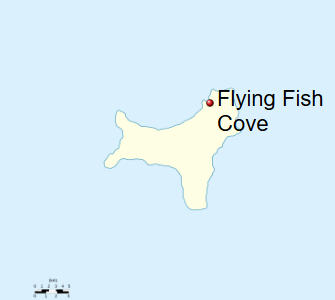
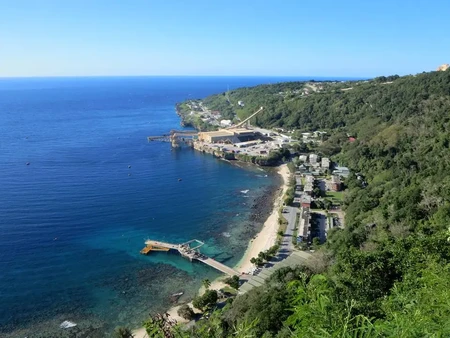
Christmas Island is an Australian external territory, however since it's discovery in 1615 it has been in the hands of the British, and the Japanese before it's transfer from Singapore to Australia in 1958. The island has been a source of phosphates due to bird guano for all of this time. It was named by Capt. William Mynors of the East India Company, when he sailed past it on Christmas Day in 1643 on board the company ship Royal Mary.
The island's main settlement, Flying Fish Cove, is named on many maps as simply "The Settlement", it is home to around 1600 people and is nowadays a centre for SCUBA diving and recreation. The town was established in 1888, although it is named after a landing two years earlier. Capt. John Maclear discovered an anchorage in a bay, and landed to take samples of the flora and fauna on the island. He named the bay and subsequent settlement after his ship, the HMS Flying Fish
FLYING FISH COVE = NAMED AFTER THE SHIP HMS FLYING FISH
West Island ~ Cocos (Keeling) Islands
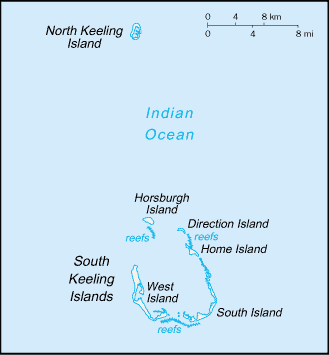
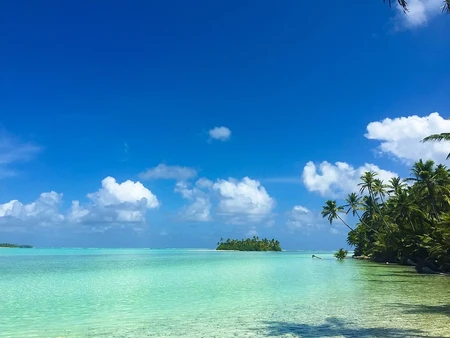
The Cocos (Keeling) Islands are an Australian external territory that is located about midway between Australia and Sri Lanka in the Indian Ocean. The territory's dual name reflects the fact that the archipelago has been called both "The Cocos Islands" and "The Keeling Islands" in the past, as well as "The Keeling-Cocos Islands", "The Cocos-Keeling Islands" and the "Borneo Coral Islands". The name was officially given as Cocos (Keeling) Islands in 1955. The name Cocos derives from the abundance of Coconut trees and the name Keeling comes from William Keeling, who discovered the islands in 1609.
There are only two permanently inhabited islands in the group, Home Island and the capital West Island. Home Island is the most populated. It was revealed in 2013 that the Australian government operates a listening station on West Island. Quite simply, West Island got it's name because...wait for it...it's in the west of the archipelago. Who would have guessed!
WEST ISLAND = ISLAND IN THE WEST
Saint-Denis ~ Reunion
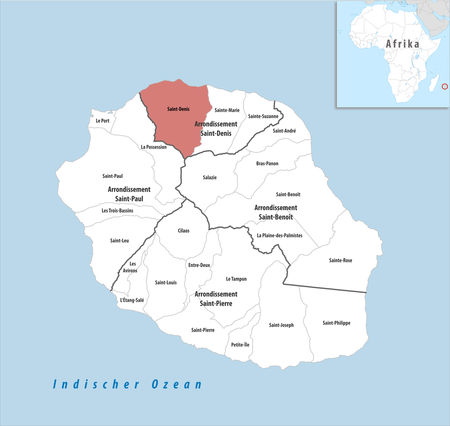
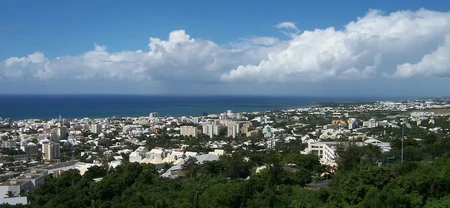
Reunion is a French overseas department, which means it is as much a part of France as Paris. flights from France to Reunion are domestic flights, and citizens are French with the same rights, the Euro is the currency and it is part of the European Union. Owing to it's strategic location there is a large French military presence on the island. It was discovered in the 17th century and named Isle Bourbon after the House of Bourbon that ruled France at the time. After the French Revolution it was renamed Reunion Island. However in 1806 it was name Isle Bonaparte in honour of Napoleon, although in 1810 it became Isle Bourbon again. It was eventually renamed Reunion in 1848. Reunion is French for "meeting" and is thought to refer to the meeting of the troops of Paris and Marseilles during the French Revolution.
Saint-Denis was founded in 1669 by Etienne Regnault, who became the first governor of the island. It was settled in the north of the island due to the land being more fertile than the south. The commune of Saint Paul was established earlier on the west of the island because the anchorage and weather was more favourable. Both settlements served as the capital until Saint-Denis was chosen as the permanent capital in 1738. Saint-Denis was named after one of the ships that had visited in 1668 by a friend of Etienne.
SAINT-DENIS = NAMED AFTER A SHIP OF THE SAME NAME
Mamoudzou ~ Mayotte
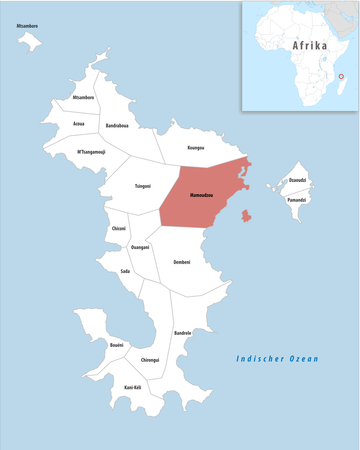
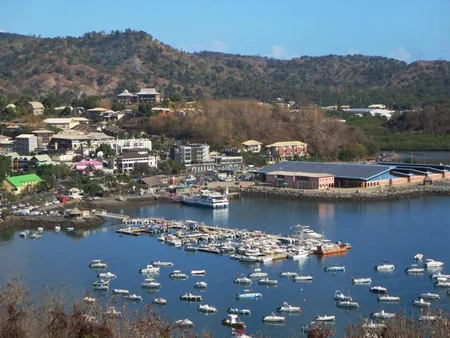
Our final offering in this blog is Mamoudzou in the French Overseas department of Mayotte. Like Reunion, and French Guiana, it is part of Metropolitan France and part of the Eurozone. It is nestled between Madagascar and mainland Africa close to the island nation of Comoros. There are two main islands of Mayotte, Grande Terre and Petite Terre, as well as a few islets. The islands were first populated from Eastern Africa and then by Arabs, they brought Islam to the islands that remains the dominant religion today. The island was then taken over by Madagascar, who sold them to France in 1841. The name is believed to come from Mawuti, a shortened version of the Arabic name Jazīrat al-Mawt meaning "Island of Death", possibly referring to the dangerous reefs that surround the islands.
The original capital of Mayotte was Dzaoudzi but it was moved to Mamoudzou in 1977. In December of 2024, Cyclone Chido destroyed most of the homes, administrative buildings and parts of the town hall in Mamoudzou. In the local Shimaore language Mamoudzou is known as Momojou and this may be the origin of the name. However, once again I am thwarted. I cannot find any etymology of Mamoudzou, or for Momojou for that matter. Once again, e-mails have beensent, but if my experience with the capitals of Oceania are anything to go by, I shall be waiting a long time for a reply. Sorry!
MAMOUDZOU = ? YET ANOTHER QUESTION MARK!
Summary
Another one written and published. It seems that almost all of these entries in the last five blogs, with the exception of three of the UK capitals, French Guiana, and Antarctica, have all been islands. In the next blog in the series, possibly the final one, there are a couple more islands and then some of the land-based capitals, if you know what I mean. I shall be visiting Tristan da Cunha first and then see where we end up.
If the next one in this series is the last, which at the moment I think it will be, then don't panic, I have a few other ideas for blogs in the pipeline. Some are similar to these but not about places, others are stand alone. But the main one, I think, may be an idea I had last week. My eldest grandchild, who is 8 years old, often stays with myself and my wife on the odd weekend. I have decided now that Spring is around the corner, that he and myself will go on a visit to somewhere local. I then thought I could write a blog about the visit, in the style of a travel guide, but more in depth. Where I live in Cheshire is steeped in history, the town I live in has it's roots in times prior to the Roman Empire, and there are many places I (we) could visit. Would anyone be interested in reading about a single place in a blog ? Let me know in the comments!
So. that's it for now. Hope you enjoy reading it as much as I did making it, although I am waning away from this genre if I'm honest, I have made quite a few blogs about etymology now and I think it is getting a little stale. I'm not saying I won't return, but I may make a few differnet blogs in the meantime. Watch this space as they say.
Au revoir for now readers, and I will be back soon!
For Mayotte, I found nothing. Some French websites mention the fact that it would also derive from Mawuti but I highly doubt it.
For Noumea, I found a source saying that it would mean "sunrise" in Kanak. It needs to be confirmed and I'll try to find other info about that but it makes a bit more sense than the previous one, I guess.
Question, have any of these email ever responded?
Northern Marianas and Guam will be in the next one.
Although I never said that this would be an all inclusive series.
"In summary: Mamoudzou = Mahmud (Arabic name) + -zou (Shimaore locative suffix) = "Place of Mahmud.""
I can't guarantee it didn't hallucinate :p
Thanks for your help.
Thanks for bringing us another entry to this series