
Other Capital Origins ~ Part Six
First published: Saturday March 1st, 2025
Report this blog
Introduction
Well, here we are again, will this series ever end? Maybe this is the last one, maybe it isn't.
It was pointed out to me in the comments section of Part Five, by Xtrordinary, that I had missed out some places in the Pacific. Three of the five locations mentioned do not have an officially designated capital city. To be precise, the British Indian Ocean Territory is administered from London, TAAF (the French Antarctic area) from Reunion, and according to Wikipedia, Tokelau doesn't have a capital. Tokelau, incidentally, means "North Wind" in the local language. But two of them do. Now, I could say that I omitted them for purely political reasons, or I could have lied and said they are in an upcoming blog (Wait, I think that is what I actually put in a reply to Xtrordinary), anyhow, the real reason is quite simply...I forgot! OK, OK, I know, it's an age thing. That's why when you guys make comments about things like this, I really appreciate it, honestly I do. I'm not just saying it, I am really grateful to have feedback on my blogs in whatever way. Alright, I may be upset if you said you hated it, and I shouldn't write anymore, but hey, you're entitled to your opinion. I won't be offended. I'm rambling again aren't I? Sorry.
So, anyway, lets get on with Part Six, which may strangely jump back to the Pacific Ocean before jumping back to the Atlantic. This one is a little eclectic, much like my musical tastes.
Saipan ~ Northern Mariana Islands
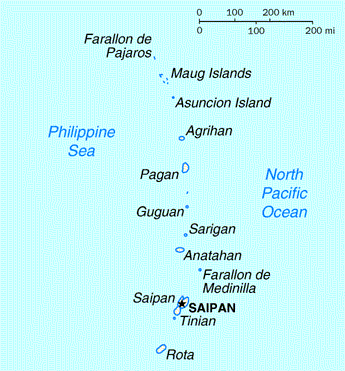
The Northern Mariana Islands are an unincorporated territory of the United States. The southernmost island in the chain, Guam, is a separate US territory, more about that later. Over the years, NMI have been under the control of the Spanish, German, and Japanese empires, but after WW2 they became part of the United Nations trust territories under US administration until formally joining the USA in 1986, when it's population became US citizens. The islands got their current name in 1668, when a Spanish missionary, Father Diego Luis de San Vitores, named them Las Marianas in honour of the Spanish regent and widow of King Felipe IV, Mariana of Austria. The Mariana Trench, the deepest part of any ocean, was named after the islands.
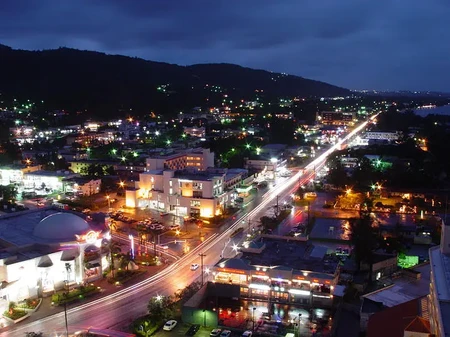
Evidence has been found of inhabitation in Saipan for at least 4000 years, it is thought that the first settlers were from what is now the Philippines. Saipan is also the name of the island, and the indigenous people are known as the Chamorro. It is from their language that Saipan gets it's name. However, the native people of the Caroline Islands further south, claim the name derives from the word, sááypéél, which in their language means "a voyage empty" referring to their legendary journey to the island group.
SAIPAN - A VOYAGE EMPTY
Hagatna ~ Guam
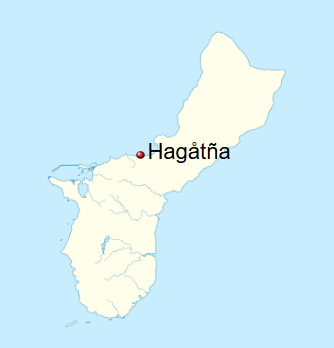
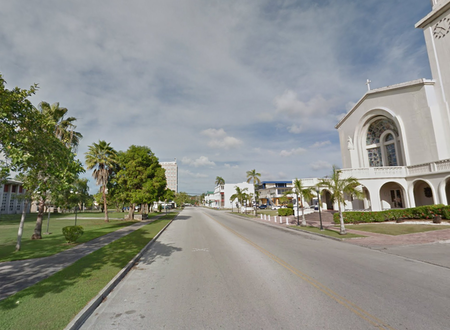
As mentioned previously, Guam is another unincorporated US territory, it was originally part of the Spanish Empire but was ceded to the US after the Spanish-American War in 1899. In 1941, just hours after the attack on Pearl Harbor, Guam was captured by the Japanese. It was retaken by the US in 1944. The indigenous Chamorro people call the island Guåhan from the word guaha meaning "to have" and is thought to refer to the island having everything needed to survive and live there.
Hagatna, or to be precise Hagåtña with it's accents, was from the 18th to mid 20th century the main place of habitation on Guam, however nowadays, it is the second smallest in population. It is still the capital due to the seat of government and is one of the largest commercial areas. During the occupation by the Japanese it was named Akashi meaning "bright stone". In the local Chamorro language Hagatna can be split into two derivations, Hagåt- and -ña. The suffix -na meaning "his or her" and Hagat meaning "blood". So the name of Hagatna means (his or her blood) and is thought to refer to a meaning of "related to".
HAGATNA = HIS (OR HER) BLOOD
Edinburgh of the Seven Seas ~ Tristan da Cunha
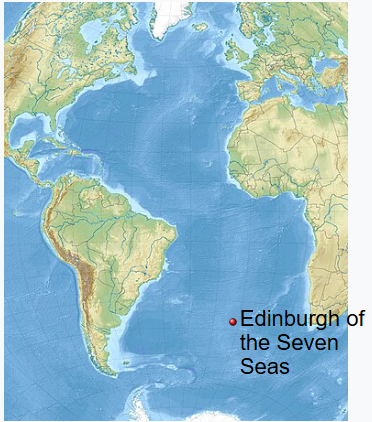
Tristan da Cunha is part of a British Overseas Territory that also encompasses Saint Helena and Ascension Island. TDC itself is a remote group of volcanic islands, the others are Gough Island, Inaccessible Island and the Nightingale Islands. Gough Island is the only other island to be inhabited, mainly by South African scientists that monitor a weather station and flora and fauna year round. Gough is named after Capt. Charles Gough who sighted the island in 1732. Inaccessible is named for it's difficulty in making landfall, and the Nightingales are named after a British captain, Gamaliel Nightingale in 1760. Tristan da Cunha is named after a Portuguese explorer, Tristão da Cunha, who modestly named the island after himself when he sighted it in 1506.
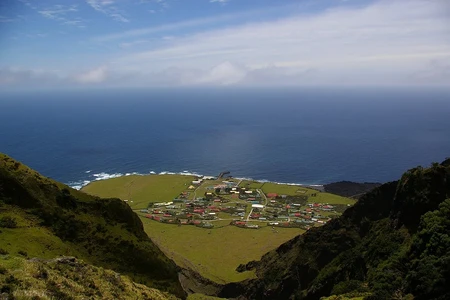
Locally referred to as "The Settlement" or "The Village", Edinburgh of the Seven Seas is the only town on the island. The settlement was founded in 1816 by a sergeant from the Scottish Borders region. A military garrison was established on the island to guard against any French attempts to rescue Napoleon, who was incarcerated on Saint Helena. The military base remained until after World War II. In 1867, the son of Queen Victoria visited the island and the city is named after him, Prince Alfred, Duke of Edinburgh.
EDINBURGH OF THE SEVEN SEAS = NAMED AFTER DUKE OF EDINBURGH
Jamestown ~ Saint Helena
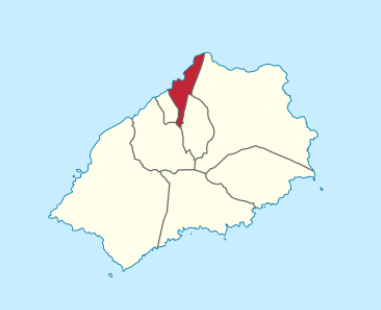
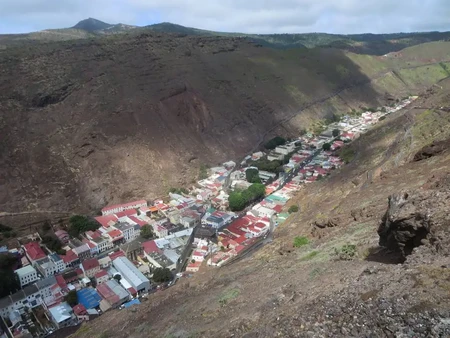
Saint Helena is another part of the British Overseas Territory that includes TDC and Ascension. Saint Helena's most well known claim to fame is as the final place of exile and resting place of Napoleon Bonaparte, who died on the island in 1821 at the age of 51. It was discovered by the Portuguese in the 16th century whilst sailing the trade routes to Asia around the continent of Africa. It became a major stopping point on the journey for the next four centuries until the opening of the Suez Canal. The island was named after the mother of the Roman Emperor Constantine the Great, Saint Helena of Constantinople.
Jamestown was first settled in 1659 by colonists from the British East India Company, although there was a brief interlude when it was occupied by the Dutch East India Company for six months in 1673. The British Navy kept a base at Jamestown to assist in the abolition of the slave trade, and it is thought that at least 25,000 slaves were rescued and repatriated. During WW2 a resupply tanker was sunk in the bay by a German U-boat, the wreck continued to leak oil until a team of divers drained the hulls in 2015. Jamestown is named after James, Duke of York, the then future King James II of England.
JAMESTOWN = NAMED AFTER JAMES, DUKE OF YORK
Georgetown ~ Ascension Island
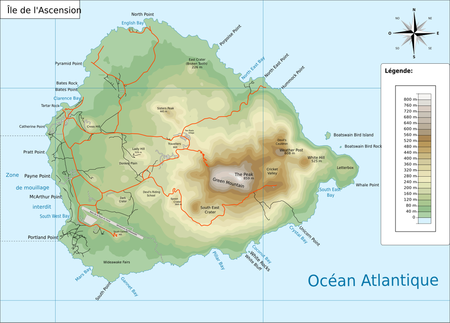
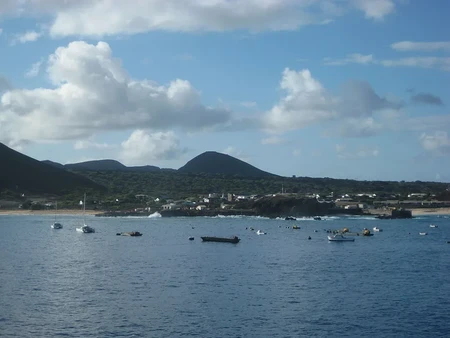
The third and final section of the British Overseas Territory that is known as "Saint Helena, Ascension and Tristan da Cunha", Ascension Island is important as a strategic military location, being virtually in the centre of the Atlantic Ocean. There has been a British garrison on the island since 1815. It was a refuelling stop for Navy vessels, especially during the Second World war and more recently the Falklands War. It is used as a tracking station for the European Space Agency and as a repeater station for the BBCs World Service. It was first sighted by Portuguese sailors heading to Asia, and is thought to have been named after the day it was discovered, Ascension Day, a day celebrating the ascension of Jesus into Heaven.
Georgetown, the capital of Ascension, is the main settlement on the island and the home to the British military garrison. This was initially built to discourage the French from using the island as a stepping off point in an attempt to rescue Napoleon that was exiled on St.Helena. Like it's namesake, Georgetown in Guyana, Georgetown takes it's name from King George III.
GEORGETOWN = NAMED AFTER KING GEORGE III
Funchal ~ Madeira
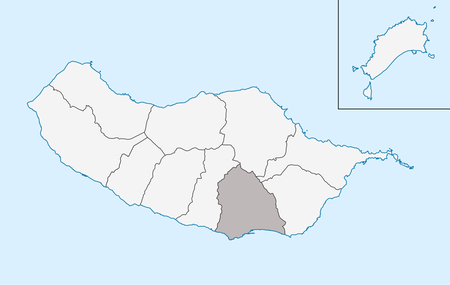
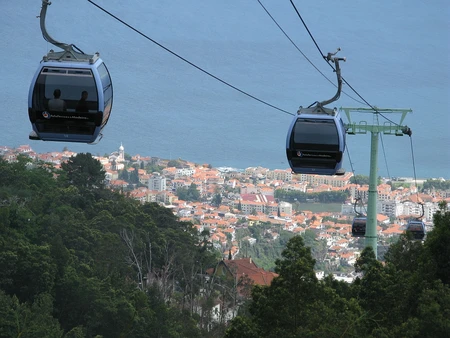
Madeira is an autonomous region of Portugal, in the North Atlantic about 250 miles north of the Canary Islands of Spain. It was discovered by Prince Henry the Navigator, a Portuguese explorer, in 1419. It is thought to have been the first territorial discovery of the "Age of Discovery", a period in history spanning two centuries from 1418. There are however, reports that Madeira may have been visited during Roman and Viking times. there is a prehistoric forest of laurel trees on the island, now protected, that is thought to have been the origin of the name, madeira being Portuguese for "wood".
Funchal is the sixth most populated city in Portugal, and is the main port for tourists and merchandise. the surrounding land is perfect for agriculture and it's sugar industry has been in production for many centuries. Funchal is twinned with around seventeen other places including Honolulu and the place where we started this journey, St.Helier in Jersey. (These blogs don't just write themselves you know.) It's name comes from the abundance of wild fennel that grows there. The Portuguese word for fennel is funcho, added to the suffix -al, denotes "a plantation of fennel".
FUNCHAL = PLANTATION OF FENNEL
Ponta Delgada ~ Azores
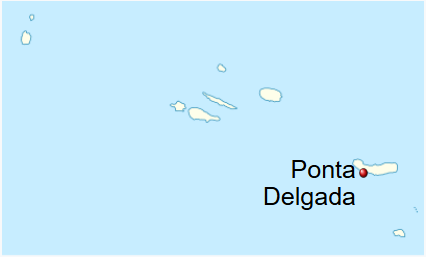
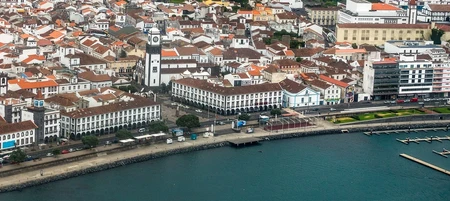
The Azores are another autonomous region of Portugal, they are situated mid-Atlantic about 1400 km or 870 miles west of Lisbon. The islands have served as a waypoint across the Atlantic for centuries, even more so in the early days of air travel when planes had to refuel to make the journey. The islands are located at the junction of three tectonic plates, the North American, the Eurasian, and the Nubian, and as such are seismically active. Although the islands are thought to have been discovered by the Portuguese, Henry the Navigator again, there is evidence suggesting visitors or settlers from as early as 2,000 years ago. The Vikings may also have visited. The name comes from the Portuguese word, açor meaning "Goshawk"
Ponta Delgada isn't the only capital of the Azores, like South Africa, there are three. The others are Angra do Heroismo and Horta. All are on different islands in the group and have different roles. Ponta Delgada (executive capital) is on the island of Sao Miguel (Saint Michael) and means "thin cape" and refers to it's location not Batman. Angra do Heroismo (judicial capital) is on Terceira Island, the third island to be discovered, and means "Bay of the Heroic". The third capital, Horta, the legislative capital, is on the island of Fiail (or Fayal, named for the large number of Faya trees) and is named from the Portuguses word for "orchard", horta. Although Google translate says it means "vegetable garden", I'll let you decide that one!
PONTA DELGRADA = THIN CAPE
ANGRA DO HEROISMO = BAY OF THE HEROIC
HORTA = ORCHARD or VEGETABLE GARDEN
Mariehamn ~ Aland
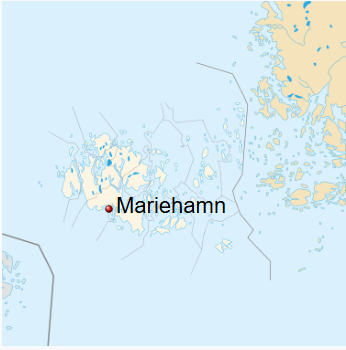
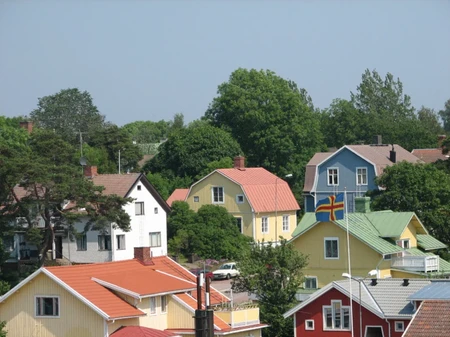
The Aland Islands are an autonomous region of Finland. They consist of around 6.500 skerries, islands, and islets, but only around 60 to 80 have a permanent population. Aland does however, have a land border with Sweden on the tiny island of Market, which is uninhabited but does have a lighthouse. The islands were originally called Ahvaland and there is some dispute over the origins. Some say it derives from the Swedish for "river land", whereas others think it comes from the Finnish word for the perch fish. What isn't in dispute however, is the origin of the name of the capital.
Mariehamn despite being part of Finland is predominantly Swedish speaking as is the majority of the Aland Islands. Mariehamn has a long history with shipping and has two harbours that are virtually ice free despite their location in the Baltic Sea. Ferries calling at Mariehamn take advantage of the islands exemption from the EU Customs Zone, meaning goods can be sold duty-free on board. The city's name comes from the Russian Empress Maria Alexandrovna who was the first wife of Emperor Alexander II. Hamn means harbour.
MARIEHAMN = MARIE'S PORT
Summary
Well, it seems like, for now, that's it. It may appear that this final episode only has eight but with the three capitals of the Azores, there are actually ten capital cities. I could do more and more obscure first level sub-divisions, Canada, Russia and Brazil come to mind, but, if I'm honest with myself, I need a change. Maybe in the future, I will revive the series, but at the moment, that's your lot.
I have an idea for a blog series, that is generally about geography, people, and other stuff, but I need to do a little more research to see if it is sustainable or just a one-off. I think it may be OK, but I need to plan a bit for them. I can't say anymore, because I don't know anymore....yet. Suffice to say, the blogs will have my usual humour (I hope) but be informative as well. Watch this space, as they say.
I also had an idea to bring back the Five Islands blog series by adding some of the missing countries. Russia is a glaring omission, but I feel I also skipped over some of the larger countries like, Canada and the USA by just writing the "Five Islands of North America" type of thing. Those larger countries have enough, well documented islands to deserve their own blog.
Anyway, in the words of Gump, Forrest Gump, "That's all I have to say about that" !
So for now, dear friends, I shall bid you fare the well, for a short time until I work out the direction I am going to take. Like Arnie, I'll be back!
at this point these names are decently meaningful, or predictable, we probably are running out of islands.
anyway, great blog, nice thing to read before going to sleep.
Just for you...
Svalbard comes from Svalbarði which is Norwegian for "cold edge/ridge/turf/beard"
Spitzbergen comes from the Dutch for "Pointed mountains"
The main settlement of Longyearbyen is named after an American industrialist, John Munro Longyear, whose company started mining there in 1906.
Hows that?