
Second City Origins ~ Africa Part 3
First published: Sunday October 6th, 2024
Report this blog
Introduction
As always, I'll just ramble on about something inconsequential at the start of my blog. I wonder if anyone actually reads this bit? I could just put random words together and see if anyone notices, or I could just slip the odd word in that doesn't make sense, wheelbarrow, and check in the comments to see if anybody saw it.
The third part of Africa, the south and south-east, looks to be just as much a challenge as the last one. There isn't much data or information about these second cities on my first port of call in my research, Wikipedia. It is taking me much longer to find out the etymologies of some of these cities, occasionally several hours without success, but I persevere.
Anyway, enough of my procrastinating, let's get on with the show shall we...
Lubumbashi ~ Democratic Republic of the Congo
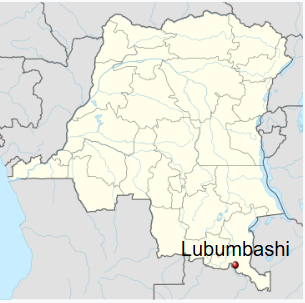
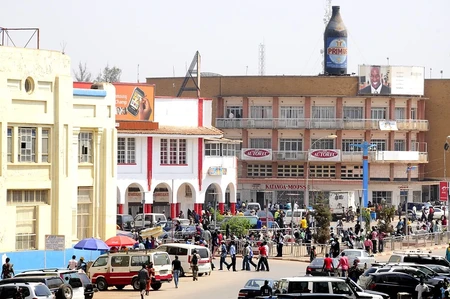
Formerly known as Élisabethville after Elisabeth of Bavaria, Queen of Belgium, Lubumbashi is the centre of the mining industry mainly copper and cobalt. In 1957, it became an autonomous city and held the first election in which indigenous Congolese people could vote.
The first, and only, president of Zaire, Mobutu Sese Seko, renamed many towns that had European origins into more authentic African names.
As with many political figures worldwide, there is a certain amount of vanity. Lubumbashi was named after the first Prime Minister of the D.R.C., Patrice Lumumba.
LUBUMBASHI = NAMED AFTER PATRICE LUMUMBA
Lubango ~ Angola
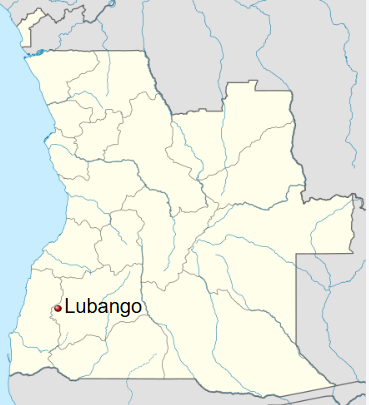
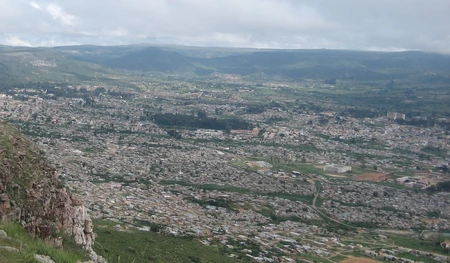
In 1882, Portuguese immigrants from Madeira settled in the area and called it Lubango. They developed the region and started a settlement that the Portuguese government renamed "Sá da Bandeira". It was named after Bernardo de Sá Nogueira de Figueiredo, 1st Marquess de Sá da Bandeira. Following Angola's independence from Portugal, the city was once again renamed to Lubango.
The name Lubango comes from the local Sukuma language and translates to blessed.
LUBANGO = BLESSED
Rundu ~ Namibia
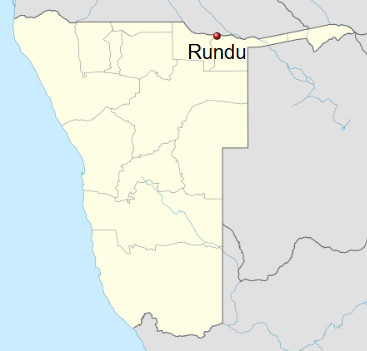
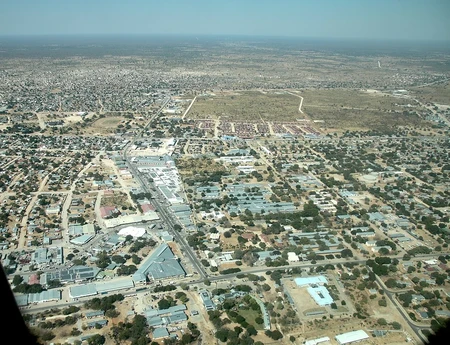
Rundu is one of the fastest growing towns in Namibia, between the 2001 and 2011 censuses the population almost doubled. Many of its residents, however, still live in shacks despite one of its suburbs being named Tutungeni which means "Let's Build".
The name Rundu comes from the VaShambyu people and means "a place of high ground". This is according to an article in the Namibian Online Newspaper.
RUNDU = PLACE OF HIGH GROUND
Francistown ~ Botswana
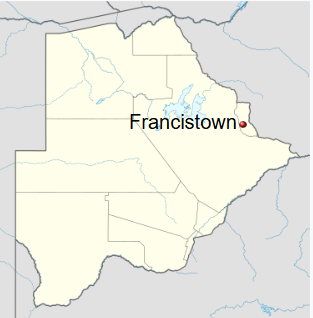
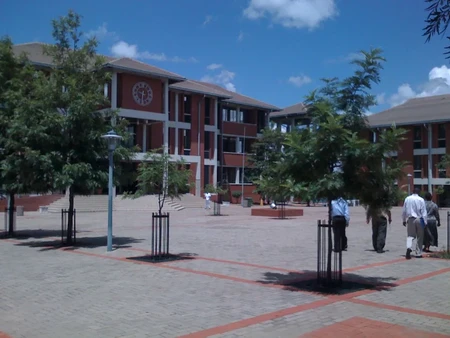
Francistown is the only English-named city in Botswana, it was founded in 1897, and was the main city during the first gold rush in Africa, fifteen years before the South African boom at Witwatersrand.
The city was named after, or even by, one of the first prospectors, a Daniel Francis from Liverpool, England. He acquired prospecting rights in 1869 from King Lobengula, head of the Matabele people.
FRANCISTOWN = TOWN OF FRANCIS
Johannesburg ~ South Africa
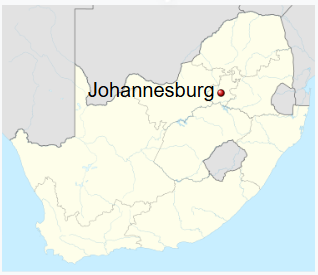
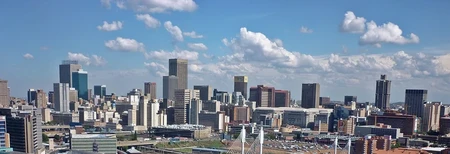
Being the largest city in South Africa, Johannesburg is often mistaken for the country's capital. The city grew from a small farm in 1886 to the mega-city it now is due to the discovery of one of the largest gold deposits in Africa.
The origin of its name is disputed, the burg part obviously means "town" or "city", just like Hamburg or Pittsburgh. However, the Joannes portion of the name could be from several people who were involved in the city's growth in the early years.
1. Christiaan Johannes Joubert - Chief of Mining
2. Stephanus Johannes Paulus Kruger - President of South Africa (1883-1900)
3. Johannes Meyer - First government official in the area
4. Johannes Rissik - Member of a delegation sent to acquire mining rights.
The answer could be any one of these suggestions. It doesn't really matter who is correct because at the end of the day.....
JOHANNESBURG = TOWN OF JOHANNES
Maputsoe ~ Lesotho
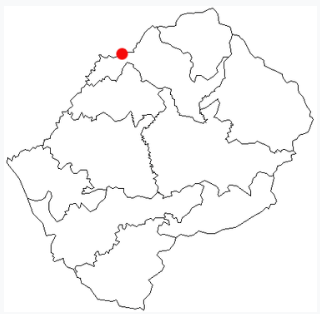
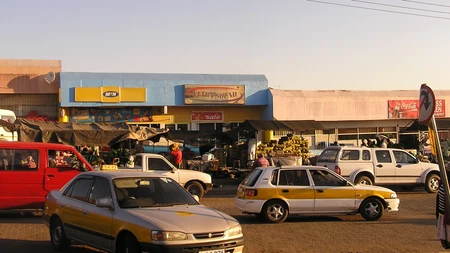
This one might be a struggle, Wikipedia only has nine lines in its entry, but here goes. Maputsoe is a border town situated on the Mohokare River near to Fliksburg in South Africa. Ireland has a NGO based in Maputsoe that was set up by a Lesotho politician whilst she was ambassador to Ireland.
After searching many websites without success, I tried a translation from the local Sotho language. Maputsoe translates to "the blue ones", however, if I split the word into maput and soe I get "trees" and "sorry". Mapu and tsoe brings up "map" and "get out". Other combinations on the same theme come up with "steal the map", and "reward ma" So which is it?
MAPUTSOE = THE BLUE ONES or SORRY TREES or GET OUT THE MAP or REWARD MOTHER.
Manzini ~ Eswatini
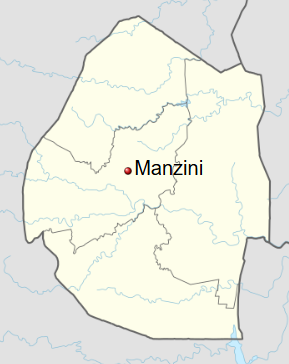
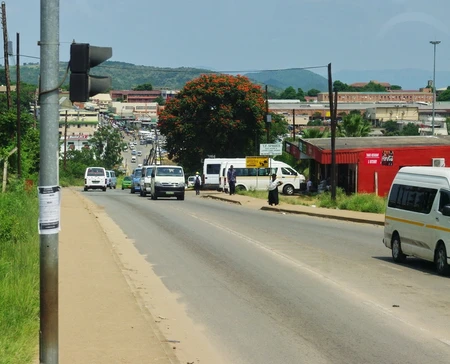
Manzini was named Bremersdorp in 1898 after Arthur Bremer sold his hotel to the British Colonial authorities with the stipulation that the settlement should bear his name. The suffix dorp is Afrikaans for "village".
In 1960, the town reverted to its original Swazi name of Manzini in honour of Chief Manzini Mbokane who was a trusted confident and advisor to King Mbandzeni.
MANZINI = NAMED AFTER MANZINI MBOKANE, LOCAL CHIEF.
Matola ~ Mozambique
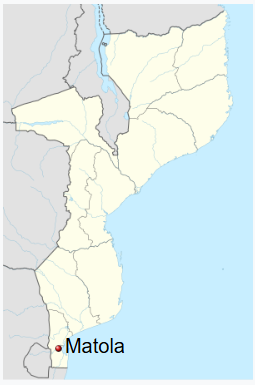
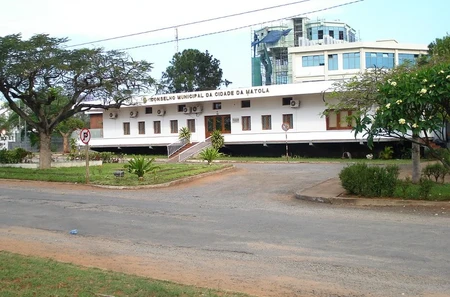
Matola is a city within the suburbs of the Mozambique capital, Maputo. In the city, there is a port and the largest industrial area in Mozambique. The city produces products as diverse as soap, cement, and agricultural items. In 2014, South Korean car manufacturer Hyundai opened a production facility in the city producing the i10 and Accent models.
The name Matola derives from the name of a kingdom in the area that was present at the time of the first colonial visitors. The kingdom was known as Matsolo in the local Ronga language. The Ronga dictionary offers no translation of either name.
MATOLA = DERIVES FROM MATSOLO
Toamasina ~ Madagascar
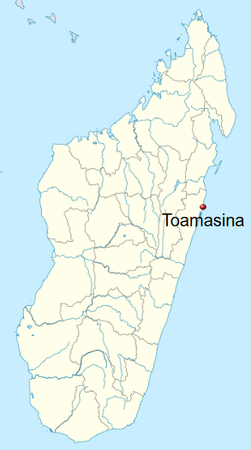
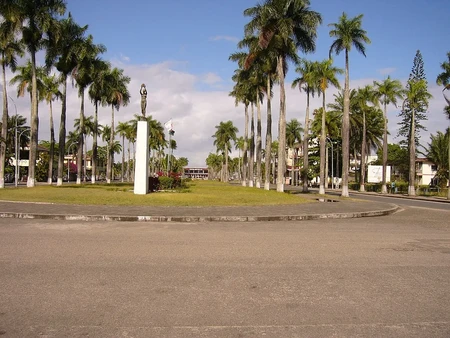
Toamasina is home to Madagascar's largest seaport. Trade goods that flow through the city include food, cattle, gold, and rubber. During colonial times the city was susceptible to diseases like plague and malaria , however since the draining of surrounding marshes there has been a massive improvement.
Toamasina translates to "salty" or "like salt" which makes sense in that it is on the coast of the Indian Ocean.
TOAMASINA = SALTY
Mutsamudu ~ Comoros
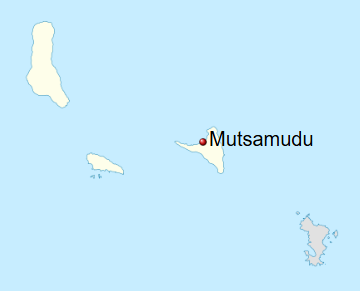
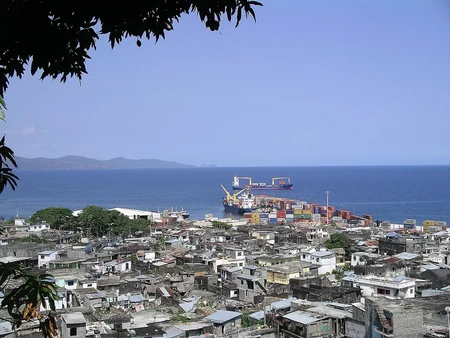
Mutsamudu is the largest city on the island of Anjouan in the Comoros. It is thought to have been founded in 1482 and by the 1700s was the most prosperous settlement in Comoros due to trade between Madagascar and Mozambique being funnelled through the port.
Mutsamudu was a Swahili port, so I tried translation from that language. The word mutsamudu translates to "persevere", but when split into mutsa and mudu the two words translate to "kind" and "period" respectively.
MUTSAMUDU = PERSEVERE or KIND PERIOD
Vacoas-Phoenix ~ Mauritius
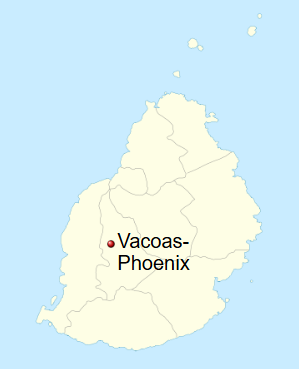
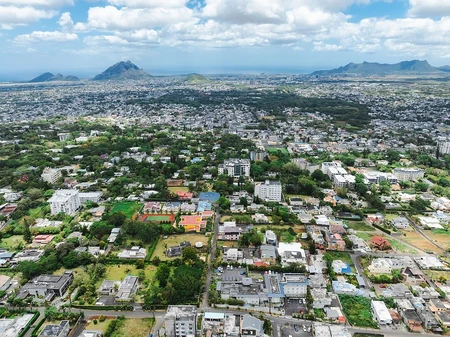
As you can probably deduce from the name, this city was originally two settlements. They fused into one community in 1963. The municipality is known in French as Villes Jumelles which translates to "Twin Cities".
We shall split the names on this occasion, mainly because we can, so we get the name of Vacoas which comes from the pandamus plant which was abundant in the area and used to make mats and bags. The Phoenix part of the name was an ancient sugar plantation established in 1846.
VACOAS = PANDAMUS PLANT
PHOENIX = NAMED AFTER A PLANTATION
Anse Boileau ~ Seychelles
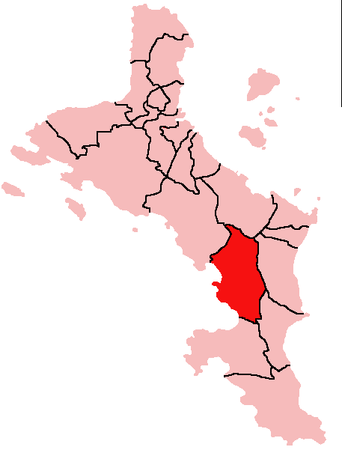
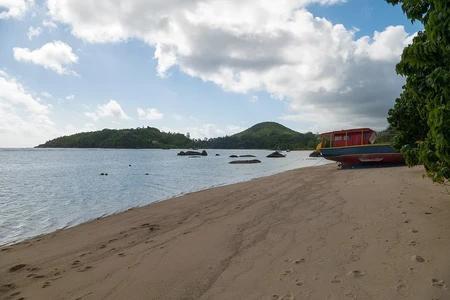
This was a difficult one, There isn't a list of townships in the Seychelles, aside from the capital, Victoria, all data refers to districts. The district with the largest population is Anse Boileau, and that only has just over 4,000 inhabitants. It is often described as a fishing village and is popular with tourists.
The anse part of the name is French and translates to "Cove". The cove in question was named after a French captain who arrived on the island in 1790 on his ship, the Archille. His name was Boileau, unfortunately I couldn't find any record of his first name. This local government website is my source of this information.
ANSE BOILEAU = BOILEAU'S COVE
Summary
Three down, One to go! At least in the African section anyway. Next time we head up the eastern side of Africa before finishing in Sudan prior to jumping across the water to our third continent, Asia. But that's in the future.
I am enjoying the challenge of finding out about these smaller settlements that are relatively unknown outside of their respective countries. Some have extremely small Wikipedia entries, often just a few lines, it's then a case of trawling through Google pages to find a snippet of information that may or may not be helpful.
I am unsure if some of these are the actual meaning or not. As someone once told me, "People will believe the best information available. If your information is the only information, it must therefore be the best!" Wise words indeed!
Anyway, once again, thanks for reading, and if you commented, then thanks for taking the time to communicate. It is most appreciated.
See you on the next one!
also thank you for your participation in squid games
wheelbarrow
it's also not get out the map, as "map" (the translator might just be trying to make sense of
"mapu" or "mapu" is a loanword), an english word defo didnt arrive to the area before a hundred years ago. these two possiblities should prolly be removed lol
Blue could possibly mean the river nearby
great read, I had no idea that
mostsome of these cities even existed!