
Second City Origins ~ Asia Part 1
First published: Sunday October 20th, 2024
Report this blog
Introduction
I hope this blog section isn't as difficult as the African parts. Although initial research looks to be a little sketchy for the Arabian peninsula, I am hopeful that I will obtain sufficient data to finish the project.
Asia, the Middle East, or the Levant as it is sometimes called. (That isn't strictly true though, the Levant was a term used for the lands of the Mediterranean to the east of Italy, so while it does cover some of the countries in this episode, it doesn't cover the whole of Arabia.)
So anyway, let's continue in the footsteps of T.E.Lawrence (a.k.a Lawrence of Arabia), a British Army officer that is well known for his exploits in the Arab Revolt and in Syria. A film was made about his life, appropriately called Lawrence of Arabia.
But I digress, as usual. Let's crack on with the blog and to our first city...
Aden ~ Yemen
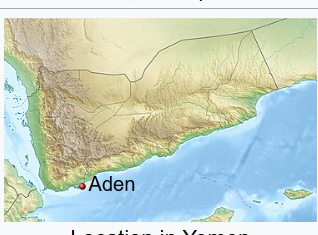
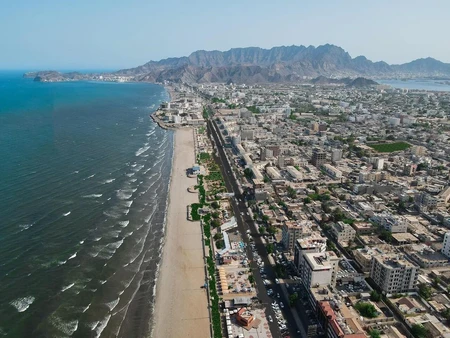
Aden was the capital of South Yemen before the two countries joined. The capital then moved to Sana'a. However, since the conflict in Yemen, Aden has been the temporary capital. Due to its location between the Red Sea and the Persian Gulf, it has been a strategic port since ancient times.
Aden means "resident" and refers to the fact that the port is the residency of many ships, well that's according to Wikipedia. There is another source that suggests that it comes from the Akkadian word edinnu which translates to "plain". Some scholars also believe it is synonymous with the biblical garden, Eden.
ADEN = PLAIN ( or RESIDENT)
Seeb ~ Oman
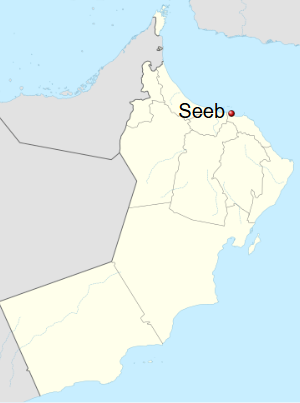
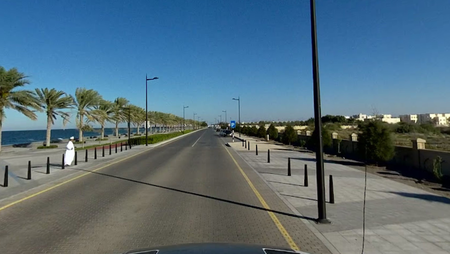
During Portuguese occupation, the Fort of Sibo was located here. It was part of a defensive line of fortified cities designed to control access to the Persian Gulf. it stood on land now occupied by Muscat Airport.
In 2014 it was disclosed in the press that Seeb was the location for a "beyond top secret" internet monitoring facility run by GCHQ, part of the British Secret Service.
Here we go again! There isn't much information about Seeb. Etymology websites suggest it is a Farsi word meaning "apple". Google suggests that it is Arabic for "married". So I thought, Seeb must come from Sibo, but all I got there was pages and pages about "Small Intestine Bacterial Overgrowth" It Just doesn't seem right that, a weird name for a city.
So, for want of a better idea, I've gone with "apple", which seems appropriate with the last one being linked to the Garden of Eden.
SEEB = APPLE (Unless you know better!)
Dubai ~ United Arab Emirates
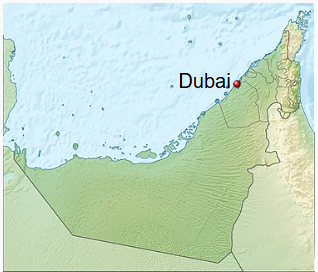
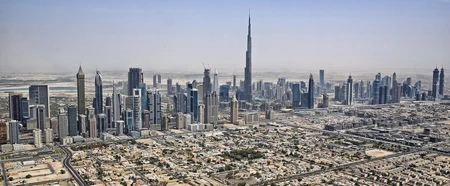
There can't be many JetPunk users who haven't heard of Dubai, it features in quite a few quizzes. The Burj Khalifa is still the world's tallest building at 828 metres, actually higher than Belgium's highest point, Signal de Botrange at a mere 694 metres.
There are many theories to the origin of the name, Dubai. One theory is that it comes from an Arabic proverb, Daba Dubai, which means "They came with a lot of money.". Another theory suggests if derives from the past tense of the Arabic word yadub meaning "to creep", referring to the slow movement of the Dubai Creek. A third suggestion is that it comes from the same word, but an alternate meaning of "baby locust" which refers to the many locusts that occupied the area before the massive development of the city.
DUBAI = BABY LOCUSTS (or CREEPING CREEK or LOTS OF MONEY) You decide!
Ar-Rayyan ~ Qatar
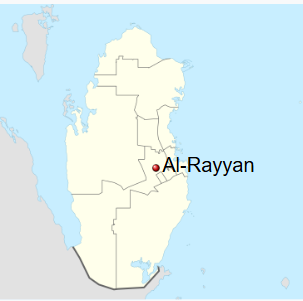
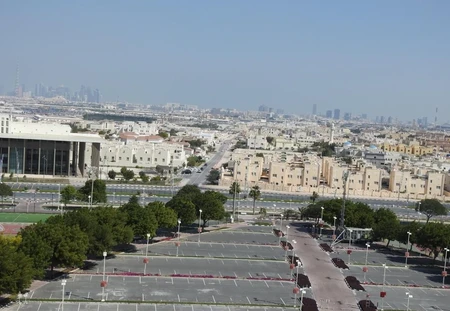
Al-Rayyan is part of the metropolitan area of Doha, but is a city in its own right. Prior to the city's massive expansion it consisted of small traditional villages and luxury villas owned by Qatar's ruling family.
The city's name derives from the Arabic word ray, which translates to "irrigation". The city's low elevation is the reason for the name, the area acting as a flood plain during the rainy season.
AL-RAYYAN = IRRIGATION
Muharraq ~ Bahrain
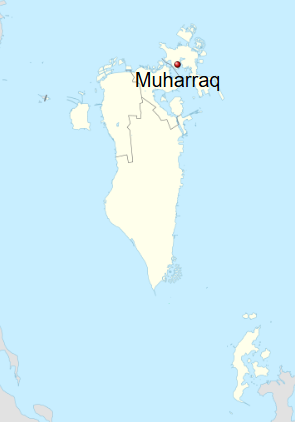
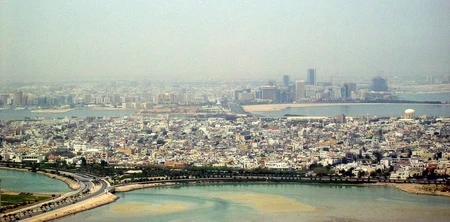
Muharraq has been a settlement since at least the 3rd century BC. It has been occupied by many different religions from early Christianity to a pagan cult that worshipped an ox. The city is also known for its old buildings and souk or marketplace. It was the capital of Bahrain until 1923.
Its name is Arabic and means "Place of Ashes", although I couldn't find out why.
MUHARRAQ = PLACE OF ASHES
Jeddah ~ Saudi Arabia
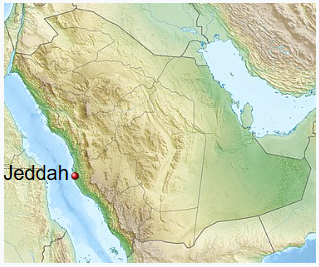
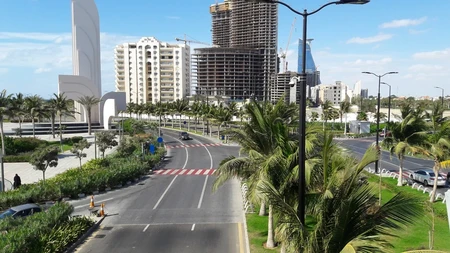
Jeddah is a port city on the Red Sea. Its nickname is "The Bride of the Red Sea." (No, I don't know why either.) The city is a gateway to Mecca and Medina and has hosted millions of Muslims on their way to the Hajj since the 7th century.
There are several theories to the etymology of Jeddah, however, the most accepted premise is that the name derives from the Arabic Jaddah meaning "grandmother". According to folklore, the Tomb of Eve is located in Jeddah. Eve is considered the grandmother of humanity.
JEDDAH = GRANDMOTHER
Hawally ~ Kuwait
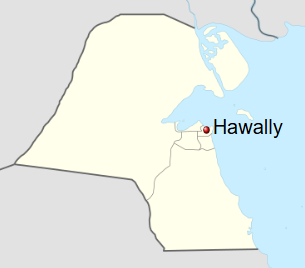
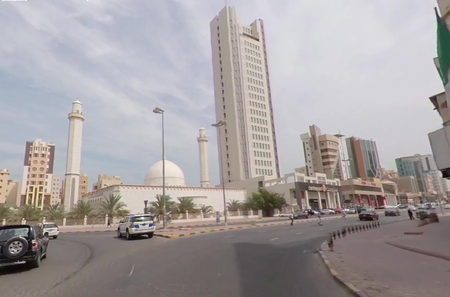
The settlement was first established in the 7th century. The city is home to many nationalities from both the Middle east and the rest of Asia.
The city was built amongst wells and its name reflects this. Hawally comes from the Arabic phrase, alhulw li which translates to "Sweet to me" referring to the freshness of the water.
HAWALLY = SWEET TO ME
Mosul ~ Iraq
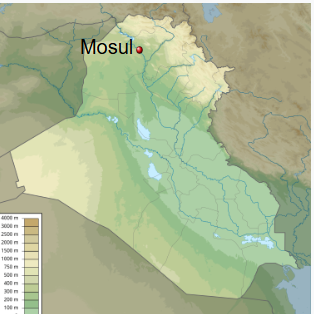
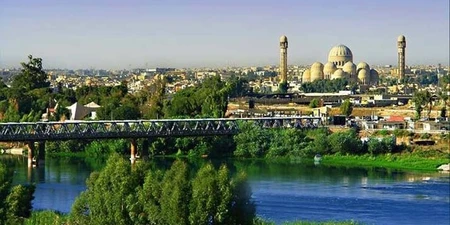
Mosul straddles the Tigris River and encloses the ancient city of Nineveh, once considered the world's largest city. Mosul is also nicknamed al-Faiha ("the Paradise"), al-Khaḍrah ("the Green"), and al-Hadbah ("the Humped"). It is sometimes called "The Pearl of the North" and "the city of a million soldiers."
Its name is probably derived from Mépsila, the name of an ancient settlement near present-day Mosul. The relatively modern name of Mosul, or as it is sometimes spelt Mawsil, means "linking point" or "Junction City".
MOSUL = LINKING POINT (JUNCTION CITY)
Zarqa ~ Jordan
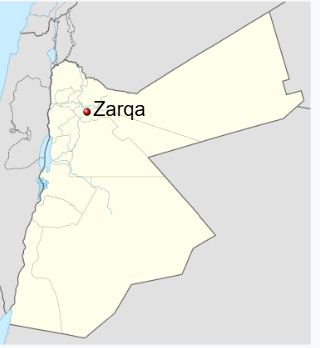
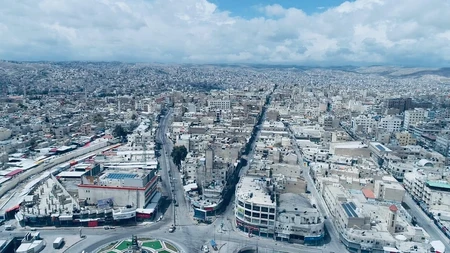
Despite being inhabited since the first century AD, the city of Zarqa was only established in 1902. It was established by Chechen refugees fleeing the wars between the Russian and Ottoman Empires. During the British occupation, bases were built and the settlement gained the nickname "Military City".
Its name is Arabic in origin and translates to "Blue". Zarqa became the "Blue City".
ZARQA = BLUE
Tel Aviv ~ Israel
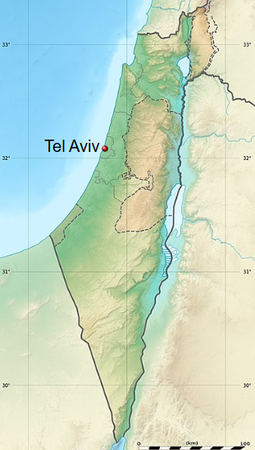
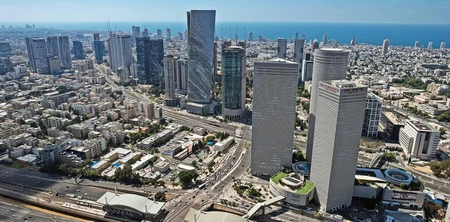
Although Tel Aviv isn't the nation's capital, it is home to most of Israel's foreign embassies. The city was founded in 1909 as a suburb of Jaffa, and was given the Hebrew name of Ahuzat Bayit or "Homestead" in English.
Its name was changed a year later to Tel Aviv. It derives from the biblical name Tel Abib meaning "Tell of Spring". Tell isn't "to tell (someone)" it is the name given in archeology to an artificial mound, such as used for ancient burials or refuse disposal.
TEL AVIV = TELL OF SPRING
Aleppo ~ Syria
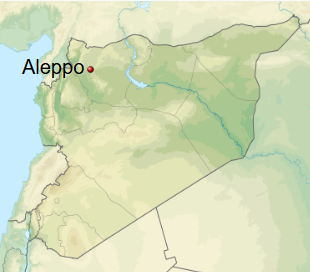
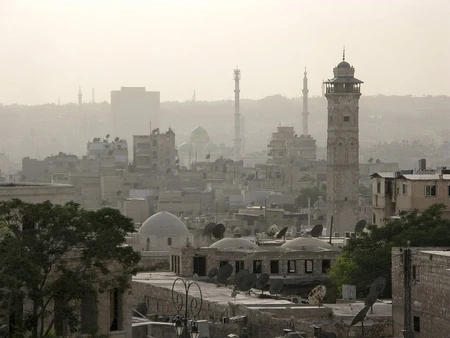
Aleppo is one of the oldest continuously inhabited cities in the world. It may have been occupied since around 6,000 BC; however, the earliest written mention is on cuneiform tablets from around 3,000 BC. It was at the western end of the famous Silk Road trade route to the Far East.
The city's ancient name, Halab , is thought to be the origin of Aleppo. Halab is said to have been the Aramaic word for "white," which is also thought to be the derivation for the word "milk" in Hebrew. Another scholar proposes that the city was named after the Hebrew word for "milk" because Abraham milked his sheep there to feed the poor. The modern Arabic name of al-Shahbāʾ means "the white-colored mixed with black" and refers to the colour of marble found in the area.
ALEPPO = WHITE (or MILK)
Tripoli ~ Lebanon
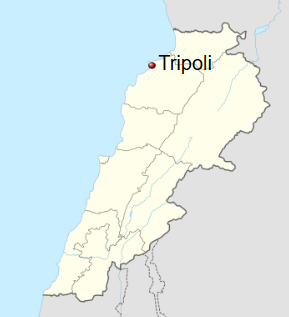
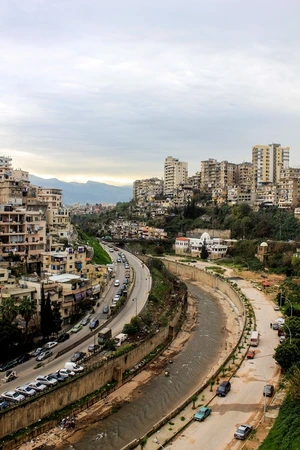
An easy one to end this part on. This Tripoli has been known as "Levantine Tripoli" to distinguish it from the capital of Libya which is known as "Tripoli of the West". It is an old Phoenician city and was established in the 8th century BC, however there is evidence of a settlement there for at least 500 years prior to that.
The name has a similar derivation to the other Tripoli. (The etymology of that one can be seen here). The name is of Greek origin and can be split into Tri meaning "three" and poli meaning "city". Tripoli was a conurbation linking the three Phoenician cities of Sidon, Tyre, and Arados.
TRIPOLI = THREE CITIES
Summary
Next, we head to the disputed island of Cyprus. The ownership is disputed by Greece and Turkey, as well as on JetPunk concerning its location. (Let's not get into that again, please!). We will travel through the "border" areas of Georgia and Armenia, and eventually onto the "stans", well at least the difficult to spell ones.
I've also managed to finish this blog at an opportune time, I am currently writing this while waiting for Sunday dinner to cook (Lamb shanks in mint gravy with carrots, cabbage, and roast potatoes in case you're interested).
So anyway, until next time, I will bid you farewell.
Nice blog!
also, very interesting blog, i forgot about the existence of the other tripoli.