
Second City Origins ~ Asia Part 2
First published: Thursday October 31st, 2024
Report this blog
Introduction
Well, we're fair flying through these cities. Europe and Africa are finished, and we're halfway through Asia with just Oceania and the Americas to go. I may struggle a little with Oceania, but we'll cross that bridge when we come to it. I still haven't committed half of the capitals to memory, so second cities are still a mystery. Anyway, that's for the future, I'm getting ahead of myself.
In this blog, we shall explore as far as the 'stans. Hopefully without a hiccup, but now that I've mentioned it, it will probably go Pete Tong. (That's Cockney rhyming slang for "wrong". Check out my BLOG about this strange language that originated in the East End of London)...(Sorry, another shameless plug!).
And on that self-indulgent note, I had better get on with the show....
Limassol ~ Cyprus
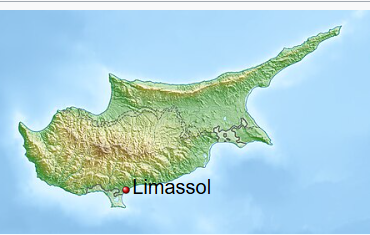
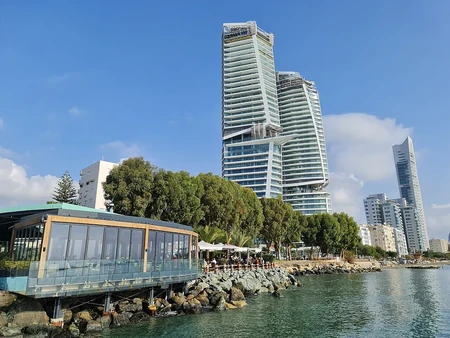
Limassol was originally built between two ancient Greek cities, Amathus and Kourion. To the west of the city is the British Overseas Territory of Akrotiri. In 2014, TripAdvisor ranked Limassol as the third most up-and-coming city in the world.
The name of the city originates from the Ancient Greek word, Nemesos meaning "one found in the middle". It is thought to refer to the location between the aforementioned cities. The name evolved over time to Lemesos which when anglicised becomes Limassol.
LIMASSOL = ONE FOUND IN THE MIDDLE
Istanbul ~ Turkey
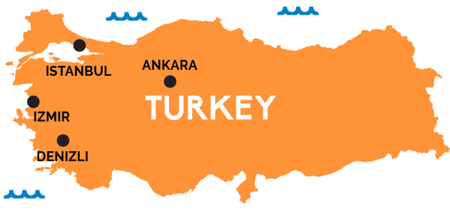
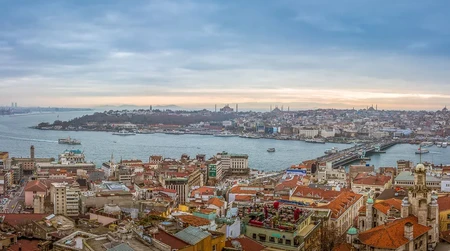
Like Dubai in the last episode of this blog series, Istanbul is a well-known city. It features in many JetPunk quizzes and is the largest city in Turkey. Istanbul is an intercontinental city straddling the Bosphorus Strait, which is the border between Europe and Asia.
As many of you will know, this city has had other names. The names changed depending on the people occupying the area or on the language spoken.
1. Lygos - the name of a Thracian settlement, origin unknown
2. Byzantium - Thought to have derived from a Thracian name Byzas, Greek folklore refers to a King of that name.
3. Augusta Antonina - named by Roman Emperor Severus in honour of his son Antoninus
4. New Rome - Roman Emperor Constantine the Great, renamed it as the capital of the Eastern Roman Empire.
5. Constantinople - named after the above Emperor Constantine, it translates as Constantine's City
6. Istanbul - This name probably comes from the Greek phrase "στὴν Πόλι" (pronounced stim boli) and meaning "in the city", Constantinople was usually just referred to as "The City".
ISTANBUL = IN THE CITY
Gyumri ~ Armenia
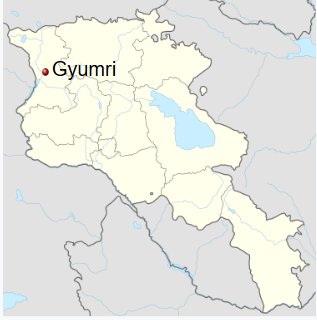
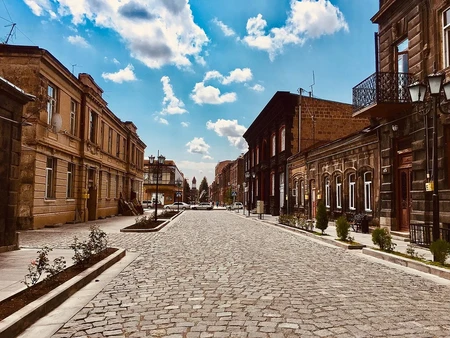
Yet another city with multiple names. It was originally called Kumayri which over time changed phonetically to Gyumri. However, the city was renamed Alexandropol in honour of the wife of Tsar Nicolas I, Princess Alexandra. Then during the Soviet era, it was called Leninakan honouring Vladimir Lenin, obviously! Following independence from the USSR, the city returned to Kumayri until 1992 when the name Gyumri was chosen.
The name Gyumri is a derivation of Kumayri, the etymology of this name has been lost over time.
GYUMRI = NAMED FROM KUMAYRI
Batumi ~ Georgia
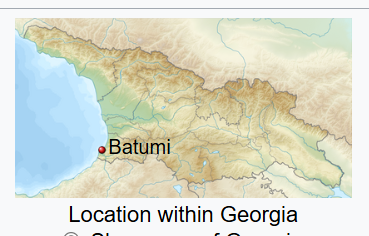
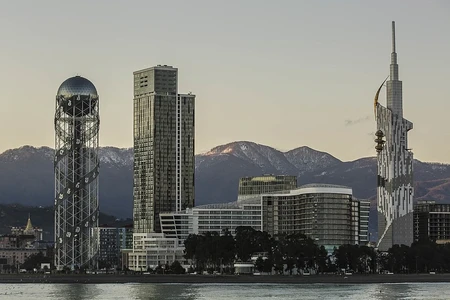
Known as the "Las Vegas of the Black Sea", since much of Batumi's economy relies on gambling and tourism, although there is a large seaport and shipbuilding facilities. The port is a major export location for Central Asian oil and agricultural products.
Batumi developed on the site of an ancient Greek settlement called Bathys which is derived from bathus limen meaning "deep harbour".
BATUMI = DEEP HARBOUR
Sumgait ~ Azerbaijan
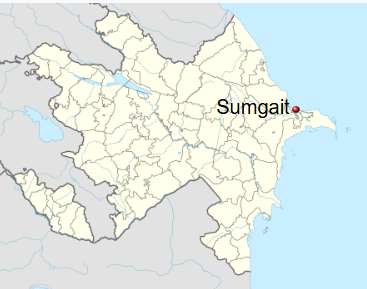
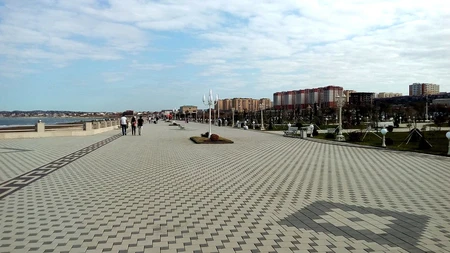
During the Soviet era, due to heavy industrialisation, Sumgait was named the "Most polluted place on Earth" by Time magazine. Since independence, thanks to a recover program financed by the World Bank, the city has been continuously improving and nowadays, pollution is at minimal rates.
Sumgait is the anglicised version of the Azerbaijani name Sumqayit. Local legend states that a hero known as Sum, was tasked to kill a monster that is blocking the river. When Sum kills the monster, the waters are released. However, Sum is swept away in the release of water, never to be seen again. His love spent every day at the riverside shouting "Sum, Come Back" in Azerbaijani, Sumqayit.
SUMGAIT = SUM, COME BACK
Mashhad ~ Iran
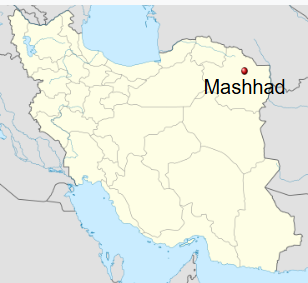
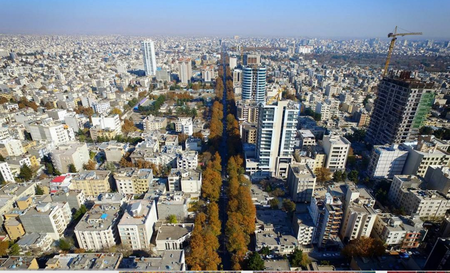
Apart from being one of the very few names with a double "H", I can't think of any more actually, Mashhad is an ancient city that was also located on the famous "Silk Road" trade route. Nowadays, the city is home to around 3.5 million souls, despite its relatively remote location.
Its name means "Place of Martyrdom" and refers to the Imam Reza shrine that is the burial place of the eighth Shia Imam, Ali al-Rida. The shrine is a place of pilgrimage for 25 million people each year, and as such is the holiest place in Iran.
MASHHAD = PLACE OF MARTYRDOM
Turkmenabat ~ Turkmenistan
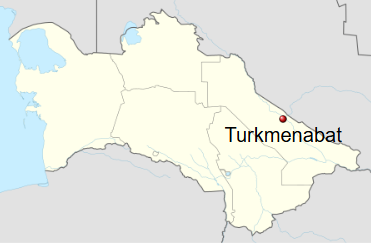
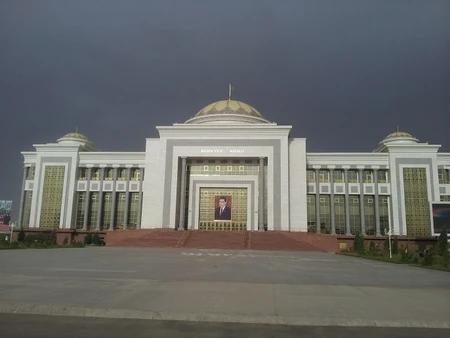
Yet another city on the Silk Road, there seems to be a pattern here. Turkmenabat is an industrial city with a history stretching back at least 2,000 years. The city is connected by rail, road, and river transport and is as much a trade hub now as it was many centuries ago.
A former name of the settlement is Çärjew (or Chardzhou) which comes from the Persian word čahârjuy. This can be split into čahâr, meaning "four", and juy, meaning "brook". So the old name means "Four Brooks". However, we are concerned with the current name, Turkmenabat. This name can also be split into two parts. Turkmen being the name of the local tribe and namesake of the country, and abat, being a local spelling of the Persian word abad meaning "cultivated place".
TURKMENABAT = CULTIVATED PLACE OF THE TURKMEN
Almaty ~ Kazakhstan
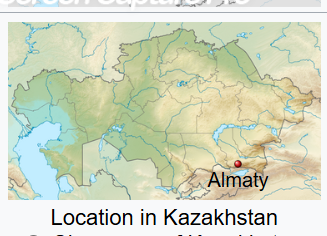
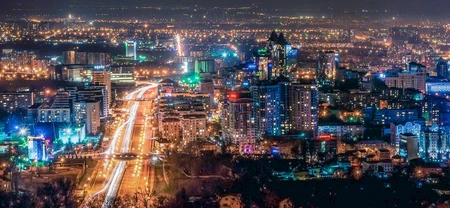
What connection does Almaty have to New York City? It is also nicknamed "The Big Apple." Another similarity is that it is also a former capital, although much more recent than NYC. In 1997, it was demoted in favour of Akmola, Astana, Nur-Sultan, Astana. It is still the main financial and commercial centre of Kazakhstan. I remember Almaty from my school days when it had the intriguing, at least to me, name of Alma-Ata.
The name is thought to derive from the Kazakh word алма meaning "apple". In fact, the region is famous for its apples and is believed to be the place where modern apples originated.
ALMATY = APPLE
Osh ~ Kyrgyzstan
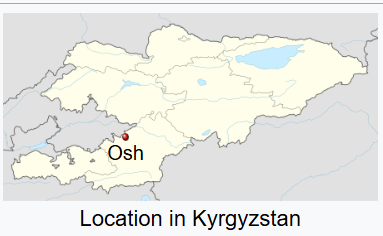
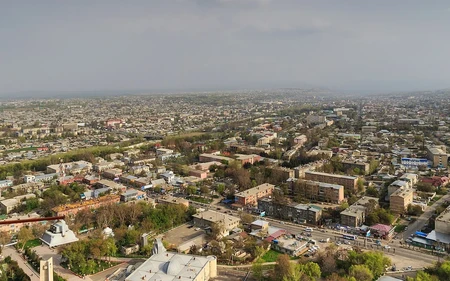
Probably the shortest name in this blog series, Osh is the oldest city in Kyrgyzstan, founded over 3,000 years ago, it is at the mid-point of the Silk Road. Its market or bazaar has been operating in the same spot for at least 2,000 years.
The name of Osh derives from the River Vakhsh which runs through the city. There is also a water goddess of the same name that was worshipped at a cave shrine on the nearby Sailaman-too mountain. Vakhsh means "Red Water".
OSH = FROM VAKHSH = RED WATER
Namangan ~ Uzbekistan
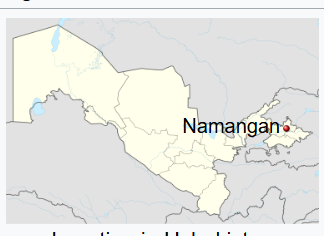
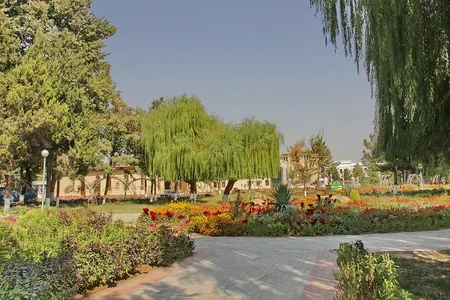
Namangan has seen changes in industries over the years, salt, cotton, and nowadays, light engineering and food production. Although there has been disruption to this trade by various forces from Russian Tsars and Soviet Russia to the current reputation for Islamic revivalism with its connections to various terrorist groups.
The name of Namangan comes from the Persian word, namak kan, meaning "a salt mine".
NAMANGAN = SALT MINE
Khujand ~ Tajikistan
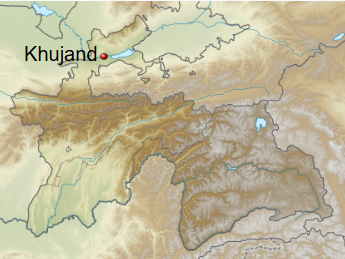
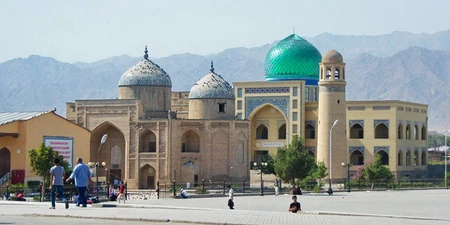
Khujand dates back to the Persian Empire and is one of the oldest cities in Central Asia. Continuing the theme, it was also a major city on the Silk Road trade route. It is thought that the city may also have been the site of the Greek settlement Cyropolis established by Cyrus the Great in 329BC.
The origins of the name Khujand are obscure and lost to time. However, I did find a language website that mentions a Persian word jand which is often used as a suffix and means "city". the page also has some examples including Khujand which it states is "City of Sun". So, for want of a better description....
KHUJAND = CITY OF SUN
Kandahar ~ Afghanistan
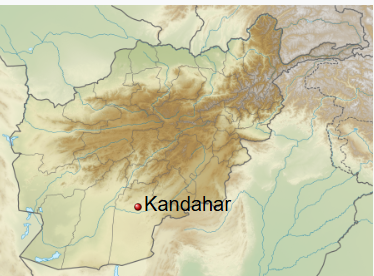
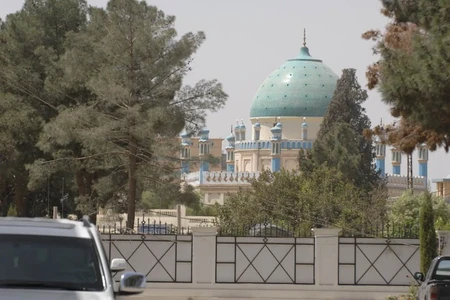
Kandahar is the seat of power for the ruling Taliban and their cultural centre. As such it could be the de facto capital of Afghanistan, however, the Taliban themselves insist Kabul is the nation's capital city. It is thought to be one of the oldest cities worldwide with evidence of a fortified city being on the site of Kandahar in at least 1,000BC.
The name is thought to derive from the name of the original settlement of Alexandria built in the area. Alexander in the local Pashto language is Iskandar. It is thought that over time the name changed to Scandar, then Candar, and then obviously to Kandahar.
Local folklore, however, states that Kanda means "candy" in Pashto and Kandahar probably means "Candy Area" due to the abundance of fruits like grapes, apricots, and melons that are grown in the area.
KANDAHAR = ALEXANDER (or CANDY AREA)
Summary
I couldn't think of anything original to write here, so I though I would describe the steps I take in my research for the blog. I'll list them in the order I work, starting from the very beginning, a very good place to start according to Julie Andrews in the "Sound of Music" movie.
1. Make a list of countries that I used in my Capital City Origins blog.
2. Check citypopulation.com website for the second largest city in those countries.
3. Double check population figures on Wikipedia and change if necessary. (Kandahar was a change, citypop had Herat as the second largest city, Wikipedia had it as the third, but the population difference was about 100k.
4. Check Wikipedia for the city's etymology. If there isn't one, check other sources from anywhere online and cross reference from another source.
5. Think of an introduction
6. Make a heading for the first entry.
7. Read through the full Wikipedia article on that particular city. Making notes as I read.
8. Add the location map and photo to the blog, these are usually from Wikipedia.
9. Write a short blurb about the city, then the etymology.
10. Repeat step 6 to 9 for each entry until the end.
11. Think of a summary to write. This is the hardest part. Sometimes I just type whatever pops into my head. That's why it is sometimes random, my mind works that way and I'm not going to apologise for it. Anyway, Special Agent Leroy Jethro Gibbs on the TV show NCIS says apologising is a sign of weakness!
See you next time, when we continue our journey around Asia, we are halfway there, living on a prayer, just two more Asian episodes to go.
JetPunk really is great for learning on! I enjoy how you tell us a bit about each city in addition to its etymology
Always such a pleasure to read your blogs! I love your content. So informational and always a funny read.