
Second City Origins ~ North America Part 2
First published: Sunday December 22nd, 2024
Report this blog
Introduction
Well, here we are, the final episode in the Second City Origins blog series. From Panama to Canada. It's almost like we are travelling the Pan-American Highway from the Darien Gap to Prudhoe Bay in Alaska. Although there are a few detours along the way, and our route doesn't really follow the road, but hey, you know what I mean. (If you don't know about my ramblings off at a tangent by now, then shame on you, read more of my blogs!). Now there's an idea for a future blog, The Pan- American highway and the etymology of the towns it visits. I'll add it to the list, but don't hold your breath for that one just yet.
"Get on with it, toowise" I here you shout, well OK then.....
We start our journey in Panama.....
Colon ~ Panama
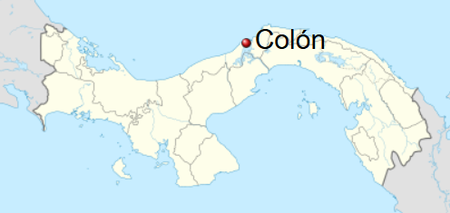
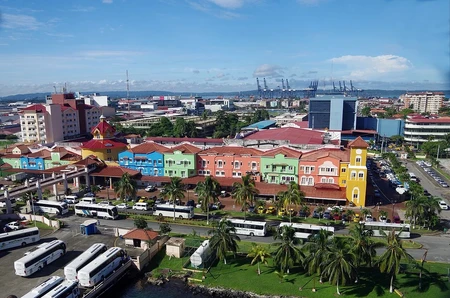
Colon was founded in 1850 as the terminal of the Panama Railroad that was built to transport goods and people during the California Goldrush. The city has a history with fire, it was destroyed in 1885 and again in 1915, then the Great Fire of Colon in 1940 burnt down a third of the city. It became an exclave of Panama during the time of the US occupation of the Panama Canal Zone.
Despite the shape of Panama vaguely resembling the large intestine, unfortunately Colon wasn't named after its namesake body part. It's name actually comes from the Spanish name for Christopher Columbus. Colon is the Spanish translation of Columbus.
COLON = COLUMBUS
Cartago ~ Costa Rica
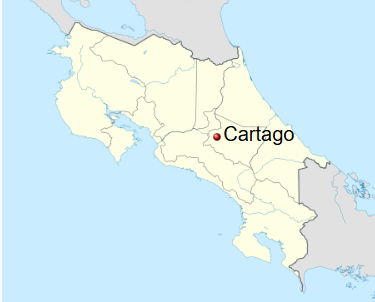
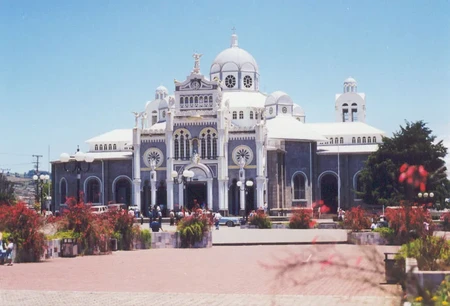
Cartago was the capital of Costa Rica until 1823 when it was moved to San Jose by the republican leader for political reasons. Many pilgrims make the journey to the Basilica (In the picture) due to the statue of a Black Madonna called "La Negrita" that is supposed to have healing powers. Folklore says that the statue was found by a young girl who took it home, only for it to mysteriously return to its original place several times.
The city was named by the Spanish explorer Juan Vasquez de Coronado, who named it after the Phoenician city of Carthage which means New City. Cartago is Spanish for Carthage. Coronado named the city when it was first founded.
CARTAGO = NEW CITY
Leon ~ Nicaragua
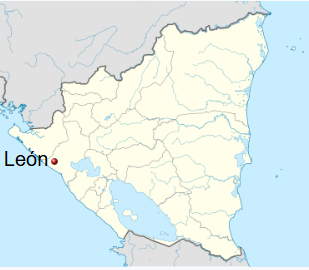
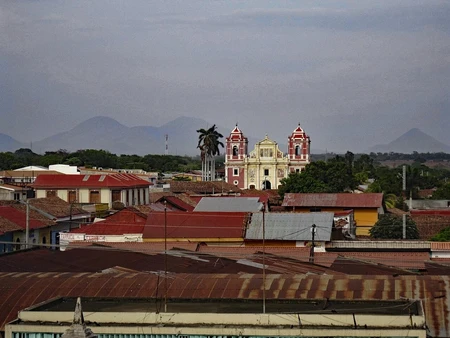
The first city of Leon was established further inland from it's current position, however, following an earthquake in 1610 the settlement was abandoned in favour of the present location. The original site was excavated in 1960 and is now called Leon Viejo. leon has a large number of heritage sites including many churches, some are connected by tunnels used during invasions by various European pirates.
The city was named after the city of Leon in northwest Spain. The original Leon's name derives from the Latin name of the city used by the Romans, Castra Legionis, meaning "Camp of the Legion". So the name Leon is a Spanish translation of Legion.
LEON = LEGION
San Pedro Sula ~ Honduras
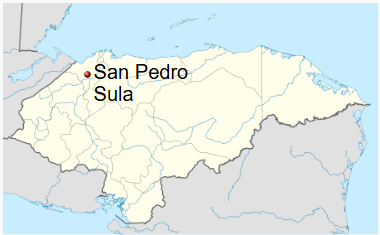
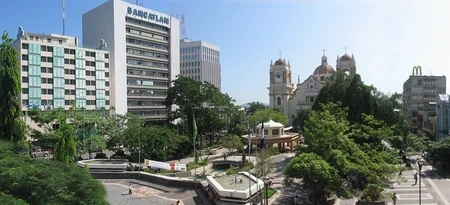
Before the arrival of the Spanish in the 16th century, the area around San Pedro was a trade hub between the Mayan and Aztec civilisations. However, over the following centuries it declined and was mostly impoverished until the arrival of the Interoceanic Railroad in 1874. Nowadays, the city provides almost two thirds of the GDP of Honduras.
The city was originally named Villa de Señor San Pedro de Puerto Caballos, this name evolved over the years to the current San Pedro Sula. The "Sula" part of the name comes from the Sula Valley which was the area prior to the Spanish invasion. Sula comes from the local dialect word Usula and means "Birds". San Pedro is Spanish for Saint Peter.
SAN PEDRO SULA = SAINT PETER OF BIRDS
Soyapango ~ El Salvador
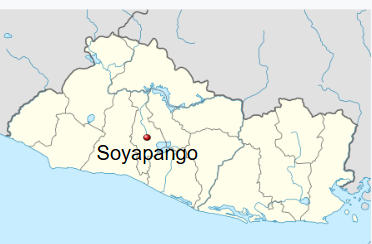
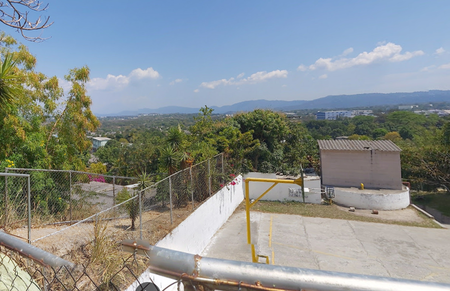
Soyapango is a satellite city of the nation's capital, San Salvador. It is located on the main highway between San Salvador and the rest of El Salvador, and as such has more than 70,000 vehicles pass through every day. The largest shoe manufacturer in Central America is based in Soyapango.
There is little information about the origins of the name, however I did find a list of all of El Salvador's placenames and origins. According to this website of indigenous names, most placenames come from the Ch'or'ti language. It's entry for Soyapango is..
"Soyapango - soy yah pan k'o - "bent and in pain from breaking open of peak" (535 CE). Injured people found from Ilopango eruption."
It refers to the eruption of the Ilapango volcano in 535.
SOYAPANGO = BENT AND IN PAIN FROM BREAKING OPEN OF PEAK (Apparantly!)
Mixco ~ Guatemala
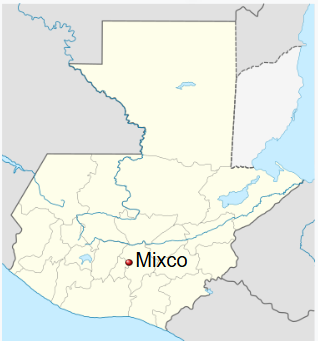
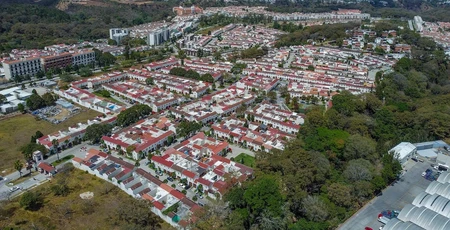
Mixco is another satellite city, this time to Guatemala City, the capital of Guatemala (obviously). The majority of the area of Mixco is surrounded by canyons with many bridges spanning the gaps. Ciudad San Cristóbal is an area of Mixco that was built in 1973 and is one of the largest residential areas in Guatemala.
The name of Mixco is derived from the Nahuatl word Mizco, meaning “place of the temple of clouds.”
MIXCO = PLACE OF THE TEMPLE OF CLOUDS
Belize City ~ Belize
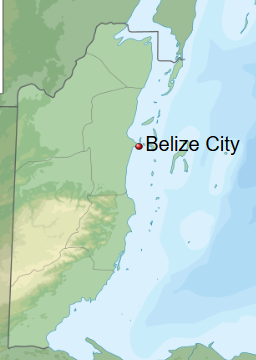
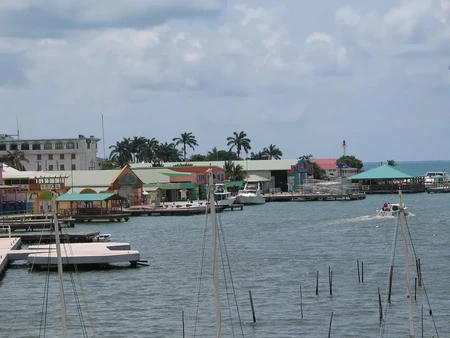
Belize City was the capital of British Honduras, the name of the country before it's independence from the UK and its name change to Belize. Originally founded in 1638 and called Belize Town, the settlement became a port town exporting wood especially mahogany, and importing slaves to toil in the forestry industry.
Although there is no definitive theory for the origin of the name, it has been proposed that the name Belize comes from the Mayan language word, belix (pronounced beliz) meaning "Muddy Waters". I don't think they were referring to the American Blues singer of the same name, more to the state of the river that runs through Belize City.
BELIZE CITY = CITY NEAR THE MUDDY WATER
Tijuana ~ Mexico
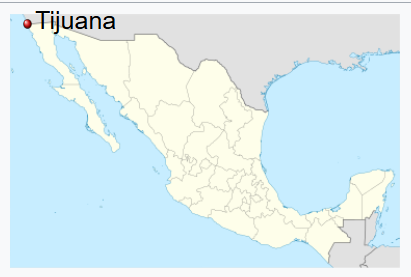
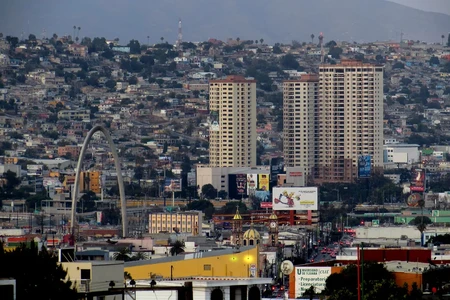
As many of you probably know, Tijuana is located across the border from San Diego, USA. The area was originally the homeland of tribal hunter-gatherers until the arrival of European settlers in the 16th century. They turned the land into a cattle ranch which then developed over several centuries into the city it is today. After the tragedy of 9/11, US border controls increased which, in turn, reduced tourism and also drug violence. This trend is slowly turning around and the city is now considered a centre for commerce and medical tourism.
The name of the city derives from a ranch founded in 1829 called Rancho Tia Juana, the accepted meaning of this comes from the Kumeyaay language word tiwan meaning "By the sea". However, another theory states that Tia Juana is Spanish for "Aunt Jane" and refers to a roadside inn owned by a woman known as "Aunt Jane" that provided food and lodgings to travellers. No record of such an establishment is known to exist.
TIJUANA = BY THE SEA
New York City ~ United States of America
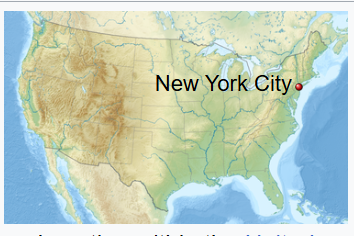
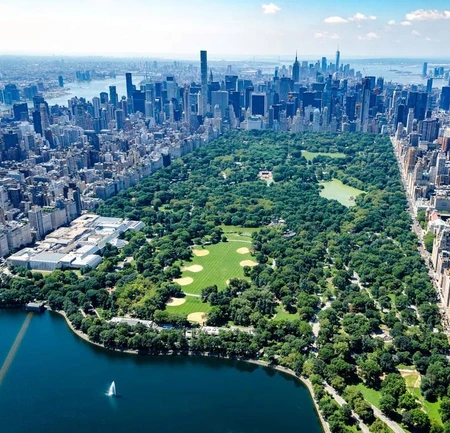
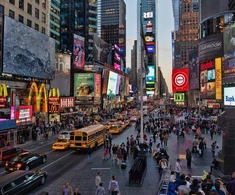
There can't be many people on Earth that haven't heard of New York, or The Big Apple as it is sometimes called. Originally, settled by the Dutch, who called it New Amsterdam. NYC can lay claim to many records, it is home to the worlds two largest Stock Exchanges, the highest rent rates in the US, and the highest number of billionaires and millionaires in any city world-wide. Fifth Avenue is reported to be the most expensive shopping street in the world too.
The name was given to the city by King Charles II of England when he bestowed the land to his brother, the Duke of York, in 1664. Incidentally, the nickname "The Big Apple" was apparently coined by two stable hands in New Orleans when discussing the large prize moneys awarded at horse races in New York.
NEW YORK CITY = NAMED AFTER THE DUKE OF YORK
Toronto ~ Canada
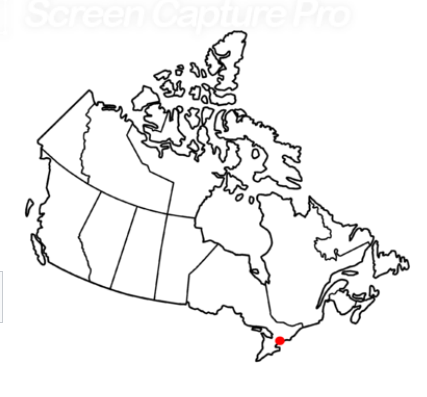
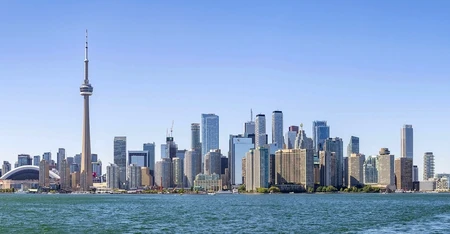
Another large city, Toronto is North America's fourth largest city. The area of Toronto had been settled by the Mississauga peoples for around 10,000 years until the land was purchased by the British in 1793 and called York. It was renamed Toronto in 1834. The city was the capital of Upper Canada in the days of the British Empire.
The name is thought to originate from the Huron tribal language, from the word Taronto meaning "The Narrows" referring to a channel of water between lakes Simcoe and Couchiching where the Huron planted trees to trap fish. There is also a thought that it comes from the Mohawk language name for the same narrows, tkaronto, meaning "where there are trees standing in the water"
TORONTO = THE NARROWS or WHERE TREES STAND IN THE WATER
Summary
WOW !
The series has ended.
So where do we go from here?
Well, first of, I'm taking a short break from blogging to spend more time with my family over the festive season and the New Year. But, I shall be back in 2525 , sorry 2025, I was harking back to a 1960s hit by Zager and Evans called "In The Year 2525", check it out on Spotify youngsters!
Sorry about that, where was I ...oh yeah, I will be back in the new year with another short series (only 4 episodes to this one) dealing with the etymology of the US state capitals from Albany, NY to Trenton, NJ. This time however I am not writing a short history paragraph on each one, I am commenting on an attraction of the city. I know the US is scattered with roadside attractions such as Cadillac Ranch and The biggest ball of twine in Minnesota, well, that one is according to Weird Al anyway. (Does it actually exist ? Let me know in the comments please, because that has given me another idea for a one-off blog for the future) So, anyway, I thought I would try to find a strange attraction for each state capital, glutton for punishment that I am, this will probably be harder to research, but hey-ho.
Thoughts of future blogs ? Let me know what you think about these gems....
Other Capital Origins (Capitals of territories, states, and autonomous regions around the world)
Some more Song or Band Name Origin blogs
Origins of Sea and Ocean names
Fast Food Outlet Name Origins
Some One-off random blogs about mundane everyday things
That's enough for now, I look forward to your thoughts on these ideas.
So for now, all that remains is to wish you all a very Merry Christmas, and a Happy and Prosperous New Year. And just to be inclusive, if you don't celebrate Christmas then Happy Holidays to you.
p.s Don't drink to much eggnog, its disgusting stuff. (ohh that's given me another idea, Food Name Origins...Eggnog, Haggis, Pie Floaters, you get the idea)
OK that's enough now toowise, just submit the blog and walk away from the keyboard.
See y'all next year!!
One thought I had is that if the strange tourist attraction in each capital serves to be too difficult, you could always pivot to strangest tourist attraction in the whole state. This might give you more flexibility in making your choices.
And I like the fast food origins idea!
And I am already considering the food idea but maybe not limited to fast food, rather to national dishes? I need to think it through and do some research.
Satisfying conclusion, toowise. I look forward to whichever series you decide to write next!
great series, it was enjoyable reading through all the entries