
Second City Origins ~ South America
Last updated: Sunday December 1st, 2024
Report this blog
Introduction
After the difficulty of finding the origins of the second cities of Oceania, I'm looking forward to the easier South American cities. Well, I hope they're easier. The towns are generally a lot larger, with several million inhabitants instead of several hundred, but, I haven't started the research properly yet, I'm just rambling on as usual in the Introduction.
This edition of the series contains the whole of the South American continent from Patagonia to the Amazon and over the Andes. As long as we discount France or French Guiana there are only 12 countries. French Guiana may be covered at a later date, I have some ideas for after this series.
We will start in the south, just because, well, I started that way on the Capital City Origins blog. Another shameless plug for an earlier series of blogs, sorry about that.
So, with the words of the Chinese philosopher, Laozi, ringing in my ears, "A journey of a thousand miles begins with a single step", let's take a step into......
Valparaiso ~ Chile
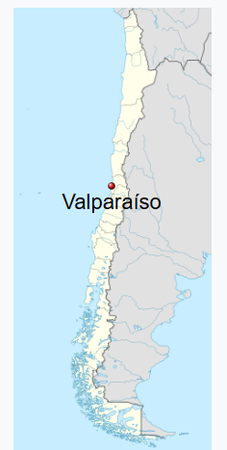
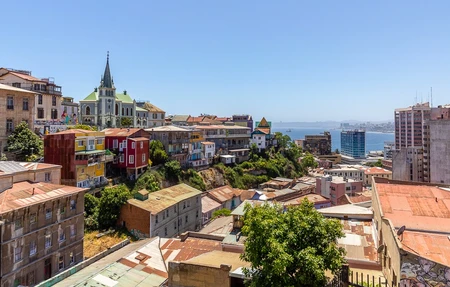
Valparaiso is one of the most important Pacific seaports, although it declined somewhat after the opening of the Panama Canal. Prior to this the port was an important stopover for ships sailing to the Atlantic via the Straits of Magellan in the far south of the continent. The city was the first in South America to have a volunteer fire fighting service and still has the worlds oldest Spanish language newspaper, El Mercurio de Valparaíso.
The city was named after a tiny village in Spain, Valparaiso de Arriba. This village was the birthplace of the founder of Valparaiso, Juan de Saavedra. Valparaiso is a Spanish word meaning "Vale of Paradise"
VALPARAISO = VALE OF PARADISE
Cordoba ~ Argentina
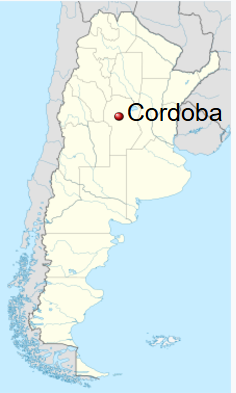
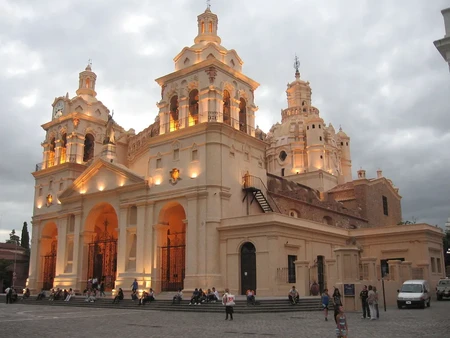
Cordoba was founded in 1573 and is one of the oldest Spanish colonial cities on the continent. The city, at times, has rivalled Buenos Aires in political importance. It was the site of the initial mutiny that eventually deposed President Juan Peron.
It seems that the Spanish conquistadors weren't very imaginative when they named their cities. As with Valparaiso above, Cordoba was named after the town of Cordoba in Spain by Jeronimo Luis de Cabrera. It is believed that the name comes from the Punic language words, qart ṭūbah, meaning "good town".
CORDOBA = GOOD TOWN
Salto ~ Uruguay
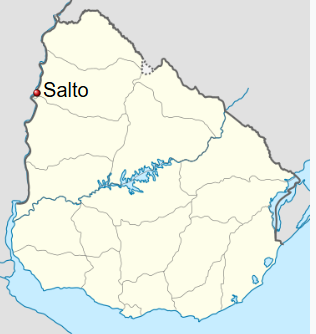
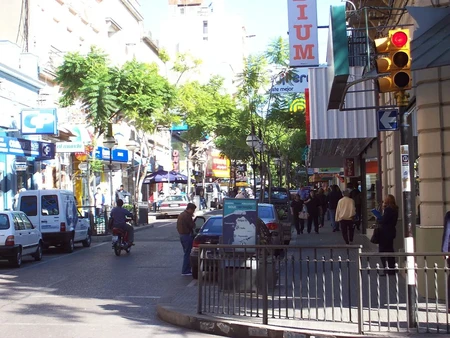
In 1756, the Spanish governors of Uruguay sent a force of soldiers to protect the border region of northwest Uruguay. Where they built their encampment grew into the city of Salto. The city saw a surge of criminal activity in the early 21st century, and according to the president of the local Chamber of Commerce, the Don Atilio barrio of Salto is the most dangerous in Uruguay.
The area was originally named San Antonio del Salto Chico but over time it has been shortened to Salto. Salto in Spanish means "leap" and is thought to denote the many waterfalls in the nearby Uruguay River, and the "leaping waters"
SALTO = LEAP
Ciudad del Este ~ Paraguay
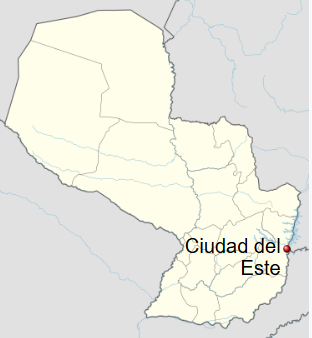
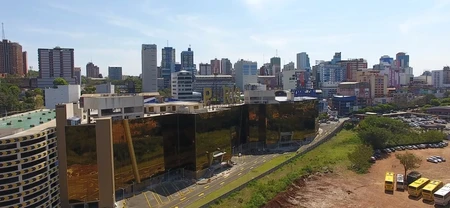
This city is the largest in the Triple Frontier region, an area that encompasses the tri-border regions of Paraguay, Brazil, and Argentina. It is one of the largest free trade zones in the world attracting business from all three countries in the region. One of the largest hydroelectric dams is nearby, as are the Iguazu Falls on the Parana River.
Ciudad del Este is Spanish and can be translated to Eastern City. The city has has former names. Firstly, Puerto Flor de Lis meaning "Port Lily Flower" but also in the Guarani language, Tacuru pucu meaning "Tall Termite Hill". Both much more imaginative than Eastern City.
CIUDAD DEL ESTE = EASTERN CITY
Sao Paulo ~ Brazil
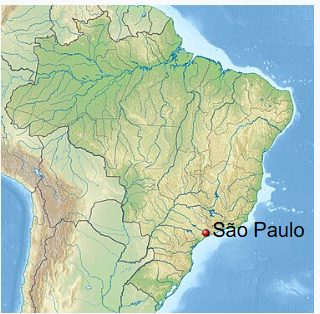
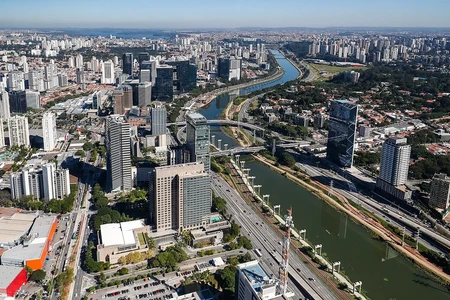
Sao Paulo is the largest most populated urban area outside of Asia, and the largest Portuguese speaking city in the world. It is the home to Latin America's largest stock exchange and what is considered to be the best university in Brazil. Its many parks and museums make this city a cultural hub and it's Gay Pride Parade is the second largest in the world after New York.
The name of the city is in honour of Paul the Apostle, who spread the teachings of Jesus in the 1st century AD. Sao Paulo is Portuguese for Saint Paul
SAO PAULO = SAINT PAUL
Santa Cruz de la Sierra ~ Bolivia
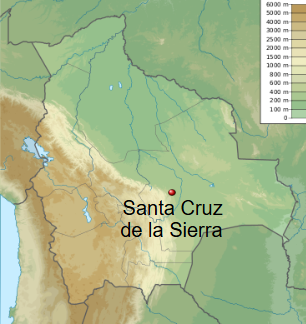
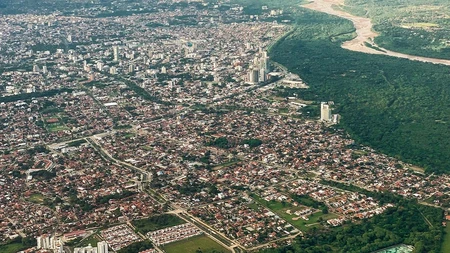
The city of Santa Cruz, as it is often called, was founded in 1561, but around 200km (124miles) east of its current location. It was moved several times until it was finally established on the Pirai River in the late 16th century. It was a small outpost until land reforms in the mid 20th century when it began to grow at a significant pace. Santa Cruz is now Bolivia's largest city and contributes around 35% of the country's GDP.
Santa Cruz de la Sierra is Spanish and as some of you may know, translates to "Holy Cross of the Mountains".
SANTA CRUZ DE LA SIERRA = HOLY CROSS OF THE MOUNTAINS
Arequipa ~ Peru
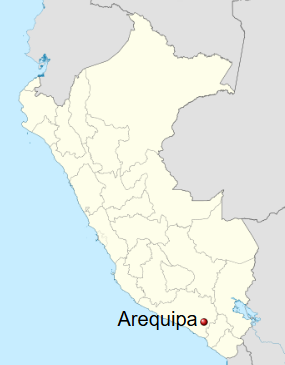
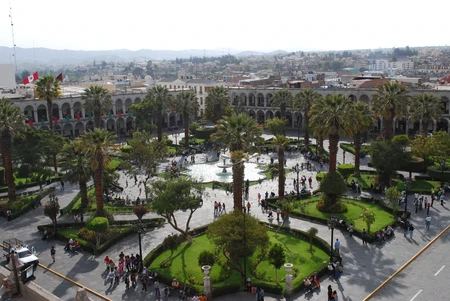
The city was founded in 1540 with the long-winded name of "Beautiful Villa of Our Lady of the Assumption". In 1541, King Carlos V ordered it to be changed to "City of Arequipa". During Peru's history it has been called "Very Loyal and Noble City", and "Heroic city of the free people of Arequipa". Thank goodness the powers that be decided to just go with Arequipa!
There are a few theories as to the origin of the name. Local folklore tells a story of visiting Europeans pointing at the ground and asking the name of the land. Local chiefs misunderstood and thought they were asking permission to sit, and replied "Ari qhipay" which in Quechua means "Yes, Stay".
Another theory is that it derives from the Aymara phrase ari qquepan meaning "trumpet sound" refering to the noise when a conch shell is blown. And finally, another theory about the Aymara language, the name comes from the phrase, Ari qipa, meaning "Behind the Peak" refering to the city's location near to the Misti Volcano. As much as I'd like it to be "trumpet sound" of "yes, stay" I fear the last theory is the most probable.
AREQUIPA = BEHIND THE PEAK
Guayaquil ~ Ecuador
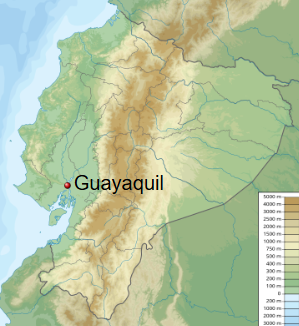
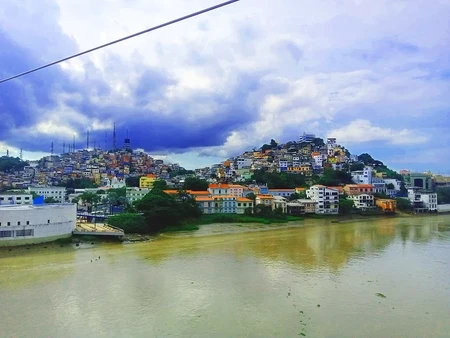
Guayaquil was founded in 1538 by Spanish conqueror Francisco de Orellana, he named it Muy Noble y Muy Leal Ciudad de Santiago de Guayaquil ("Most Noble and Most Loyal City of Santiago de Guayaquil"). What was it with these explorers, couldn't they just name something by a single name? Over the following centuries the city was raided and looted by several waves of French and British pirates and was a port for the transportation of many types of merchandise including slaves.
It is said that the name derives from the names of a local leader and his wife. Guayas and his partner Quil are said to have resisted the Spanish invasion of the area and choosing to fight to the death rather than give in to the Spanish Empire.
GUAYAQUIL = NAMES OF GUAYAS AND QUIL
Medellin ~ Colombia
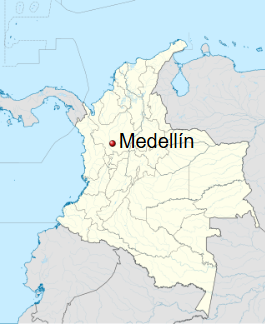
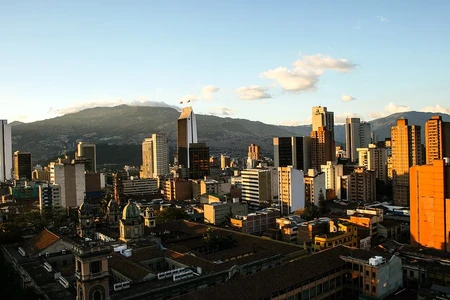
Medellin is an industrial city involved in the exports of coffee and gold. In the 1980's it was considered one of the most dangerous cities in the world, mainly due to warring drug cartels including the infamous Pablo Escobar. Nowadays, thanks to progressive mayors and the death of Escobar, the crime rate has been reduced enough to make Medellin less dangerous than Baltimore and New Orleans.
The city was named after the birthplace of Hernan Cortes, the village of Medellin in Spain. This village in turn, was named after a Roman general, Quintus Caecilius Metellus Pius, who named the village Metellinum which translates from the Latin to Medellin.
MEDELLIN = NAMED AFTER MEDELLIN, SPAIN (THAT WAS NAMED AFTER A ROMAN GENERAL)
Maracaibo ~ Venezuela
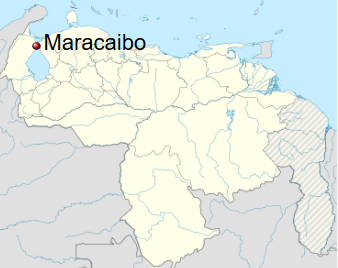
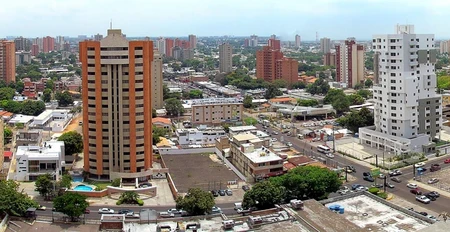
Despite being the country's second most populated city, Maracaibo is often referred to as "The First City of Venezuela". This is because the city was the first to introduce much of what we take for granted today, like electricity and many public services. The population of the city increased dramatically with the discovery of petroleum in 1917.
Historians have two theories on the origin of Maracaibo. The first involves an indigenous chief named Mara, that fought the Spanish invaders to the death. When he was killed the natives shouted Mara cayo, or "Mara fell". Although, it is thought strange that the natives would shout in Spanish.
The second theory is that the land was named by native people as Maara-iwo meaning "Place where serpents abound".
MARACAIBO = MARA FELL or PLACE WHERE SERPENTS ABOUND (I like the last one!)
Linden ~ Guyana
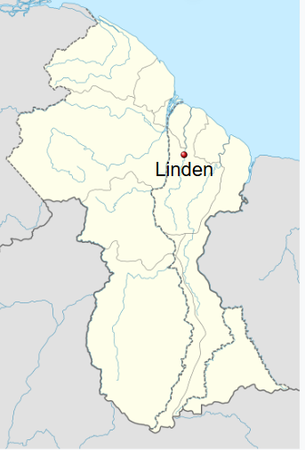
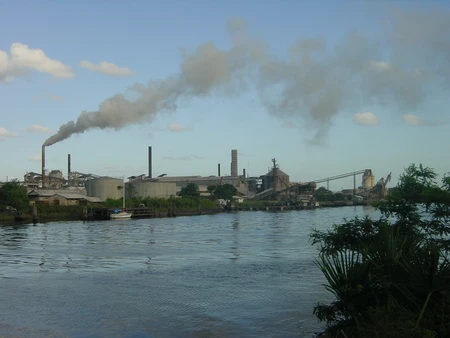
Linden is a mining town. It grew up around a bauxite mine and there are now many active and disused mines in the area, some of which are up to 90m deep. The town was originally made up of three villages called Wismar, MacKenzie, and Christianburg. In 1970 they were consolidated into the township of Linden.
The name of Linden honours the Leader of Guyana, President Linden Forbes Sampson Burnham.
LINDEN = NAMED AFTER THE PRESIDENT
Blauwgrond ~ Suriname
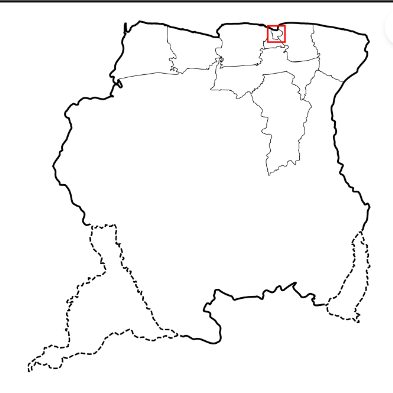
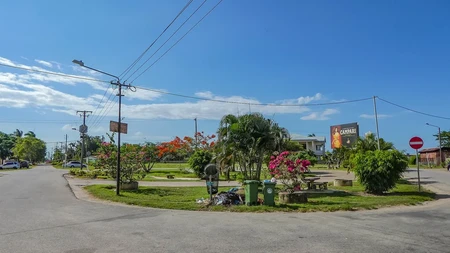
Blauwgrond is a suburb of the capital, Paramaribo. However, in Suriname it is classed as seperate and is called a "resort". This doesn't mean it is a holiday destination, just what each township is called. It is known in the area as a culinary centre, especially for Javanese food.
The name translates to English as "Blue Ground" and refers to the bluish hue of the soil in the area.
BLAUWGROND = BLUE GROUND
Summary
South America done and dusted in one blog! Although there is a small omission, French Guiana, sitting there ignored in this blog, and come to think of it, ignored in the capital city blogs too. But, not to worry. I have decided to tell you all of my plans for after this blog series ends. Some of you have already been speculating in the comments, so to dispel any rumours, I will come clean.
This blog is my 98th blog overall. I will be writing North America's first of two Second City blogs and then a Special for my 100th blog. After that will be the final Second City Blog.
Then I am thinking of writing a four blog series on the origins of the names of state capitals of the USA. Followed by a short series of blogs highlighting the etymology of other capitals. For example, in the UK there are three other capitals apart from London, I'm talking, obviously, of Edinburgh, Cardiff and Belfast. But there are also capitals of Jersey, Guernsey and the Isle of Man, plus each overseas territory has a capital. As do other countries overseas regions, French Guiana fits here, along with Greenland, Aruba, and many more. I'm sure there are some I have forgotten about. I may ask a question on the message board in due course.
So, in case the above was "TLDR" here's a list of my planned blogs.....
Second City Origins - North America #1
100 Blogs Special
Second City Origins - North America #2
US State Capital Origins #1-4
Regional Capitals # 1- ? (I don't know yet how many of these)
So there you have it, my writing schedule for the next 12 months. As you can guess, I am enjoying writing the short entries in these blogs and researching the names. Who knows, but after the geography ones I may start on different subjects. Everything has a name after all and all names have a history of their origins.
Anyway, in the words of Shrek, "That'll do Donkey, That'll do"
I wonder if it is a similar amount of people living in places named after saints?
You would have to be loyal and noble to visit there!