
Featured Quizzes
User Quizzes
Create Quiz
Data and Charts
Word Search
Flash Cards
Badges and Games
About JetPunk
Message Board
Dark Mode

Multiple Choice City Quiz – Nantes
Can you answer these multiple choice questions about the city of Nantes and its environs?
Rate:
Last updated: September 9, 2025
You have not attempted this quiz yet.
More quiz info >>
| First submitted | March 16, 2025 |
| Times taken | 78 |
| Average score | 60.0% | Report this quiz | Report |
4:00
The quiz is paused. You have remaining.
Copied!
Scoring
You scored / = %
This beats or equals
% of test takers
also scored 100%
The average score is
Your high score is
Your fastest time is
Keep scrolling down for answers and more stats ...
1. Which famous writer, known for "Twenty Thousand Leagues Under the Sea" and "Journey to the Center of the Earth," was born in Nantes?
The famous writer born in Nantes who is known for "Twenty Thousand Leagues Under the Sea" and "Journey to the Center of the Earth" is Jules Verne.
Victor Hugo
Albert Camus
Honoré de Balzac
Jules Verne
2. Which French king signed the Edict of Nantes in 1598?
The French king who signed the Edict of Nantes in 1598 was Henry IV. The edict granted substantial religious freedoms to French Protestants (Huguenots) and aimed to end the religious conflicts that had plagued France during the Wars of Religion.
Henri IV
Louis XV
François I
Louis XIV
3. In what year was Nantes liberated during the Second World War?
Nantes was liberated from German occupation during the Second World War on August 12, 1944, by French Resistance fighters and advancing Allied forces.
1941
1942
1943
1944
4. What is the name of the passenger transport system in Nantes (previously TAN)?
For 2023, the name of the passenger transport system in Nantes is Naolib ("Nao" for Naoned which is the breton name of Nantes and "lib" for the liberty to travel).
RATP
STRAN
STAR
Naolib
5. Nantes played a significant role in the transatlantic slave trade. Which of the following was one of the key reasons for Nantes' involvement in this tragic period of history?
Nantes became one of the main French ports involved in the transatlantic slave trade, particularly due to its strategic location along the Loire River, which made it a key departure point for ships heading to Africa and the Caribbean.
Its proximity to the Caribbean islands, making it a major port for the trade
The city’s alliance with the British, who were leaders in the slave trade
The founding of the first abolitionist movement in Nantes
Nantes strong agricultural economy, which relied on slave labor
6. What is the name of the most visited castle in Nantes?
The most visited castle in Nantes is the Château des Ducs de Bretagne (Castle of the Dukes of Brittany). This historic fortress, located in the heart of Nantes, was once the residence of the Dukes of Brittany.
Château d’Ussé
Château d'Azay-le-Rideau
Château des ducs de Bretagne
Château de Pierrefonds
7. In which year did Nantes officially become a part of France?
Nantes officially became a part of France in 1532, following the Treaty of Union between the Duchy of Brittany and the Kingdom of France. This treaty was signed by Anne of Brittany, the Duchess of Brittany, and King Francis I of France.
843
1204
1532
1794
8. What is the connection between "Namnete" and the city of Nantes?
"Namnete" refers to the ancient Celtic tribe that lived in the area now known as Nantes. The name "Nantes" itself comes from this tribe, and the city has a rich history that dates back to their time!
"Namnete" was the name of a famous king from Nantes.
"Namnete" refers to the ancient Celtic tribe that lived in the area now known as Nantes.
"Namnete" is a traditional festival held every summer in Nantes.
"Namnete" is the name of a historic battle that took place near Nantes.
9. What does the "LU" stand for in the famous Biscuit LU brand, known for its iconic "Petit Beurre" biscuits?
The LU company was founded in 1846 by Jean-René Lefèvre and Paul Utile, and they combined their names to create the brand "Lefèvre Utile."
Louis Ulric
Lefèvre Utile
Légumes Unis
Lune de l’Unité
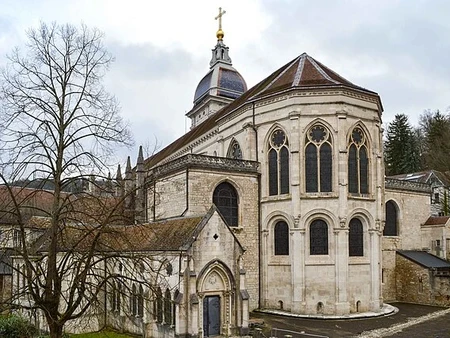
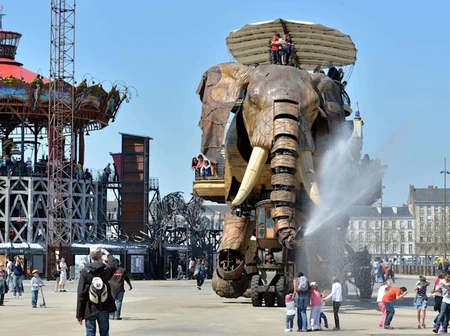
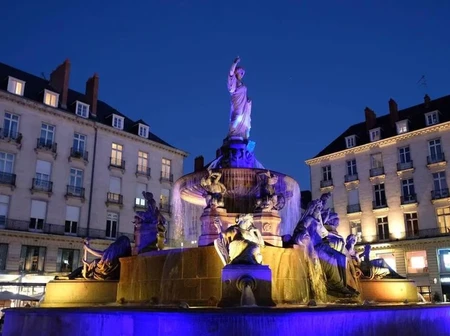
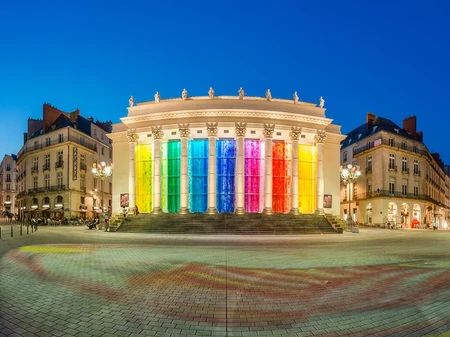
10. Which of these places isn't found in Nantes?
1 : Cathedral Saint-Jean in Besançon. 2 : Les Machines de l'Île. 3 : Place Royale. 4 : Place Graslin
Save Your Stats
Your Next Quiz

How many countries do you know? In this quiz, you've got 15:00 to name as many as you can. Go!

In 4 minutes, name as many NFL football teams as you can.

There are 48 countries that are generally considered to be part of Asia. How many can you name?

What countries finished atop the medal table at the 2026 Winter Olympics?
New and Popular
and since the language is english: I. or 1st